

Ethics commission takes scolding from Salida councilman
A Salida elected official who was the subject of an ethics complaint had strong words for the state’s Independent Ethics Commission this week, telling commissioners their process needs reform.
In July 2020, Salida resident Michelle Parmeter filed an ethics complaint with the commission and against Salida City Councilmember Harald Kasper, alleging he had violated the public trust in a 2019 vote regarding zoning issues.
According to the complaint, the city purchased land adjacent to property Kasper owned, and Kasper voted in favor of the city’s purchase of that land for recreational purposes. Parmeter said, without proof, that the purchase increased the value of Kasper’s land. She also objected to several rezoning decisions by the city council, including one for an affordable housing development near where she lives, and asked the commission to overturn those decisions (which is outside of their authority).
Amendment 41 bars public officials from “breaching the public trust for private gain.”
In 2020, the commission decided the complaint was not frivolous and moved it to the investigative phase.
In his response, Kasper said the rezoning decisions were part of the city’s effort to find land for affordable housing, and that Parmeter disliked those decisions because she lives next door to where that housing would be built. According to Kasper, in a July 2019 city council meeting, Parmeter’s husband, a doctor, said they were not concerned whether teachers, police officers or waiters could find a place to live and more concerned that the affordable housing would cost the city doctors and lawyers who live near the development. As to the land purchase, it has been part of the city’s planning documents since 2013, Kasper noted, and the council’s 4-1 decision to okay the purchase would have been approved without his vote.
He also noted that the complaint didn’t actually identify any ethics violations he could have committed.
The commission held a hearing on the complaint on June 15, and dismissed it, in part because the zoning issues raised by Parmeter were not within the purview of the commission. As to the land purchase, the commission’s investigation found that the sale did not increase the value of Kasper’s nearby property and noted that Parmeter did not present any evidence to the contrary.
Kasper, however, had something to say about the process, and chewed on the commission on Tuesday over the amount of time it had taken to resolve as well as the damage caused to his reputation.
He called the experience of the ethics complaint “surreal. Thank God we agreed on the outcome.” However, the complaint by Parmeter was “intentional abuse of this process by a disgruntled citizen,” one who was allowed to file a complaint without any evidence of wrongdoing on his part.
“She has won,” Kasper said. “She has achieved what she set out to do,” to cause him pain for the audacity of serving on the city council “and not bow to her tantrums.”
Kasper said he spent thousands of dollars on attorneys’ fees, and asked for a written response from the commission to the complainant, telling her that abusing the ethics process is in itself unethical.
Common sense also dictates that the burden of proof should be on the person who filed the complaint, Kasper told the commission. But since the state does not want to put the burden on the accusing citizen, “the responsibility should lie with the commission, to shorten the process and unload the burden on the accused,” Kasper said.
Kasper also suggested that the process needs to be changed to throw out “ludicrous claims,” and if they fail to do so, the commission becomes a nuisance, he said.
Commissioner Vice-Chair Selina Baschiera responded that she would take Kasper’s comments into consideration.
TRAIL MIX | Colorado politicians are no strangers to weaponized ethics complaints
Baschiera later raised Kasper’s comments in a discussion of the commission’s budget and staffing for the fiscal year 2022-23.
The commission has had just one staff person, Executive Director Dino Ionnides, for the past several years. He’s responsible for all administrative duties, doing the investigations, training for covered agencies at both the state and local level and dealing with logistics for meetings. The commission had an additional staffer some years ago who handled outreach and training, but budget cuts eliminated that position.
Since then, the commission has been reluctant to seek more staffing, even turning down an offer from the Joint Budget Committee for that purpose about six years ago.
But given the deluge of complaints in 2020 (likely the result of publicity around the ethics investigation into then-Gov. John Hickenlooper), Baschiera seemed open to the possibility of adding another staffer.
“I’m concerned about the length of our process,” Baschiera said, adding that she wondered about whether they should hire an investigator to help with the workload, given the volume of complaints in recent years. It’s part of a consideration for the time individuals spend when they come to the commission, she explained.
The idea of hiring an investigator also appealed to Chair Elizabeth Espinosa-Krupa. Such staffing would free up Ionnides to focus on training, she said.
To date in 2021, the commission has received 20 complaints, dismissing 19 of them as frivolous. The 20th is in a “preliminary investigation” status and has not been ruled on yet.
In 2020, the commission received 80 complaints, dismissing all but five. The previous year, 26 complaints were received, with all but two dismissed as either frivolous or outside the commission’s jurisdiction.
Ethics commission dismissed complaint against Delta County official but decision is on appeal
Finally, the commission reviewed an appeal on a previous dismissal of a complaint against Delta County Administrator Robbie LeValley. JoAnn Kalenak of Hotchkiss, who publishes the Delta County Citizens Report, appealed the commission’s decision to dismiss the complaint last month, which was tied to county purchases of beef from LeValley’s ranch. The commission rejected Kalenak’s appeal Tuesday.
Colorado Politics Must-Reads:

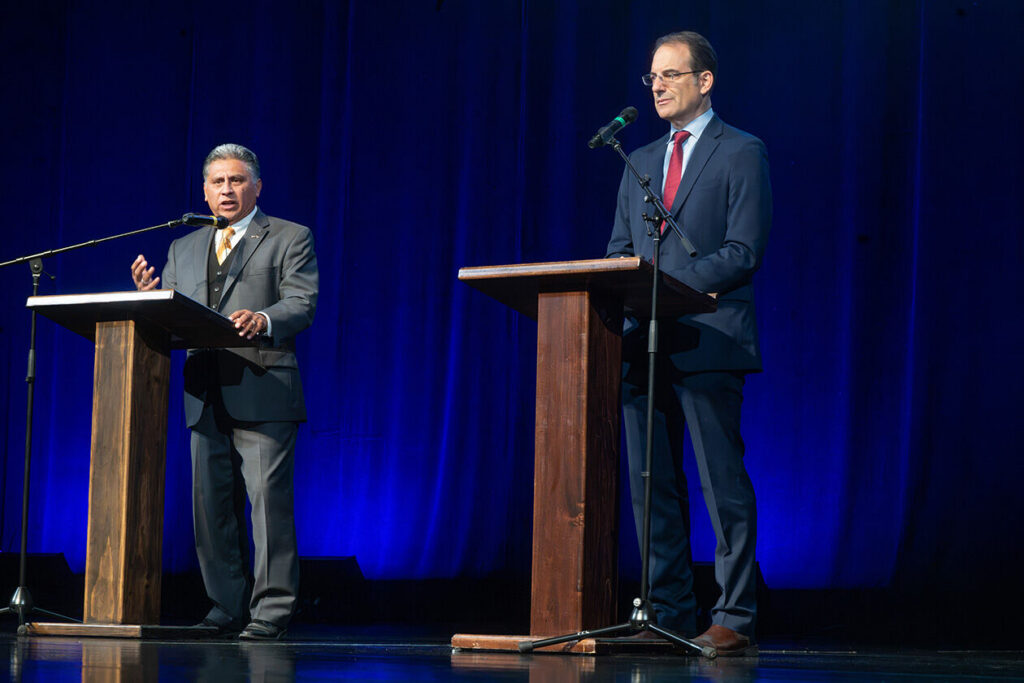
Gubernatorial candidates Phil Weiser, Greg Lopez spar, as Marx skips debate
Deborah Grigsby
deborah.smith@denvergazette.com
Updated 4 hours ago
Two of the candidates for Colorado governor squared off in a televised debate on Thursday night, when Attorney General Phil Weiser, the Democratic nominee, and former U.S. Rep. Greg Lopez, an unaffiliated candidate, delved into issues of affordability, data center...
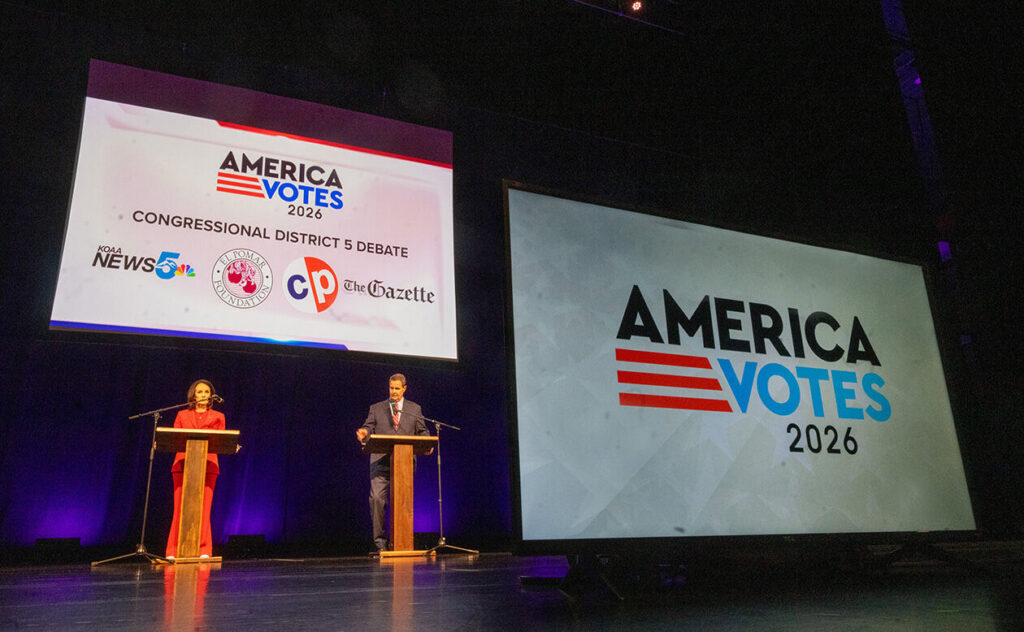
Troops, taxes, war dominate Colorado’s 5th CD debate between Jeff Crank, Jessica Killin
Deborah Grigsby
deborah.smith@denvergazette.com
Updated 5 hours ago
Republican U.S. Rep. Jeff Crank and Democratic challenger Jessica Killin on Thursday night clashed over the war in Iran, the federal budget and healthcare when they took the stage in Colorado Springs for a sold-out debate in the race to...
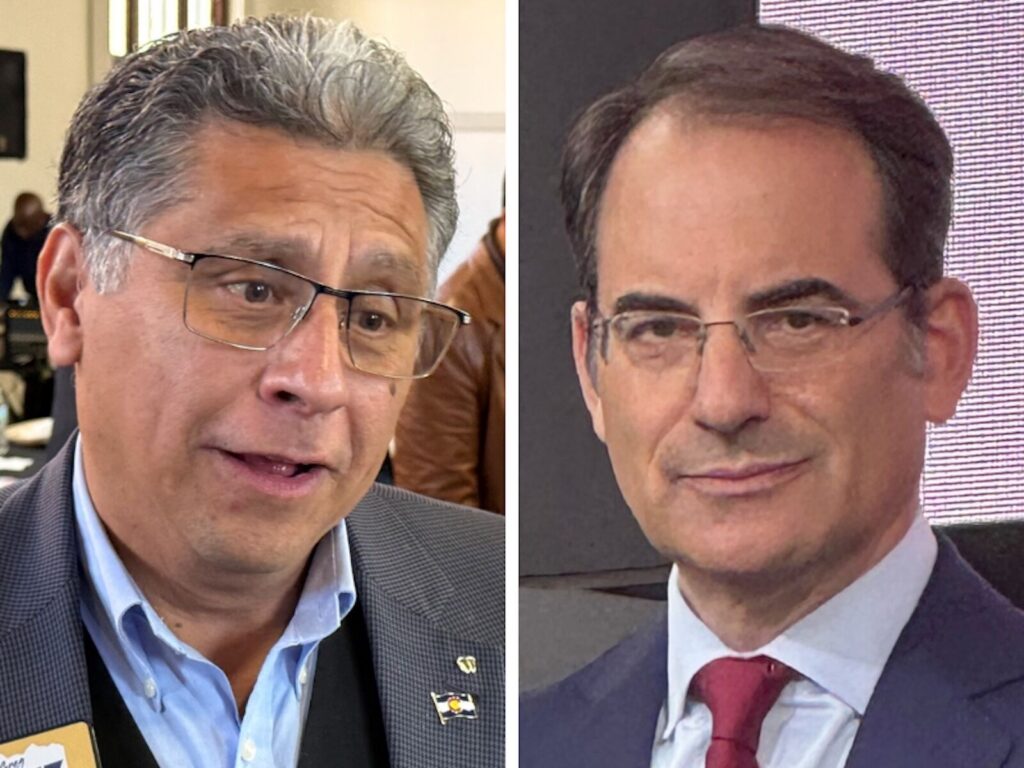
WATCH: Colorado gubernatorial candidates Phil Weiser, Greg Lopez face off Thursday in televised debate
Ernest Luning
ernest.luning@coloradopolitics.com
Updated 7 hours ago
Two of the candidates for governor of Colorado are set to square off in a televised debate for the first time Thursday night, when Attorney General Phil Weiser, the Democratic nominee, and former U.S. Rep. Greg Lopez, an unaffiliated candidate,...
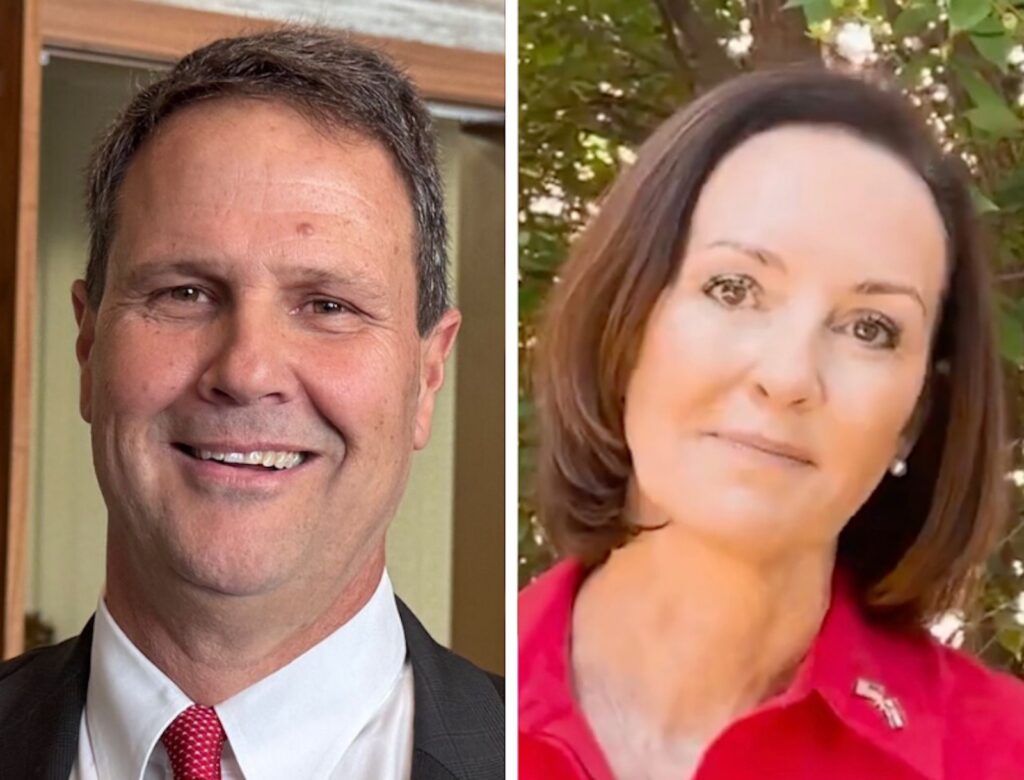
WATCH: Republican US Rep. Jeff Crank, Democratic challenger Jessica Killin debate in Colorado’s 5th CD
Ernest Luning
ernest.luning@coloradopolitics.com
Updated 8 hours ago
Republican U.S. Rep. Jeff Crank and Jessica Killin, his Democratic challenger, are scheduled to meet for a televised debate in the race to represent Colorado’s 5th Congressional District on Thursday night. The candidates are set to take the stage at...

Colorado officials warn of e-bike safety amid increase in serious youth injuries
Matt Kyle
matt.kyle@denvergazette.com
Updated 4 hours ago
Serious injuries involving e-bikes, e-scooters and children have risen significantly in Colorado over the past year and a half. Traumatic injuries involving e-bikes have risen 184%, according to Alicia Melven, Colorado injury prevention and outreach specialist for Children’s Hospital Colorado’s...

Colorado State Fair youth golf tournament celebrates 11 years
Marianne Goodland
marianne.goodland@coloradopolitics.com
Updated 10 hours ago
Twenty-eight teams tee off Friday at Walking Stick Golf Course in Pueblo for a tournament supporting 4-H, Future Farmers of America and capital improvements at the Colorado State Fair. Now in its 11th year, the Partners of Youth in Ag...

Controversial two-bag furbearer limit heads to CPW meeting under legal threat
Marianne Goodland
marianne.goodland@coloradopolitics.com
Updated 10 hours ago
Next week’s Colorado Parks and Wildlife Commission meeting in La Junta is likely to open under the cloud of threatened legal action. Safari Club International and the Sportsmen’s Alliance Foundation warned the commission this month that its July vote imposing...

Democratic-aligned poll shows big majority of swing-seat voters support routine childhood vaccines
Ernest Luning
ernest.luning@coloradopolitics.com
Updated 13 hours ago
A new poll conducted by Democratic-aligned groups found that voters in competitive U.S. House districts — including a battleground seat in Colorado — support routine childhood vaccinations by a wide margin and oppose a recent order by President Donald Trump...
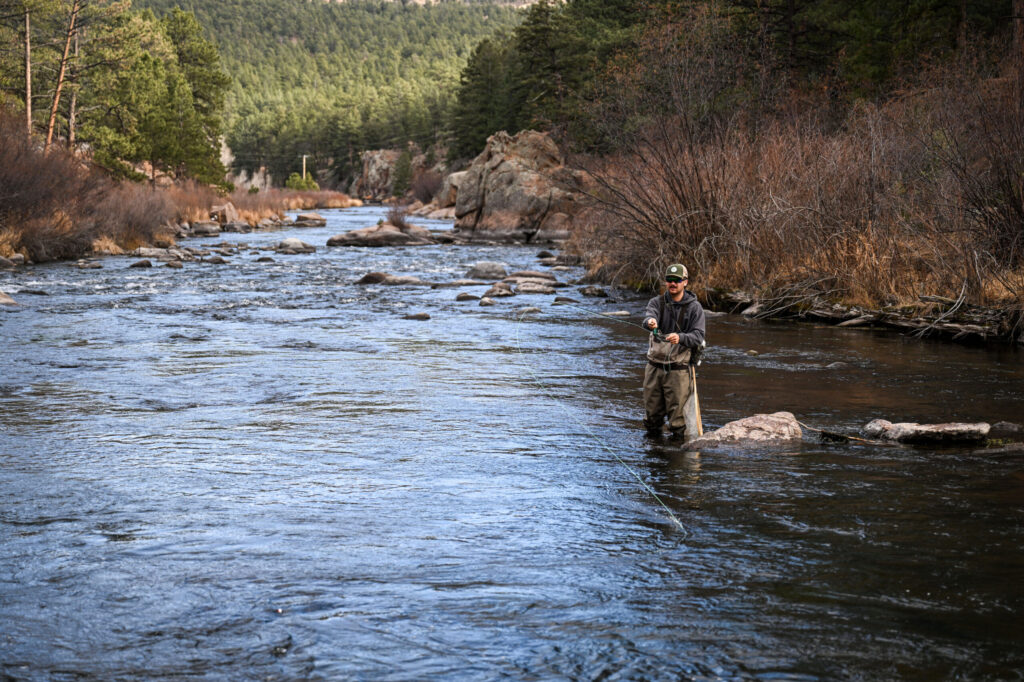
Some Colorado hunters oppose measure establishing constitutional right to hunt, fish proposal, group says
Marissa Ventrelli
marissa.ventrelli@coloradopolitics.com
Updated 7 hours ago
A group that says it represents hunters and anglers from across Colorado announced its opposition to a ballot measure that would establish the right to hunt and fish in Colorado’s constitution, saying it could result in the overturning of bans...

Coalition drops Colorado transportation ballot measure after securing deal
Marissa Ventrelli
marissa.ventrelli@coloradopolitics.com
Updated 8 hours ago
The proposed constitutional amendment seeking to dedicate all transportation-related revenue to Colorado’s roads and bridges will no longer appear in this November’s ballot after its proponents reached an agreement with lawmakers following months of negotiations. Initiative No. 175, backed by...
PREV
PREVIOUS

NONPROFIT REGISTER | Charity golf tournament raises $61,000 for Colorado Veterans Project
COLORADO VETERANS PROJECT Denver News: Arrowhead Golf Course in Littleton was the setting for the third annual charity golf tournament hosted by CrossCountry Mortgage, LLC, an event that raised $61,000 for the Colorado Veterans Project. “We are so appreciative to the CrossCountry Mortgage team for naming Colorado Veterans Project as the benefactor of this year’s […]
Weiser picks up endorsements from nearly every Democrat holding state office
Colorado Attorney General Phil Weiser has won endorsements from every Democratic member of the state legislature and nearly every Democrat elected to state executive office, his campaign announced Thursday as the Democrat wrapped up a five-day, statewide tour to launch his re-election bid. Weiser has also been endorsed by a handful of county commissioners and […]