

COURT CRAWL | Welcome back to Supreme Court, ‘enraged’ judge the subject of appeal

Welcome to Court Crawl, Colorado Politics’ roundup of news from the third branch of government. The state Supreme Court is resuming its normal calendar of oral arguments and decisions this week, and the U.S. Court of Appeals for the 10th Circuit decided whether an “enraged” judge compromised the right to a fair trial.
Justices are back in town
• After taking a hiatus from oral arguments during the summer, the Colorado Supreme Court will resume hearing cases this week. There are some major issues to be addressed during this first round of oral arguments starting at 9 a.m. on Tuesday. The Court Crawl is keeping its eye on the following cases:
People v. Ojeda: This involves a “Batson challenge,” named for the U.S. Supreme Court case barring race-based dismissals of jurors. The justices will review whether the Court of Appeals was correct to find a violation and order a new trial.
People v. Viburg: The Supreme Court decided last year that for felony DUI, prosecutors must prove to a jury that a person had at least three prior (misdemeanor) DUI convictions. The district attorney for Jefferson County is seeking to retry a man for felony DUI under the new standard, and the justices will consider whether that violates double jeopardy.
Rojas v. People: The Supreme Court will consider the “res gestae” doctrine that allows for contextual or even hearsay evidence at trial, but which has its critics.
Thomas v. People: Can someone who is in handcuffs be charged with resisting arrest? The parties are asking the Court to decide when, precisely, someone can be considered “under arrest.”
Breaking the tie
• The Supreme Court is also considering a case that asks whether a Jefferson County judge was correct to conclude he had no “judicial tie-breaking” authority to decide where a divorced couple’s parents should attend school, after the mother and father could not agree between themselves.

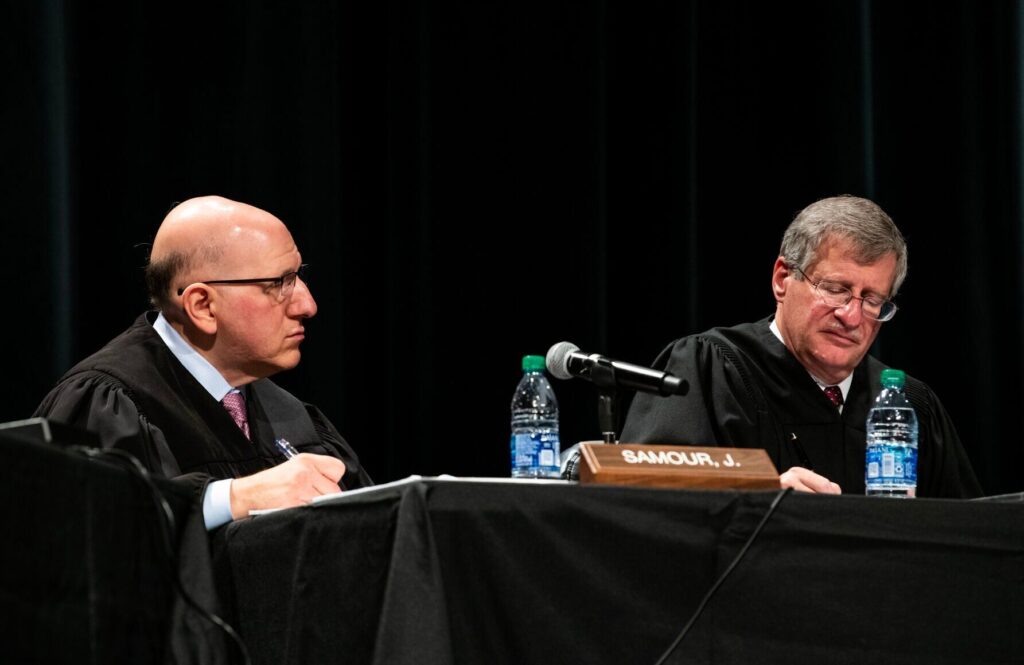
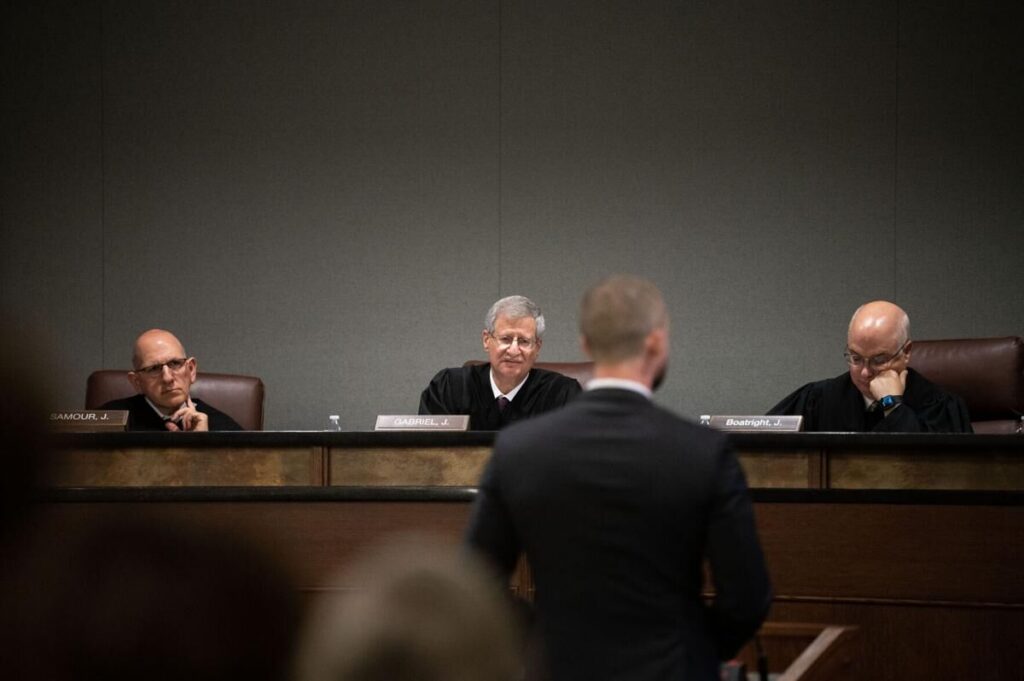
Justices of the Colorado Supreme Court, 2021

‘The courtroom was en fuego’
• In 2017, a federal jury handed a $2.45 million verdict to a former ramp agent at Denver International Airport for suffering disability-based discrimination from his employer, SkyWest Airlines. But SkyWest appealed, alleging U.S. District Court Senior Judge Robert E. Blackburn improperly handled the misconduct of SkyWest’s own representatives.
• First, a paralegal for the regional airline gestured for a witness on the witness stand not to answer a question. Blackburn was not pleased, and told the jury he had “banished” the paralegal. Then, a juror and a SkyWest witness had a conversation in an elevator in violation of the judge’s directive. Blackburn removed both of them from the trial and told the jury about the inappropriate contact.
• Although the 10th Circuit found on appeal that Blackburn had handled the matter appropriately, SkyWest thought the “enraged” judge may have turned the jury against them. In one of the best lines uttered during oral arguments, an attorney for SkyWest said, “The courtroom was en fuego in that moment.”
Other news from the 10th Circuit
• A Drug Enforcement Administration agent applied for a warrant for what he thought was a single person growing marijuana illegally. He didn’t realize he was actually monitoring two people — both Chinese — with similar-sounding names and with seemingly no connection to each other. Still, the 10th Circuit upheld the faulty warrant and the conviction.
• An inmate with a bowel disease asked for prison officials to accommodate his bathroom schedule by giving him access to meals at predictable times. They refused, and instead offered him adult diapers. Although a lower court judge found the diapers to be a reasonable accommodation of his disability, the 10th Circuit decided otherwise and reinstated the lawsuit of Jason Brooks.
• Brooks told Colorado Politics after the decision: “In prison I never was able to process what was happening fully because the environment forces you to be stoic; suffering was experienced inwardly only. I never showed much emotion going through this because being looked at as weak person in prison can lead to its own set of problems. My recent release has allowed me to process my journey, but it’s still very fresh.”
• His is the second recent civil rights case from Colorado in which CU law students argued on behalf of the plaintiff. As with Brooks’s appeal, the students won the other case as well.

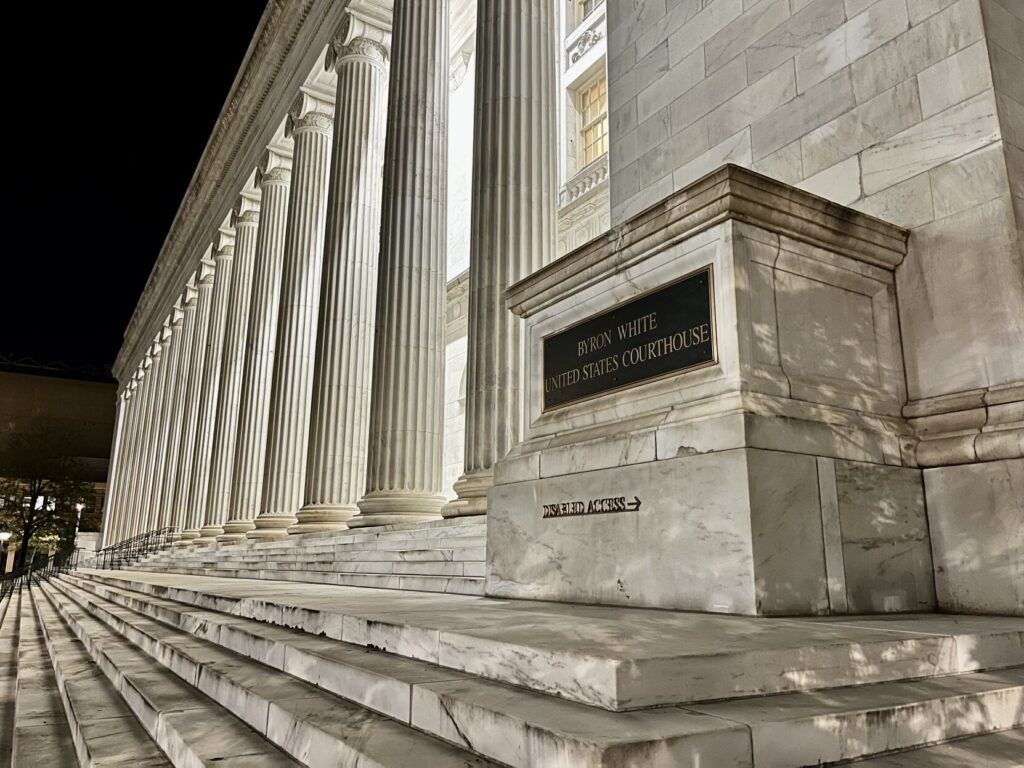
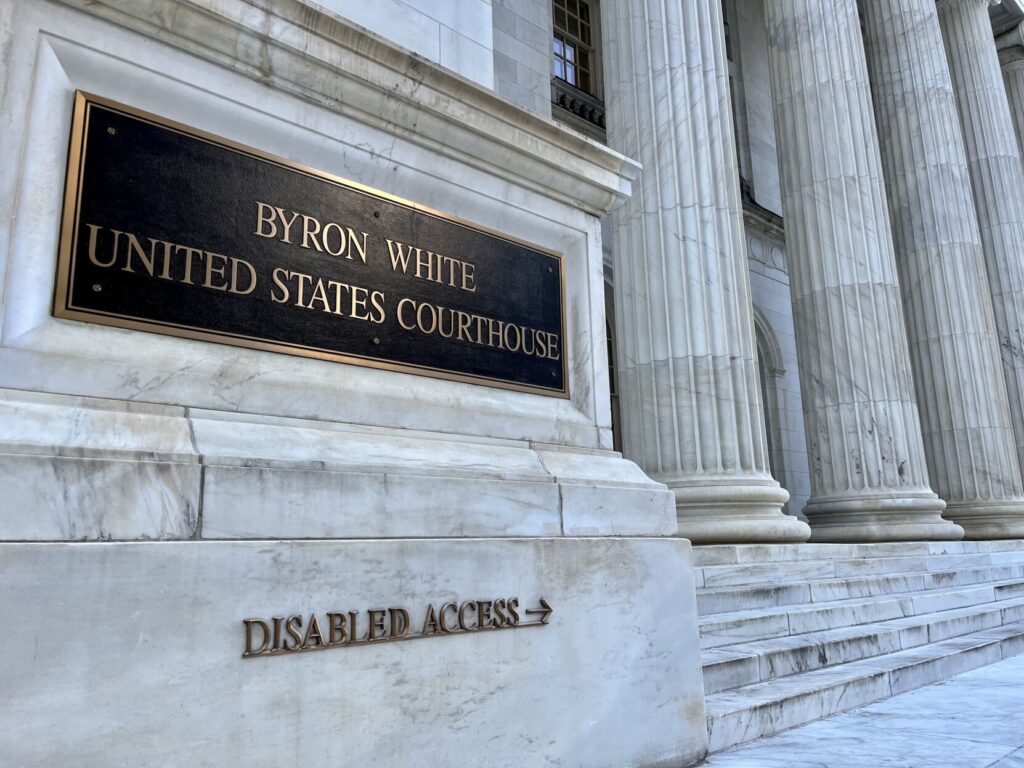
FILE PHOTO: The Byron R. White U.S. Courthouse in Denver, which houses the Court of Appeals for the 10th Circuit.
MICHAEL KARLIK/COLORADO POLITICS

Qualified immunity denied
• There were two decisions from the federal district court pertaining to qualified immunity. (To recap: QI is a judicially-created shield against civil liability for government employees, unless they violated someone’s clearly-established legal rights.) In an unusual move, U.S. District Court Judge William J. Martínez reclaimed his jurisdiction over an excessive force case, despite a Fort Collins officer’s appeal to the 10th Circuit. The judge denied QI to the officer, and labeled his appeal of that decision “frivolous,” meaning it will continue to trial unless the 10th Circuit says otherwise.
• A judge also denied QI to Aurora officers who fatally shot a mentally ill man in an apartment. Despite the procedural victory for the man’s surviving family, the judge cautioned that further evidence, like body-worn camera footage, could deal a blow to their case.
Miscellaneous decisions
• An Arapahoe County sheriff’s deputy allegedly blocked a detainee from filing a grievance twice. The 10th Circuit dismissed the detainee’s lawsuit — because he hadn’t filed a grievance first.
• A man serving a 60-year sentence for a 1998 murder has appealed to the U.S. Supreme Court, saying lower courts haven’t fully considered whether the lead detective on his case knew an informant was lying about key testimony.
• Colorado is failing to provide federally-mandated services under Medicaid for children who are mentally ill or have behavioral health disorders, a federal lawsuit alleges.
• There are 32 vacancies statewide across the citizen-led nominating commissions for judges.

Colorado justices acknowledge judge’s misunderstanding of law in eminent domain case
Michael Karlik
michael.karlik@coloradopolitics.com
Updated 15 hours ago
Members of the Colorado Supreme Court appeared to agree on Tuesday that a Douglas County judge incorrectly believed he lacked the authority to allow a property owner to pursue evidence challenging a government entity’s legal right to take the property...
Colorado legislators pass bill that sponsors say would strengthen sex crime victim protections
Jenny Deam
jenny.deam@gazette.com
Updated 13 hours ago
A Colorado bill that supporters say would strengthen victim protections and mandate law enforcement training on how trauma can affect survivors of sex crimes and domestic violence is on its way to Gov. Jared Polis’ desk for signing. Senate Bill...
Municipal camping bans do not violate Colorado Constitution, says appeals court
Michael Karlik
michael.karlik@coloradopolitics.com
Updated 19 hours ago
Municipal ordinances that ban people from living on public property do not violate the Colorado Constitution’s prohibition on cruel and unusual punishment, the state’s second-highest court ruled on Thursday. A three-judge Court of Appeals panel agreed that it was appropriate...
10th Circuit again dismisses ex-prison employee’s challenge to workplace DEI training
Michael Karlik
michael.karlik@coloradopolitics.com
Updated 1 day ago
The Denver-based federal appeals court dismissed a second lawsuit on Monday brought by a former Colorado Department of Corrections employee who was offended by an equity training module and had alleged it created a hostile work environment. In 2023, U.S....

As Colorado’s federal judges churn through immigration petitions, Domenico’s cases sit undecided
Michael Karlik
michael.karlik@coloradopolitics.com
Updated 14 hours ago
Colorado’s U.S. District Court judges have spent months pushing out decisions in hundreds of immigration detention cases and largely siding with detainees, but one judge has barely touched his caseload. Chief Judge Daniel D. Domenico has only issued orders in...
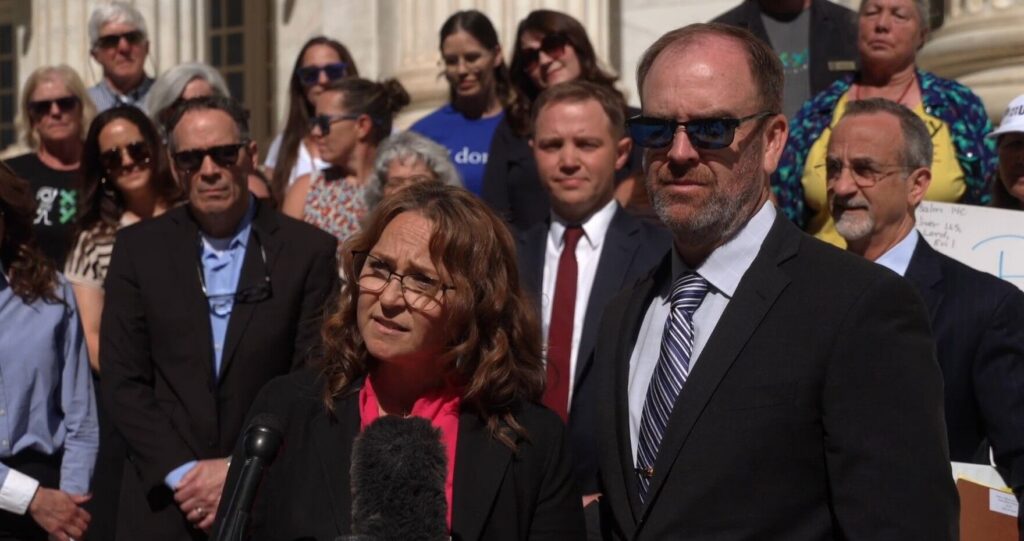
Federal judges hear arguments over Colorado school district’s gender identity rooming policy
Nicholas Fogleman
nicholas.fogleman@denvergazette.com
Updated 2 days ago
A panel of judges at the 10th U.S. Circuit Court of Appeals heard arguments Tuesday in a lawsuit challenging JeffCo Public School’s policy of assigning students to overnight accommodations on school trips based on gender identity. The lawsuit, filed in...
10th Circuit analyzes sentencing process for probation violators in rare all-judges’ hearing
Michael Karlik
michael.karlik@coloradopolitics.com
Updated 2 days ago
All 12 full-time judges on the Denver-based federal appeals court gathered for a rare oral argument on Monday to consider whether one of the court’s precedent-setting opinions created a process for sentencing probation violators that is out of step with...
Colorado justices skeptical of defendant’s challenge to flawed jury instruction
Michael Karlik
michael.karlik@coloradopolitics.com
Updated 3 days ago
Members of the Colorado Supreme Court appeared willing to uphold a defendant’s vehicular eluding conviction on Tuesday, suggesting that an incorrectly worded jury instruction was not an obvious and harmful error in light of the defense’s choice not to dispute...
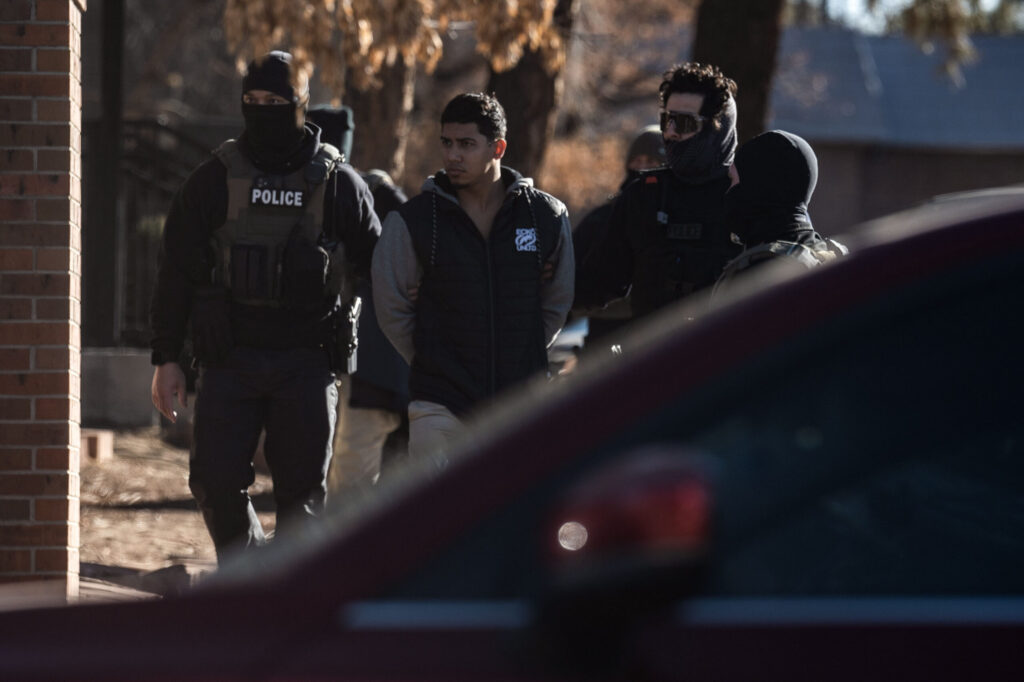
ICE ‘materially violated’ order on warrantless arrests, Colorado judge says
Michael Karlik
michael.karlik@coloradopolitics.com
Updated 2 days ago
A federal judge ordered U.S. Immigration and Customs Enforcement on Tuesday to immediately train its Colorado employees about how to lawfully perform warrantless arrests, after the evidence showed officers had little understanding of the requirements. U.S. District Court Senior Judge...
Trump picks Daniel Domenico for 10th Circuit vacancy
Michael Karlik
michael.karlik@coloradopolitics.com
Updated 4 days ago
President Donald Trump announced on Monday that U.S. District Court Chief Judge Daniel D. Domenico is his choice to fill an upcoming vacancy on the Denver-based federal appeals court. Domenico, who is 54 this year, is Trump’s only appointee to...
PREV
PREVIOUS

Supreme Court finds Colo. Springs police acted unconstitutionally with pole camera surveillance
Colorado Springs police violated constitutional protections against warrantless searches by using a pole-mounted camera to monitor a suspected drug dealer’s home continuously for three months, the Colorado Supreme Court ruled on Monday. The key decision clarified the privacy rights of individuals in an age of advanced surveillance technology. Although the government argued that Rafael Phillip […]

Federal judge wrong to tell jury that defendant was lying, appeals court finds
A federal judge inappropriately told a jury that the defendant was lying on the witness stand, the federal appeals court in Denver concluded on Monday, while simultaneously finding the error was not sufficient to overturn his convictions. The federal government admitted that U.S. District Court Judge William J. Martínez committed the error, but argued the evidence […]