

Appeals court reinstates Colorado inmate’s disability rights lawsuit over adult diapers

A lower court judge took a disabled inmate’s statements out of context and mistakenly concluded it was reasonable for the state to offer him nothing but adult diapers for his condition, the federal appeals court based in Denver decided on Wednesday in reinstating the man’s civil rights lawsuit against the Colorado Department of Corrections.
The ruling from the U.S. Court of Appeals for the 10th Circuit indicated the CDOC forced Jason Brooks to choose between wearing adult diapers or missing meals due to his bowel disease. But prison officials refused to approve a more reasonable option to accommodate his bathroom schedule. Consequently, a jury could have decided that the prison’s failure to provide Brooks with his preferred alternative – a “movement pass” that allowed him a fixed meal time – violated his right to have a reasonable accommodation under the Americans with Disabilities Act.
“In summary, a reasonable juror could find the following facts: (1) diapers did not give Brooks meaningful access to meals, (2) movement passes are routinely granted, and (3) such a pass significantly improved Brooks’s ability to access meals in the past,” wrote Senior Judge Michael R. Murphy in the opinion of the three-member appellate panel that heard Brooks’s case. “Given these underlying facts, a reasonable jury could ultimately conclude the defendants did not provide Brooks with a reasonable accommodation.”
Matthew R. Cushing, an attorney who represented Brooks before the 10th Circuit along with two University of Colorado law students, said the case will now likely return to the district court for a jury trial over damages on Brooks’s ADA claim.
Brooks has severe ulcerative colitis, which is an inflammatory bowel disease that affects the large intestine. It causes abdominal pain, diarrhea and an urgent need to defecate. His condition qualified as a disability under the ADA, the federal civil rights law whose goal is to eliminate disability-based discrimination in employment, public accommodations and governmental activities – including prisons.
Brooks was serving a prison sentence for securities fraud and ended up missing hundreds of meals beginning in February 2012 when he was transferred to Fremont Correctional Facility. Because of his frequent and unpredictable need to use the restroom, it was necessary for him to stay by the toilet instead of attending a “chow pull” – the variable window for meals where prisoners access the cafeteria in groups.
During this time, Brooks allegedly slipped well below his ideal weight, to as little as 136 pounds. His choice was to sit in the cafeteria to eat, possibly in his own feces, or to go without food.
Briefly at Fremont, Brooks requested and received the movement pass, which diabetic inmates had access to and enabled them to eat meals during the first chow pull. The arrangement reportedly worked well for Brooks because he could use the restroom before going to the cafeteria and get food before a line formed, allowing him to eat quickly if needed.
But the pass expired and the prison refused to renew it. The ADA inmate coordinator, Julie Russell, allegedly claimed that allowing Brooks to continue to eat with the diabetic prisoners was “unreasonable due to the unintended security concerns it would create.”
Attorneys for Brooks told the court he was able to make 55% to 60% of his meals when he had the pass, but that frequency dropped to as low as 20% after the revocation. There were 74 instances between June 2012 and February 2013 when he missed all three meals. The Colorado Attorney General’s Office disputed those figures, saying Brooks’s “irregular meal attendance is overwhelmingly the result of his own decisions.”
The prison instead offered Brooks adult diapers, which he refused because sitting in soiled diapers in the cafeteria would have put him at risk of assault. Officials thus deprived Brooks of “any semblance of human decency, and saw nothing remotely wrong with forcing Mr. Brooks to repeatedly defecate on himself, around hundreds of other inmates, in order to obtain his meals,” Brooks wrote to the court.
Brooks initially filed a lawsuit against the CDOC in late 2013, and the case made it to the 10th Circuit for the first time in 2017. The appellate court reversed the dismissal of the lawsuit, and returned it to the district court for further review of Brooks’s ADA claim.
After reconsidering Brooks’s claim, U.S. Magistrate Judge S. Kato Crews ruled in favor of the CDOC again in September 2019. Crews focused on whether Brooks had shown the prison failed to provide a reasonable accommodation for his disability that allowed him to meaningfully access the cafeteria. He ultimately decided the adult diapers that Brooks refused were, in fact, a reasonable accommodation.
The magistrate judge based his decision in large part on a deposition Brooks gave in which he allegedly admitted that adult diapers were acceptable.
Brooks explained to a lawyer that “in all situations [adult diapers are] completely unreasonable, unless you have an inability to control your bowels.” After stating he was not incontinent, Brooks clarified: “I can’t even tell when the leakage is about to start. So that is not up to me.”
“Brooks concedes three things with this testimony,” Crews wrote in his order. “(1) undergarments are reasonable if ‘you have an inability to control your bowels;’ (2) he has an inability to control his bowels (whether or not he calls it ‘incontinence’; and, (3) because he has an inability to control his bowels, undergarments are a reasonable accommodation.”
But the 10th Circuit panel determined Crews omitted crucial statements Brooks had made in his deposition that would, in context, have raised a question about the suitability of diapers for Brooks.
Brooks’ complete answer read: “in all situations, [adult diapers are] completely unreasonable, unless you have an inability to control your bowels. Obviously, the guys I knew that did use them were older, 50, 60 years old. There was only a couple of them. They had just gotten sick, right, so no understanding of – when this disease hits you for the first time, when you don’t have an understanding….So, luckily, I had six years, seven years before I was incarcerated to be able to figure out my disease process and how it affected me.”
“Read in its entirety,” Murphy wrote in the panel’s September 8 opinion, “a reasonable juror could understand Brooks’s deposition testimony as standing for the proposition that although diapers may be a reasonable accommodation for some sufferers of ulcerative colitis, they were not a reasonable accommodation at his stage of the disease.”
The panel reversed Crews’ decision and revived the ADA portion of Brooks’ lawsuit, but only in part.
In April 2018, the CDOC transferred Brooks to Sterling Correctional Facility and granted him a movement pass. He was then released on parole while awaiting the 10th Circuit’s decision. Although the government argued – and the 10th Circuit agreed – that the portion of Brooks’ appeal asking the court to order the CDOC to accommodate his disability was moot as a result, Brooks may still sue for monetary damages.
The appellate panel did, however, agree to dismiss Brooks’ claim against Russell, the ADA coordinator. The court concluded there was no evidence to suggest Russell acted with deliberate indifference toward Brooks’ food and medical needs by denying him the movement pass. In fact, Russell apparently felt she had no authority to give one to Brooks, and had a “reasonably mistaken” belief that movement passes were a medical decision.
Meghan Baker, the facilities team leader with Disability Law Colorado, said the 10th Circuit’s decision highlighted the way in which the Department of Corrections sometimes conflates medical needs with reasonable accommodations of a disability.
“It may be true that something is both, but accommodations really could be quite broad. It could be a device or piece of equipment or change in policy,” she said. Baker added that she was glad the panel recognized the implications to Brooks’ dignity from the CDOC’s focus on adult diapers.
“That’s really important to recognize and something that’s lost sometimes when we think about people in jail or prison: that they still maintain basic human rights,” she said.
CU law students Aja Robbins and Angela Boettcher, who have since graduated, argued on Brooks’ behalf to the 10th Circuit.
The case is Brooks v. Colorado Department of Corrections et al.



Denver murder conviction reversed for incomplete self-defense instruction
Michael Karlik
michael.karlik@coloradopolitics.com
Updated 28 minutes ago
Colorado’s second-highest court reversed a defendant’s murder conviction last week because a Denver judge gave an incomplete instruction to the jury about the man’s right to self-defense. Donald R. Gonzales and Gary McLaughlin met up in a Capitol Hill parking...
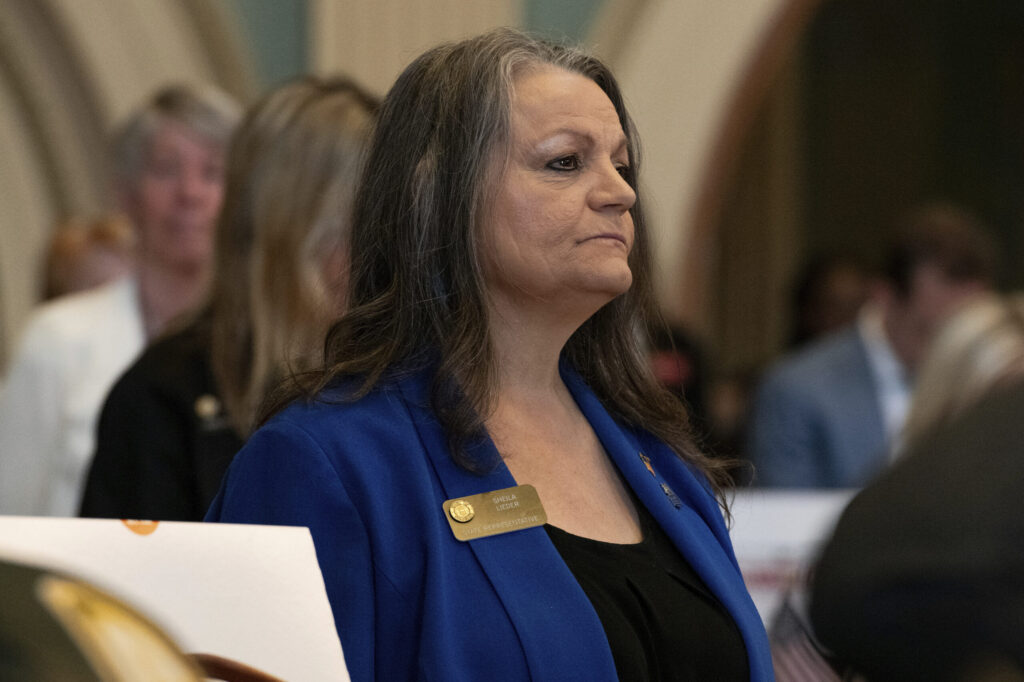
Colorado lawmaker, House leaders named in workplace-retaliation lawsuit
Marianne Goodland
marianne.goodland@coloradopolitics.com
Updated 3 hours ago
A former legislative aide has filed a lawsuit alleging she was mistreated, illegally directed to perform campaign work and harmed by a House leadership structure she charged was fragmented, politicized and ineffective at protecting employees. The lawsuit, filed by Jennifer...

Federal judge hears arguments about Colorado’s 3-day gun purchase waiting period
Michael Karlik
michael.karlik@coloradopolitics.com
Updated 8 hours ago
A federal judge heard arguments on Monday about the constitutionality of a 2023 Colorado law that generally imposes a three-day waiting period on firearm purchases after the initiation of a background check. The test that the U.S. Supreme Court created...

Colorado Supreme Court intervenes in Weld County prosecution dismissed due to Missy Woods misconduct
Michael Karlik
michael.karlik@coloradopolitics.com
Updated 3 minutes ago
The Colorado Supreme Court ordered a Weld County trial judge last week to respond to the district attorney’s claim that he improperly dismissed a criminal case because of “outrageous” conduct by the Colorado Bureau of Investigation. Daniel Lee Eatinger stood...
Schoolchildren’s presence at child sex-related trial did not harm Arapahoe County defendant, appeals court says
Michael Karlik
michael.karlik@coloradopolitics.com
Updated 3 days ago
Colorado’s second-highest court decided on Thursday that the presence of a group of schoolchildren on the first day of a child sexual exploitation trial did not violate an Arapahoe County defendant’s constitutional right to a fair trial. Prosecutors charged Jerry...
Appeals court cites week-old Colorado law to reinstate child neglect case at child, father’s request
Michael Karlik
michael.karlik@coloradopolitics.com
Updated 3 days ago
Colorado’s second-highest court invoked a new state law for the first time on Thursday and reinstated a child neglect case that both the child and her father wished to reopen. House Bill 1227 took effect on Aug. 12, reversing a...
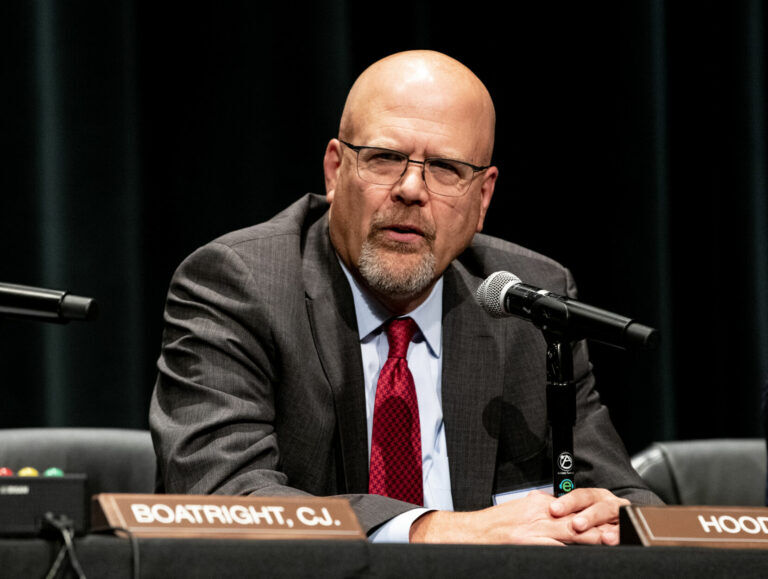
Colorado Supreme Court names William Hood as next chief justice
Michael Karlik
michael.karlik@coloradopolitics.com
Updated 4 days ago
The Colorado Supreme Court has selected Justice William W. Hood III to be the next chief justice, the judicial branch announced on Friday. Hood will succeed Chief Justice Monica M. Márquez, who took over the role in July 2024. “I...

Family of slain Lakewood teacher releases statement as murder suspect makes first court appearance
Matt Kyle
matt.kyle@denvergazette.com
Updated 1 day ago
Patrick Theodore Barnett, the Lakewood man accused of killing his wife, a Jeffco Public Schools art teacher, made his first court appearance Friday morning as his wife’s family looked on. The status conference hearing was held before District Court Judge...
Appeals court upholds Park County trophy hunting conviction
Michael Karlik
michael.karlik@coloradopolitics.com
Updated 4 days ago
Colorado’s second-highest court clarified on Thursday that a defendant may stand convicted under the state’s trophy hunting laws if he abandons a bear carcass but returns later to remove the meat. Under Colorado law, it is a felony to detach...

Judge grants partial injunction to GEO in fight against state health inspection law
Kyla Pearce
kyla.pearce@gazette.com
Updated 5 days ago
A judge ruled Thursday that The GEO Group does not have to follow parts of a new state law requiring more frequent health and safety inspections at the U.S. Immigration and Customs Enforcement processing center in Aurora. Under the order...
PREV
PREVIOUS

Neguse secures $50 billion for proposed Climate Conservation Corps
U.S. Rep. Joe Neguse of Lafayette is taking credit for landing more than $50 billion in stimulus money for the proposed 21st Century Climate Conservation Corps. The first $10 billion would go to hire thousands of young people and veterans starting out at $15 an hour, followed by $40 billion for local resilience and wildfire […]