

Judge refuses Arapahoe sheriff, EMS request to pause ketamine injection lawsuit
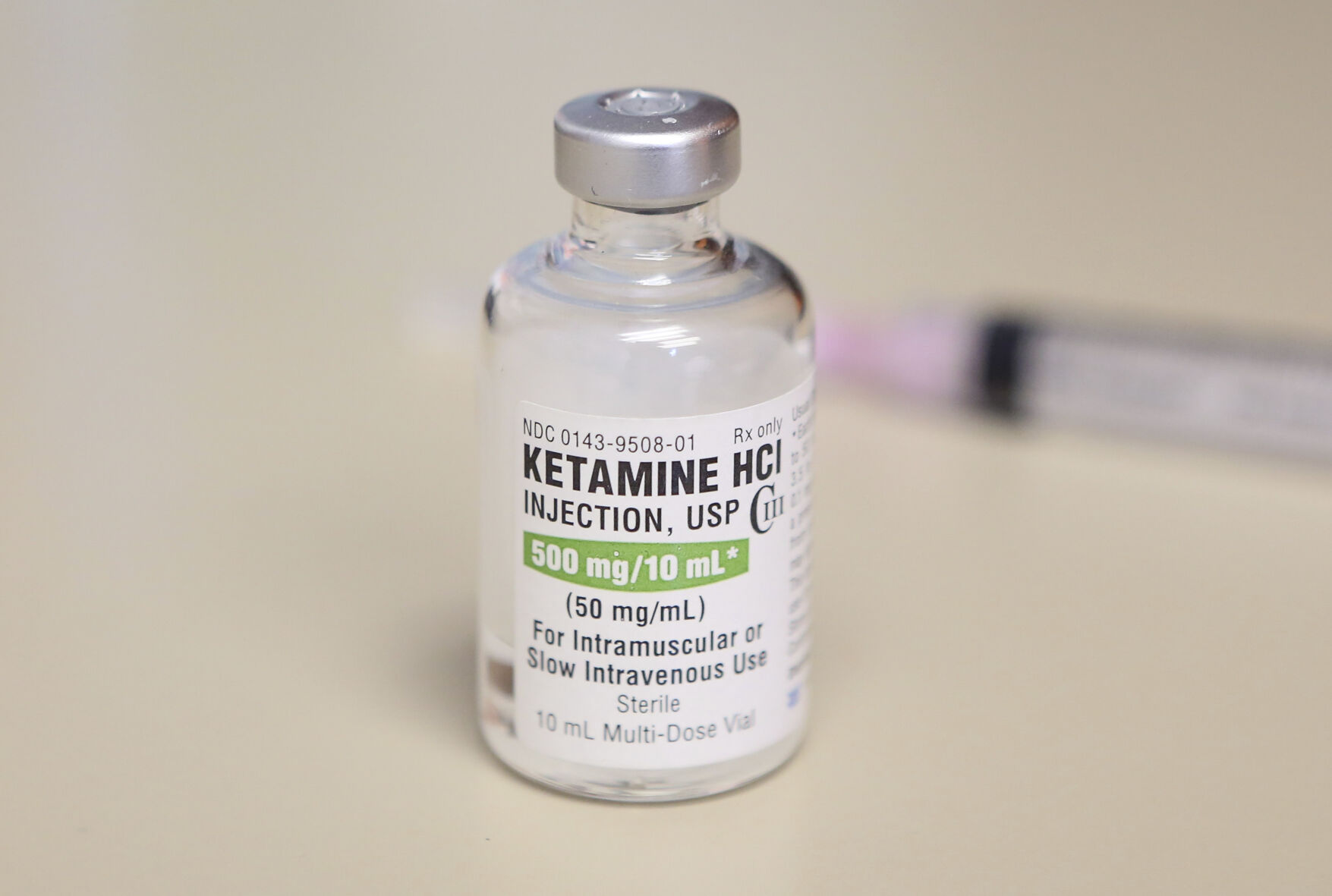
A federal court has rejected a request by the Arapahoe County sheriff and other first responders to pause the lawsuit against them from a man who involuntarily received a heavy ketamine injection and subsequently needed machine breathing assistance in the hospital for three days.
Sheriff Tyler Brown, South Metro Fire Rescue and five employees who were directly involved in the August 2019 arrest of Elijah McKnight asked to halt the discovery of evidence while a judge considered their motion to dismiss McKnight’s excessive force lawsuit. But on Tuesday, U.S. Magistrate Judge S. Kato Crews refused to do so.
“The Court takes judicial notice of the local and national attention this issue has garnered,” he wrote in an Aug. 10 order. “To be sure, this is not the only case in this district (involving the use of Ketamine) to arise during the week of August 18, 2019.”
Crews was referring to Elijah McClain, the 23-year-old man who died one week after Aurora police and emergency medical personnel restrained and injected him with ketamine, despite the lack of reasonable suspicion that he had committed any crime.
McClain’s deadly interaction with Aurora first responders happened just four days after McKnight’s ketamine injection. McClain received a 500 milligram dose of the sedative, suffered cardiac arrest and never regained consciousness. South Metro responders injected McKnight with two doses totaling 750 milligrams.
The defendants from the sheriff’s office and South Metro have asserted qualified immunity, which is a judicial doctrine shielding government employees from liability unless they violate a clearly-established legal right. They argued to the court that they could not conceive of “any discernible public interest that would be negatively impacted” by pausing the discovery of evidence until a judge could make the decision on qualified immunity.
“This case is entering its eighth month, and the incident at issue took place two years ago,” Crews countered in his order. “The Plaintiff in this case spent three days unconscious and required machine assistance to help him breathe. He is deserving of answers regarding why this happened and whether anyone is to be held responsible.”
Crews also agreed with a previous magistrate judge who rejected a similar request in the McClain family’s lawsuit against Aurora, finding it was not in the public interest to “put on the back burner” a lawsuit that raised significant questions about the practices of emergency responders.
In his amended claim, McKnight detailed how two sheriff’s deputies encountered him passed out at a bus stop on the night of Aug. 20, 2019. The deputies reportedly revived him without difficulty, and McKnight volunteered that he had two warrants for his arrest. They then tackled and restrained McKnight, which McKnight believed to be unreasonable given the lack of a threat he posed.
After the deputies placed McKnight in handcuffs, South Metro personnel arrived. After reviewing body-worn camera footage, KUNC reported that one first responder said McKnight was “a little too hyped up right now,” and the South Metro workers discussed injecting him with ketamine.
“Don’t inject anything into my veins,” McKnight told them.
One of the workers gave McKnight 500 milligrams of the sedative, allegedly putting him in a “near cathartic like state.” After receiving authorization from a doctor, the South Metro worker injected McKnight with 250 additional milligrams. According to his lawsuit, McKnight was in the hospital for a week and a half, three days of which were spent in the intensive care unit hooked up to an assistive breathing machine.
“It’s wrong that my life was almost taken, and Elijah McClain’s life was taken in a similar incident,” McKnight told FOX31.
Earlier this year, the governor signed into law new restrictions on the use of ketamine at scenes where police are present. Aside from a prohibition on law enforcement unduly influencing whether to administer ketamine, the legislation requires emergency medical personnel in such situations to weigh or estimate the weight of the person, possess training in the use of ketamine, and have the equipment and ability to respond to adverse reactions.
The law also clarifies that “excited delirium” is not a medical emergency justifying the sedative’s use. First responders claimed both McClain and McKnight had the condition.
The American Society of Anesthesiologists has said it opposes ketamine “or any other sedative/hypnotic agent to chemically incapacitate someone for a law enforcement purpose and not for a legitimate medical reason.”
McKnight’s lawsuit requests that he be paid for lost wages, medical expenses, and be awarded other damages.
The case is McKnight v. Brown et al.

Federal judge directs plaintiff to revise complaint alleging Denver officers’ constitutional violations
Michael Karlik
michael.karlik@coloradopolitics.com
Updated 2 hours ago
A federal judge directed a defendant to revise his allegations on Wednesday to more precisely state what two Denver officers and the city itself allegedly did to violate his constitutional rights by facilitating his prosecution for murder until prosecutors dropped...
Federal judge explores new sanctions against ex-Colorado judicial discipline director
Michael Karlik
michael.karlik@coloradopolitics.com
Updated 3 hours ago
A federal judge on Wednesday directed Colorado’s former judicial discipline director, for the third time this year, to explain why she should not sanction him for his latest conduct in his litigation against the state’s judiciary. Christopher S.P. Gregory, who served...
Colorado joins lawsuit challenging changes to Endangered Species Act
Marissa Ventrelli
marissa.ventrelli@coloradopolitics.com
Updated 2 hours ago
Colorado once more joined a coalition of states challenging the Trump administration — this time on proposed rules regarding the Endangered Species Act. The pair of lawsuits challenge new rules made under Interior Secretary Doug Burgum, who earlier said the...

10th Circuit orders second look at immunity for Kiowa County deputy over fatal vehicle crash
Michael Karlik
michael.karlik@coloradopolitics.com
Updated 34 minutes ago
The Denver-based federal appeals court directed a trial judge on Tuesday to further analyze whether a Kiowa County deputy and the sheriff’s office may be sued for a fatal vehicle collision. The Colorado Governmental Immunity Act generally shields government entities and public...
Colorado justices to hear appeal in Kendrick Castillo death lawsuit, ‘fugitive’ rule
Michael Karlik
michael.karlik@coloradopolitics.com
Updated 36 minutes ago
The Colorado Supreme Court announced on Tuesday that it will decide whether it was proper to dismiss a lawsuit over the 2019 shooting death of Kendrick Castillo after the defendants paid the maximum amount of damages available to Castillo’s parents,...

Federal judge dismisses Douglas County’s challenge to collective bargaining law
Nicholas Fogleman
nicholas.fogleman@denvergazette.com
Updated 10 hours ago
A federal judge dismissed claims brought by the Douglas County Board of Commissioners alleging that a state law granting county employees the right to organize and join labor unions violates free speech protections and conflicts with federal labor law. Douglas...

Arapahoe County judge’s frustration with defense lawyer not grounds for new trial
Michael Karlik
michael.karlik@coloradopolitics.com
Updated 1 day ago
Colorado’s second-highest court decided last week that an Arapahoe County judge’s repeated rebukes of a defense attorney and orders to “be quiet” did not rise to the level of bias or a violation of the defendant’s due process rights. A...

Divided appeals court upholds vehicle theft conviction despite unclear origin of car’s value
Michael Karlik
michael.karlik@coloradopolitics.com
Updated 23 hours ago
Colorado’s second-highest court upheld a defendant’s conviction for aggravated motor vehicle theft last week, even though it was unclear how the Thornton Police Department estimated the value of the stolen car. Officer Marc Faivre encountered Ashley Shelee Gibbens-Martinez in a...
Disgraced ex-CBI analyst Missy Woods sentenced to prison in DNA scandal
Jenny Deam
jenny.deam@gazette.com
Updated 1 day ago
A Jefferson County district court judge on Tuesday sentenced a disgraced former Colorado Bureau of Investigation DNA analyst to a decade in prison for altering and deleting data in scores of criminal cases over several years. Jefferson County District Judge...

Parenting from prison: Inmates hope to be present in their children’s lives, while physically absent
Marianne Goodland
marianne.goodland@coloradopolitics.com
Updated 1 day ago
The room was decorated with balloons, the tables sparking bright with colors as the smell of pizza and cake wafted through the air. As did music. This was, after all, a father-daughter dance. Except this was not a typical father-daughter...
PREV
PREVIOUS
Major health care organizations in Colorado urge action on COVID-19
With more vaccine mandates on the way, a coalition of 19 Colorado health care organizations said Thursday that all health care employees should be vaccinated; that those two years and older should wear masks indoors, especially children returning to school; and to support the health care organizations that mandate vaccinations for their employees. Children’s Hospital […]
Citing security breach, Griswold orders Mesa County to replace voting equipment
Colorado Secretary of State Jena Griswold said Thursday that she has issued an order prohibiting Mesa County from using election equipment she said was compromised when the county’s clerk and recorder “knowingly” allowed a security breach that led to the voting system’s passwords showing up on right-wing websites. “The integrity of these components cannot be […]