

OUT WEST ROUNDUP | Great Salt Lake water hits new low; groups want gray wolves resisted
UTAH
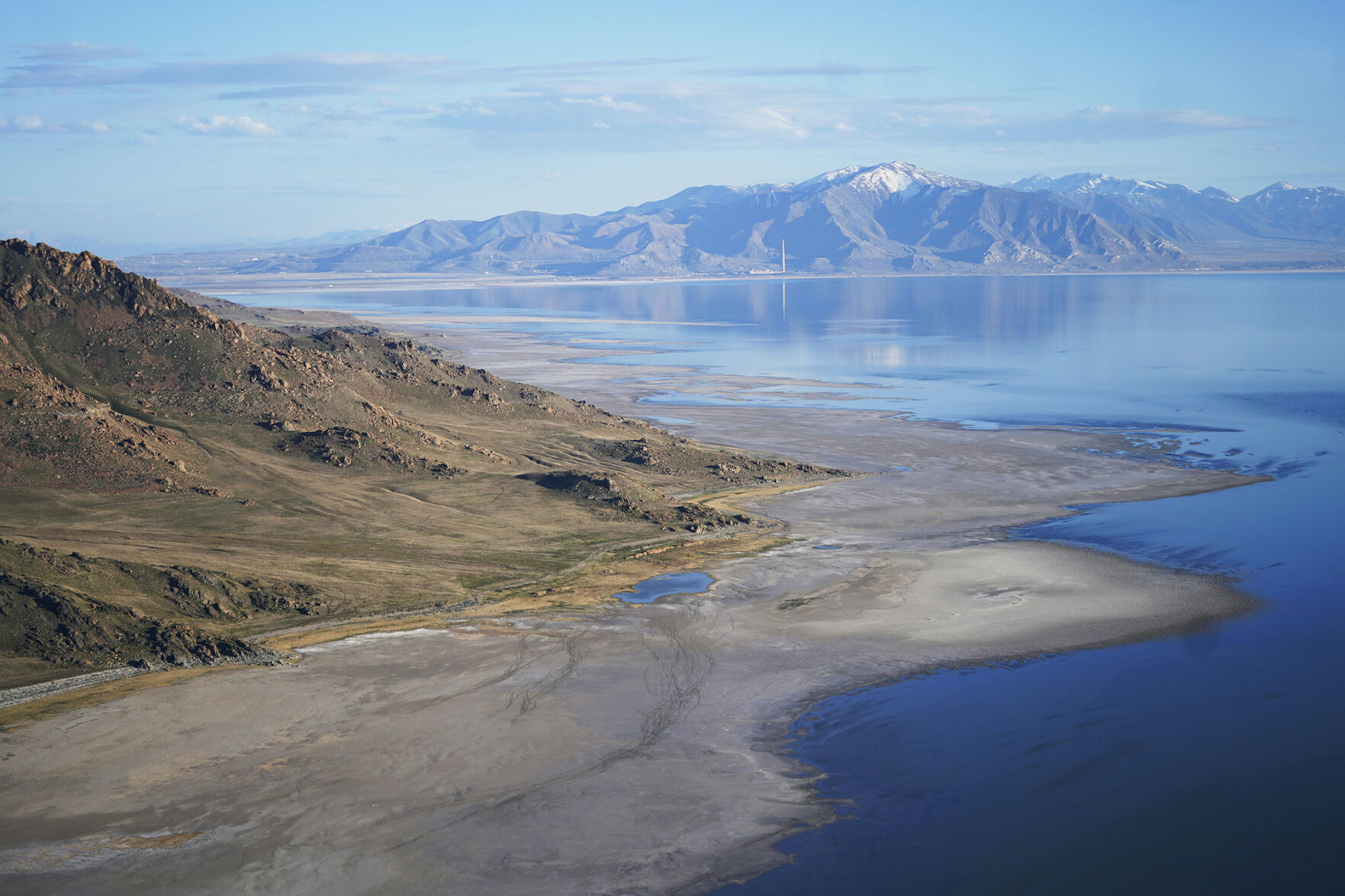
Water levels at Great Salt Lake drop to historic low
SALT LAKE CITY – The water levels at the Great Salt Lake have hit a historic low, a grim milestone for the largest natural lake west of the Mississippi River that comes as a megadrought grips the region.
On July 31, the U.S. Geological Survey announced average daily water levels had dropped about an inch below the previous record of 4,191.4 feet, which was set in 1963.
The new record comes months earlier than when the lake typically hits its lowest level of the year, indicating water levels could continue to drop even further, said Candice Hasenyager, the deputy director of Utah’s Division of Water Resources.
Receding waters are already affecting a nesting spot for pelicans, which are among the millions of birds dependent on the lake. Sailboats have been hoisted out of the water to keep them from getting stuck in the mud. More dry lakebed getting exposed could send arsenic-laced dust into the air that millions breathe.
People for years have been diverting water from rivers that flow into the lake to water crops and supply homes. Because the lake is shallow – about 35 feet at its deepest point – less water quickly translates to receding shorelines.
Most years, the Great Salt Lake gains up to 2 feet from spring runoff. This year, it was just 6 inches.
Utah Gov. Spencer Cox, a Republican, has begged people to cut back on lawn watering and “pray for rain.”
Scientists have long warned that the weather will get wilder as the world warms, and climate change has made the West much warmer and drier in the past 30 years.
IDAHO
Coalition seeks relisting of gray wolves in West
BOISE – Wildlife advocates on July 29 petitioned federal officials to restore federal protections for gray wolves throughout the U.S. West after Idaho and Montana passed laws intended to drastically cut their numbers.
Western Watersheds Project, WildEarth Guardians and others sent the petition to the U.S. Fish and Wildlife Service. The agency is supposed to respond within 90 days on whether there is enough information for a potential listing under the Endangered Species Act.
The groups cite unregulated hunting, poaching and genetic problems involving small wolf populations.
In May, Idaho Republican Gov. Brad Little signed a measure lawmakers said could lead to killing 90% of the state’s 1,500 wolves through expanded trapping and hunting. It took effect July 1.
Lawmakers pushing the measure, backed by trappers and the powerful ranching sector but heavily criticized by environmental advocates, often said the state can cut the number of wolves to 150 before federal authorities would take over management. They said reducing the population would reduce attacks on livestock and boost deer and elk herds.
About 500 wolves have been killed in the state in each of the last two years by hunters, trappers and state and federal authorities carrying out wolf control measures.
The U.S. Fish and Wildlife Service didn’t immediately respond to a request for comment.
NEW MEXICO
Air Force takes next step in fuel cleanup at base
ALBUQUERQUE – The U.S. Air Force has spent years trying to keep a jet fuel leak from reaching Albuquerque’s drinking water supply and now says it has enough information to outline its work, paving the way to wrapping up the cleanup efforts.
Officials from Kirtland Air Force Base say they will spend the next several months to a year writing a report that they will submit to the New Mexico Environment Department. Once the state reviews and approves it, the base can make recommendations for a final cleanup.
The Air Force has spent $125 million cleaning up soil and water around the base that borders Albuquerque. The fuel leak – believed to have been seeping into the ground for decades – was detected in 1999 and attributed to a supply line break.
The Air Force’s assertion that there’s no risk to communities nearby hasn’t eased everyone’s concerns. A group of lawmakers, residents and nonprofit organizations asked a federal judge last year to enforce deadlines for the cleanup.
The judge dismissed the complaint in March, saying the court didn’t have jurisdiction over the matter. And even if it did, he would defer to state regulators overseeing the Air Force’s actions.
The state has up to nine months to review the report submitted by the Air Force. Once it’s approved, the military will start crafting recommendations on final cleanup plans, which again are subject to public comment and approval from the state.
State makes gas stations liable for DUI
SANTA FE – Gas stations have a legal obligation not to sell fuel to drivers who are believed to be intoxicated, the New Mexico Supreme Court said July 19 in a decision that could have far-reaching effects on businesses and that only one other state applies so strictly.
The divided court outlined a precedent-setting ruling that raises the implication that not only gasoline merchants but other types of businesses – from auto parts stores and tire shops to mechanics – could be on the hook for ensuring they don’t sell products to people who then drive drunk.
The decision notes that only one other state – Tennessee – applies the law in such a way to create a “duty of care” for businesses to refrain from supplying fuel to drunken drivers because of the risk of driving while intoxicated.
The ruling came in response to a request from a federal appeals court to resolve a question of state law concerning the potential liability of a retailer that sold gasoline to an intoxicated driver in 2011. After refueling and returning to the highway, that driver crossed the center line and crashed into an oncoming vehicle, killing a person.
Under the legal doctrine of negligent entrustment, the owners of potentially dangerous goods have a responsibility to supply those goods only to someone competent to safely use them.
While New Mexico has no law that would prohibit the sale of gasoline to intoxicated drivers, the court’s majority wrote that a duty not to sell gasoline to someone who is drunk is consistent with liability for giving that person alcohol or a vehicle.
State law holds businesses and others liable for selling or serving alcohol to intoxicated people.
MONTANA
Western Democrats push for mining industry changes
BILLINGS – House Democrats from some Western states are preparing to push for changes to a longstanding law that governs mining for copper, gold and other hardrock minerals on U.S.-owned lands, including making companies pay royalties on what they extract.
A report published July 26 by the Government Accountability Office shows that the U.S. stands out among some other countries such as Australia, Canada and Chile that collect royalties on minerals.
The U.S. does not collect royalties on those minerals in most cases. House Natural Resources Committee Chairman Raul Grijalva said the mining industry should pay at least as much as oil and gas companies, which typically pay royalties of 12.5% on the value of resources extracted from federal lands.
The Arizona Democrat said he also wants to change how companies acquire land for mining, so that more thorough environmental reviews can be done and some areas shielded from development.
Efforts to significantly change the government’s mining law – which dates to 1872 – have failed.
There are about 750 hardrock mines on federal lands. That figure doesn’t include more than 70 coal mines whose owners must pay federal royalties.
Under the current law, companies and individuals can gain exclusive rights over public minerals by “staking” a claim, which consists of driving a wooden or metal stake into the ground over a mineral deposit.

Wyoming governor sues state board, asks court to enforce property tax cap | OUT WEST ROUNDUP
The Associated Press
the-associated-press@coloradopolitics.com
Updated 4 days ago
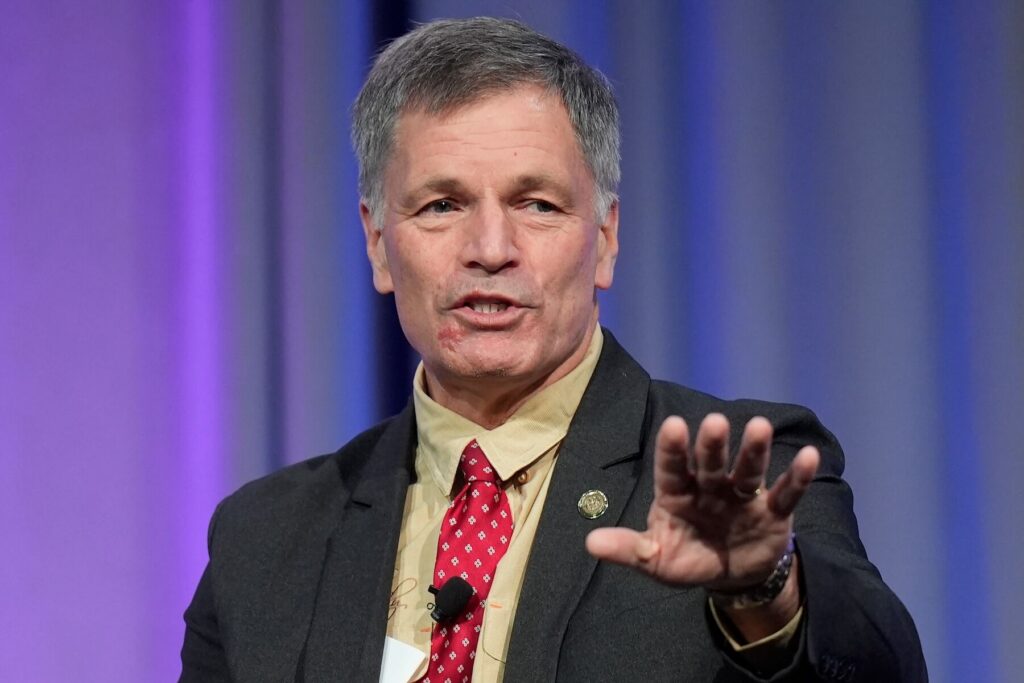
WYOMING Governor sues over property tax cap Gov. Mark Gordon filed a lawsuit on June 16 to force the State Board of Equalization to certify residential property tax values after the panel concluded it could not do so due to...
Democratic Colorado rural congressman threatens to caucus with GOP to preserve PILT | A LOOK BACK
Rachael Wright, Special to Colorado Politics
rachael.wright@coloradopolitics.com
Updated 3 days ago
Forty-Five Years Ago This Week: “It’s sometimes like talking to a brick wall,” said Colorado Congressional District 3 U.S. Rep. Ray Kogovsek. Kogovsek was frustrated at the lack of support from congressional representatives from the East Coast and the Midwest...

25 lessons and wishes to celebrate America’s 250th | SONDERMANN
By Eric Sondermann
by-eric-sondermann@coloradopolitics.com
Updated 4 days ago
The 250th celebration of America’s birth is upon us. There is undoubtedly much to salute. Despite plenty of strife and discontent at home, America remains a beacon to much of the world. The wisdom of our founders has largely withstood...

Colorado Politics Calendar July 6-12
Rachael Wright, Special to Colorado Politics
rachael.wright@coloradopolitics.com
Updated 4 days ago
CoPo’s weekly political calendar helps you find political and public policy events throughout Colorado. It includes candidate and issue campaign events, public policy meetings, court hearings, state and local party conventions, assemblies, debates, rallies, parades, speaking engagements, traveling dignitary appearances,...

Victor Marx holds a steady lead over Barbara Kirkmeyer in Colorado Republican governor contest
Thelma Grimes
thelma.grimes@coloradopolitics.com
Updated 2 days ago
Victor Marx overtook state Sen. Barbara Kirkmeyer in the Republican primary for governor on Wednesday evening, seizing a narrow lead after trailing her since polls closed. Kirkmeyer, one of three candidates, opened the night with a clear advantage, at one...

Democrats confront shift as socialist-aligned candidates win races in Colorado
Thelma Grimes
thelma.grimes@coloradopolitics.com
Updated 24 hours ago
Democratic socialists’ recent electoral gains — punctuated by Melat Kiros’ victory on Tuesday over U.S. Rep. Diana DeGette, the dean of Colorado’s congressional delegation — are the result of a movement that has been taking shape in metro Denver for...
Trump’s judicial nominee orders bond in wave of cases after 10th Circuit rejects government’s position
Michael Karlik
michael.karlik@coloradopolitics.com
Updated 3 days ago
Within 24 hours of the Denver-based federal appeals court rejecting the government’s expansive view of its immigration detention authority, the lone judge in Colorado to embrace that view ordered bond hearings for detainees in at least 20 cases. U.S. District...

Cherry Creek spent $65K on investigation, but invoices remain secret, records show
Nico Brambila
nico.brambila@denvergazette.com
Updated 3 days ago
After previously refusing to disclose the cost associated with the investigation into the former superintendent and his wife, the former human resources chief, Cherry Creek School District officials partially released records showing the cost to taxpayers: $65,054.85. The Denver Gazette...

Colorado governor fires clemency board members who opposed Tina Peters commutation
Marissa Ventrelli
marissa.ventrelli@coloradopolitics.com
Updated 3 days ago
Gov. Jared Polis has fired two members of his clemency board who opposed his commutation of Tina Peters’ sentence, according to Colorado Politics news partner 9News. In firing Azra Taslimi and Hannah Seigel Proff, Gov. Jared Polis said they had...

Democrats supercharge court fight after campaign finance ruling
James A. Downs
james.a..downs@washingtonexaminer.com
Updated 3 days ago
Democrats are hoping to dampen the GOP’s midterm cash advantage after Republicans scored a major win allowing unlimited coordination between political parties and candidates. Republican campaign arms say they can access discounted TV ad rates after the Supreme Court lifted...
PREV
PREVIOUS
SONDERMANN | The many obstacles to a GOP rebound in Colorado
At the end of Marjorie Taylor Greene week in Colorado, and in my old hometown of Colorado Springs, it is time to take stock of what has befallen the Colorado Republican Party and the depths to which it has sunk. We can start by rewinding the clock less than two decades. As 2004 dawned, Colorado’s […]

Wildfire smoke exacerbates health conditions, contributes to more deaths, and it's getting worse
For successive days this week, Denver ranked among the worst cities in the world for air quality, and statewide alerts warning of the dangerous haze have become a constant part of summer life here. There are a combination of factors driving the air quality’s recent deterioration, not least of which is man-made pollutants. But experts […]