

SONDERMANN | The many obstacles to a GOP rebound in Colorado
At the end of Marjorie Taylor Greene week in Colorado, and in my old hometown of Colorado Springs, it is time to take stock of what has befallen the Colorado Republican Party and the depths to which it has sunk.
We can start by rewinding the clock less than two decades. As 2004 dawned, Colorado’s political landscape featured a Republican governor, two Republican U.S. senators, five Republican members of Congress, Republican control of both houses of the General Assembly, and Republicans in all but one of the other executive offices of state government.
Fast forward just 17 years. Republicans are now shut out of the governor’s office (as has been the case since 2007); hold precisely zero other executive state offices; hold neither U.S. Senate seat; and constitute but three of seven members of the state’s Congressional delegation.
In the legislature, they control neither house. Moreover – and think about this one – there are more Democrats in the state House (41) than Republicans in the House and Senate combined (39).
That is a reversal of stunning proportions. For Colorado Republicans, it has been a complete collapse.
As with any such development, the reasons behind it are complex and multiple. Anyone who pretends there is a single cause is a simpleton.
True, there has been substantial migration to Colorado and those newcomers have gravitated to the Democratic side. Also true that rural parts of the state have been stagnant or declining while the urban corridor is growing.
On top of that, Democrats long ago eclipsed Republicans in a lot of the mechanics and tactics of politics.
But those elements of the analysis are largely clinical and incomplete. On top of those factors, so many of the wounds Republicans have suffered have been self-inflicted.
While it is still premature, though not all that much, if someone were to do an autopsy of the Colorado GOP, suicide would have to be listed as a principal cause of death.
Again and again, Republicans have evidenced a preference, sometimes even a compulsion, for intramural warfare instead of smart political strategy and the selection of credible, electable candidates.
Played well, politics is a game of addition. Republicans have often chosen subtraction. As the state has moderated, the wise move would have been some shift, even slightly, toward the political center.
Instead, time and again, Republicans have dug in their heels, appeased their intensely animated base and become ever more extreme.
The signs of this abound. The silly invitation to Marjorie Taylor Greene to El Paso County’s Lincoln Day Dinner was just the latest crackpot move. Was David Duke not available? Are Madison Cawthorn and Matt Gaetz wearing ankle bracelets? Does Donald Trump Jr. have laryngitis?
It is quite the sight to watch so many top Republicans, including State Chair Kristi Burton Brown, find sock drawers that urgently need sorting as an excuse to avoid the event.
Republicans in the State House decided to spend the final day of the recent session debating an attempted coup against their allegedly too moderate and insufficiently partisan minority leader. Ah, that obsession again with internecine battles.
Now the State Republican Central Committee is preparing to consider, perhaps even seriously and with straight faces, a hot-headed proposal to do away with next year’s Republican primary in favor of letting an assembly of a couple thousand delegates pick the party’s nominees.
If ever there was a recipe for turning off even more previously loyal voters, producing even more extreme candidates and yielding an even worse electoral disaster, here it is.
This is a party desperately crying out for adult supervision. And for someone willing to speak hard truths and shut people down when they step into the crazy zone.
From a Republican perspective, the most troubling news out of the 2020 election has to be not just the overall wipeout, but the scarily narrowing margins in their strongholds like El Paso, Douglas and Weld counties. If their heavy dominance withers in places like that, their ability to win statewide races will grow ever more remote.
Think who now represents the GOP brand in Colorado. With Cory Gardner’s departure for the Washington lobbying ranks (excuse me, “government relations”), that mantle falls to none other than Rep. Lauren Boebert.
Depending on redistricting, Boebert has decent odds of holding onto her Congressional seat. But as someone to rehabilitate the party’s standing in all-important counties like Jefferson, Arapahoe and Larimer (even wide swaths of Douglas and El Paso), she does not stand a chance.
Far beyond Boebert, the defining face of the Republican Party is, of course, that of former President Donald Trump. As Trump took over the GOP, Republican fortunes in Colorado went from bad to worse.
Elections that previously had been close became blowout losses. Even that occasional victory, such as Gardner’s two-point win in 2014, turned into a punishing nine-point defeat the next time he was on the ballot.
The sad reality for Republicans here is that they can’t live with Donald Trump and can’t live without him. The mass of Colorado voters never warmed to Trump and his brand has only turned more toxic. On the flip side, he has a stranglehold on the affections of the Party’s activist, cultish base. In the short term, it is hard to see how someone wins a major nomination without being at least nominally, self-defeatingly on that team.
It may just be the fate of Colorado Republicans to have to incur more losses and wait for the Trump show to fade away before a real rebound can be seriously contemplated.
Speaking without partisan interest, it would be good if it were otherwise. Any state is better off with two viable, competitive parties. One-party domination breeds arrogance and its own excesses. Colorado would benefit if its Republicans were able to reject their own worst instincts and get back in the game.
By any objective measure, 2022 should be the GOP’s long-awaited year of opportunity. Both the governor’s chair and a Senate seat are up for election. Redistricting will scramble the congressional and legislative equations. The off-year traditionally holds peril for the party in the White House.
Despite that alignment, it is hard to see what’s left of the Colorado Republican Party being ready or able to capitalize. But if not in 2022, then when?
Eric Sondermann is a Colorado-based independent political commentator. He writes regularly for ColoradoPolitics and the Denver Gazette. Reach him at EWS@EricSondermann.com; follow him at @EricSondermann on Twitter.

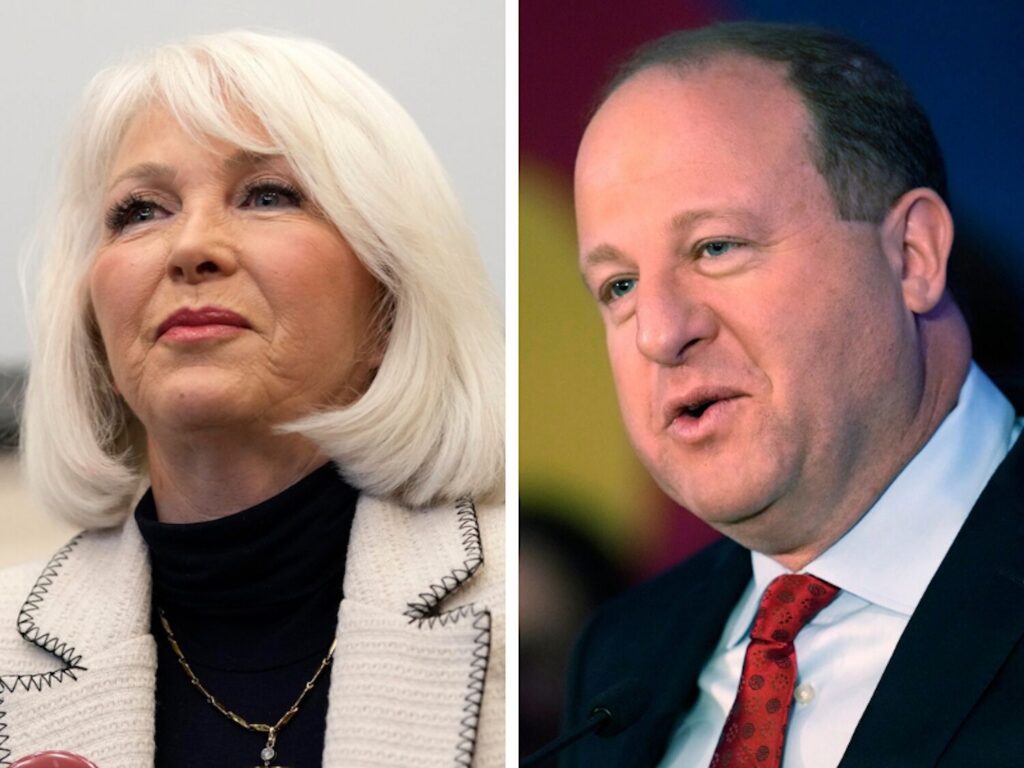
Colorado governor fires clemency board members who opposed Tina Peters commutation
Marissa Ventrelli
marissa.ventrelli@coloradopolitics.com
Updated 3 days ago
Gov. Jared Polis has fired two members of his clemency board who opposed his commutation of Tina Peters’ sentence, according to Colorado Politics news partner 9News. In firing Azra Taslimi and Hannah Seigel Proff, Gov. Jared Polis said they had...
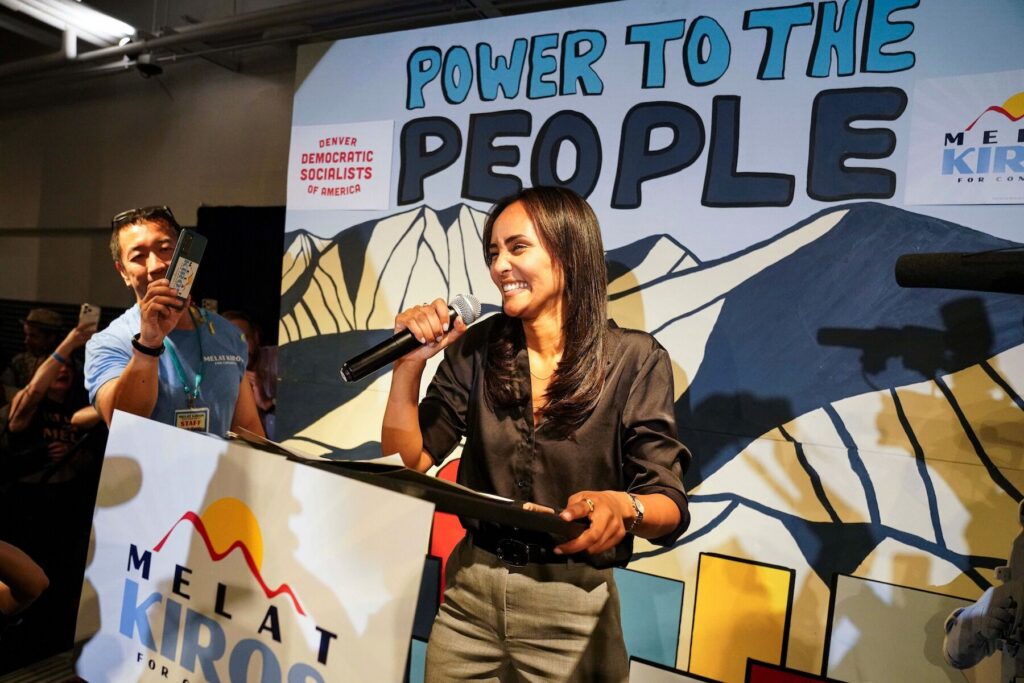
How Melat Kiros pulled Democratic Party left in upset win over Diana DeGette
Ernest Luning
ernest.luning@coloradopolitics.com
Updated 3 days ago
“It’s time for change,” Democratic congressional candidate Melat Kiros, a political newcomer and self-described democratic socialist, said in her campaign’s TV ad. On Tuesday night, primary voters in Denver agreed, giving the nomination to the 29-year-old, while at the same...

Victor Marx’s lead sits outside of recount threshold in Republican race for Colorado governor
Luige DelPuerto
luige.delpuerto@gazette.com
Updated 4 days ago
Ministry leader Victor Marx on Wednesday night overtook state Sen. Barb Kirkmeyer in the Republican primary for Colorado governor, securing enough votes that — for now — put the race beyond the mandatory recount threshold. The Republican primary race between Kirkmeyer...

Large Colorado counties hunker down to count ballots as Republican race for governor tightens
Marissa Ventrelli
marissa.ventrelli@coloradopolitics.com
Updated 4 days ago
Nearly 24 hours after ballot boxes closed for Colorado’s 2026 primary election, the Republican nominee for governor remained undecided as counties hunker down to tally more ballots. As of 3 p.m. Wednesday, several counties were still processing tens of thousands...
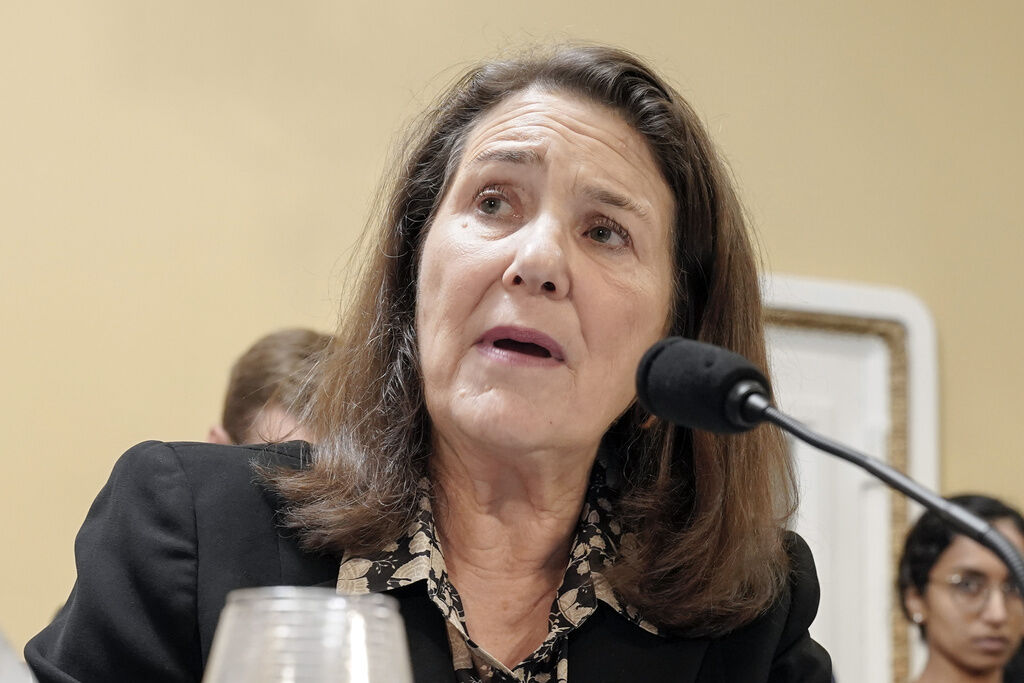
Colorado’s Diana DeGette concedes defeat to Democratic socialist Melat Kiros
Ernest Luning
ernest.luning@coloradopolitics.com
Updated 4 days ago
U.S. Rep. Diana DeGette — the dean of Colorado’s congressional delegation — conceded defeat in the race for the 1st Congressional District a day after losing to Democrat rival Melat Kiros in their party’s primary contest. “I want to congratulate...
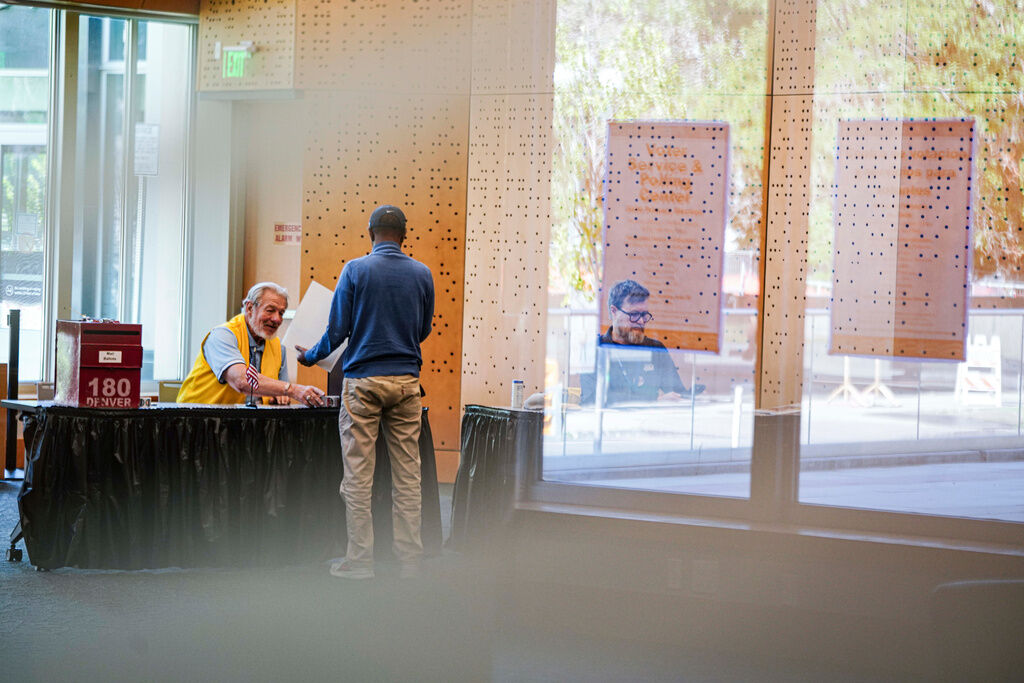
Progressive Democrats, traditional Republicans secure state House victories in Colorado
Marianne Goodland
marianne.goodland@coloradopolitics.com
Updated 4 days ago
With ballots still being counted, results from Tuesday’s primary election remained up in the air for several candidates for the Colorado General Assembly. Still, the preliminary results as of Wednesday morning showed progressive Democrats had a good night, as did...

5 takeaways from Colorado’s shocker of a 2026 primary election
Ernest Luning
ernest.luning@coloradopolitics.com
Updated 4 days ago
Voters in Colorado’s Democratic primary on Tuesday night mostly let their elected officials know that they’re fed up with the party’s Washington politicians and ready to back the most aggressive fighters they can find. At the same time, the voters...
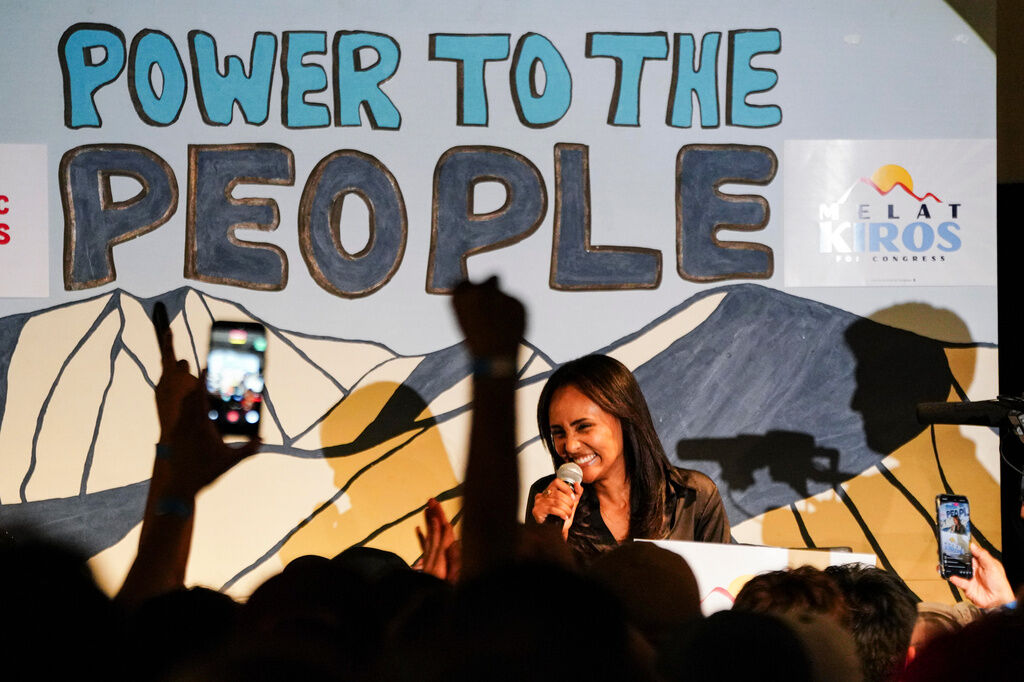
Melat Kiros shocks 15-term incumbent Diana DeGette, winning Colorado’s 1st CD Democratic primary
Ernest Luning
ernest.luning@coloradopolitics.com
Updated 4 days ago
In the equivalent of a political earthquake, 29-year-old Democratic socialist Melat Kiros defeated 15-term U.S. Rep. Diana DeGette in Colorado’s Denver-based 1st Congressional District primary, according to unofficial election results Tuesday night. The Associated Press called the race at 10:03...
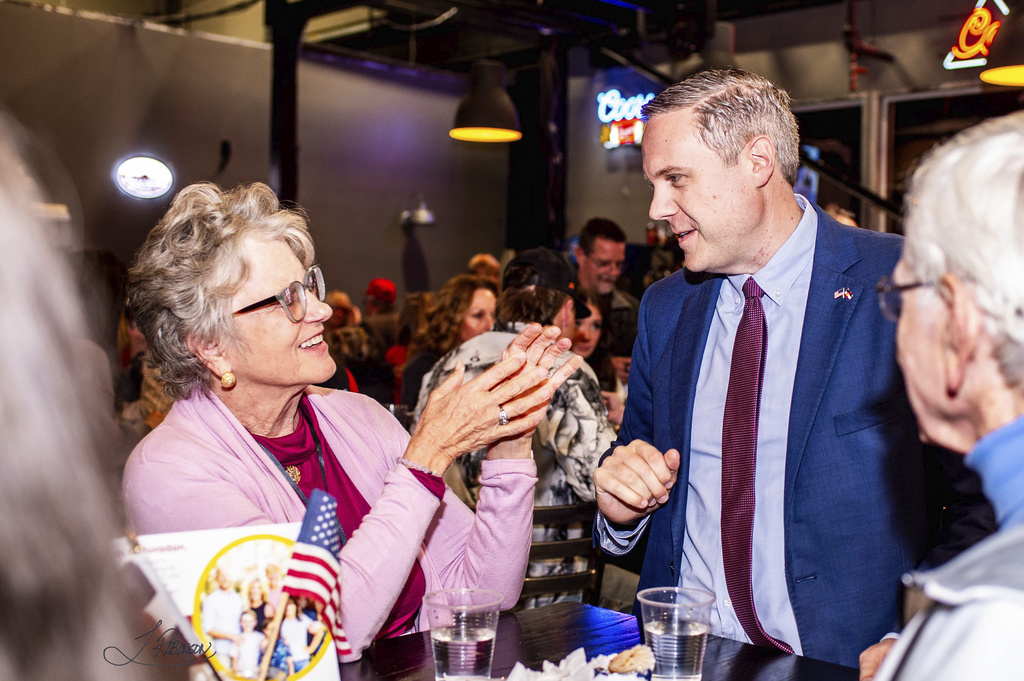
Dwayne Romero wins Democratic primary, will face Republican Jeff Hurd in Colorado’s 3rd CD
Ernest Luning
ernest.luning@coloradopolitics.com
Updated 5 days ago
Democrat Dwayne Romero has defeated challenger Alex Kelloff in the primary in Colorado’s 3rd Congressional District, where Republican U.S. Rep. Jeff Hurd fended off a challenge from a former state lawmaker, according to The Associated Press. In returns posted at...

Democrat Jessica Killin claims victory in Colorado’s 5th Congressional District primary
Ernest Luning
ernest.luning@coloradopolitics.com
Updated 5 days ago
Jessica Killin walked out to the song American Girl in a bright red dress to claim victory in the democratic primary race for Congressional District 5 at a hotel in downtown Colorado Springs on Election Day. She beat her fellow...
PREV
PREVIOUS
Denver's metro air quality worst in the world Saturday
Denver’s air ranked as the worst in the world Saturday afternoon as the air quality index hit 192, according to IQAir, a website that ranks air pollution in major cities. The Mile High City sat atop cities such as Johannesburg, Dubai and Delhi. But the poor air conditions didn’t keep people from walking around the […]

OUT WEST ROUNDUP | Great Salt Lake water hits new low; groups want gray wolves resisted
UTAH Water levels at Great Salt Lake drop to historic low SALT LAKE CITY – The water levels at the Great Salt Lake have hit a historic low, a grim milestone for the largest natural lake west of the Mississippi River that comes as a megadrought grips the region. On July 31, the U.S. Geological […]