

As part of $500,000 vaccination push, Denver to give free COVID-19 doses to DPS students, families

Denver is setting aside another $500,000 to improve the city’s vaccination rate among certain communities, Mayor Michael Hancock said Monday, with a portion of that money going to free doses for students and their families.
The city has one of the highest vaccination rates in the state: According to state data, more than 75% of Denver’s eligible population has received at least one dose as of Monday afternoon. But as has been the case statewide, that rate has dropped significantly since the spring. The city has averaged fewer than 900 doses delivered daily over the past week.
Still, city data indicates that Denver’s Hispanic population in particular has trailed white residents. At least 70% of Denver’s white residents in every age group have been vaccinated. For the Hispanic residents, only the 65-and-older group has a vaccination rate above 50%.
To address the disparity, Hancock announced at his “State of the City” address Monday that an additional $500,000 would be set aside “to continue bringing vaccines into neighborhoods and communities with low vaccination rates,” he said. The money comes from a federal immunization grant, a spokeswoman said.
It’s unclear how much of that money will go where. In a late Monday afternoon press release, the city wrote that a “portion of the funding” will be used to provide free vaccinations to eligible Denver Public School students and families. It’s a new phase of the city’s previous vaccine program, which gave students other inoculations for free.
“In addition to providing other vaccinations for diseases such as measles, pertussis and influenza, mobile outreach teams will now also be visiting schools across the district to offer COVID-19 vaccinations to all eligible children and their families,” the city wrote in its release.
A city spokeswoman said late Monday that “the exact spend on DPS versus other vaccination opportunities is still being determined. But all funding is going towards vaccines in under-vaccinated communities.”
Hancock told the Gazette that the city recognized it had “some work to do in terms of those who are unvaccinated.”
“We need to go back to those communities that have low vaccination rates and meet residents where they are,” he said. “So, those funds are going to be used to improve accessibility, improve outreach and do what we can to get the message across on how critically important it is to get vaccinated.” He didn’t provide any specifics beyond that about where the money would go or program names.
He, too, did not provide specifics on how the money will be used.
In the city’s release, officials noted the mounting concerns “over the highly contagious delta variant.” The state’s COVID-19 numbers have ticked steadily upward in recent days, as have Denver’s. Though both are still far below previous levels, they represent a reversal of weeks of decreases, even though the bulk of the city has been inoculated. A Denver Health official said last week that there’s “every reason to believe” that the delta variant is driving the growth in cases, here and statewide.
Asked if Denver was considering re-instituting any of its public health measures, Hancock said “not really” and noted the city’s high vaccination rate.
“But the reality is, we’ve got to keep our tool chest flush with the options available to us to keep people safe,” he told The Gazette. “And, two, we’ve got to continue doing everything we can to encourage folks to get vaccinated – that’s simply the facts.”
Gazette staff write Hannah Metzger contributed to this report.


10th Circuit upholds finding of no misconduct against Colorado federal judge
Michael Karlik
michael.karlik@coloradopolitics.com
Updated 2 hours ago
A judicial committee for the Denver-based federal appeals court upheld the chief judge’s finding last week that a federal judge in Colorado did not engage in misconduct by handling a civil case involving other attorneys and judges in the state....
Denver mayor says city police will detain ICE officers using ‘excessive force’
Deborah Grigsby
deborah.smith@denvergazette.com
Updated 11 minutes ago
Denver Mayor Mike Johnston on Thursday outlined his city’s response to immigration enforcement operations, including intervening to stop federal officers when local police observe them using “excessive” force. Johnston also said the city will not allow federal authorities to “stand...
SCOTUS whisperer? Justice Carlos Samour may get second opportunity to turn state dissent into national precedent
Michael Karlik
michael.karlik@coloradopolitics.com
Updated 6 hours ago
For the second time in two years, Justice Carlos A. Samour Jr. occupies an unusual position: Having his dissent in a Colorado Supreme Court case potentially forming the basis of U.S. Supreme Court precedent. Earlier this week, the nation’s highest...
Republicans roll out first ad pinning Democrats for not standing during State of the Union
Emily Hallas, Washington Examiner
emily.hallas.washington.examiner@gazetteedit.wpenginepowered.com
Updated 6 hours ago
A conservative group is launching a sweeping ad campaign on Thursday, seeking to capitalize on Democrats‘ refusal to stand during a portion of President Donald Trump’s State of the Union address centered on illegal immigration. American Sovereignty created a message...
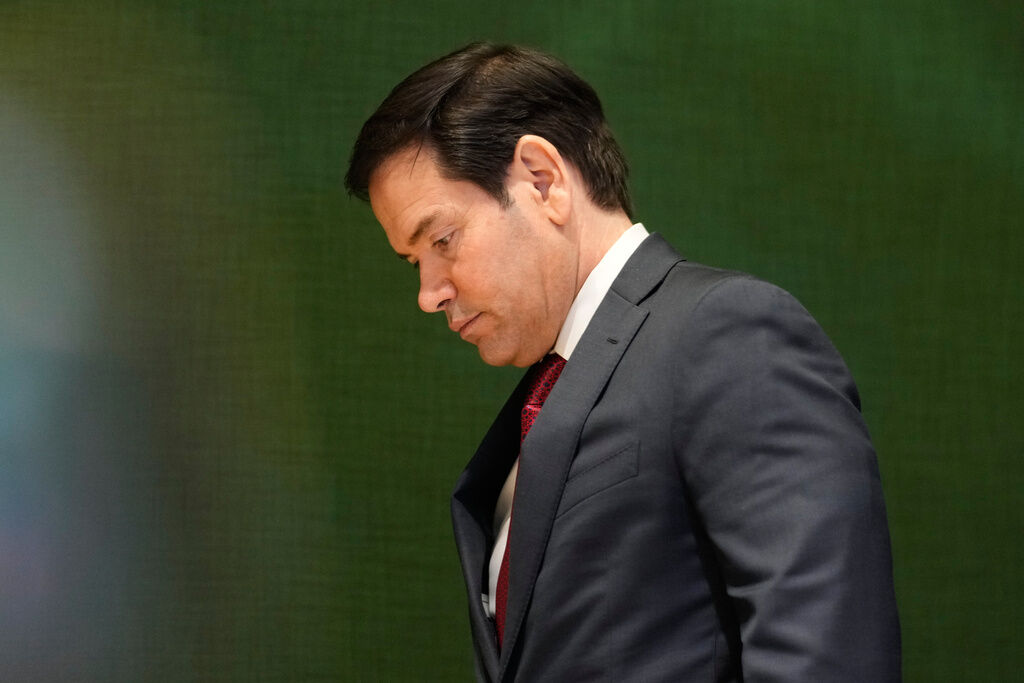
Rubio says any future nuclear proliferation deals have ‘to involve’ China and Russia
Washington Examiner Staff, Washington Examiner
washington.examiner.staff.washington.examiner@gazetteedit.wpenginepowered.com
Updated 7 hours ago
During a visit to the Caribbean on Wednesday, Secretary of State Marco Rubio was asked about recent talks in Geneva regarding weapons of mass destruction and the prospect of future nuclear weapons agreements. He responded that any such deal would...
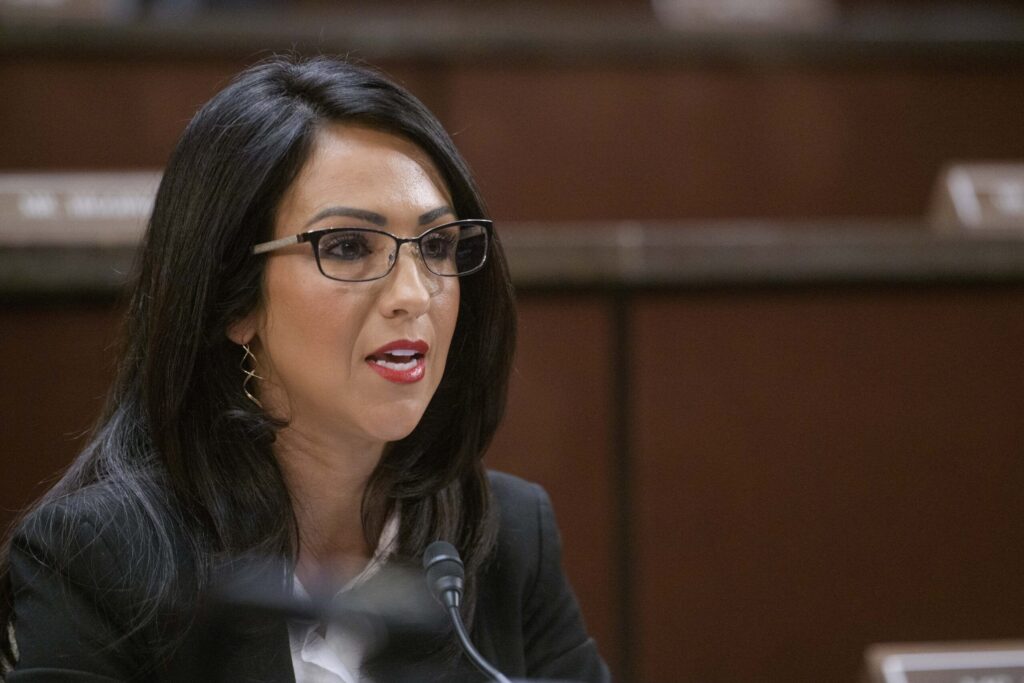
Hillary Clinton deposition paused after Lauren Boebert allegedly leaks photo from inside hearing
Molly Parks, Washington Examiner
molly.parks.washington.examiner@gazetteedit.wpenginepowered.com
Updated 6 hours ago
The House Oversight Committee has paused the deposition of former first lady and Secretary of State Hillary Clinton on Thursday after political commentator Benny Johnson shared a photo on social media of the closed-door hearing. Rep. Lauren Boebert (R-CO), who...

Colorado district attorneys oppose bipartisan bill limiting government access to bought data
Marissa Ventrelli
marissa.ventrelli@coloradopolitics.com
Updated 7 hours ago
A bipartisan coalition of Colorado lawmakers is advancing a bill that would prohibit police from purchasing personal consumer data without a warrant, setting up a clash with prosecutors who warn the measure could hamper criminal investigations. House Bill 1037, sponsored...

Lawmakers propose raising excise taxes on alcohol, marijuana to fund mental health spending
Marissa Ventrelli
marissa.ventrelli@coloradopolitics.com
Updated 7 hours ago
Colorado lawmakers hope to refer a measure to the November ballot that would increase excise taxes on alcohol and marijuana, with the revenue going toward mental health and civil commitment facilities around the state. House Bill 1301, sponsored by Rep....
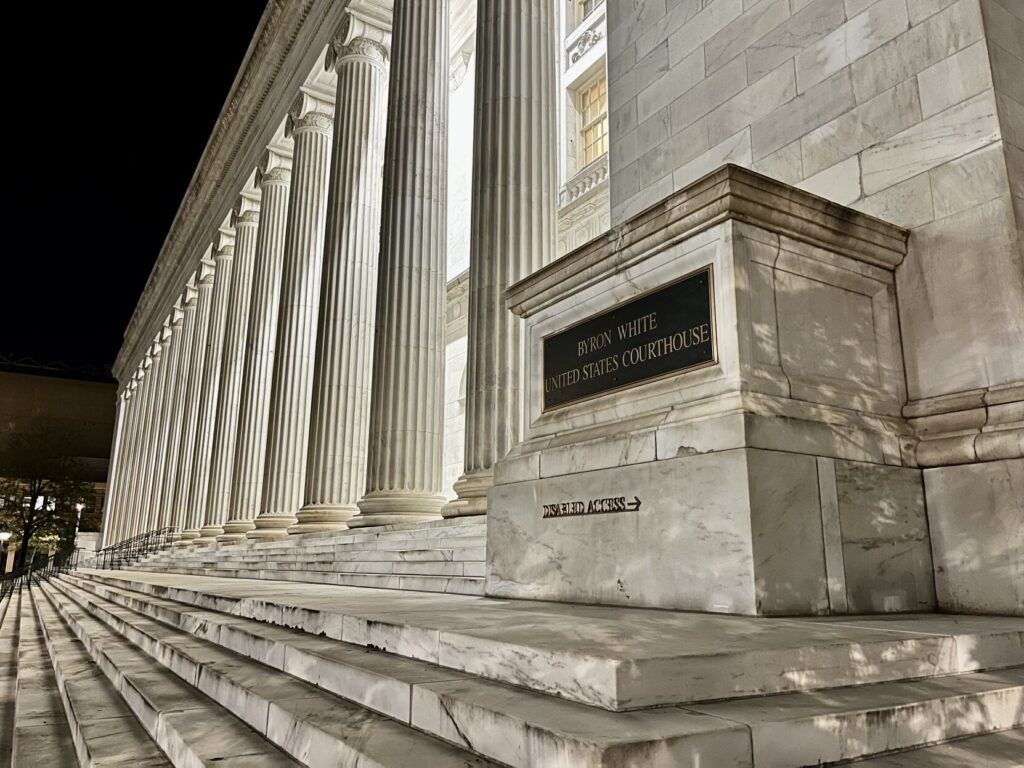
10th Circuit appoints ex-Colorado solicitor general to argue issue after federal government declines
Michael Karlik
michael.karlik@coloradopolitics.com
Updated 21 hours ago
The Denver-based federal appeals court took the unusual step earlier this month of appointing an attorney to independently argue a key issue in a criminal sentencing appeal after the government indicated it would not contest the defendant’s view of the...

Greeley voters halt landmark development project
Hap Fry, Special to The Gazette
hap-fry@gazette.com
Updated 21 hours ago
GREELEY – The landscape-altering Cascadia development project has been put on ice, according to unofficial results of a city referendum on the project Tuesday. The proposed development would have included an 8,600-seat multiuse arena and ice center that would be home to the Colorado Eagles,...
PREV
PREVIOUS

Map deadline in high court's redistricting order still TBD, vexing commissions
A Colorado Supreme Court order might have given the state’s redistricting commissioners a little more time to finish their maps, but it’s not entirely clear what the court’s decision on Monday means. Staff and attorneys for the commissions said they will need to talk more with their attorneys at official commission meetings, perhaps in non-public […]

Court rejects wrongful death suit while warning against out-of-state regulation of Colorado recreation
Warning of what might happen if it let other states regulate Colorado’s outdoor recreation economy, the federal appeals court based in Denver has rejected a wrongful death lawsuit from the family of a Texas man who died while rappelling in Lake County. A three-judge panel for the U.S. Court of Appeals for the 10th Circuit […]