

BIDLACK | Erasing the stigma for tormented vets
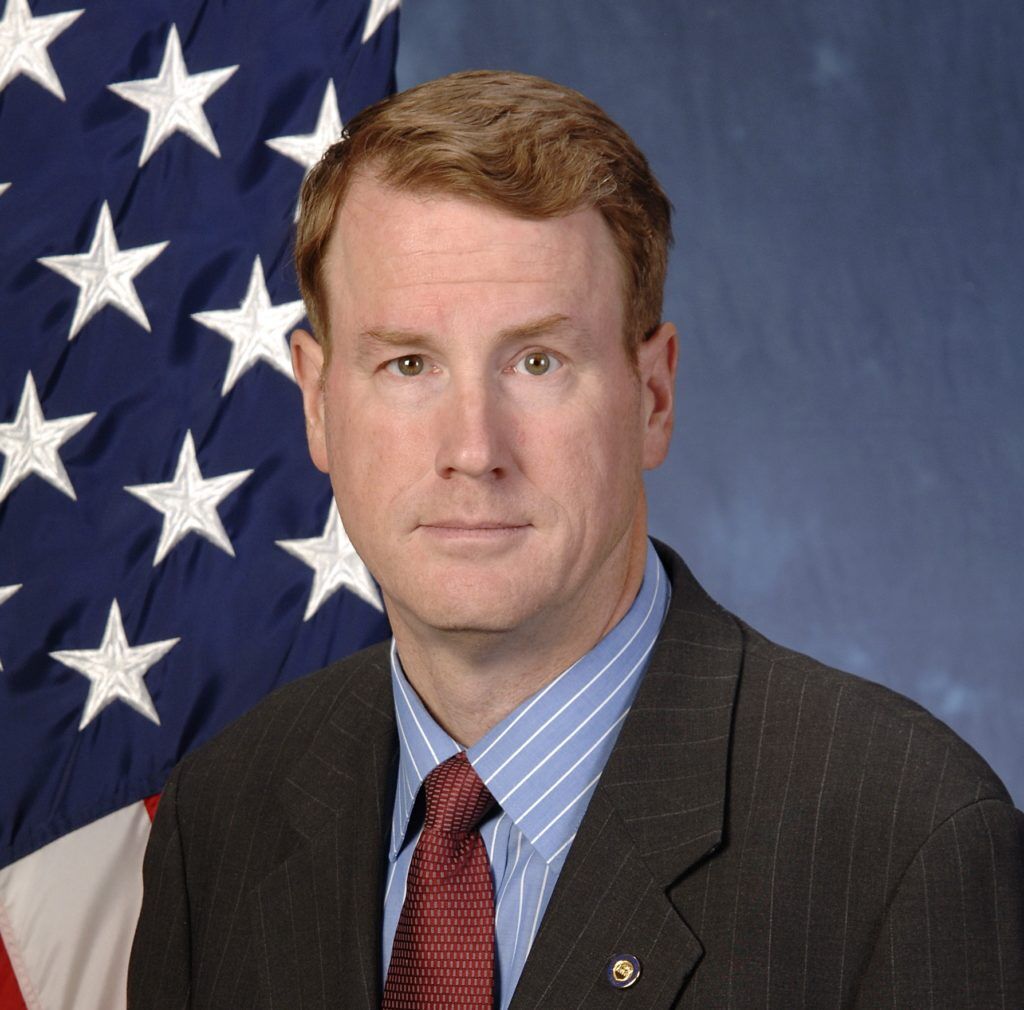
A recent Colorado Politics story caught my eye, and I hope I can be forgiven for writing a rather personal column today. Amid the dozens of other bills being signed into state law by Gov. Polis recently was Senate Bill 129, which created a veteran suicide prevention pilot program. The language of that bill caught my eye, as it referred to the need to provide “no-cost, stigma-free, confidential, and effective behavioral health treatment” for Colorado veterans. To me, the most important of those words is “stigma-free,” and I can speak to that from personal experience.
I had the true honor of wearing my country’s uniform for over 25 years as an officer in the United States Air Force. I started off as an ICBM “finger on the button” guy and taught American government and the Constitution at the USAF Academy for many years. I had assignments working in the Pentagon, the White House, the State Department, and others. But for me, one single day of that service stands out beyond any other.
The morning of Sept. 11, 2001, I had an appointment at the Pentagon, so I was not at my regular duty station as a military adviser in the State Department. So, I was there. I saw stuff, I did stuff. I won’t talk about it, ever, but I was there. I held pieces of the airplane in my hands (take that, nutty conspiracy people) and did what I could to aid in the aftermath.
A few months later, the vagaries of military assignments found me back at the AF Academy, again teaching, but with a burden that I found increasingly difficult to carry. I felt tremendous guilt, a guilt I feel to this day, over my one day of combat, so to speak, at the Pentagon. I felt that I had not done enough, I should have helped more. I knew that such thoughts were not fully rational, as I had done what was asked of me at the triage area, aiding wounded and seeing some of the dead, but the guilt lingers.
I decided, as I was already a lieutenant colonel and was likely to retire before I would need to worry about any further promotion issues, that I would ask for help from the mental health clinic. You see, for military folks, especially officers, there was (and I fear still is) a stigma around the idea of getting help for mental health issues. We are supposed to suck it up, but the nightmares that come every night made it hard to suck it up when you are feeling such guilt. The clinic had changed its name to the “life skills clinic” in an effort to reduce the stigma. I went there, saw a few folks, tried a few meds, and perhaps it did me a small amount of good, though not much.
I still have most of my 9/11 issues, and that is why the new law signed by Polis is so important. Be it a single day, as in my case, or years of multiple deployments by so many more, one can be profoundly scarred by what you see and must do in military service. And as you likely know, the post 9/11 veteran suicide rate is tragically high, with roughly 22 per day in the U.S. I’d be lying if I said those same thoughts are not daily visitors to my own mind. My near-nightly nightmares remain my 9/11 calling card to this day. But fortunately, I have a wonderful wife and a support structure that helps me feel not quite so alone and, well, guilty. But for far too many, those support systems are not in place. The stigma of needing, let alone getting, mental health treatments remains far too high in the military community.
A big chunk of my VA disability rating is for PTSD. And that illness, in addition to all too often being a source of shame, also kills. A recent Brown University study found that four times as many veterans since 9/11 have died at their own hands than died in combat. My heart aches for my fellow post 9/11 vets, along with the countless older vets who returned from their wars with all the horrors of PTSD but in a world that did not yet recognize the significance of the condition.
Way back in the late 1980s, I happened to be changing planes at the Memphis airport. I had a couple of hours till my next flight so I headed to the café. The place was packed, without a single open table. I noticed an Army officer sitting alone at a table, and I didn’t hesitate to go over and ask if I could join him. He welcomed me, as I knew he would. There is a brotherhood/sisterhood in the profession of arms. With less than one half of 1% of the U.S. public serving in the military, it is a tight group, and we usually look out for each other. My minor challenges pale when compared to the burdens carried by so many who did much more than me. I truly hope that we, as a society, can provide the support needed to those that suffer in silence. The new law is a good first step, but there are many more steps to take on this important journey.


The Denver Broncos are on the ballot this fall | Jon Caldara
Jon Caldara
jon-caldara@coloradopolitics.com
Updated 3 days ago
Do you want the Broncos to win the Super Bowl? Then you’d better hope Amendment 87 — which brings back Colorado’s economy-strangling “graduated” income tax — loses at the ballot box this fall. Seriously. Forget Republicans and Democrats. Forget tax...
Was there ever a Colorado city that required racial segregation by law? | BOB LOEVY
Bob Loevy
bob-loevy@coloradopolitics.com
Updated 1 day ago
The answer is “yes.” The Black Racial Equity Study Commission, led by Colorado Senate President James Coleman, has learned the city of Fruita had laws forbidding black people from being on the city streets at night and from being buried...
The African roots of three Colorado leaders | SONDERMANN
Eric Sondermann
eric-sondermann@coloradopolitics.com
Updated 3 days ago
Colorado’s political transformation is measured in many ways. A once reliably red state (with asterisks) became purple and is now a rather deep blue. For better or worse, probably the latter, power is ever more consolidated along the Front Range...

Fighting for every Colorado rural hospital on the eastern plains | GUEST COLUMN
Colorado Politics
colorado-politics@coloradopolitics.com
Updated 3 days ago
By Lauren Boebert After touring Melissa Memorial Hospital in Holyoke and Wray Community District Hospital — two of more than a dozen rural hospitals in my district — I was again reminded why I fight for them in Washington. The...

Fix Colorado without shortchanging taxpayers | GUEST COLUMN
Colorado Politics
colorado-politics@coloradopolitics.com
Updated 2 days ago
By Lisa Frizell If we truly want to fix Colorado, we must respect taxpayers, demand accountability and prioritize classroom results. Proposition NN fails the test. The far left put forth this measure, presenting it as the only way to fund public...

New anti-gun legislation is about preventing firearm ownership, not safety | GUEST COLUMN
Colorado Politics
colorado-politics@coloradopolitics.com
Updated 3 days ago
By Ava Flanell It’s been a little more than a month since the most radical anti-gun legislation went into effect in Colorado history: Senate Bill 25-003. Originally intended as an “assault weapons ban,” Colorado Democrat sponsors settled for a complicated...
Colorado ed department must up its competence to prevent waste, fraud, abuse | Paula Noonan
Paula Noonan
paula-noonan@coloradopolitics.com
Updated 3 days ago
The Colorado Department of Education let $24 million fly from its checking accounts from January 2017 through June 2026 to CHE, aka Colorado Homeschool Enrichment. The details show how easily CHE and Education Re-Envisioned BOCES re-envisioned how to convert public...
Remember the injustice of forced unionism | GUEST COLUMN
Colorado Politics
colorado-politics@coloradopolitics.com
Updated 3 days ago
By Mark Mix This Labor Day we celebrated the men and women whose hard work keeps the country running. But in Colorado, many of those same workers face a real threat: pay union dues or lose their job. That’s because...

Should we always blame voters for low civic participation in elections? | GUEST COLUMN
Roland Halpern
roland-halpern@coloradopolitics.com
Updated 3 days ago
This year, like every election cycle, we hear the same complaints — enough citizens don’t vote. Voter turnout is too low. People are disengaged. Citizens are shirking their civic responsibility. If only voters cared more, democracy would work better. Fair...

Lori Gimelshteyn on 3 ballot measures to ‘let kids be kids’ | The OpEdge Podcast
Tony Olivero
tony.olivero@gazette.com
Updated 3 days ago
Lori Gimelshteyn — board member of Protect Kids Colorado and executive director of the Colorado Parent Advocacy Network — joins The OpEdge to discuss three measures headed to Colorado voters this November. Gimelshteyn tells host and investigative columnist Jimmy Sengenberger...
PREV
PREVIOUS

OPINION | Reinvest relief funds in state employees, services
Debi Macias The COVID-19 pandemic has hit our communities and our families hard. Colorado, like other states across the country, has faced new and unprecedented challenges. The coronavirus has changed life as we know it and completely transformed the workplace. It has also brought to the forefront long-term and glaring problems in our state’s public […]

CALDARA | Local control? It's a complete lie
Jon Caldara When is “local control” not local control? Whenever the current progressive state legislature increases local control, that’s when. Don’t worry. You won’t be confused in a moment. We Coloradans generally like having governmental authority close to us rather than centralized in some place far away. It’s a lot easier getting in touch with […]