

Bill seeking to limit teen access to high-potency THC advances after debate on data collection, patient privacy

The Colorado House on Wednesday advanced a bill seeking to keep high-potency marijuana products out of the hands of teens after a rigorous debate on data collection and patient privacy.
House Bill 1317 from Speaker Alec Garnett, D-Denver, and Reps. Yadira Caraveo, D-Thornton and Tim Geitner, R-Falcon, seeks to achieve that goal by:
- sending the Colorado School of Public Health $1 million per year for three years to conduct an analysis of existing research on the impact of high-potency THC marijuana and concentrates on physical and mental health, find gaps in that research and conduct studies to fill those gaps. The legislation also creates a scientific review council to review the findings in that analysis and make recommendations to lawmakers;
- directing the state Department of Public Health and Environment to compile a report on hospital and emergency room discharge data reflecting patients who display “conditions or diagnosis that reflect marijuana use;”
- directing coroners to order a toxicology screen to test for THC in non-natural deaths of those under 25 years old. The results of those screens would be required to be reported to CDPHE’s Colorado Violent Death Reporting System and the agency would be required to compile a report on those screens;
- lowering the purchase limit on concentrates for medical patients and recreational consumers to 8 grams per day, down from the 40-gram threshold adults are currently allowed to possess. For medical patients between ages 18 and 20, that limit drops to two grams per day
- updating the seed-to-sale tracking system for medical patients to ensure compliance with the new limits; and
- requiring medical patients ages 18 to 20 to consult with two doctors who diagnose “a debilitating or disabling medical condition,” and schedule follow up appointments every six months before receiving their medical cards.
The main objection raised by some Republican lawmakers came to the provision updating the Metrc seed-to-sale tracking system. Under that provision, the tracking system would be updated with information tying purchases to a medical patient’s identification number in real time, rather than at the end of each day.
That’s the main provision of the bill designed to prevent “looping,” when a patient buys up to their daily limit at one dispensary before heading to another to again buy up to their daily limit before the system updated.
According to Garnett, looping by 18-year-old medical card holders is the main way high-potency THC products are making their way into the hands of underage students.
“All we’re asking is that we update the interface so that we prevent 18-year-olds or anybody from purchasing over their daily limit,” he said.
Geitner, meanwhile, emphasized that the provision wasn’t an expansion of the Metrc system.
“1317 does not disrupt what is currently already happening, it does not expand what is currently already happening. It is just more of a continuation of the same,” he said.
Some of his GOP colleagues strongly disagreed.
“I think it is a clear expansion of the database from tracking the plant and the product to now tying that product to an individual,” said Rep. Kevin Van Winkle, R-Highlands Ranch. “This is a bill I want to support, but this is a piece of it that greatly worries me — that this informational will build up for years and years and years.”
To that end, he introduced an amendment seeking to mandate the information entered in the system be kept confidential and deleted on a weekly basis. Rep. Kim Ransom, R-Littleton, also proposed an amendment seeking to delete data on a monthly interval.
Those measures drew support from a handful of Republicans skeptical on data collection.
“Many of us within the military with really high-level security clearances had all of our data stolen,” said Rep. Andres Pico, R-Colorado Springs, a retired Naval flight officer. “CDOT has been hacked. These things do happen, and so it’s an extra level of security.”
Geitner countered that to his knowledge, the Metrc system had not been hacked in its 20 years of use in the state. And, like Geitner, Garnett pushed back on the notion that the bill expanded the system.
“We’re not asking for more information to be collected, we’re just changing the time that it’s entered into Metrc,” he said. “All we’re asking … is don’t wait until the end of the day to do it, just do it per transaction to prevent those kids from creating a gray market and diverting the product onto high school campuses.”
Both amendments failed after the bill sponsors opposed them, though they indicated they would be open to further discussions on the issue.
A second amendment from Ransom was approved by the chamber though. That removed the time element and instead focused on ensuring the data was kept confidential. The bill sponsors said that element was already required in the state constitution but added they would be fine with reinforcing it with what they described as a “belt and suspenders” provision.
Though the bill passed on a voice vote Wednesday, it still must pass a recorded roll call vote then work its way through the legislative process in the Senate before the session adjourns.


10th Circuit partially revives lawsuit over 2020 Denver protest injuries
Michael Karlik
michael.karlik@coloradopolitics.com
Updated 4 hours ago
The Colorado-based federal appeals court revived a man’s claims against Denver on Friday after concluding a trial judge resolved the case in the city’s favor without analyzing two of the three instances of alleged excessive force and other constitutional violations....

Federal judges find Colorado immigration judge violated several orders
Michael Karlik
michael.karlik@coloradopolitics.com
Updated 4 hours ago
Multiple federal judges in Colorado have freed people from immigration custody after determining that one immigration judge violated their directives for properly conducting bond hearings. For nearly a year, Colorado’s U.S. District Court has faced a flood of “habeas corpus” petitions...
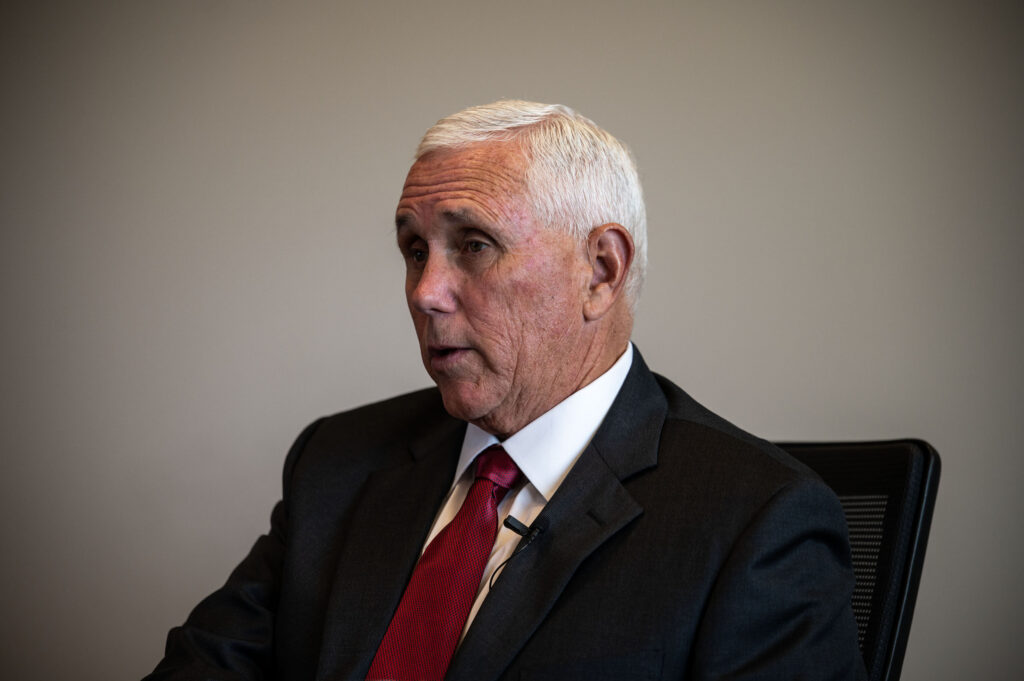
Q&A with Mike Pence | Former vice president says GOP’s populist turn from conservatism isn’t permanent
Ernest Luning
ernest.luning@coloradopolitics.com
Updated 4 hours ago
Former Vice President Mike Pence says he’s concerned that the Republican Party has taken a populist turn away from bedrock conservative principles during President Donald Trump’s second term, but he believes the party will return to its roots when Trump...

New federal plan sets short-term rules for Colorado River management
Marianne Goodland
marianne.goodland@coloradopolitics.com
Updated 3 hours ago
Interior Department’s plan spares Colorado from mandatory cuts for now After years of stalled negotiations among the seven states that rely on the Colorado River, the federal government on Friday released its own plan for managing the drought-strained system. Calling...
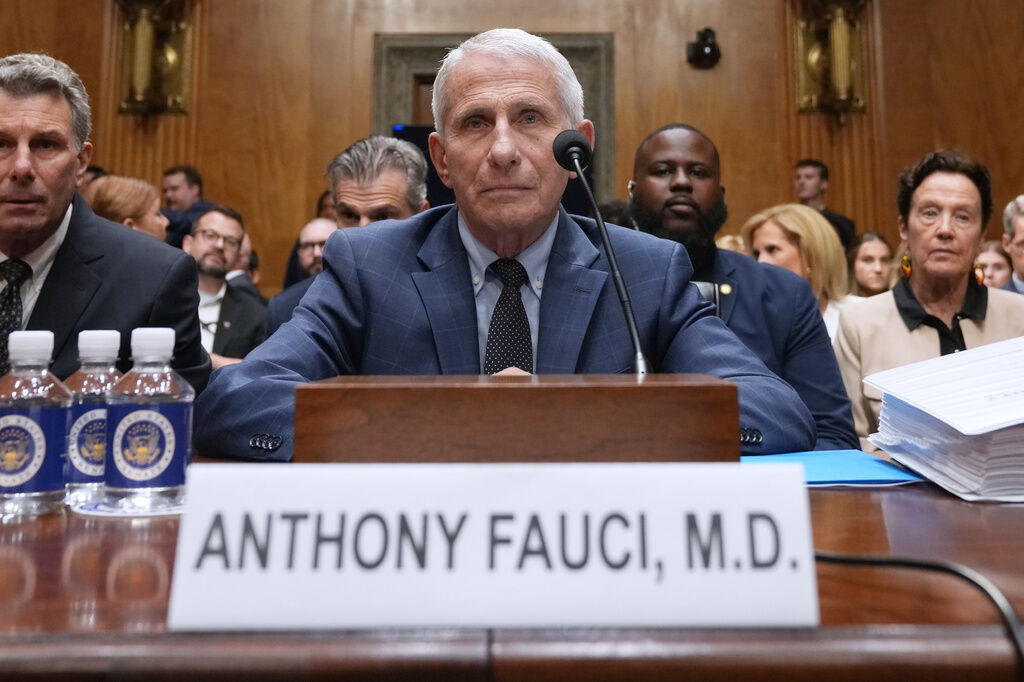
Fauci’s diary details blooming outrage toward ‘far right,’ softness toward Biden and China
Hudson Crozier
hudson.crozier@washingtonexaminer.com
Updated 8 hours ago
Dr. Anthony Fauci increasingly railed against “far right” critics of his approach to COVID-19 issues while describing strong support from the Biden White House in his pandemic-era diary, which was recently released by Congress. The former National Institute of Allergy...

Colorado is spared mandatory cuts under federal Colorado River proposal
The Associated Press
the-associated-press@coloradopolitics.com
Updated 9 hours ago
California, Arizona and Nevada to take less water under plan While Colorado has been spared from mandatory reductions, Arizona, California and Nevada would take less water from the Colorado River under a proposal announced Friday by the federal government to...

Republican Victor Marx taps George Markert as his lieutenant governor pick in Colorado’s gubernatorial race
Ernest Luning
ernest.luning@coloradopolitics.com
Updated 2 hours ago
Colorado Republican gubernatorial nominee Victor Marx named George Markert, a retired Marine colonel, as his running mate for lieutenant governor Friday morning, saying the former U.S. Senate candidate will bring “exceptional character, proven leadership and a lifetime of serving others”...

Pueblo mayor, council concoct Trumpian Texas Two-Step | Dennis Maes
Dennis Maes
dennis-maes@coloradopolitics.com
Updated 1 day ago
Several weeks ago, an article was published positing Pueblo Mayor Heather Graham is a disciple of the calamitous Donald Trump school of governance — specifically as it related to questionable ethical practices and the misuse of public funds. Recently, Graham...

Colorado can’t afford to turn its back on proven public safety technology | GUEST COLUMN
Colorado Politics
colorado-politics@coloradopolitics.com
Updated 1 day ago
By Samuel G. Michael I recently saw a report that said Colorado is leading the way in artificial intelligence adoption for businesses. Across our state, more business owners and employees than ever before use AI for their everyday functions —...
Misconduct complaints from ex-Colorado judicial discipline director dismissed against federal judges
Michael Karlik
michael.karlik@coloradopolitics.com
Updated 23 hours ago
The administrative body for the Denver-based federal appeals court upheld a finding last week that misconduct complaints against Colorado’s chief federal trial judge and the chief appeals judge warranted dismissal and appeared to be a “litigation tactic” by the complaining...