

CAUCUS BUSTER | Bill on charter school approvals splits Democrats

First-year State Rep. Jennifer Bacon, D-Denver, faces her toughest battle so far Thursday when she presents a charter school bill that has already divided Democrats.
The issue has divided lawmakers firmly in support of charter schools (and the big-money group that funds them) and those who either aren’t fans or believe the accountability isn’t quite there (and the big-money groups that fund them).
House Bill 21-1295 wades into one of the more disputed aspects of charter schools: how school boards – and the Colorado State Board of Education – approve or reject a charter school application.
The bill creates a “rebuttable presumption” that a local school board can use to reject a new charter school application. Those justifications include the school district’s long-term planning as well as the impact on enrollment.
A third justification, the district’s overall financial health, is in the introduced version of the bill but Bacon said she plans to take it out. She’s also leaving out renewal applications.
The bill “provides clarity to school districts on how they can approve and disapprove charter schools,” Bacon told Colorado Politics. “We need that clarity because in managing the whole district, with charter schools included, we’re running into some very severe barriers to providing a quality education. That includes enrollment, and holding all schools accountable.”
Current law allows backers of a charter school, presumed to be parents and other supporters, to apply for authorization with the local school board. Once reviewed by a district accountability committee, the school board then votes up or down on an application.
If denied, the charter school can appeal to the state board of education. The state board can review the application and decide whether to deny the application or send it back to the school board for a second look.
If the school board denies the application a second time, and the charter school goes through a second appeal with the state board, that body can order the school board to accept the charter school if they believe it is in the “best interest of the child” in that district. That’s happened several times in the last decade.
The “best interest” is a key phrase in considering charter schools, as it turns out; it’s also part of the reason Bacon is sponsoring the bill.
Bacon is a director on the Denver Public Schools Board of Education, so she’s seen the situation firsthand. She told Colorado Politics that the problem is a lack of transparency in the state board’s decision.
The standard of review – the best interest of the kids – isn’t defined, Bacon pointed out. Best interest as a standard is typically found in family law, an area where Bacon, a lawyer, is familiar.
“You have to take the totality of the circumstances, urgency, divorce or custody cases. In the school space, we’re not sure what that means. So we have to lean on the state board to tell us, and sometimes they don’t tell us.”
Sometimes they will just say it’s a quality application or kids deserve the chance. But, Bacon asked, what about everyone else in the district?
The bill sets up factors that school districts can use to make make the claim that they are acting in the best interest of the community. That means they have to submit evidence to the charter school on either enrollment or disruption to long-term strategic planning. Those strategic plans are in writing, she noted.
The bill was written to require those factors be specifically identified when reviewing an application.
This is to help take care of all kids in a district, not just the ones in the potential charter school, Bacon explained.
Bacon also pointed out that the bill doesn’t change what the state board can do with regard to how they deal with charter school applications. They can still order the school board to accept a charter school, but the bill just provides some necessary transparency in what they must consider and how that decision is reached, Bacon explained.
Bacon has taken heat over sponsoring a bill that some call a conflict of interest. Not so, Bacon says; not as a matter of law, in the rules of the General Assembly or otherwise.
“We are supposed to bring our experiences here; it’s no different than a teacher running a bill on teacher licensure or a district attorney making laws on what we can and cannot prosecute,” or for teachers to advocate for the School Finance Act, she said. This is not a conflict, she stated, and the experience is critical.
As to the bill, “it’s hard to tell families, who advocate for their kids” to think about everyone else’s kids. That’s the role of the school board member.
“We’re not upset with families advocating for their school; they should, that’s fantastic,” she said. “But somebody has to know what it takes to not only help the 100 kids but to help the other 1,000.”
The bill has provoked one of the strongest divides among Democratic lawmakers and their allies at the state Capitol. On the side of HB 1295 is the state’s largest teachers’ union, the Colorado Education Association; the state associations of school boards and school executives, and several school districts. Opposing the bill: the state Department of Education, the State Board of Education, the Colorado Children’s Campaign, and perhaps the biggest opponent of all: Education Reform Now Advocacy, the financial side of Democrats for Education Reform, a pro-charter, anti-teacher union organization founded in 2007 by New York hedge fund managers.
ERNA is one of the largest donors to Democratic lawmakers in the General Assembly over the past decade, pumping $10.3 million into Democratic candidates for school boards and the legislature, independent expenditure committees that back Democrats and related causes. Sources told Colorado Politics that Democrats, especially in the state Senate, are looking to kill the bill, should it get there.
Bacon acknowledged that she has a hard fight ahead, a nod to the difficulties the bill is raising for Democratic lawmakers, who traditionally tread carefully on the issue.
The bill, not surprisingly, is also opposed by the Colorado League of Charter Schools. A May 4 blog post on the league’s website said Bacon’s bill is “a blatant attempt to strip the State Board of Education of its authority to prevent local school boards hostile to charter schools – like Denver’s – from choking the life out of the charter sector.”
In the 2019-20 school year, there were 262 charter schools in Colorado enrolling 128,000 students, or about 14% of total public school enrollment.
Dan Schaller, president of the charter league, told Colorado Politics that “based on the factors, it would make it virtually impossible for a charter school to overturn a district decision. District finances and long-term plans are so broad that you can justify virtually anything under them.”
The existing standard – putting kids first, which he said is what we should ground all our decisions on education – has proven to be balanced over time, Schaller said. When schools have to go to the state board, they have to demonstrate demand for the school and that they can provide a strong program, he added.
In addition, Schaller questioned just what problem the bill is trying to solve. Over the last 20 years, that standard has been balanced, he said; the number of times a decision has gone in favor of a school district is about the same for the number of times a decision has made in favor of a charter school.
Democratic allies of charter schools are not the only opponents of the bill. On Wednesday, Colorado Republican Party Chair Kristi Burton Brown released a letter she’d sent to her Democratic counterpart, Morgan Carroll, about Bacon’s bill.
Burton Brown implored Carroll to persuade Bacon and the Senate sponsor of HB 1295, Sen. Tammy Story, D-Littleton, to withdraw it.
“This misguided, dangerous bill would, in effect, take away the ability for parents to bring a high-performing charter school to their district if their board is anti-charter,” the letter states. “Right now, parents have an effective avenue to appeal a district’s decision to the state board. But your Democrats in the legislature want to take that avenue of appeal away from them.”
It’s not the first time Democrats have tried to make changes to the appeal process for charter schools; in 2018, then-Sen. Mike Merrifield, D-Colorado Springs, a firm opponent of charter schools, sponsored Senate Bill 18-118, which would have taken away that second right of appeal by charter schools to the state board. The bill failed in the Republican-controlled Senate Education Committee on a party-line vote.
HB 1295 will be heard by the House Education Committee at 1:30 p.m. Thursday. Among Democrats on the committee, Rep. Tony Exum, D-Colorado Springs, has accepted money from DFER, a $400 maximum contribution in 2016; Rep. Dafna Michaelson Jenet, D-Aurora, has accepted four contributions in 2018 and 2020, totaling $900. Both, however, have also accepted substantially larger contributions from the Colorado Education Association and other teachers’ unions.


Mysterious letter causes uproar, investigation in Mesa County GOP | A LOOK BACK
Rachael Wright, Special to Colorado Politics
rachael.wright@coloradopolitics.com
Updated 3 days ago
Twenty Years Ago This Week: An unregistered activist group calling themselves ‘The Colorado Republican Caucus’ mailed letters to at least 160 Republicans in Mesa County calling various Grand Junction Republicans “turncoats” and “traitors.” “The danger was that the letters were...
Colorado Politics Calendar Apr. 20-26
Rachael Wright, Special to Colorado Politics
rachael.wright@coloradopolitics.com
Updated 3 days ago
CoPo’s weekly political calendar helps you find political and public policy events throughout Colorado. It includes candidate and issue campaign events, public policy meetings, court hearings, state and local party conventions, assemblies, debates, rallies, parades, speaking engagements, traveling dignitary appearances,...
A happier budget week | Capitol M | Week of April 18, 2026
Marianne Goodland
marianne.goodland@coloradopolitics.com
Updated 2 days ago
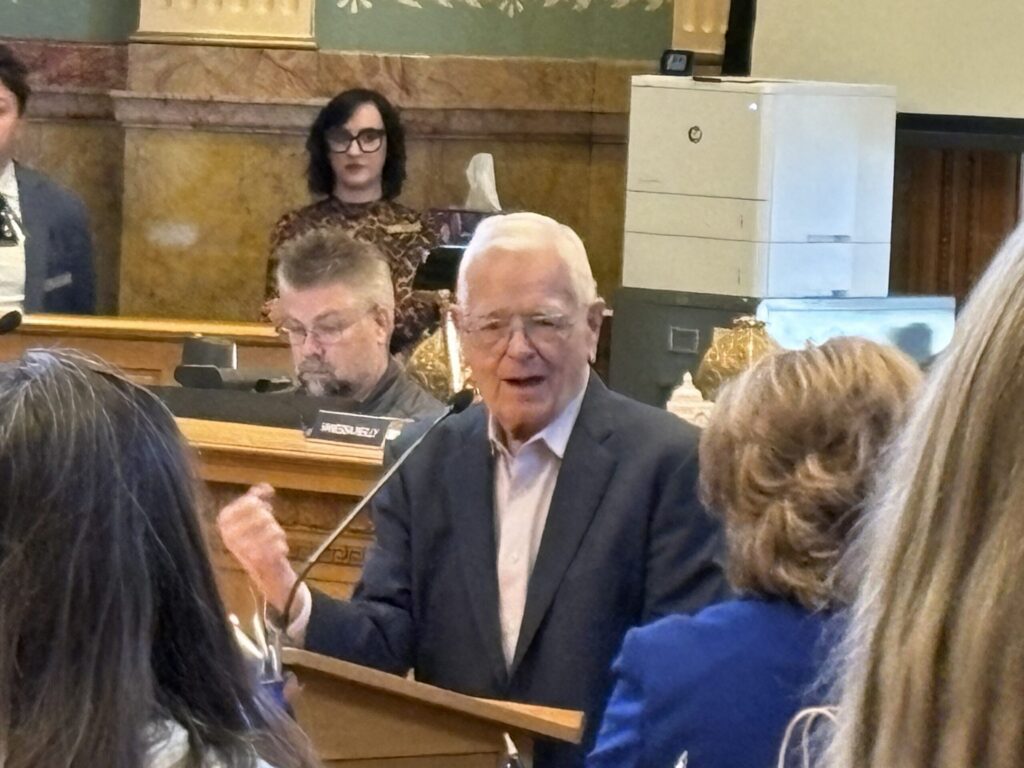
It’s budget time at the state Capitol, and generally, it’s a humorless situation. It certainly was that way in the House last week, with a 15-hour reading of the long bill at 661 pages that resulted in lawmakers having to...

Colorado lawmakers advance bill to tackle Colorado’s prison capacity issues
Marianne Goodland
marianne.goodland@coloradopolitics.com
Updated 20 hours ago
As lawmakers move the 2026–27 state budget toward completion, they are intensifying efforts to address overcrowding and capacity challenges within the Department of Corrections and related agencies—issues that have contributed to increased spending in the budget. The state Senate on...
Colorado justices, lawyers speak with rural students through outreach program
Michael Karlik
michael.karlik@coloradopolitics.com
Updated 21 hours ago
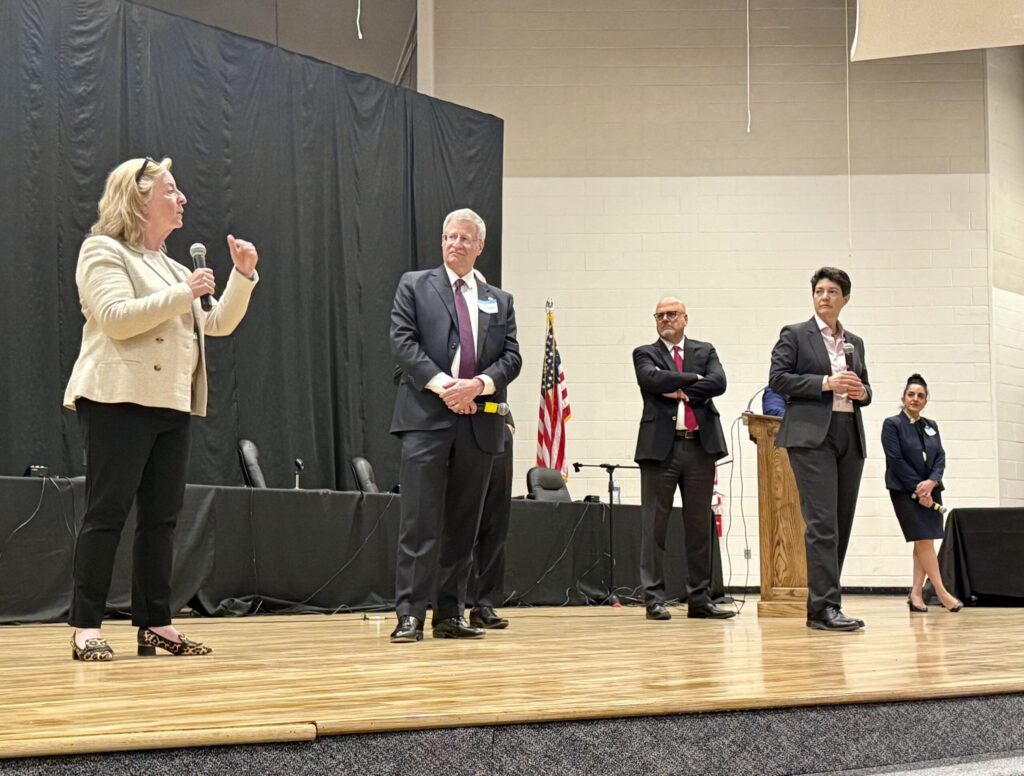
Members of the Colorado Supreme Court appeared before students from eight rural schools on Thursday to hear a pair of cases, field questions, and mark the first time the state’s newest justice participated in the long-running program. “I had such...
Democrats want Colorado colleges to provide medication abortion
Marissa Ventrelli
marissa.ventrelli@coloradopolitics.com
Updated 18 hours ago
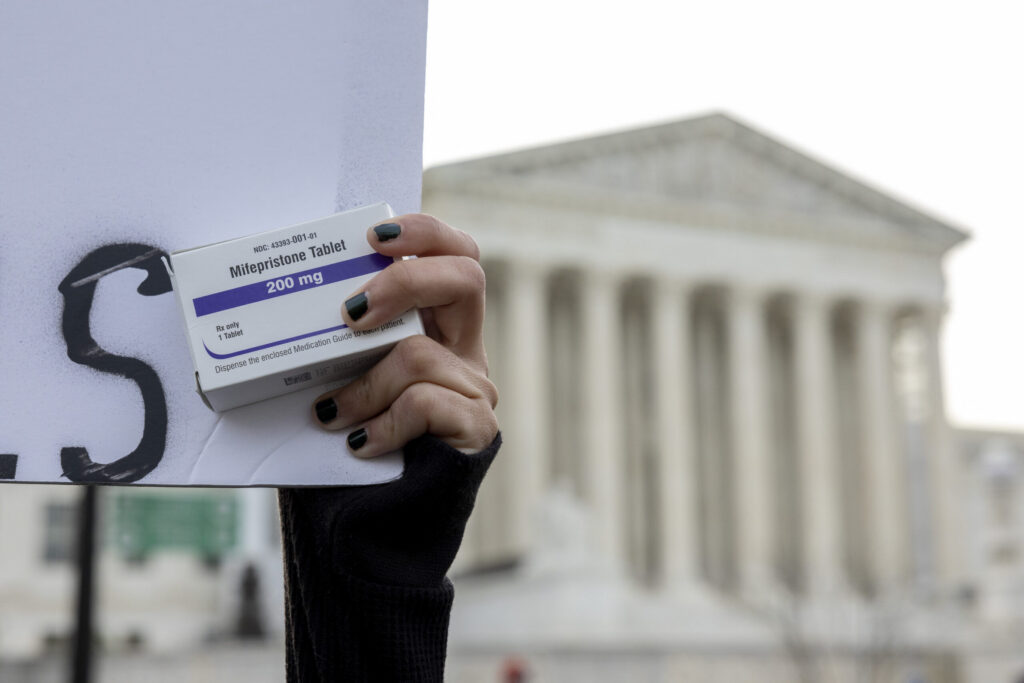
A bill proposing to require Colorado colleges and universities to provide abortion medication services cleared a legislative committee on Thursday. Advocates said the measure — which exempts religious-based institutions but applies to public, private, and community colleges — will improve...

Trump ‘in discussions’ with IRS to cut deal in tax record lawsuit
Brady Knox, Washington Examiner
brady.knox.washington.examiner@gazetteedit.wpenginepowered.com
Updated 18 hours ago
President Donald Trump is in talks with the Internal Revenue Service to strike a deal over the release of his tax records. The news was revealed in a legal filing, where his legal team said they were in “discussions” with...
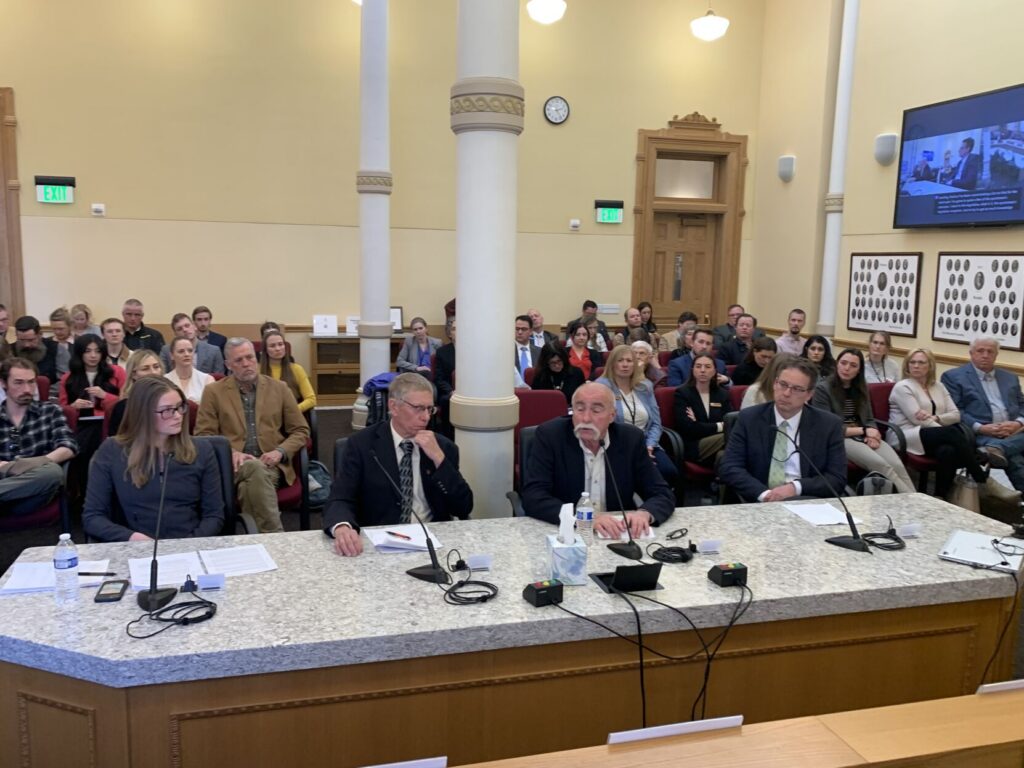
Governor’s wildlife commission picks face pushback ahead of Colorado Senate hearing
Marianne Goodland
marianne.goodland@coloradopolitics.com
Updated 19 hours ago
Colorado’s largest coalition of hunters, anglers, and wildlife conservation groups is urging state lawmakers to reject two of Gov. Jared Polis’ latest nominees to the Colorado Parks and Wildlife Commission, setting up a contentious confirmation hearing before the Senate Agriculture...
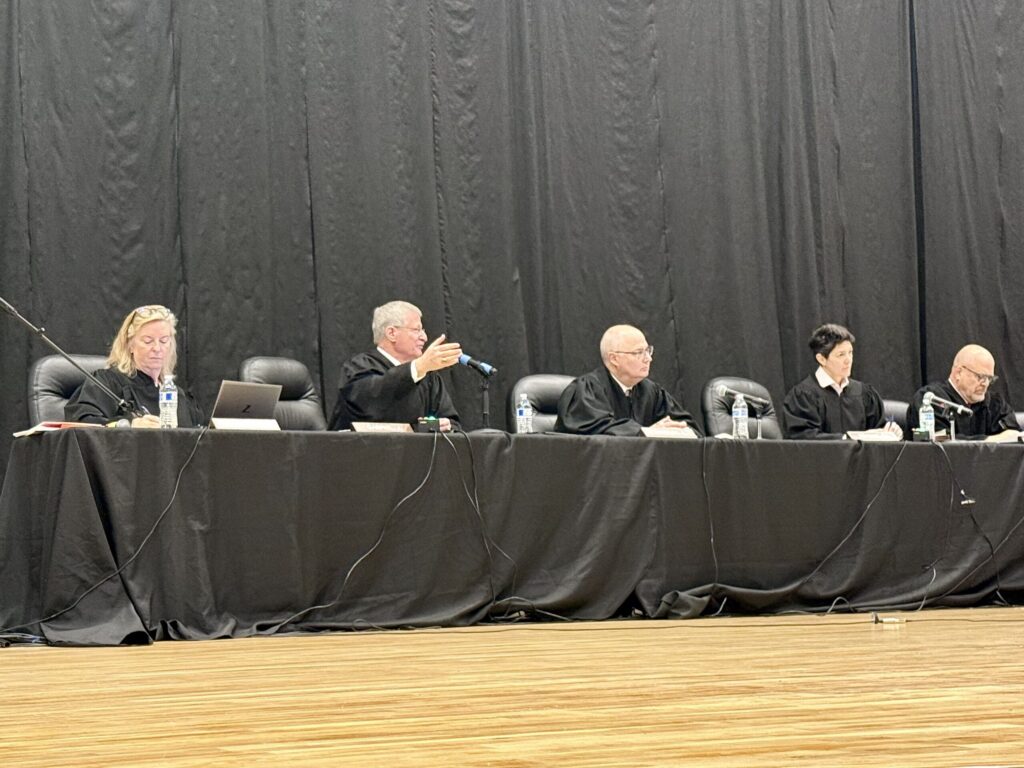
Colorado justices skeptical of snowboarder’s bid to revive injury lawsuit after signing new waiver
Michael Karlik
michael.karlik@coloradopolitics.com
Updated 20 hours ago
The Colorado Supreme Court seemed to agree on Thursday that a plaintiff is not entitled to continue his snowboarding injury lawsuit because he purchased another pass in the middle of litigation that released all past legal claims. “It says you’re...
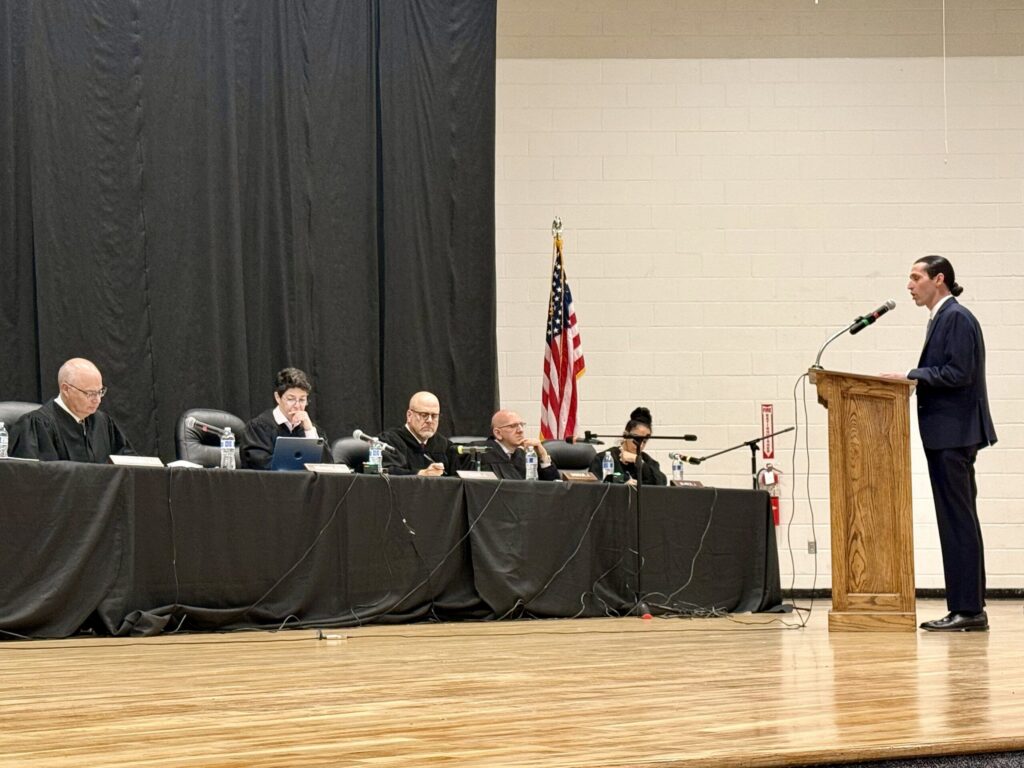
Colorado Supreme Court appears OK with revised ‘reasonable doubt’ instruction
Michael Karlik
michael.karlik@coloradopolitics.com
Updated 1 day ago
The Colorado Supreme Court appeared largely comfortable on Thursday with the recently revised definition of “reasonable doubt” that is now part of the template jury instructions for criminal cases. To date, multiple Court of Appeals decisions have endorsed the constitutionality...
PREV
PREVIOUS

Metro-area counties to end capacity limits, other COVID-19 restrictions Sunday
Several metro-area counties are set to end COVID-19 restrictions Sunday, according to officials and existing health orders. Adams, Arapahoe, Boulder, Broomfield and Jefferson counties will all move to “level clear” Sunday, according to their current health orders, which expire after Saturday. Denver’s order also expires this weekend. A spokeswoman for the city and county of […]

Denver’s elementary enrollment is falling. Could school consolidation be next?
In the past six years, Denver Public Schools has lost about 5,000 elementary-aged students, district data shows. That’s the equivalent of 16 schools’ worth of kids. The decline has hit the western and north-central regions of the city especially hard. At a school board meeting last week, the district said it plans to spend next […]