

HUDSON | Pondering a proper approach to policing
Before we defund the police or reinvent policing – or, worse yet, expand their authority to include a presumptive right to run down protesters with their vehicles – we should pause to reconsider the proper role of policing in a democratic society. Police forces are younger than the republic itself. New York City didn’t get around to creating what is now the largest police department in the nation until 1845, in part to manage the social unrest spilling onto its streets and fueling the run up to the Civil War. Despite 175 years to perfect crowd control neither New York, nor Denver for that matter, have gotten the hang of it.
Colorado’s history of policing is complicated by its frontier ethic of powerful sheriffs ruling a lawless land and quick to print “Wanted Dead or Alive” posters that encouraged vigilante justice. When Trinidad hired gunman Bat Masterson to clean up its town, they discovered they’d signed up for a lot more justice than they really wanted. Two years after his arrival, Masterson was voted out by a frightened citizenry. My great-grandfather Mahlon was ousted by Congress as U. S. Marshal for Eastern New Mexico during the Colfax County range wars. His “kill them all and let God sort them out” ethos filled local cemeteries but failed to assure domestic tranquility.
The most primal responsibility for police is keeping us safe. Despite appeals to the better angels of our nature, experience instructs us there are those whose natures include a propensity for theft, violence and contempt of the rules and laws governing a civilized society. Policing these miscreants is a necessity. The nature of this threat has changed alongside the evolution of our economy and the technologies steering it. During the Great Depression organized crime prospered on profits from the sale of illegal alcohol, gambling, prostitution, extortion and racketeering. Small-town police forces couldn’t prevail against the machine guns employed by these gangsters. Consequently, Congress prohibited their private ownership – a restriction that remains in place today with little objection.
However, once technology developed automatic rifles that perform functionally like machine guns, it was American police that first demanded they be outlawed as well. Public attitudes had changed substantially since the 1930s, aided and abetted by the National Rifle Association and a supine Congress. The AR-15 was touted as a constitutionally protected implement of self-defense. Even Antonin Scalia expressed reservations with this Second Amendment claim. I recall a comment from a Florida Police chief 30 years ago when his state’s murder rate led the nation. Florida had emerged as a major drug corridor that delivered small shipments to remote beaches. He wryly observed, “80% of these killings result from automatic rifle fire. This leads me to think they don’t result from family quarrels.”
Since then this issue, like so many, has been politicized. Unfortunately, many police officers have sided with congressional Republicans. That would change rapidly if these weapons were turned against them as many zealots on the far-right fringes of partisan debate insist they will soon be needed to resist government tyrannies. Meanwhile, firearms slay a thousand Americans each week, while police kill an additional thousand each year. If this strikes you as a bit nuts, it is. Only a tiny fraction of gun deaths results from armed intrusions, hijackings or burglaries. We’ve arrived at an acceptance of epidemic of suicides, as well as random school and workplace shootings. Why don’t we view this slaughter a threat to public safety?
Which returns us to the question of the proper role for policing. Absent the hot pursuit of a known criminal perpetrator, why should a traffic stop ever result in a state-sanctioned death? When an illegal “right turn on red” results in an accident or injury, the driver should be held accountable. But, when the driver is unfamiliar with the location or the infraction is poorly marked, who benefits from more than a warning? Do minor civil misdemeanors really require an armed response? Modern technologies enable far more injurious offenses that often go uninvestigated and therefore escape any real threat of prosecution.
Cybercrimes and fiscal frauds ruin American lives and further impoverish poor families. Our police forces are ill-equipped to protect us against these criminal conspiracies. In fact, the government response is frequently shifted to a lone ombudsman in a hard-to-find consumer-protection office. As we reconsider policing, is this problem likely to grow worse? Almost certainly. Denver’s police monitor severely criticized the city’s police response to last year’s civil disorder. Is that problem also likely to grow? Should the police be reordering their priorities? These questions answer themselves.
Public outcry in the 1880s prompted a congressional intervention removing Mahlon Hudson during the Colfax County wars. More police demand for sane gun control could spur Congress to do the right thing today.

Colorado must continue finding common ground on wildfire policy | GUEST COLUMN
Colorado Politics
colorado-politics@coloradopolitics.com
Updated 18 hours ago
By John Herrick Colorado has never lacked for opinions about wildfire policy. We debate forest management, climate change, prescribed burns, land use, air quality and budgets. Those debates are familiar territory, but a new discussion is beginning to happen around...

Proposition NN is the best investment for Colorado’s students and schools | GUEST COLUMN
Colorado Politics
colorado-politics@coloradopolitics.com
Updated 18 hours ago
By Justin Ogden Colorado families know what it means to make difficult budget decisions. Inflation has driven up the cost of groceries, housing, utilities and just about everything else. Families like mine work hard to stretch every dollar while still...

Were the primaries a preview for consequential general election? | Paula Noonan
Paula Noonan
paula-noonan@coloradopolitics.com
Updated 2 days ago
Colorado’s political future will go the way of this election. Historically, the state has not had both chambers controlled by a supermajority. This election may change that. The primaries suggest how the general election may play out. Democrats had solid...
Disagreement doesn’t have to mean disrespect | GUEST COLUMN
Colorado Politics
colorado-politics@coloradopolitics.com
Updated 2 days ago
By Vincent Atchity These days, it doesn’t take long to feel overwhelmed by politics. Turn on the news, scroll through social media or read the comments on almost any political post and you’ll find anger, outrage and personal attacks. For...

Keeping Colorado’s kids’ trust online | PODIUM
Colorado Politics
colorado-politics@coloradopolitics.com
Updated 3 days ago
By Stuart Jenkins Almost every day, the kids and teens we serve across Colorado are introduced to new generative artificial intelligence and other emerging technology, including conversational AI systems designed to simulate human conversation. These tools are no longer a...
Marx’s ‘through line’ predates Trump, connects to Maes | FEEDBACK
Colorado Politics
colorado-politics@coloradopolitics.com
Updated 3 days ago
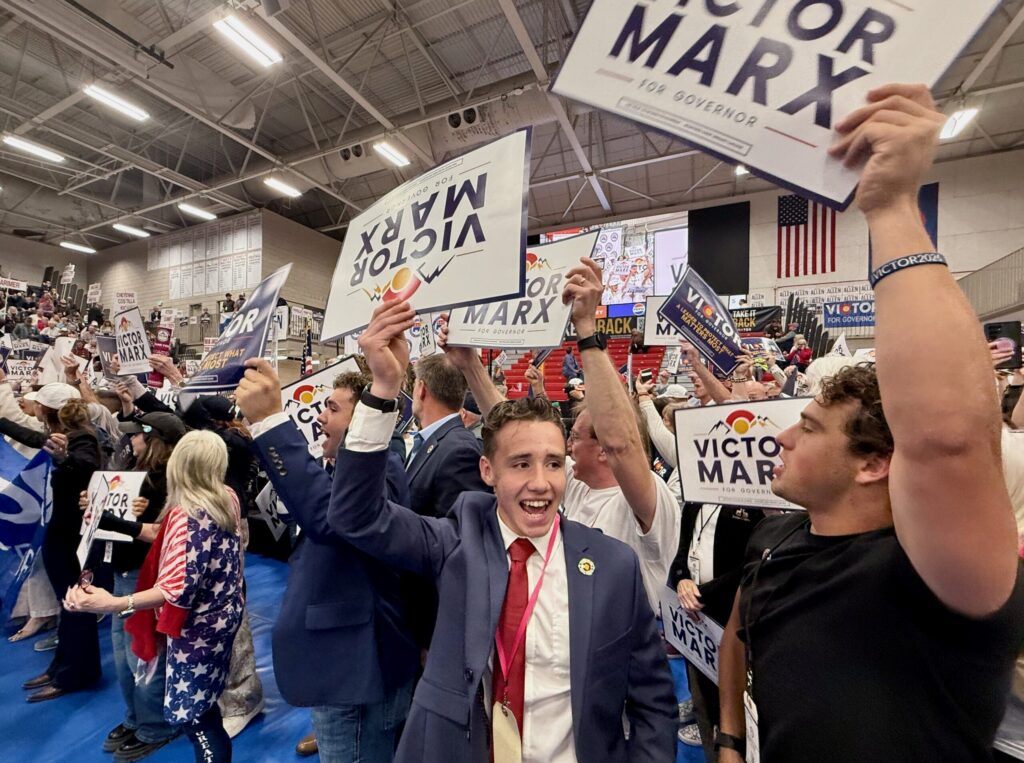
Eric Sondermann is of course correct Victor Marx is an unserious, unelectable, embarrassing Republican nominee for governor of Colorado. But I respectfully submit that the “through line,” as Mr. Sondermann describes it, is not from Trump to Marx, despite their...

Cedric Pride’s blueprint for opportunity through the trades | The OpEdge Podcast
Tony Olivero
tony.olivero@gazette.com
Updated 3 days ago
Cedric Pride, CEO of the nonprofit Pride Initiative in Denver, joins The OpEdge with a blueprint for workforce development, skilled trades, and economic opportunity. Pride tells host and investigative columnist Jimmy Sengenberger why he believes the trades offer a path...
Colorado’s No. 1 education ranking should raise our ambition | GUEST COLUMN
Colorado Politics
colorado-politics@coloradopolitics.com
Updated 3 days ago
By Scott Laband Colorado has earned the right to celebrate its new No. 1 ranking in education from U.S. News & World Report. Gov. Jared Polis called it “one of the proudest moments” of his time in office and shared the...

Colorado’s No. 1 education ranking reflects the power of school choice | GUEST COLUMN
Colorado Politics
colorado-politics@coloradopolitics.com
Updated 3 days ago
By Peter Mason Colorado is now the No. 1 state in the nation for education, according to the 2026 U.S. News & World Report Best States rankings. That is a distinction worth celebrating. It is also a distinction worth understanding....

Courageous Colorado bucks Trump’s federal stupidity | Miller Hudson
Miller Hudson
miller-hudson@coloradopolitics.com
Updated 4 days ago
There are several theories regarding the rhythm of American politics. The most frequently cited is the pendulum hypothesis — positing that episodes of liberal dominance are then interrupted by spans of conservative control. Since Ronald Reagan’s presidential election in 1980,...
PREV
PREVIOUS

BIDLACK | All candidates dread dialing for dollars
Hal Bidlack My regular reader (Hi Jeff!) will recall that I was the Democratic candidate for the US Congress in the Colorado district around Colorado Springs back in 2008. It was an amazing experience, filled with remarkable people, wonderful experiences, and the mind-numbing, soul-sucking, hour after hour spent on the phone begging strangers for money. […]

FEEDBACK | Leadership needed to stem homelessness
Re: “Homelessness in Denver is out of control,” April 19. The author of this article is spot on except for the fact that the leadership of Denver is clueless and blind to the actual problem. I have worked for seven years to confront the actual issues such as rehabilitation, support, and rampant drug use. The […]