

Court of Appeals rules courthouse closure during trial not a constitutional violation

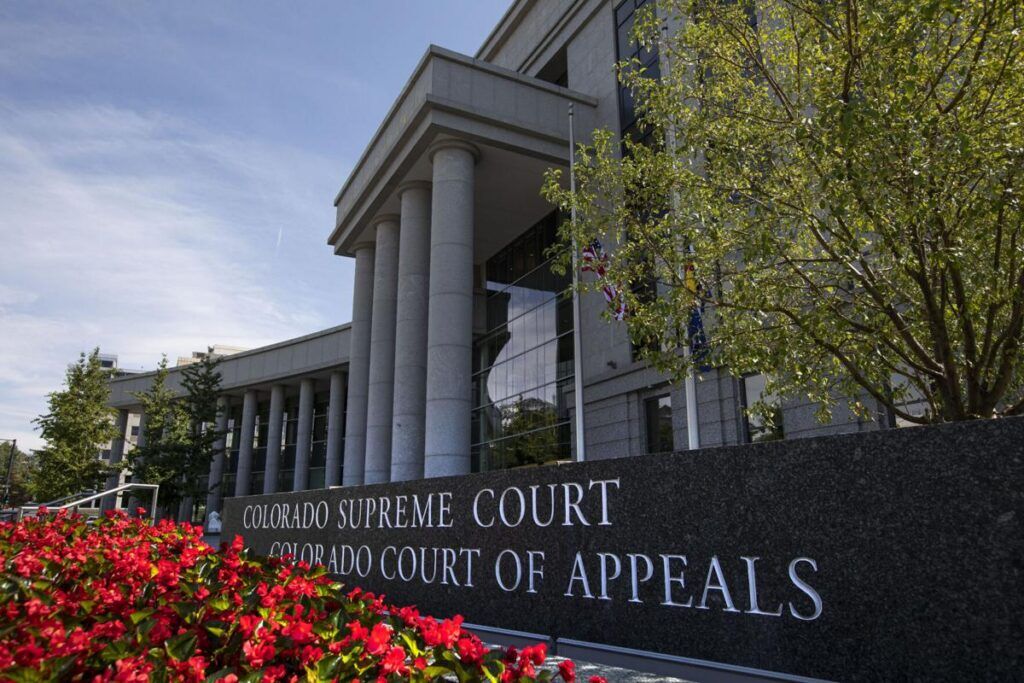
Although the U.S. Constitution provides the right to a public trial, the Colorado Court of Appeals on Thursday ruled that the after-hours closure of a courthouse while a jury trial was occurring did not violate the defendant’s constitutional rights.
The U.S. Supreme Court has laid out specific criteria for judges to consider when closing their courtrooms to some or all members of the public during trials. But the murder case of Michael Jones in La Plata County raised the question of what happens when the entire courthouse is closed, unrelated to a judge’s order.
During the second evening of Jones’s 2018 trial, when jury selection was ongoing, a deputy told people to be cautious if they wanted to leave the building, because the doors had locked at 5 p.m. From 5 until 5:15, the defense was in the process of questioning jurors, meaning there had been a 15-minute period in which the public was shut out of the courthouse.
La Plata County District Court Judge William L. Herringer promptly warned the deputy he needed to have the doors unlocked “because I will shut a trial down before I continue with a trial having the public locked out of the courthouse. It’s just something we cannot have.”
The defense asked for a mistrial declaration, and Herringer ultimately denied the request. The judge pointed out he had no role in the closure, the doors to the courtroom itself were still open, the proceedings had only lasted a quarter of an hour with the lockout, and there was no evidence anyone had tried to enter the courthouse to view the trial. Herringer had a “high degree of confidence” the courthouse closure had not violated Jones’s public trial right.
In 1948, the U.S. Supreme Court determined the Sixth Amendment’s guarantee of a “speedy and public trial” applies to states, with Justice Hugo Black writing how the “knowledge that every criminal trial is subject to contemporaneous review in the forum of public opinion is an effective restraint on possible abuse of judicial power.”
Because there may be legitimate reasons for excluding the public from courtroom proceedings, a majority of the state Supreme Court last year adopted a standard for determining whether a courtroom closure was “trivial,” or whether it implicated the protections the public trial right is meant to ensure. The goals of holding public trial include ensuring a fair process, reminding the judge and prosecutors of their duty to the defendant, encouraging witnesses to come forward and discouraging perjury.
Applying the standard, a three-member panel of the Court of Appeals concluded the lockout affected none of those elements. Notably, there was no witness testimony during the closure, and neither the prosecution nor the judge was aware of the locked doors, meaning their behavior would not have changed during those 15 minutes.
“Because of the brief duration of the closure, coupled with its inadvertent and incomplete nature, we are satisfied that it did not affect the fairness of Jones’s trial,” wrote Judge Lino S. Lipinsky de Orlov in the panel’s opinion, which went unpublished and is not intended to set a precedent.
The case is People v. Jones.


Legislature overrules state Supreme Court decisions, federal judges contend with violations of orders | COURT CRAWL
Michael Karlik
michael.karlik@coloradopolitics.com
Updated 7 hours ago
Welcome to Court Crawl, Colorado Politics’ roundup of news from the third branch of government. The Colorado legislature overruled two recent state Supreme Court decisions in this year’s session, plus federal judges are addressing the government’s violations of their orders...
Appeals court reinstates murder case despite ex-DA Linda Stanley’s conduct
Michael Karlik
michael.karlik@coloradopolitics.com
Updated 22 hours ago
Colorado’s second-highest court reinstated the murder and child abuse charges on Thursday against a Fremont County defendant, reasoning that the former district attorney’s misconduct did not warrant dismissal of the charges. A judge previously dismissed the criminal case against defendant...

How a CU Boulder law school program helped free a Denver man after 27 years in ‘shaken baby’ murder case
Matt Kyle
matt.kyle@denvergazette.com
Updated 6 hours ago
From the first time she looked at Stephen Martinez’s case, Boulder attorney Jeanne Segil knew she had a shot at getting him released from prison. Martinez, 58, spent 27 years behind bars for a crime he now says never happened....

Tina Peters thanks Polis for shortening her sentence, calls Colorado Democrats’ censure a ‘travesty’
Ernest Luning
ernest.luning@coloradopolitics.com
Updated 4 days ago
Two days after the Colorado Democratic Party formally condemned Gov. Jared Polis over his decision last week to shorten Tina Peters’ prison sentence for tampering with election equipment, Peters heaped praise on the term-limited Democrat and slammed his party for...

Federal judge green-lights jury visit to Aurora detention center in forced-labor lawsuit
Michael Karlik
michael.karlik@coloradopolitics.com
Updated 4 days ago
A federal judge granted a request on Thursday to have jurors visit the privately run U.S. Immigration and Customs Enforcement detention center in Aurora as part of an upcoming civil trial over alleged forced labor practices. U.S. District Court Senior...
Federal judges’ responses vary to immigration authorities’ disregard of orders
Michael Karlik
michael.karlik@coloradopolitics.com
Updated 4 days ago
Colorado’s U.S. District Court judges have responded in recent days to the government’s violations of, or unclear compliance with, their orders in immigration detention cases, resulting in directives to immediately free the petitioners. “I’m just struggling to understand how he...
Colorado Supreme Court ditches debt collection case
Michael Karlik
michael.karlik@coloradopolitics.com
Updated 4 days ago
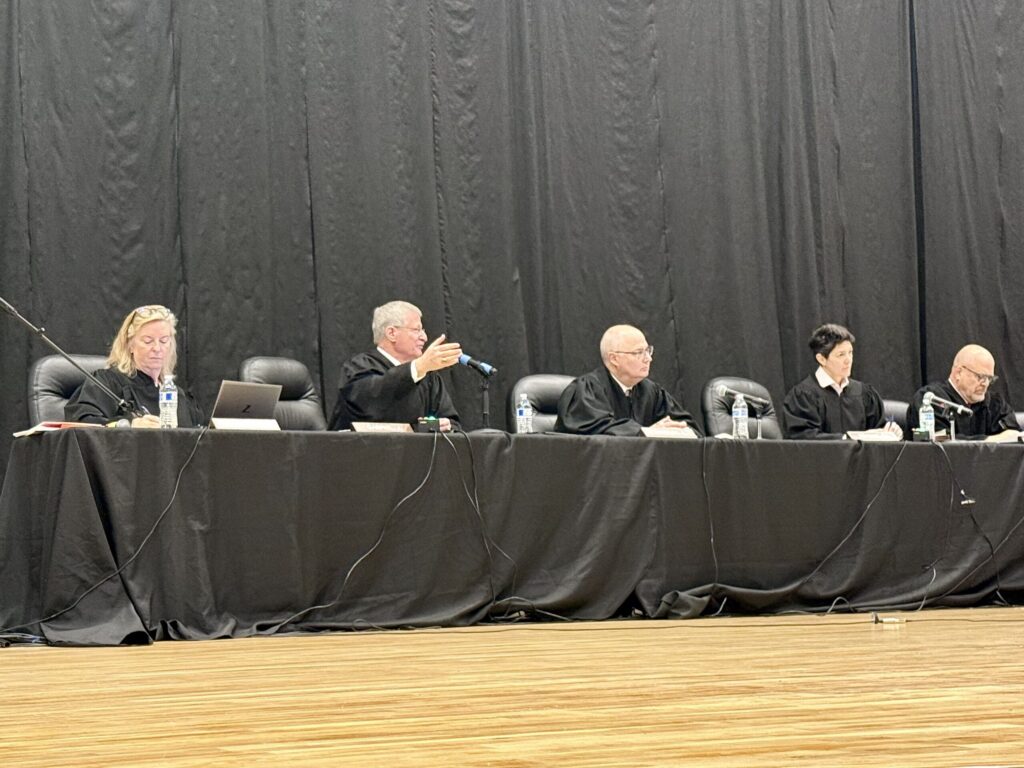
The Colorado Supreme Court declined to rule on Friday in a case questioning the procedure a creditor may use to obtain records from entities related to a debtor, in which the court initially expressed its interest. Joel Farkas is liable...
Colorado Supreme Court to evaluate test for alimony after remarriage
Michael Karlik
michael.karlik@coloradopolitics.com
Updated 4 days ago
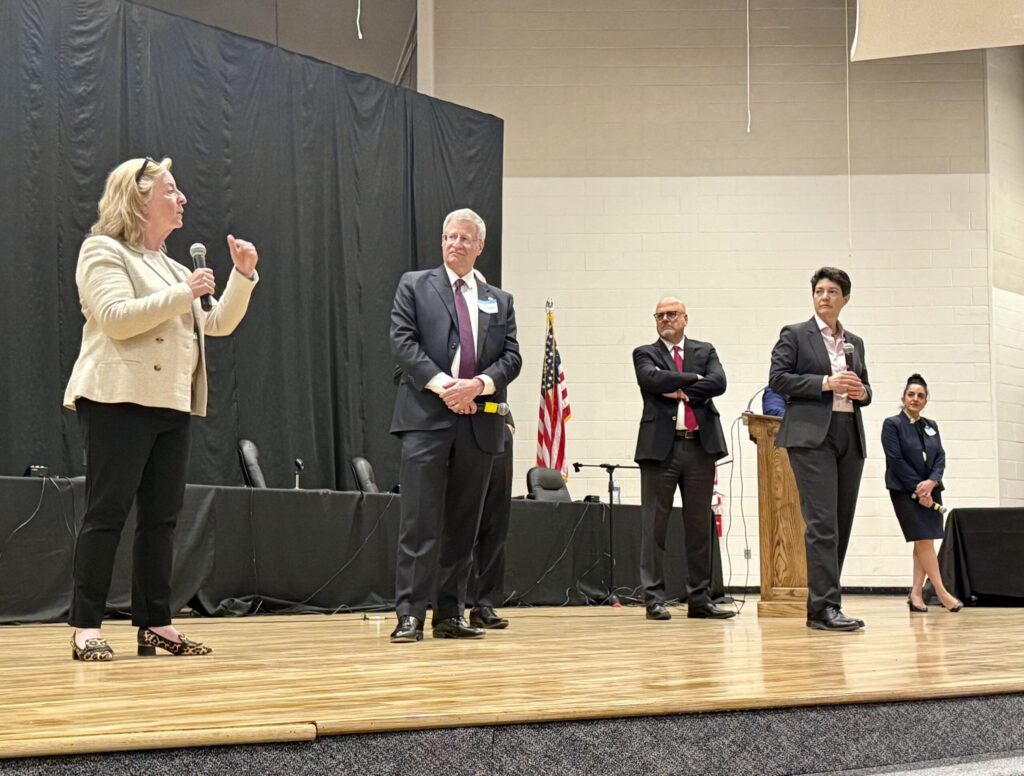
The Colorado Supreme Court announced on Monday that it will evaluate whether divorcing spouses must explicitly agree that alimony payments from one partner to the other will continue after one person remarries, or whether a “clear implication” will suffice. The...
Retired Colorado appeals judge speaks about civic advocacy, SCOTUS
Michael Karlik
michael.karlik@coloradopolitics.com
Updated 4 days ago
Retired state Court of Appeals Judge Russell Carparelli offered mild critiques of the U.S. Supreme Court earlier this month as he spoke about the rule of law, and urged lawyers to “get in the game” by advocating in the political...
Aggravated robbery charge reinstated after El Paso County judge misunderstood requirements
Michael Karlik
michael.karlik@coloradopolitics.com
Updated 5 days ago
Colorado’s second-highest court reinstated an El Paso County defendant’s aggravated robbery charge on Thursday after concluding that a trial judge misunderstood the requirement for a person to be “then and there so armed.” Allegedly, Mark Alan Ambrose walked out of...
PREV
PREVIOUS

Neguse, other House Democrats urge Biden to ban assault weapon imports
U.S Rep. Joe Neguse and more than 60 other House Democrats asked President Joe Biden on Thursday to halt importation of semi-automatic rifles and high-capacity magazines, citing Monday’s deadly shooting at a Boulder supermarket as a reason for the president to act “immediately” rather than wait for lawmakers to pass gun control legislation. “As our […]

Senate panel approves setback minimums for new schools
A Senate panel on Thursday approved a proposal from Sen. Barbara Kirkmeyer that would mandate new schools be set back a minimum of 2,000 feet from oil and gas facilities. Kirkmeyer, R-Brighton, in an interview with Colorado Politics said Senate Bill 21-114 was designed to address a loophole in current law that allows school districts to bypass the local land use process […]