

Denver City Council approves $16M contract expansion for purchasing body cameras, Tasers

Denver’s City Council voted Monday evening 11-2 to adopt a new contract expansion worth more than $16 million for purchasing Tasers, body-worn cameras and related technology, after postponing the vote from last week’s meeting.
The vote adopted Resolution 20-1356, which extends a contract with Axon Enterprise, Inc. – formerly called Taser International Inc. – through Dec. 15, 2025, and increases the amount from $15,996,615.10 to $22,097,650.10. The contract’s purchases will include body-worn cameras, related equipment, software, data storage and Tasers for the Denver Police and Denver Sheriff Departments.
In response to a question from Councilwoman Candi CdeBaca, Denver Police Chief Paul Pazen said he didn’t have the exact number of new body cameras that will be purchased under the contract. However, Deputy Director of Safety Laura Wachter said in the meeting that the contract would allow 1,000 Tasers to be replaced in 2021.
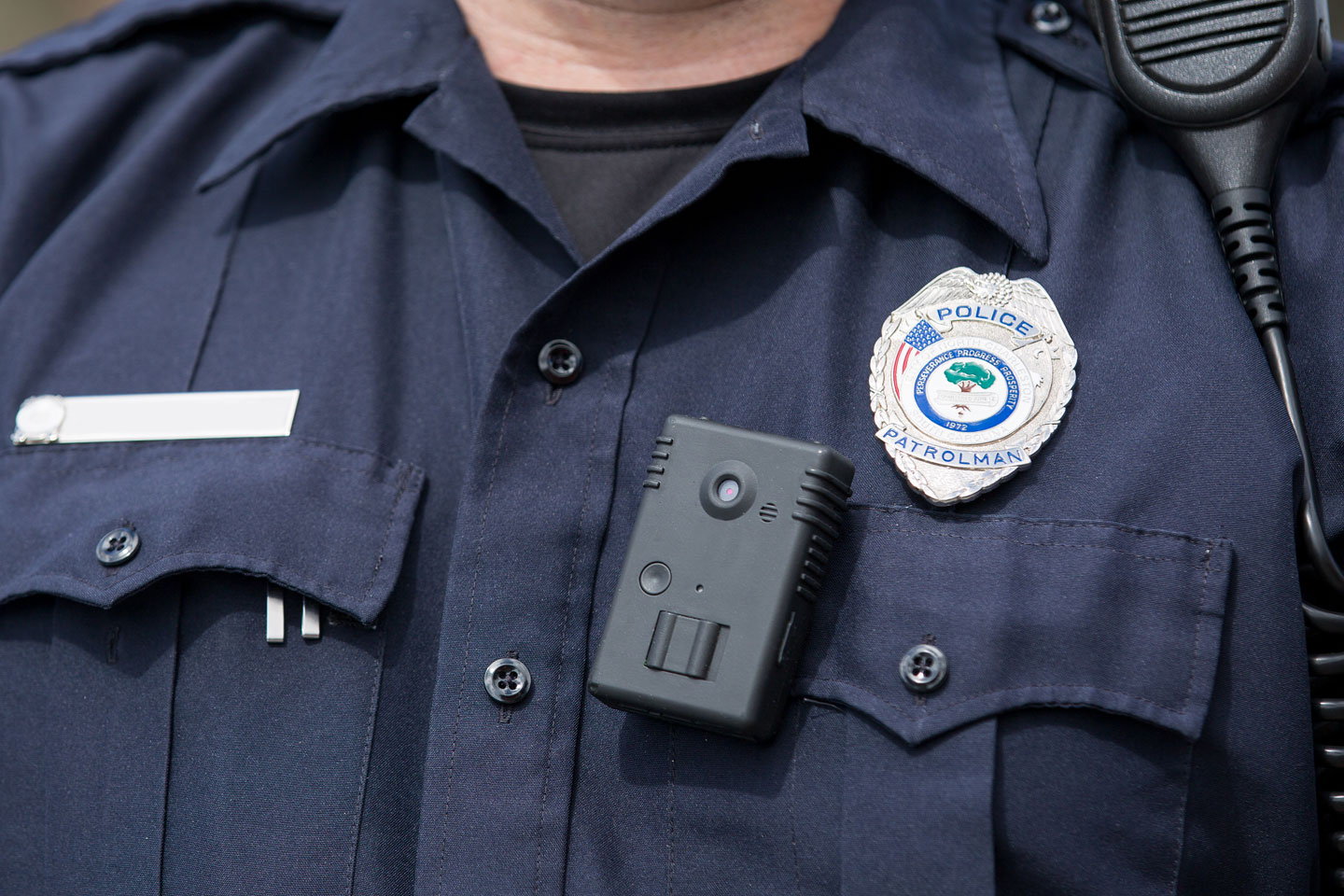
New technology purchased under the contract will include sensors that automatically activate a body-worn camera if an officer draws their gun or Taser. Pazen called the technology a “fail-safe” measure in case an officer has not already activated their camera in an encounter.
Colorado’s policing reform law enacted in June, Senate Bill 217, requires most officers to activate their body-worn cameras during interactions with the public or while responding to service calls. The mandate includes a few exceptions, such as to avoid recording information not related to a case or if an officer is working undercover.
Denver City Council delays vote on body camera contract expansion
Councilmembers CdeBaca and Chris Hinds cast the two votes against approving the contract.
CdeBaca said at the outset of the discussion she had received messages asking for a delay of the council’s vote until after the release of a report from the Office of the Independent Monitor on Denver police’s response to the spring and summer’s protests, which will happen Tuesday. She added she also received messages requesting the contract’s provisions for purchasing Tasers and body camera technology be split into separate contracts.
Councilman Kevin Flynn said he believes technology that will automatically activate a body-worn camera when a Taser or firearm is drawn from its holster makes it infeasible to split up agreements for Tasers and body-worn cameras into separate contracts.
“Because of this interaction, I would suggest that that would not be a very good thing to do, even if it were possible, because we want that functionality,” he said.
Pazen said the lion’s share of the contract’s cost for body-worn cameras is for data storage and management service. He said not approving the new contract would mean there would not be a way to access footage captured by the cameras.
“It is similar to purchasing a phone,” he said. “So if you purchase a phone, it doesn’t mean that you get to make phone calls or stream video or send text messages. You need that service plan, that data agreement. So much of the cost associated with this is associated to that data agreement, and the upgrade is just part of part and parcel of the contract itself.”
In a text message to the Denver Gazette about her dissenting vote, CdeBaca said, “The Chief of Police could not itemize the amount of cameras being purchased, the amount of tasers being purchased nor the specifics of terms of storage on the data platform. Mixing a weapons purchase with an accountability mechanism purchase regardless because the purchase is a ‘package’ without being able to articulate why the package is a deal or what is in the package for 16mil is absurd.
“This mixed contract is intentionally convoluted to defy the community calls to de-militarize their communities and confuse people into voting for more accountability while simultaneously purchasing more weapons, weapons we already have.”
Hinds’ questions about the contract expansion ranged from asking about using a locally-based vendor for providing body-worn camera technology to asking about the purpose of training using virtual-reality headsets included in the contract. Pazen said that technology upgrade will allow simulations of officer encounters to practice de-escalating situations.
Hinds didn’t state a particular reason in Monday’s discussion for his dissenting vote. Council President Stacie Gilmore indicated Hinds intended to ask more questions about the contract, but he did not after Gilmore said, “We’re doubling back and we belabored this quite a bit last week, and so hope you’ve got a quick question here and we can go ahead and vote on this.”
Hinds couldn’t immediately be reached for comment on his “no” vote.


Mysterious letter causes uproar, investigation in Mesa County GOP | A LOOK BACK
Rachael Wright, Special to Colorado Politics
rachael.wright@coloradopolitics.com
Updated 3 days ago
Twenty Years Ago This Week: An unregistered activist group calling themselves ‘The Colorado Republican Caucus’ mailed letters to at least 160 Republicans in Mesa County calling various Grand Junction Republicans “turncoats” and “traitors.” “The danger was that the letters were...

Colorado Politics Calendar Apr. 20-26
Rachael Wright, Special to Colorado Politics
rachael.wright@coloradopolitics.com
Updated 3 days ago
CoPo’s weekly political calendar helps you find political and public policy events throughout Colorado. It includes candidate and issue campaign events, public policy meetings, court hearings, state and local party conventions, assemblies, debates, rallies, parades, speaking engagements, traveling dignitary appearances,...

A happier budget week | Capitol M | Week of April 18, 2026
Marianne Goodland
marianne.goodland@coloradopolitics.com
Updated 2 days ago
It’s budget time at the state Capitol, and generally, it’s a humorless situation. It certainly was that way in the House last week, with a 15-hour reading of the long bill at 661 pages that resulted in lawmakers having to...

Colorado lawmakers advance bill to tackle Colorado’s prison capacity issues
Marianne Goodland
marianne.goodland@coloradopolitics.com
Updated 24 hours ago
As lawmakers move the 2026–27 state budget toward completion, they are intensifying efforts to address overcrowding and capacity challenges within the Department of Corrections and related agencies—issues that have contributed to increased spending in the budget. The state Senate on...

Colorado justices, lawyers speak with rural students through outreach program
Michael Karlik
michael.karlik@coloradopolitics.com
Updated 2 hours ago
Members of the Colorado Supreme Court appeared before students from eight rural schools on Thursday to hear a pair of cases, field questions, and mark the first time the state’s newest justice participated in the long-running program. “I had such...
Democrats want Colorado colleges to provide medication abortion
Marissa Ventrelli
marissa.ventrelli@coloradopolitics.com
Updated 21 hours ago
A bill proposing to require Colorado colleges and universities to provide abortion medication services cleared a legislative committee on Thursday. Advocates said the measure — which exempts religious-based institutions but applies to public, private, and community colleges — will improve...

Trump ‘in discussions’ with IRS to cut deal in tax record lawsuit
Brady Knox, Washington Examiner
brady.knox.washington.examiner@gazetteedit.wpenginepowered.com
Updated 22 hours ago
President Donald Trump is in talks with the Internal Revenue Service to strike a deal over the release of his tax records. The news was revealed in a legal filing, where his legal team said they were in “discussions” with...
Governor’s wildlife commission picks face pushback ahead of Colorado Senate hearing
Marianne Goodland
marianne.goodland@coloradopolitics.com
Updated 23 hours ago
Colorado’s largest coalition of hunters, anglers, and wildlife conservation groups is urging state lawmakers to reject two of Gov. Jared Polis’ latest nominees to the Colorado Parks and Wildlife Commission, setting up a contentious confirmation hearing before the Senate Agriculture...
Colorado justices skeptical of snowboarder’s bid to revive injury lawsuit after signing new waiver
Michael Karlik
michael.karlik@coloradopolitics.com
Updated 3 hours ago
The Colorado Supreme Court seemed to agree on Thursday that a plaintiff is not entitled to continue his snowboarding injury lawsuit because he purchased another pass in the middle of litigation that released all past legal claims. “It says you’re...
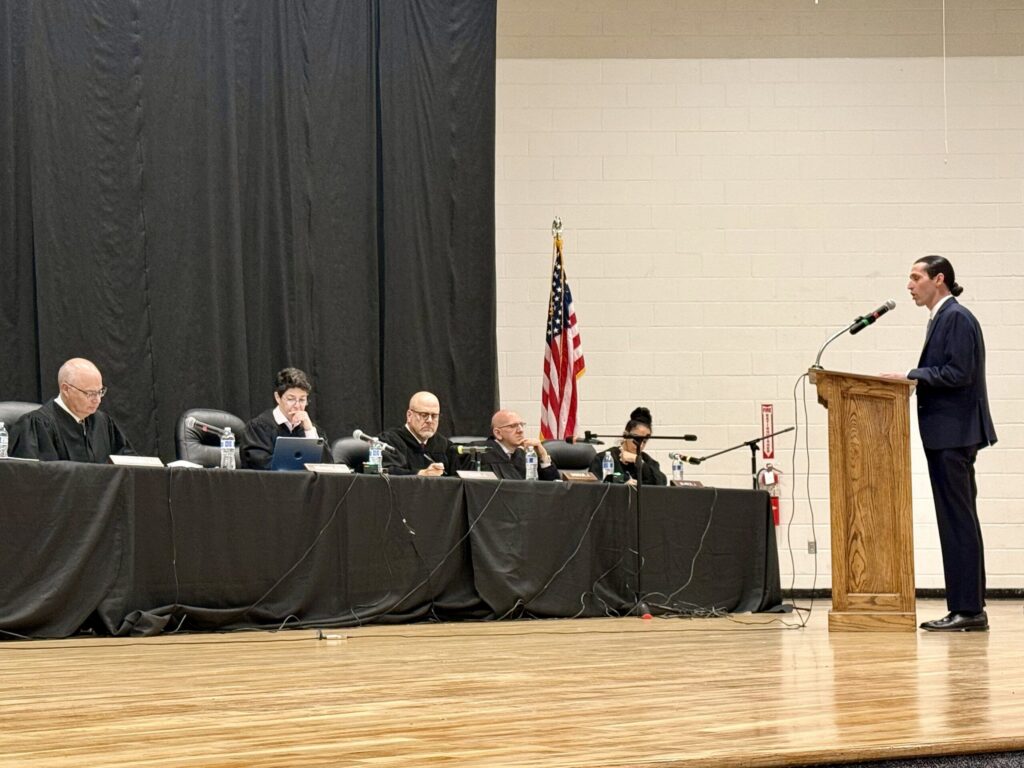
Colorado Supreme Court appears OK with revised ‘reasonable doubt’ instruction
Michael Karlik
michael.karlik@coloradopolitics.com
Updated 18 minutes ago
The Colorado Supreme Court appeared largely comfortable on Thursday with the recently revised definition of “reasonable doubt” that is now part of the template jury instructions for criminal cases. To date, multiple Court of Appeals decisions have endorsed the constitutionality...
PREV
PREVIOUS
COVID-19 vaccine trials at Aurora VA includes associate state director for AARP
While the United States could be just days away from getting its first doses of the Pfizer COVID-19 vaccine, clinical vaccine trials on Pfizer, Moderna, AstraZeneca and Janssen vaccines are ongoing, and at least one is underway at the Rocky Mountain Veterans Administration Medical Center in Aurora. According to a statement from the VA Office […]

Aurora City Council approves first vote for marijuana delivery ordinance
Aurora lawmakers approved marijuana delivery on an 8-2 vote during a City Council meeting Monday night. Monday’s vote was the first on the marijuana delivery plan, which must pass a second round of voting before being officially implemented. Councilman Dave Gruber and Councilwoman Francoise Bergan were the only ones to vote against the plan. If […]