

INSIGHTS | Denver’s race issues fueled by the flames of history
The city of Denver and the state of Colorado took pause this week in the name of Preston Porter Jr., stepping in 120 years too late.
That’s lofty for a 15-year-old railroad worker. Unspeakable torture and terror should be worth something.
Preston was Black. He, his father and 27-year-old brother, Arthur. All three were working on the Kansas-Pacific Railroad 5 miles outside of Limon that day, Nov. 8, 1900, a Thursday.
That afternoon, 12-year-old Louise Frost, the daughter of a local sheep rancher, Robert W. Frost, climbed aboard her wagon to head home after school.
She stopped to buy penny candy at the mercantile and gave another girl a ride part of the way home. As the cold evening set in, her team pulling an empty wagon arrived in her family’s yard. The candy and quilt Louise would have wrapped herself in were undisturbed on the seat of the wagon, a local historical account has it.
Preston’s troubles were only beginning.
A search party formed and soon found Louise cast down a ravine barely alive, her moans attracting her finders, before she died from her injuries.
“Both the Denver Times and the Rocky Mountain News reported that the young girl had a total of 14 stab wounds inflicted to both breasts, the neck and forehead, and a gaping gash the entire length of her right thigh,” according to HistoryNet. “Her skull was fractured from the impact of a heavy boot or boots, and she had been raped.”
The Denver media set a match on the sensational story by reporting the attacker was believed to be one of the Black itinerants working on the railroad, because who in Limon, a town of 150 white people, could do such a thing?
Preston was the best suspect they had.
He had taken a day off work to hang out with a friend in town until 1:30 p.m., when he left to make it back to the camp by 6 for dinner. The mess cook confirmed he was there, but Preston had no one to vouch for his whereabouts most of the afternoon.
The sheriff found burned clothes near the boxcar where he lived, and his boots matched tracks at the scene, law officers alleged.
Preston was in town to cash his paycheck when he was arrested and hauled off to the Denver City Jail. There, he was tortured until he confessed. He wrote that he was confessing to save his brother and father.
Preston was sent back to Limon on Nov. 16, a Friday. Newspapers in Denver reported the time the train would arrive in Limon. The lynch mob was even predicted by the press.
Reportedly, 300 men were there, including those on the train from Denver and others who came from as far away as Colorado Springs.
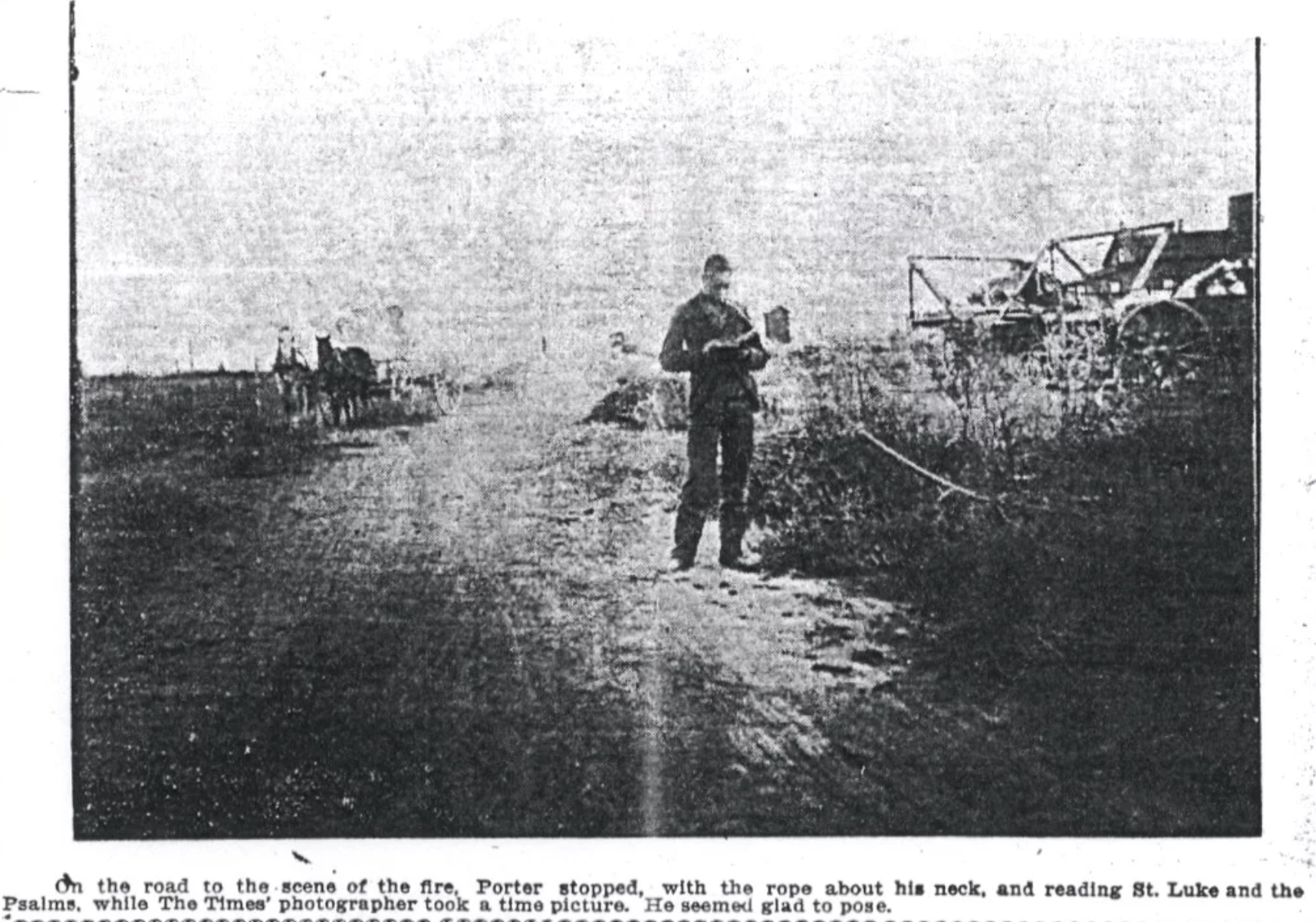
The girl’s father chose the manner of death, burning him alive. An iron rail was driven upright in the ground. They put a rope around Preston’s neck and marched him to the site, allowing him to read from the Bible, the Book of Psalms and the Gospel of St. Luke’s, as he walked to his certain death. He arrived at 4 p.m., and he wasn’t burned until 6:23.
Hands over his head, Preston was lasted to the iron rail with ropes and chains and surrounded with oil-soaked kindling. Robert Frost lit a rag and ignited the pyre.
Preston screamed for 12 minutes until the flames overtook him, according to accounts. Guilt or innocence ceased to matter.
Pinkerton detective Frank Murray, who later pursued Butch Cassidy and his gang, investigated the girl’s death and found holes: Louise was last seen alive at about 4:30, not enough time for Preston to make it back to camp for dinner 5 miles away at 6. The undisturbed candy and blanket in the wagon led him to believe Louise knew her killer and left the wagon voluntarily.
No one was ever arrested.
Well-meaning politicians – not all of them were – played a role. Three years earlier, in 1897, Colorado was one of the first states to abolish capital punishment. In 1901, the gallows returned after vigilante justice surged, as the citizenry did the dirty work the government would not. Hanging was the lone method for state-sanctioned killing until it was replaced by the gas chamber in 1934.
The General Assembly repealed the death penalty again this year.
Last weekend the Colorado Lynching Memorial Project and the Alabama-based Equal Justice Initiative erected a permanent Memorial Marker at 1300 Larimer St., just off Speer Boulevard today, near the site of the old city jail where Preston confessed.
Gov. Jared Polis signed a proclamation making Monday Preston Parker Jr. Day. He is the first Colorado governor to make such a declaration.
He cited the memorial in his proclamation, “so that all may know of this history and so that we can reckon with the realities of our past, reconcile one to the other, and move forward together to a more just future.”
The legacy of Preston Porter Jr. focuses solely on how he died and why, but it’s a monument to failed justice. You could say the same for George Floyd or Elijah McClain.
A 15-year-old screaming in the flames should remind us of the depths people can sink to when vengeance stains justice.
Did a killer walk free in Limon that day? We will never know for sure, because law enforcement, public officials and Denver’s press did nothing but fan the flames of racial hatred.
Louise Frost was buried in Denver’s Fairmount Cemetery. Preston was burned to ash, his legacy surrendered to the prairie wind.



Polis officially requests federal disaster declaration for Colorado wildfires and floods
9News
9news@coloradopolitics.com
Updated 35 minutes ago
Gov. Jared Polis has requested a Major Disaster Declaration to aid recovery from the Aspen Acres and Gold Mountain fires and subsequent flooding in the burn scars. COLORADO, USA — On Sunday, Gov. Jared Polis officially requested a Major Disaster Declaration from...

Fishing closures are becoming routine as record heat warms rivers in the US West | OUT WEST ROUNDUP
Ernest Luning
ernest.luning@coloradopolitics.com
Updated 3 days ago
MONTANA Fishing restricted as rivers warm LIVINGSTON — Trout need cool water to survive, but record heat this summer has driven water temperatures to lethal levels for fish. Wildlife officials are banning fishing during certain hours on rivers and streams...
Colorado measure redirects sales tax revenue from sporting goods, equipment to conservation programs
The Denver Gazette
the-denver-gazette@coloradopolitics.com
Updated 45 minutes ago
A proposal to redirect sales tax revenues from sporting goods and equipment toward wildfire and conservation programs will appear on the ballot this November, election officials in Colorado confirmed. The measure, if approved by voters, would reduce the amount available...
Firefighters’ deaths prompt debate over 100% suppression wildfire strategy
Rachael Wright, Special to Colorado Politics
rachael.wright@coloradopolitics.com
Updated 15 hours ago
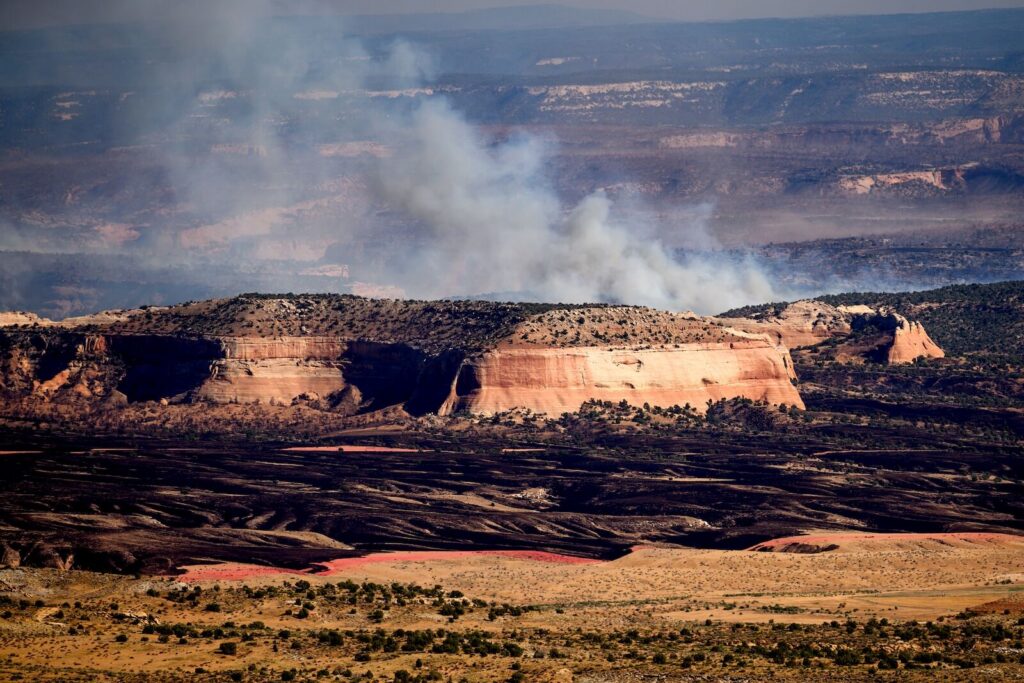
On July 22, 2026, the chief of the U.S. Forest Service testified before a House Agriculture subcommittee that his agency pursues a “full suppression” strategy to contain all fires while they are still small, rather than allowing them to burn...

A summertime all-you-can-eat political buffet | SONDERMANN
Eric Sondermann
eric-sondermann@coloradopolitics.com
Updated 5 days ago
We find ourselves in the doldrums of August with a complete dearth of political news. Yeah, right. These days, that train never stops moving. It is a 24/7/365 express amplified by 24/7/365 media. Let me respond with one of my...

GOP worker pleads guilty to campaign funds embezzlement scheme | A LOOK BACK
Rachael Wright, Special to Colorado Politics
rachael.wright@coloradopolitics.com
Updated 5 days ago
Forty-five Years ago this week: After pleading not guilty to a Denver federal grand jury indictment of five counts of bank embezzlement, Eve Lynn Lincoln, a Colorado Republican Party employee, decided to plead guilty to one count: using bank credit...
Schoolchildren’s presence at child sex-related trial did not harm Arapahoe County defendant, appeals court says
Michael Karlik
michael.karlik@coloradopolitics.com
Updated 2 days ago
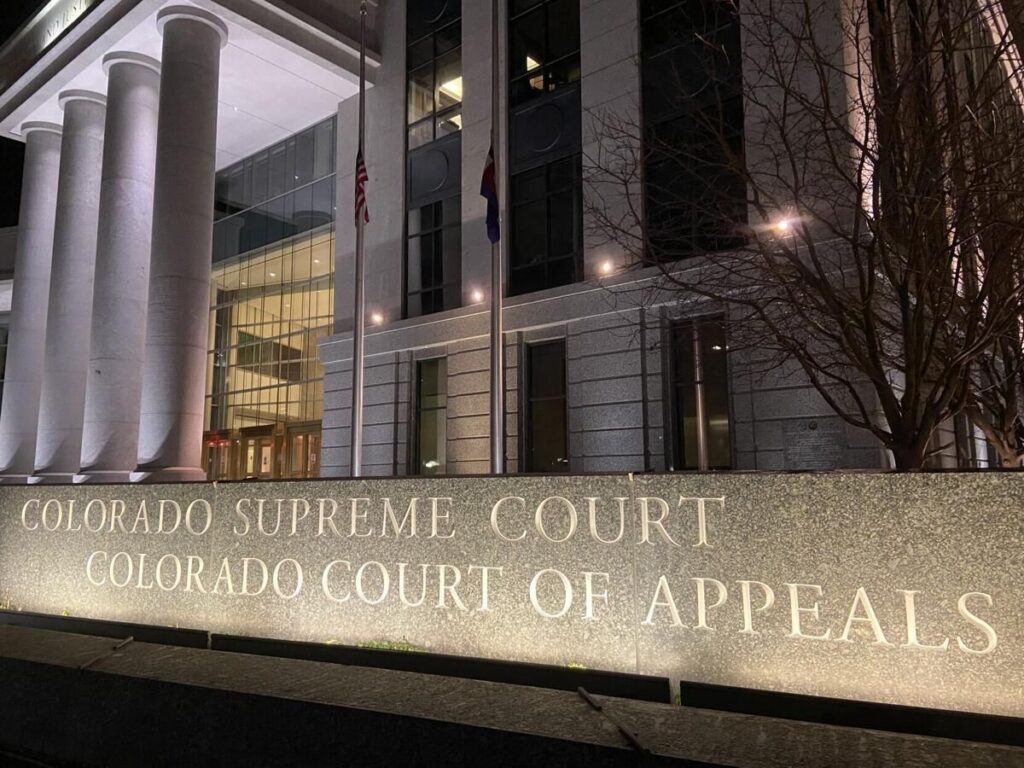
Colorado’s second-highest court decided on Thursday that the presence of a group of schoolchildren on the first day of a child sexual exploitation trial did not violate an Arapahoe County defendant’s constitutional right to a fair trial. Prosecutors charged Jerry...
Appeals court cites week-old Colorado law to reinstate child neglect case at child, father’s request
Michael Karlik
michael.karlik@coloradopolitics.com
Updated 1 day ago
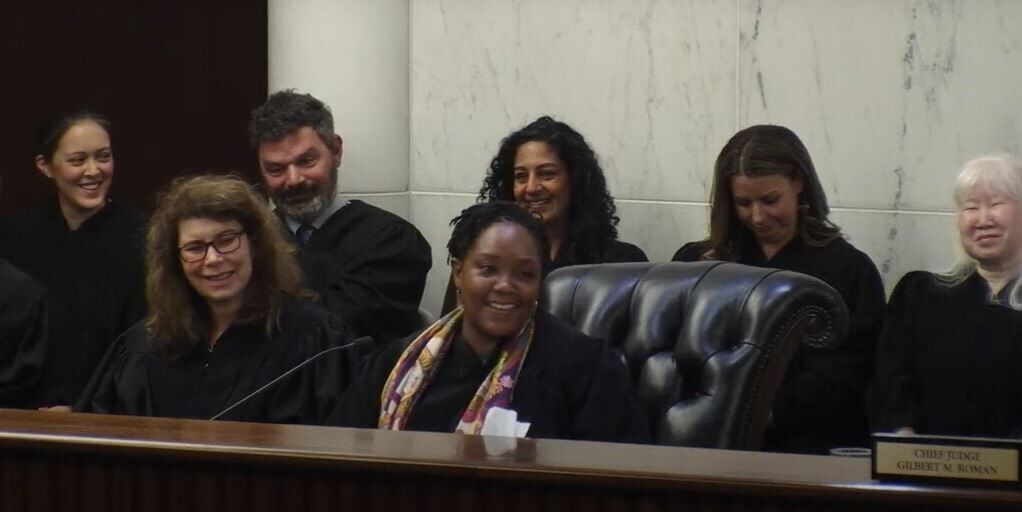
Colorado’s second-highest court invoked a new state law for the first time on Thursday and reinstated a child neglect case that both the child and her father wished to reopen. House Bill 1227 took effect on Aug. 12, reversing a...

Democratic candidate in Colorado’s 4th CD urges long-term water planning
Marianne Goodland
marianne.goodland@coloradopolitics.com
Updated 1 day ago
The Democrat hoping to become the next representative of Colorado’s 4th Congressional District on Thursday made her case on the final day of Colorado Water Congress in Steamboat Springs. Eileen Laubacher, who spent 34 years in the U.S. Navy and...

Castle Rock council declines to censure member accused of misconduct
Nicholas Fogleman
nicholas.fogleman@denvergazette.com
Updated 3 days ago
A Castle Rock Town Council meeting Tuesday became consumed by allegations that a councilmember attempted to trade a town policy decision for the withdrawal of a recall effort against him. The allegations against Councilmember Mark Davis surfaced during public comment...
PREV
PREVIOUS

Air Force Academy locks down cadets to stop coronavirus surge
A dramatic spike in coronavirus infections led to an ongoing lockdown at the Air Force Academy, where cadets have been isolated in their dorm rooms as leaders wait for the epidemic to subside. Leaders say the exponential spread of the virus coincided with October’s “third wave” of the pandemic arriving in Colorado. In the close […]
fire
Smoke plume looks significantly worse than even five minutes ago at the fire of Bear Creek Park. Video from Lower Gold Camp Road. #coloradosprings #fire pic.twitter.com/X2dZltvG7k — Mary Shinn (@maryshinn) November 19, 2020