

Court to consider injunction against Adams County for allegedly withholding mail to inmates

A federal judge will decide this week whether to issue a preliminary injunction against Adams County following allegations from a prison watchdog group that the jail has prevented inmates from receiving its magazines and correspondence.
The Human Rights Defense Center, a Florida-based nonprofit, accused the county in a Sept. 1 civil complaint of “unconstitutionally censoring” the organization’s communications with incarcerated individuals, which included mailings of educational materials about COVID-19.
“Yet since June 2019, and on an ongoing basis, the Jail and its employees have refused to deliver dozens of HRDC’s mailings to incarcerated persons, directly violating HRDC’s First Amendment right to freedom of speech,” the group wrote. The county jail reportedly returned the mail to HRDC or never notified the group of a failure to deliver.
HRDC’s request for an injunction seeks to prevent the county from continuing this alleged practice.


Assistant county attorney Kerri A. Booth, in response to HRDC’s request, wrote that the Adams County Detention Facility processes each item of mail individually to determine whether it presents a risk. She described that the facility “generally” distributes HRDC’s publications to inmates who have requested a subscription.
“HRDC cites to 32 alleged incidents of receiving returned mail. This provided them with at least 32 opportunities to call or write to ACDF to discuss and dispute the alleged ‘censorship’,” Booth explained. “HRDC fails to demonstrate any facts tending to show that it actually tried to challenged [sic] the rejections.”
J. Matthew Thornton, a Denver attorney at Ballard Spahr LLP, countered on behalf of HRDC that the group was unaware of any instances in which its mailed materials caused a security concern at any facility in the country. Citing the pressing need to inform inmates about the pandemic and the lack of notice for the jail’s reported rejection of mailings, HRDC believed the circumstances weighed in its favor for an injunction.
“If correctional facilities are allowed to simply throw away items that they choose not to deliver without any notice, it is impossible for publishers and incarcerated persons to know what materials are not being delivered and subsequently challenge the basis for the refusals,” wrote Thornton.
Such an intervention from the court, the county warned, would force the jail to “suddenly and quickly” overhaul the system for processing and distributing mail. While Adams County acknowledged the public interest in inmates accessing mail, Booth argued for the court to find a greater interest in preventing “dangerous and hazardous items” from entering the jail.
U.S. District Court Chief Judge Philip A. Brimmer has ordered arguments for and against the injunction on Wednesday morning.
The U.S. Supreme Court has ruled in the past that detention facilities may impose regulations on inmate mail that are reasonably related to legitimate, penological goals. The safety of prisons and jails qualifies under that definition, reports Americans for Effective Law Enforcement, and therefore the standard allows correctional officers considerable deference in crafting policies.
If HRDC litigation proceeds to trial, the group hopes to receive a declaration that the Adams County jail’s policies are unconstitutional and to gain a permanent injunction.
Colorado Politics Must-Reads:


Colorado Supreme Court oral arguments, chief appeals judge to retire | COURT CRAWL
Michael Karlik
michael.karlik@coloradopolitics.com
Updated 1 hour ago
Welcome to Court Crawl, Colorado Politics’ roundup of news from the third branch of government. The state Supreme Court held oral arguments in multiple cases and traveled to the Eastern Plains to visit with students, plus the chief judge of...
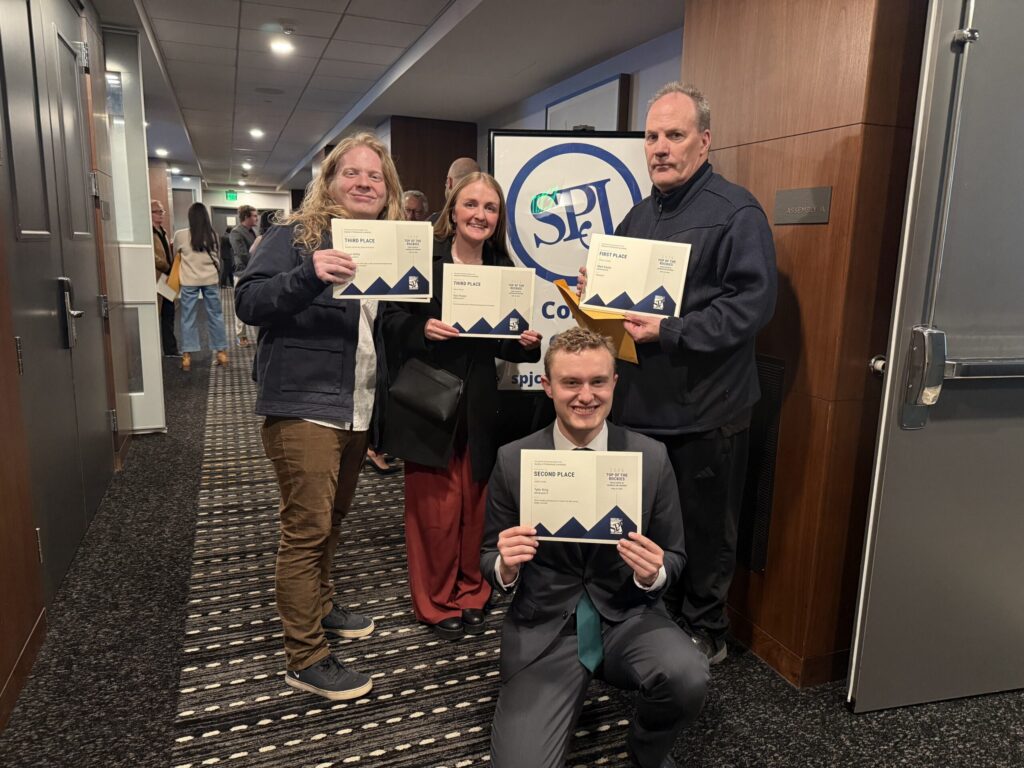
Gazette newspapers win 51 awards at Top of the Rockies
Nicholas Fogleman
nicholas.fogleman@denvergazette.com
Updated 3 hours ago
The Gazette family of newspapers won more than 50 awards at the Society of Professional Journalists’ 2026 Top of the Rockies Excellence in Journalism contest. The Gazette family, which includes The Denver Gazette, The Colorado Springs Gazette and Colorado Politics, collectively...
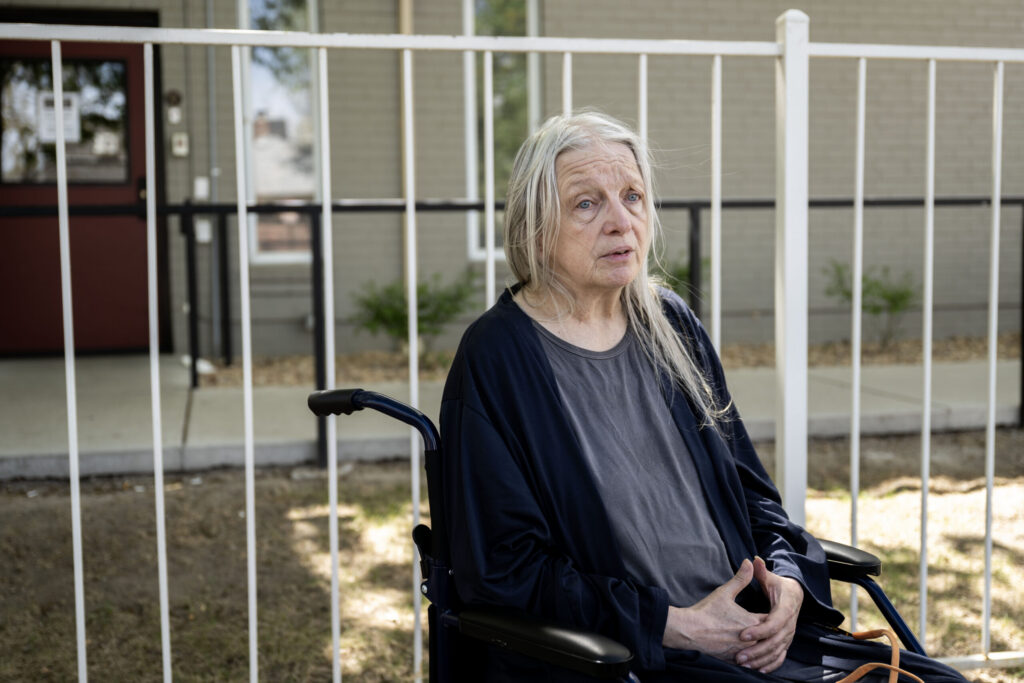
Assisted-living facility in Colorado faced minimal fine after death of 73-year-old man
Jenny Deam
jenny-deam@coloradopolitics.com
Updated 2 days ago
On Jan. 6, just after 8:30 p.m., Robert Dutkevitch rolled his wheelchair onto the smoking patio outside The Argyle assisted-living facility in Denver. Minutes later, the 73-year-old suddenly slumped in his chair, his head lolling to the side. He then...

Governor OK’s funding for summer food assistance for Wyoming kids | OUT WEST ROUNDUP
The Associated Press
the-associated-press@coloradopolitics.com
Updated 4 days ago
WYOMING Governor funds kids’ summer meals Gov. Mark Gordon secured funding for a summer food assistance program for kids and directed its implementation through an executive order. After the Wyoming legislature declined to fund the SUN Bucks program—designed to provide...

Trump says suspect was armed with multiple weapons at White House correspondents’ dinner
Alanna Durkin Richer
alanna.durkin.richer@associatedpress.com
Updated 2 days ago
WASHINGTON (AP) — President Donald Trump is addressing reporters at the White House after he and other top leaders of the United States were evacuated from an annual dinner of White House correspondents on Saturday night after a shooting incident...
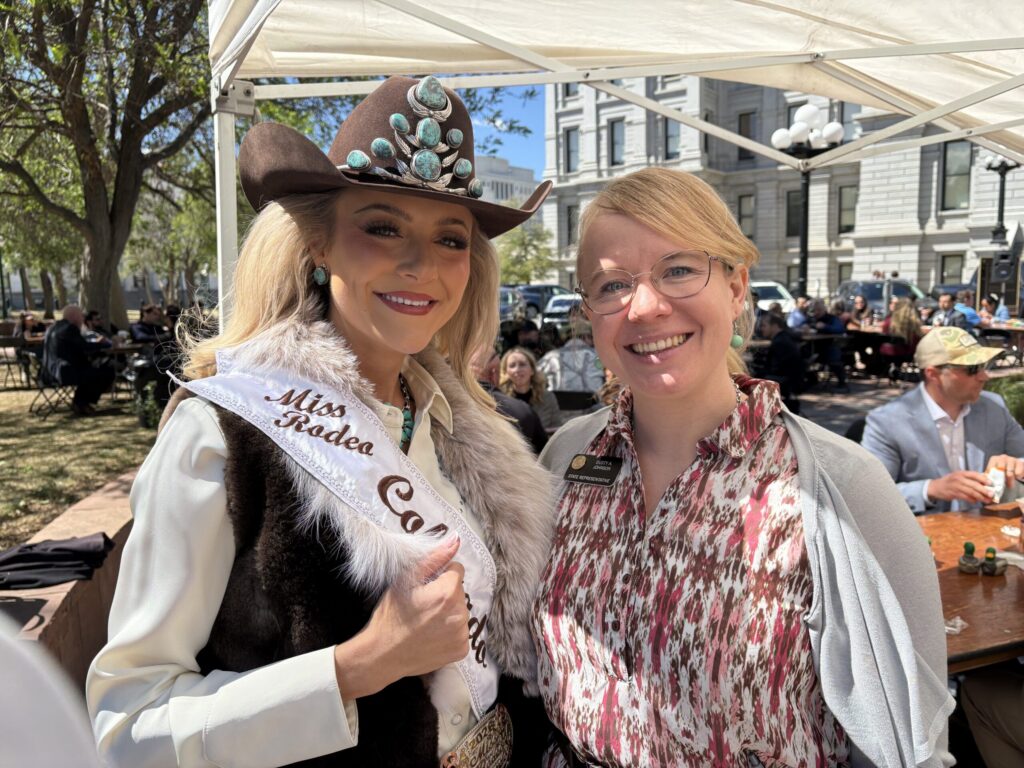
Mountain Lion/Pheasant Green Chile a hit! | Capitol M | Week of April 25, 2026
Marianne Goodland
marianne.goodland@coloradopolitics.com
Updated 2 days ago
The lighter side of the state Capitol, although if you were eating at the barbecue Thursday, you are probably not any “lighter.” With the arrival of spring comes outdoor barbecues at the state Capitol, and the most unusual is the...
Domestic violence rises in Colorado, state rep. seeks to fight back | A LOOK BACK
Rachael Wright, Special to Colorado Politics
rachael.wright@coloradopolitics.com
Updated 4 days ago
Forty-Five Years Ago This Week: A bill sponsored by Rep. Jeanne Faatz’, R-Denver, House Bill 81-1336, was the final compromise bill intended to counteract the rising tide of domestic violence in Colorado. According to FBI figures, 40,000 women in 1980...

Passenger train service from Denver to Fort Collins? | Cronin and Loevy
Tom Cronin Bob Loevy
tom-cronin-bob-loevy@coloradopolitics.com
Updated 1 day ago
A “Joint Service” plan is being developed that would bring passenger rail service from Denver north to Fort Collins by 2029. The passenger trains would be paid for with existing funds from the Denver Regional Transportation District (RTD) and other...

The applicability of Hungary’s election to our politics | SONDERMANN
By Eric Sondermann
by-eric-sondermann@coloradopolitics.com
Updated 6 days ago
American conservatives, largely synonymous these days with MAGA save for a few lonely voices of courage and dissent, have plenty to lament. Their domination of the political landscape is waning. Various special elections hither and yon have presented bright, flashing...

Colorado Politics Calendar Apr. 27-May 3
Rachael Wright, Special to Colorado Politics
rachael.wright@coloradopolitics.com
Updated 5 days ago
CoPo’s weekly political calendar will help you find political and public-policy events throughout Colorado. It includes candidate and issue campaign events, public policy meetings, court hearings, state and local party conventions, assemblies, debates, rallies, parades, speaking engagements, traveling dignitary appearances,...
PREV
PREVIOUS

INSIGHTS | A viral instant in Denver feeds a political maw
I’m not sure how I feel about Jennifer Watson. I talked to her on the phone on a Friday morning, but I’ve never met her, never walked in her shoes, never kicked up the sand of her political beliefs. I just don’t know her. That’s how Jennifer feels, too. She doesn’t know the person portrayed […]

Gardner introduces legislation proposing Colorado Springs VA hospital
U.S. Sen. Cory Gardner has introduced legislation to authorize the U.S. Department of Veterans Affairs to construct a VA hospital in Colorado Springs that would serve the large concentration of veterans in El Paso County. “Our nation’s veterans deserve timely access to quality care, but I hear frequently from veterans in El Paso County about […]