

CRONIN & LOEVY | Dems’ spending thwarted — again


Democratic Gov. Jared Polis in November of 2019 proposed a fiscal year 2021 Colorado state budget of $34.5 billion. Eight months and a COVID-19 crisis later, he and the Democratic Party-controlled state legislature approved a $30 billion state budget for the fiscal year that began July 1. That is $4.5 billion less than originally intended.
Democrats have been winning elections in recent decades, but extra-party events have undermined the Democrats from investing as much as they would like in their traditional priorities such as public K-12 education, public higher education, infrastructure, and health care for the poor (Medicaid).
Those extra-party events are the TABOR Amendment to the state constitution, the Great Recession of 2008, and, this year, the coronavirus pandemic.
This analysis assumes that, when they gain political control, Democrats want to invest government money on expanded social services. For this trait Republicans charge Democrats with being “big spenders.”
The narrative goes like this. Back in the 1980s, Colorado Republicans were enjoying the long presidential coattails of Ronald Reagan in 1980 and 1984 and George H. W. Bush in 1988. The Republicans had solid majorities in both houses of the Colorado state legislature, which prevented Democratic Govs. Richard Lamm and Roy Romer from spending much money on Democratic priorities.
This period of Republican dominance started coming to an end in the 1990s when Democrat Bill Clinton won the presidency in 1992. With the Reagan-Bush Republican coattails gone, the Democrats began electing more state legislators and occasionally taking control of one house of the state legislature or the other.
These legislative victories enabled the Democrats to take control of the state Reapportionment Commission in 2001 and gerrymander both houses of the state legislature in their favor. In 2004, the Democrats stunned the Colorado political world by winning majorities in both houses of the state legislature for the first time in decades.
But when it came to spending money, the newly empowered Democrats had a problem. The TABOR Amendment to the Colorado state constitution, adopted in 1992, put strict limits on state revenues. Increases in state taxes required the approval of state voters, and state expenditures could not grow faster than both population growth and inflation. Referendums on statewide tax increases were difficult to win, and budgets limited to population growth and inflation made it hard to keep up with the state’s fiscal needs.
A bright spot occurred when Bill Ritter won the governorship for the Democrats in 2006. His expansive spending plans for Colorado state government were ended, however, by the Great Recession that began in the fall of 2008. As the national and state economies suffered through the worst economic downturn since the Great Depression of the 1930s, state revenues dropped, and a Democratic governor had to take a financial butcher’s knife to state budgets rather than increase them.
Bill Ritter declined to run for re-election as governor in 2010. Doubtless the stark state fiscal situation due to the Great Recession of 2008 (and his resulting low poll numbers) helped convince him to voluntarily drop out of Colorado electoral politics.
This brings us to the present moment. Colorado Democrats rode the anti-President Trump blue wave of the 2018 elections into winning solid control of both houses of the state legislature and elected liberal Democrat Jared Polis governor. In the meantime, a booming national and state economy was hyping state revenues from income taxes and sales taxes.
Surely the session of the Colorado legislature beginning this January 2020 would enable the Democrats to raise spending on public schools, public colleges, health care for the poor, and transportation. Best of all, in the favorable political atmosphere created by the rapidly expanding national economy, there was talk of perhaps, at long last, convincing the voters to loosen the stranglehold of TABOR on state revenues.
And then the coronavirus arrived in Colorado in February of 2020 and ruined everything for the Democrats. The state economy suddenly went bad and tax income fell precipitously. With the grudging approval of Gov. Polis, the Democratic state legislature, which has adjourned for the year, was forced to reduce spending rather than dramatically increase it. The legislature approved nearly 200 fewer bills this year than it usually does. Higher education took another big cut. Virtually everything had to be cut. And the bad economy dismissed all thought of citizens voting favorably on increasing taxes or limiting TABOR.
We acknowledge the accomplishments of Colorado’s Democrats since they took control of both houses of the state legislature and the governor’s office. They have strengthened the rights of racial and ethnic minorities, protected gays and lesbians, and reformed police powers. They have continued to make voter registration and all mail-in voting for state elections easier. They eliminated the death penalty.
Please note that most of the Democratic Party achievements listed above did not cost much money.
As for the Republicans in Colorado, they have lost control of state government over three decades but have seen their fiscal conservatism protected by TABOR, the Great Recession of 2008, and the coronavirus pandemic. Those Republicans who share the Libertarian Party’s dislike for big government and big spending may have, in a strange backhanded sort of way, been the biggest winners of all.
We are certain Democrats will continue to try to win votes by promising to increase expenditures for public K-12 education, public higher education, Medicaid, and highways and passenger trains. Will they ever succeed at getting the needed tax revenue? Colorado is a progressive state on most social issues and conservation matters, yet it is much more an anti-tax state than most people appreciate. Meanwhile Colorado Democrats have to practice artful cutting at the same time they pledge to make major investments in their traditional priorities.


A daring and fearless rescuer — is afraid of a debate | Dick Wadhams
Dick Wadhams
dick-wadhams@coloradopolitics.com
Updated 2 days ago
Victor Marx, the Republican nominee for governor who says he can exorcize demons and who claimed he has fearlessly rescued 45,000 women and children during 150 “high-risk” missions around the world, appears to be intimidated by the notion of debating...

Proposed EPA changes could save truckers billions | Rachel Gabel
Rachel Gabel
rachel-gabel@coloradopolitics.com
Updated 2 days ago
Agriculture is in distress across nearly every segment across much of the nation, and certainly to a more dire degree in the western United States. If it were not a historic drought, some pressures could be eased. Others can be...

Colorado Democrats, your time is coming | Jon Caldara
Jon Caldara
jon-caldara@coloradopolitics.com
Updated 2 days ago
Hey, Colorado Democrats! All the fun you’ve had watching Republican dysfunction in Colorado for the last 20 years was just a preview of what is about to happen to you. The Colorado Republican Party no longer exists as a competitive...
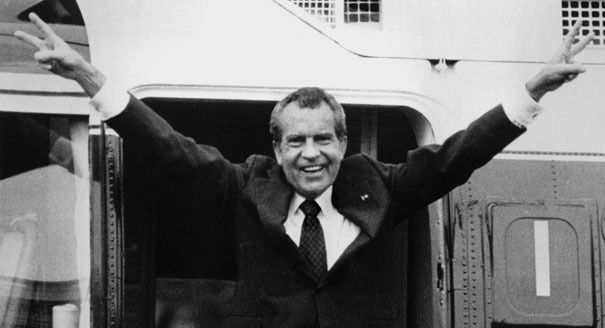
The relevance of Watergate more than a half-century later | SONDERMANN
By Eric Sondermann
by-eric-sondermann@coloradopolitics.com
Updated 5 days ago
It was the scandal for which all other scandals are now named. In June 1972, a small group of Cuban burglars with high-level connections broke into the headquarters of the Democratic National Committee. Those headquarters were located in the Watergate...
Colorado must continue finding common ground on wildfire policy | GUEST COLUMN
Colorado Politics
colorado-politics@coloradopolitics.com
Updated 4 days ago
By John Herrick Colorado has never lacked for opinions about wildfire policy. We debate forest management, climate change, prescribed burns, land use, air quality and budgets. Those debates are familiar territory, but a new discussion is beginning to happen around...

Proposition NN is the best investment for Colorado’s students and schools | GUEST COLUMN
Colorado Politics
colorado-politics@coloradopolitics.com
Updated 4 days ago
By Justin Ogden Colorado families know what it means to make difficult budget decisions. Inflation has driven up the cost of groceries, housing, utilities and just about everything else. Families like mine work hard to stretch every dollar while still...
Were the primaries a preview for consequential general election? | Paula Noonan
Paula Noonan
paula-noonan@coloradopolitics.com
Updated 5 days ago
Colorado’s political future will go the way of this election. Historically, the state has not had both chambers controlled by a supermajority. This election may change that. The primaries suggest how the general election may play out. Democrats had solid...

Disagreement doesn’t have to mean disrespect | GUEST COLUMN
Colorado Politics
colorado-politics@coloradopolitics.com
Updated 5 days ago
By Vincent Atchity These days, it doesn’t take long to feel overwhelmed by politics. Turn on the news, scroll through social media or read the comments on almost any political post and you’ll find anger, outrage and personal attacks. For...

Keeping Colorado’s kids’ trust online | PODIUM
Colorado Politics
colorado-politics@coloradopolitics.com
Updated 5 days ago
By Stuart Jenkins Almost every day, the kids and teens we serve across Colorado are introduced to new generative artificial intelligence and other emerging technology, including conversational AI systems designed to simulate human conversation. These tools are no longer a...
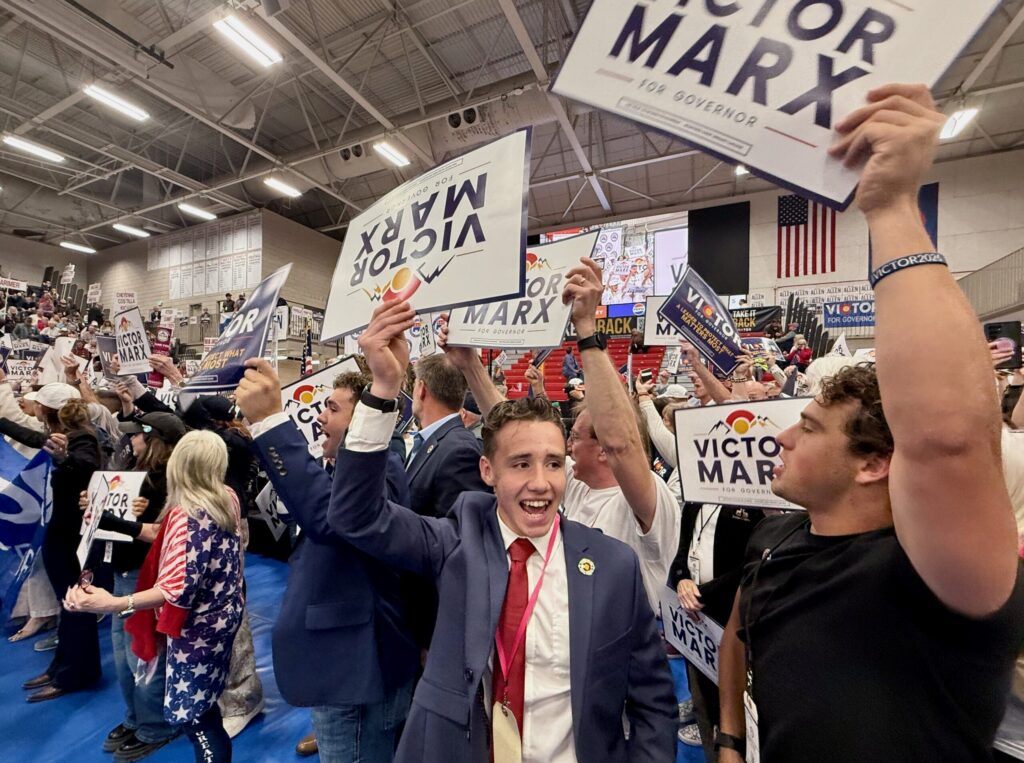
Marx’s ‘through line’ predates Trump, connects to Maes | FEEDBACK
Colorado Politics
colorado-politics@coloradopolitics.com
Updated 5 days ago
Eric Sondermann is of course correct Victor Marx is an unserious, unelectable, embarrassing Republican nominee for governor of Colorado. But I respectfully submit that the “through line,” as Mr. Sondermann describes it, is not from Trump to Marx, despite their...
PREV
PREVIOUS

SLOAN | Good intentions on both sides of the mask
Kelly Sloan The COVID pandemic lingers on, in varying degrees, and continues to bring out the latent epidemiologist in people of every political persuasion, insofar as there now appears to be an ideological aspect to contagious disease. The most disputatious issue at present seems to be the wearing of masks. With everything else beleaguering civil […]

BIDLACK | A new, chilling low for Donald Trump
Hal Bidlack A couple of years ago I found myself driving east in the southern part of Colorado, heading for Wichita, Kansas, where I was booked to do one of my one-man Alexander Hamilton performances. I had decided to drive, rather than fly, to that gig because I hadn’t really explored that part of our […]