

State health officials: Testing for health care workers and first responders underway
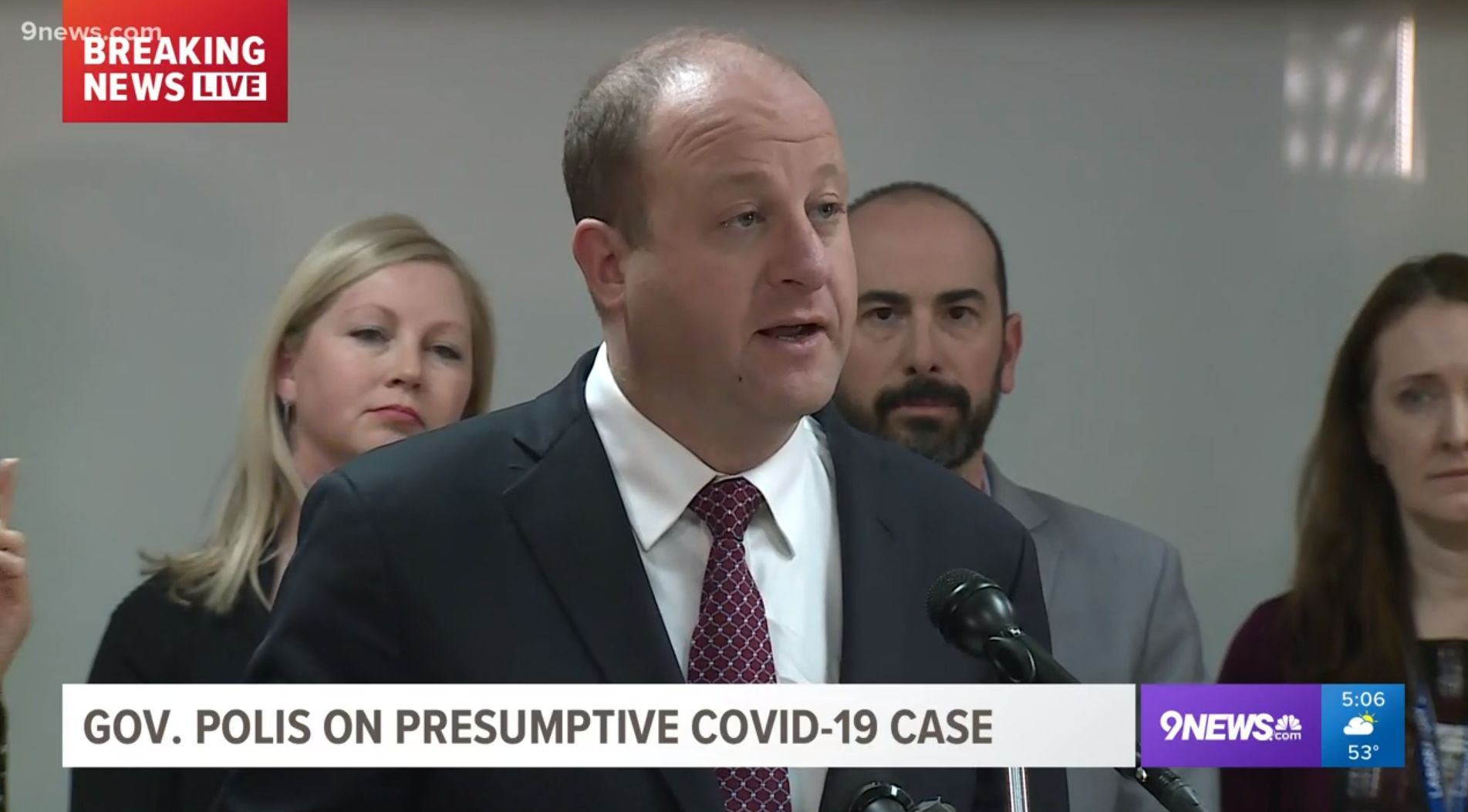
Colorado has launched a new testing program for the novel coronavirus, COVID-19, specifically designed for health care workers and first responders.
The program was announced Thursday by Mike Willis, the state’s director of the Office of Emergency Management. The program is under the federal Department of Health and Human Services, he told reporters Thursday. Tests are being conducted in three locations around the state. “It’s a great opportunity to protect the most critical components of the health care system: the people in it,” Willis said.
The state has received 5,000 test kits and expects another 2,500 in the coming week. “The longer we can protect these people, the stronger our health care system is” and the longer it will last when the surge in hospitalizations come, he explained.
Willis emphasized that the testing program is not for the general public.
The strategic national stockpile has sent two “pushes” of personal protective gear to Colorado and a third is expected in the next week. But “we knew it would not be enough,” Willis said. The state is working to acquire more supplies from public and private sector sources, and the objective is to get a supply chain up and running, although he could not say just how much the state will need.
With the statewide “stay at home” order now in effect, many are questioning how that will be enforced. Willis said the governor made it clear that voluntary compliance is the way to go. An FAQ distributed by the governor’s office Wednesday said that the executive order is the law of the land and “it’s illegal to break the law.” However, the FAQ also pointed out that the Colorado National Guard is not going to be enforcing the order, and when asked if local law enforcement will be doing road checkpoints for example, Willis indicated that would not happen.
However, for employees who work in essential industries, badges or other identification would be sufficient, Willis said, and if an employer issues a letter for employees to carry, those also would be respected.
There are employers who are looking for loopholes, which Willis called unfortunate. He said Polis would reevaluate the effectiveness of the executive order and take additional actions if the current order is not having the desired effect of flattening the curve of infections and hospitalizations. “There’s an absolute need for all of us” to voluntarily comply with the order, Willis said. “it’s unfortunate employers would put employees” in a position of having to go to work at business that are not considered essential.
The New York Times and other news outlets have reported that a 2019 federal exercise, known as the Crimson Contagion, warned of a pandemic but that information never made it past a draft report stage. “Federal agencies jockeyed over who was in charge. State officials and hospitals struggled to figure out what kind of equipment was stockpiled or available. Cities and states went their own ways on school closings,” the draft report said.
Scott Bookman, the incident commander from the Colorado Department of Public Health and Environment in charge of the pandemic, said Colorado learned a lot from that exercise. The plans assumed surge capacity and assistance from other states, but once the pandemic hit all at once across the nation, those assumptions just weren’t true, he said. That’s meant that states are working within their own borders with local public health and health care partners and emergency managers to ensure “we’re utilizing all resources at the state level to prepare for what’s coming.”
State data as of March 25 showed outbreaks at nine residential and non-hospital health care facilities, but state health officials have not identified the locations of those facilities. “We are being as transparent as we can be,” Willis said. These locations are under investigation and it’s important to complete those investigations before releasing any information, he said.
Bookman said the state is developing procedures for moving patients in areas with capacity issues to facilities with lower demand. It will be several weeks to see the impact of social distancing and the executive order on the number of cases, he said. That also means that while the state has seen a surge in cases in mountain communities, it’s not to the point where it’s creating a negative impact on the health care systems.
A lack of social distancing at grocery stores could prompt additional regulatory action, Willis indicated. “We’re discussing with the grocery store community” way to protect employees and customers, he said.

Founding documents reconnect us to our shared American roots – and rebelliousness | Vince Bzdek
Vince Bzdek
vince.bzdek@gazette.com
Updated 4 hours ago
By Vince Bzdek When you first lay eyes on the actual founding documents of our country that, for the first time in history, have travelled together from their gilded cages in Washington to visit us out here in the hinterlands,...
Would you hire Jena Griswold to handle your case? | SONDERMANN
By Eric Sondermann
by-eric-sondermann@coloradopolitics.com
Updated 4 days ago
If you were in a child custody dispute with a former spouse, would you hire an attorney with experience in family law or would you trust your case to an operative with virtually zero mastery? If you were getting ready...

Colorado Politics Calendar June 1-7
Rachael Wright, Special to Colorado Politics
rachael.wright@coloradopolitics.com
Updated 3 days ago
CoPo’s weekly political calendar will help you find political and public-policy events throughout Colorado. It includes candidate and issue campaign events, public policy meetings, court hearings, state and local party conventions, assemblies, debates, rallies, parades, speaking engagements, traveling dignitary appearances,...
Colorado General Assembly Dems kill early effort to protect children from online content | A LOOK BACK
Rachael Wright, Special to Colorado Politics
rachael.wright@coloradopolitics.com
Updated 3 days ago
Twenty-Five Years Ago This Week: Legislation sponsored by state Rep. Tim Fritz, R-Loveland, sought to use software to prevent children from violent, pornographic, or hateful materials. But after the Senate Judiciary Committee attached an “unfriendly” amendment, House Bill 01-1376 died...
Gov. Jared Polis vetoes bill requiring disclosure from administration lobbyists
Marianne Goodland
marianne.goodland@coloradopolitics.com
Updated 16 hours ago
Gov. Jared Polis on Friday vetoed a bill that would have required executive branch lobbyists to follow much of the same disclosure rules that already govern other Capitol lobbyists. Lobbyists for organizations are required to state their clients’ position on...

Gov. Jared Polis blocks Colorado Lottery’s move to allow credit card sales
Marianne Goodland
marianne.goodland@coloradopolitics.com
Updated 4 hours ago
Gov. Jared Polis on Friday signed legislation to block the Colorado Lottery’s move to allow the purchase of tickets with credit cards, effectively reversing his earlier position. Last November, Polis had said that he supported the decision of the Colorado...
Colorado governor vetoes union dues bill — again
Colorado Politics
colorado-politics@coloradopolitics.com
Updated 18 hours ago
Gov. Jared Polis on Friday vetoed yet again legislation that would have made it easier for labor organizations to impose dues on non-union members, a decision long expected after the legislature approved the measure without securing the buy-in of businesses....

Colorado Democratic attorney general candidates clash over experience and Trump lawsuits
Marianne Goodland
marianne.goodland@coloradopolitics.com
Updated 17 hours ago
Colorado’s four Democratic candidates for attorney general clashed sharply Thursday night in a debate that repeatedly returned to one theme — whether the state’s top lawyer should be a courtroom veteran or a political fighter. The contenders additionally sparred over...
DOJ reviewing Boebert concerns about Washington Nationals discriminating against Christian pitcher
Emily Hallas, Washington Examiner
emily.hallas.washington.examiner@gazetteedit.wpenginepowered.com
Updated 23 hours ago
The Justice Department on Thursday promised to examine allegations that Washington, D.C.’s major league baseball team discriminated against one of its pitchers on religious grounds. Rep. Lauren Boebert (R-CO) sent a letter to the DOJ this week, requesting it probe...
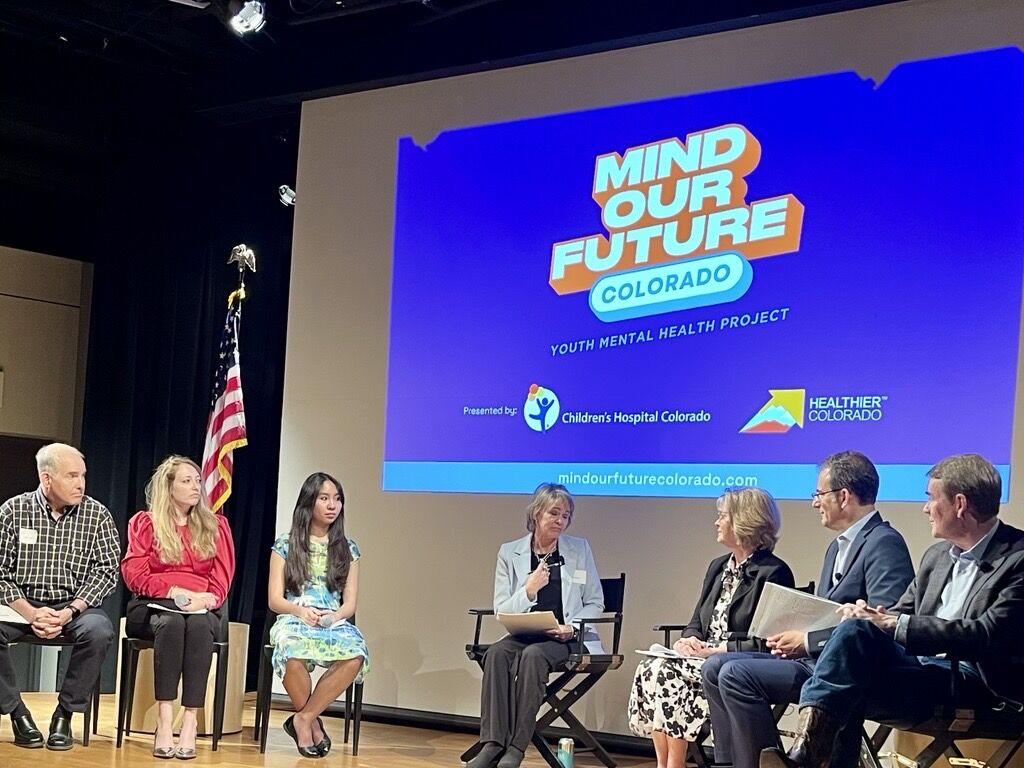
Colorado candidates for governor share plans to tackle youth mental health crisis
Marissa Ventrelli
marissa.ventrelli@coloradopolitics.com
Updated 14 hours ago
Three candidates for Colorado’s highest elected office laid out their plans to address the state’s youth mental health crisis during a forum on Thursday. Democratic Attorney General Phil Weiser, U.S. Sen. Michael Bennet, and Republican State Sen. Barbara Kirkmeyer fielded...
PREV
PREVIOUS

Denver’s lowest earners face highest economic risk during COVID-19 quarantine
A new report shows that business closures caused by the coronavirus will disproportionately impact sectors of the economy that already struggle from lower incomes, greater housing cost burden and less workplace flexibility – and Denver’s workforce is no exception. About 11% of Denver workers, or nearly 143,000 people, who are employed full-time in industries deemed […]
Who's who on the governor's COVID-19 response teams
Gov. Jared Polis has worked with corporate leaders to form advisory councils as the state addresses the COVID-19 coronavirus outbreak. Here are those people he has appointed as of March 26: GOVERNOR’S ECONOMIC STABILIZATION AND GROWTH COUNCIL Mission: Will serve as economic advisers to the governor to help him navigate COVID-19 affects on the state […]