

State Supreme Court orders review of restitution order against criminal defendant

The Colorado Supreme Court on Monday announced that it has vacated a decision of the Colorado Court of Appeals and ordered the appellate court to review whether prosecutors were appropriately granted an extension in asking for restitution from a criminal defendant.
Rafael Perez hosted a wedding at his ranch in June 2012, when an argument broke out. Multiple men began assaulting a wedding guest and Perez broke a bottle on the guest’s face. The man had to go to the hospital for his injuries.
Perez received a conviction for assault with a deadly weapon and a sentence of five years in prison. The trial court held off on making a decision about restitution for 90 days. On the ninety-fourth day, the prosecution asked for an extension to process “complex” medical bills, lost wages, and ongoing medical claims. Perez did not object to the request. Almost one year after the conviction, the court ordered Perez pay restitution of just under $20,000.
Perez then sued, citing neither good-cause reason for an extension of the restitution decision beyond 90 days nor extenuating circumstances that should have given the prosecution more time. Despite not raising the issue at the time, Perez, the Colorado Court of Appeals said, did not relinquish his right to appeal the decision. State statute requires there to be extenuating circumstances to grant an extension, which did not exist in Perez’s case.
“Because the court made no such finding explicitly, the court erred,” wrote appeals Judge Ted C. Tow, III. However, the appellate court did not order Perez’s restitution reversed because the actual complexity of the bills “does not cast doubt on the reliability of the restitution order.” Based on the concept of “plain error,” the trial court’s actions did not undermine the reliability of the conviction.
The case is The People of the State of Colorado v. Rafael Perez.
The Supreme Court ordered Perez’s case be reevaluated in light of the justices’ 2019 decision in Michael Alan Fransua v. The People of the State of Colorado. The court ruled in that case that a defendant could appeal the amount of credit he was given for time spent in jail before conviction. An appeals court did not have to only look for plain error that would have caused a clear reversal of the sentencing decision.
The Supreme Court’s direction in the Perez case asks the appellate court to go beyond the plain error standard in evaluating his claim because he had a right to raise it when he did.
This story has been updated to correct the name of the appellate judge who authored the opinion.



Colorado Politics Calendar Apr. 6-12
Rachael Wright, Special to Colorado Politics
rachael.wright@coloradopolitics.com
Updated 3 days ago
CoPo’s weekly political calendar will help you find political and public-policy events throughout Colorado. It includes candidate and issue campaign events, public policy meetings, court hearings, state and local party conventions, assemblies, debates, rallies, parades, speaking engagements, traveling dignitary appearances,...

Democrats rebounding without learning necessary lessons | SONDERMANN
Thelma Grimes
thelma.grimes@coloradopolitics.com
Updated 2 days ago
“When we fight, we win!” That, reportedly, was the chant heard over and over again at the Colorado Democratic Assembly a week ago. It suggests that pugilism has been the piece missing from the Democratic toolkit. Perhaps it was just...
An April Fool’s Day to remember | Capitol M | Week of April 4, 2026
Marianne Goodland
marianne.goodland@coloradopolitics.com
Updated 2 days ago
The lighter side of the Capitol, and if light were weight, the Capitol would have lifted off better than the Artemis II rocket on April Fool’s Day. There was a plethora of Fools at the Capitol for April Fool’s Day...
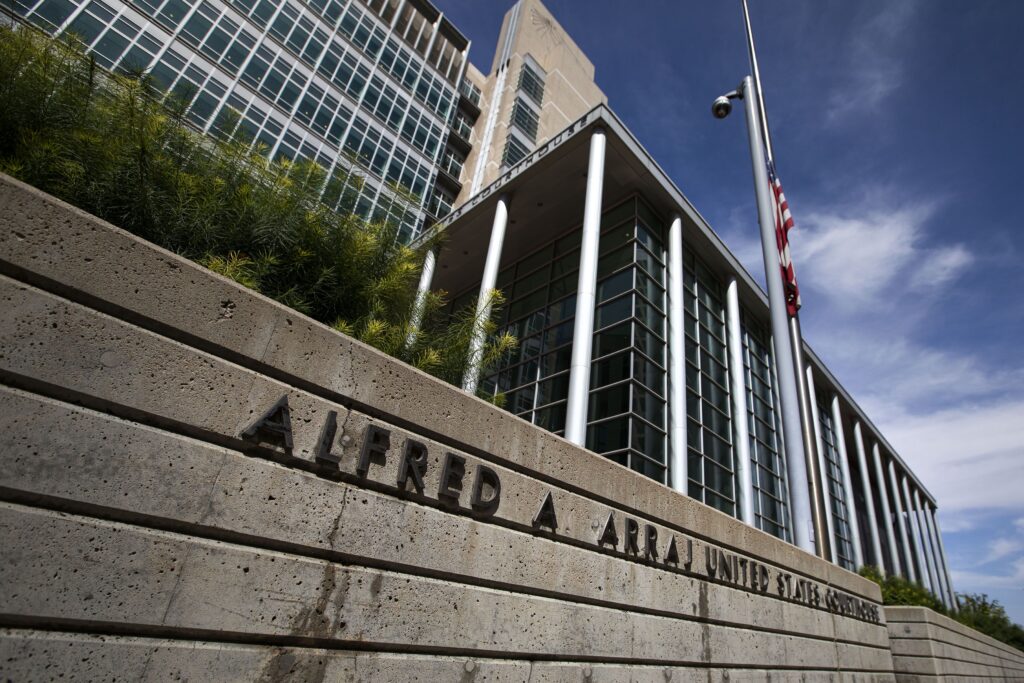
Federal judge sides with Mesa County school district in ex-student’s First Amendment claims
Michael Karlik
michael.karlik@coloradopolitics.com
Updated 11 hours ago
A federal judge concluded last week that Mesa County Valley School District 51 and three of its administrators did not violate the First Amendment rights of a former student when they imposed minor discipline in response to disruptive behavior. In...

Colorado Supreme Court intervenes in 4 ongoing cases
Michael Karlik
michael.karlik@coloradopolitics.com
Updated 14 hours ago
The Colorado Supreme Court recently moved to intervene in four ongoing cases, including two criminal prosecutions, a civil lawsuit, and a child welfare proceeding. At least four of the court’s seven members must agree to hear a case outside of...
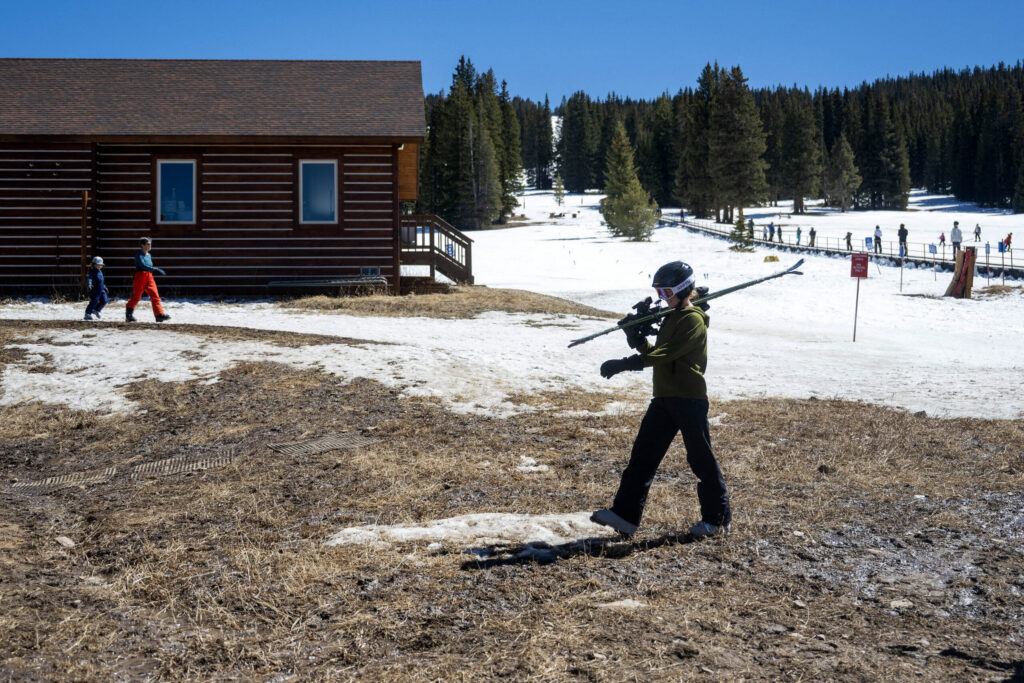
Colorado ski resorts announce early closures amid historic snowpack lows, high temperatures
Kyla Pearce
kyla.pearce@gazette.com
Updated 14 hours ago
Vail Resorts is the latest area to announce season closure Wednesday As Colorado’s historically low snowpack year comes to a close and spring conditions take over the mountains, the state’s major ski resorts are announcing closing dates — some of...

Kentucky Gov. Andy Beshear set to headline Colorado Democrats’ annual fundraising dinner
Ernest Luning
ernest.luning@coloradopolitics.com
Updated 14 hours ago
Kentucky Gov. Andy Beshear, one of the Democrats’ top 2028 presidential prospects, is scheduled to deliver the keynote address at the Colorado Democratic Party’s annual fundraising dinner in June in Denver, the party said Friday. Serving his second term as...
Gov. Polis names new leaders for Colorado health agencies in wake of Medicaid turmoil
Marianne Goodland
marianne.goodland@coloradopolitics.com
Updated 16 hours ago
Gov. Jared Polis, on Thursday, announced he was appointing Gretchen Hammer to serve as acting executive director of the Colorado Department of Health Care Policy and Financing, and deputy executive director Stephanie Beasley to become the next commissioner of the...

Federal judge releases man immediately as consequence for immigration judge disobeying orders
Michael Karlik
michael.karlik@coloradopolitics.com
Updated 14 hours ago
A federal judge ordered a man’s immediate release from immigration detention on Thursday after finding an immigration judge disregarded his prior orders requiring a bond hearing. For the past year, Colorado’s federal district court has faced a flood of “habeas corpus”...
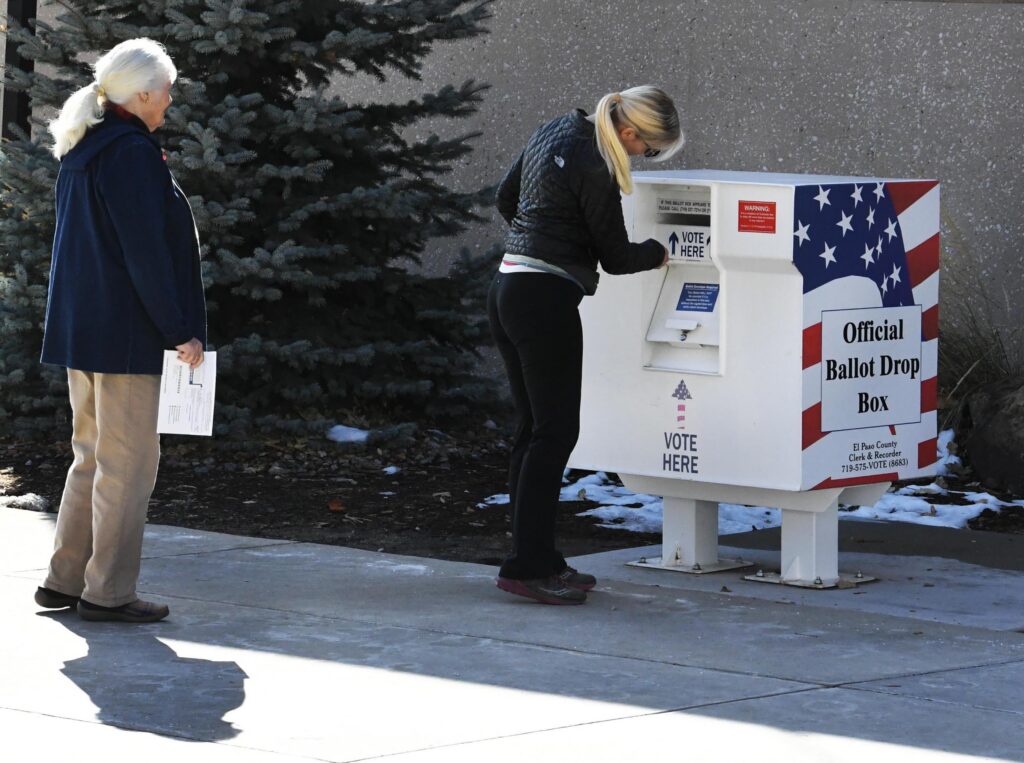
Colorado sues Trump administration, calling new election order ‘unconstitutional’
Marissa Ventrelli
marissa.ventrelli@coloradopolitics.com
Updated 18 hours ago
Colorado Attorney General Phil Weiser has joined a multistate coalition suing President Donald Trump over a new executive order on elections, arguing the directive unlawfully intrudes on states’ authority to run their own voting systems and threatens access to mail...
PREV
PREVIOUS

Denver Mayor Hancock declares 'stay-at-home' order, reverses liquor store, dispensary decision
Denver Mayor Michael Hancock on Monday issued a new “stay-at-home” order as the city and county’s confirmed coronavirus cases mark the highest of any county in the state. The public health order will go into effect at 5 p.m. Tuesday and last until April 10, although Hancock said the date could be extended if needed. […]

What a 'shelter in place' order in Colorado might look like
Residents of Colorado’s San Miguel County were ordered to “shelter in place” on Thursday, as were all Californians when Gov. Gavin Newsom ordered the state’s 40 million residents to stay home indefinitely, with few exceptions. Similar orders were issued Friday in New York, Illinois and Florida, and in Michigan, Massachusetts and Indiana on Monday. Denver is expected […]