

COVER STORY | Governing under the coronavirus cloud

At East High School, where Democrats and Republicans held their party caucuses, jazz hands and tapping shoes replaced handshakes and collegial embraces, the currency of politics.
For 56 precincts across Colorado’s biggest city, the GOP turned out less than 20 people on a sunny Saturday morning, and coronavirus was on everyone’s mind.
“Give me a hug,” said Denver Democratic activist Aaron Goldhamer, in the East High gym, as virus-leery well-wishers meandered up.
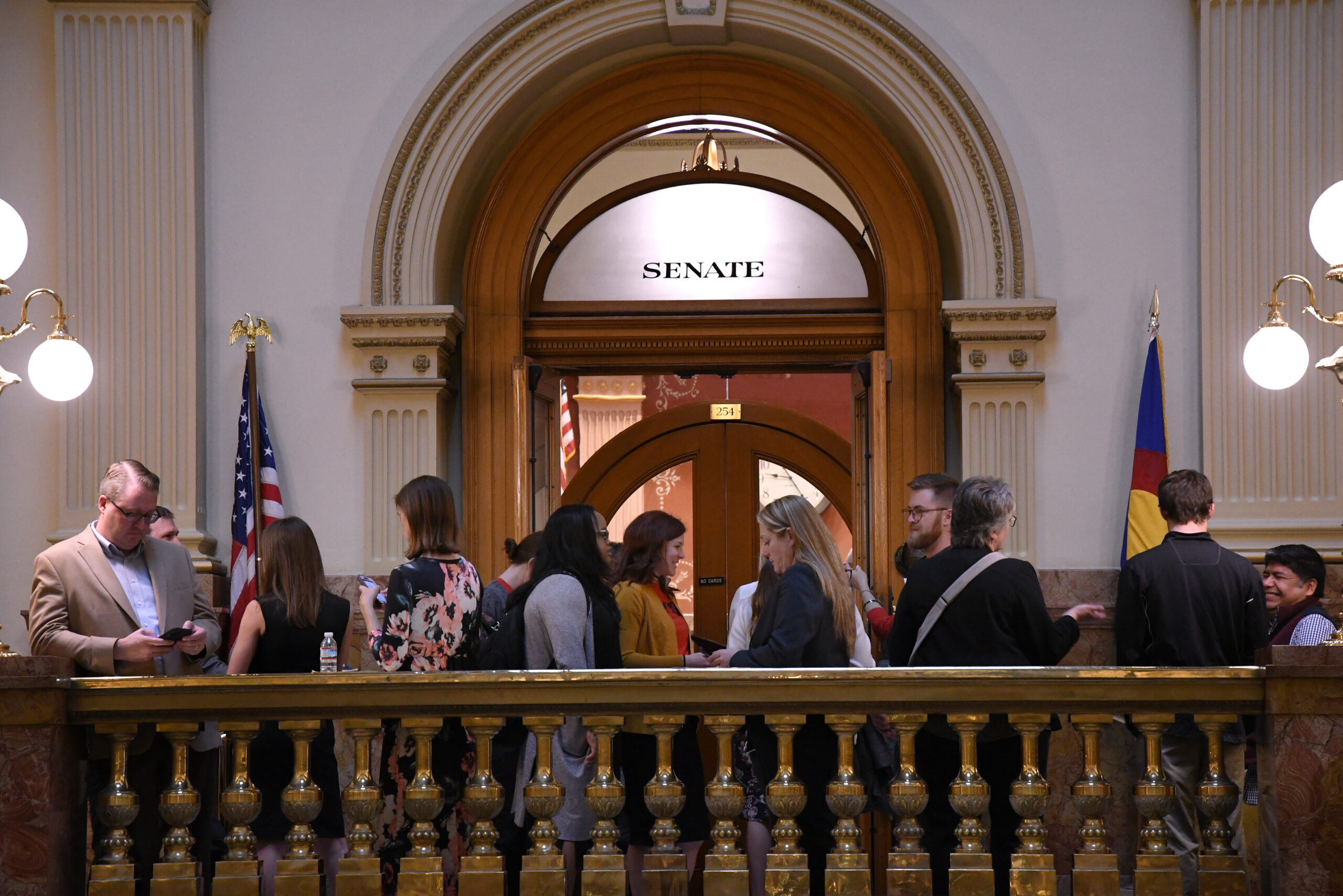
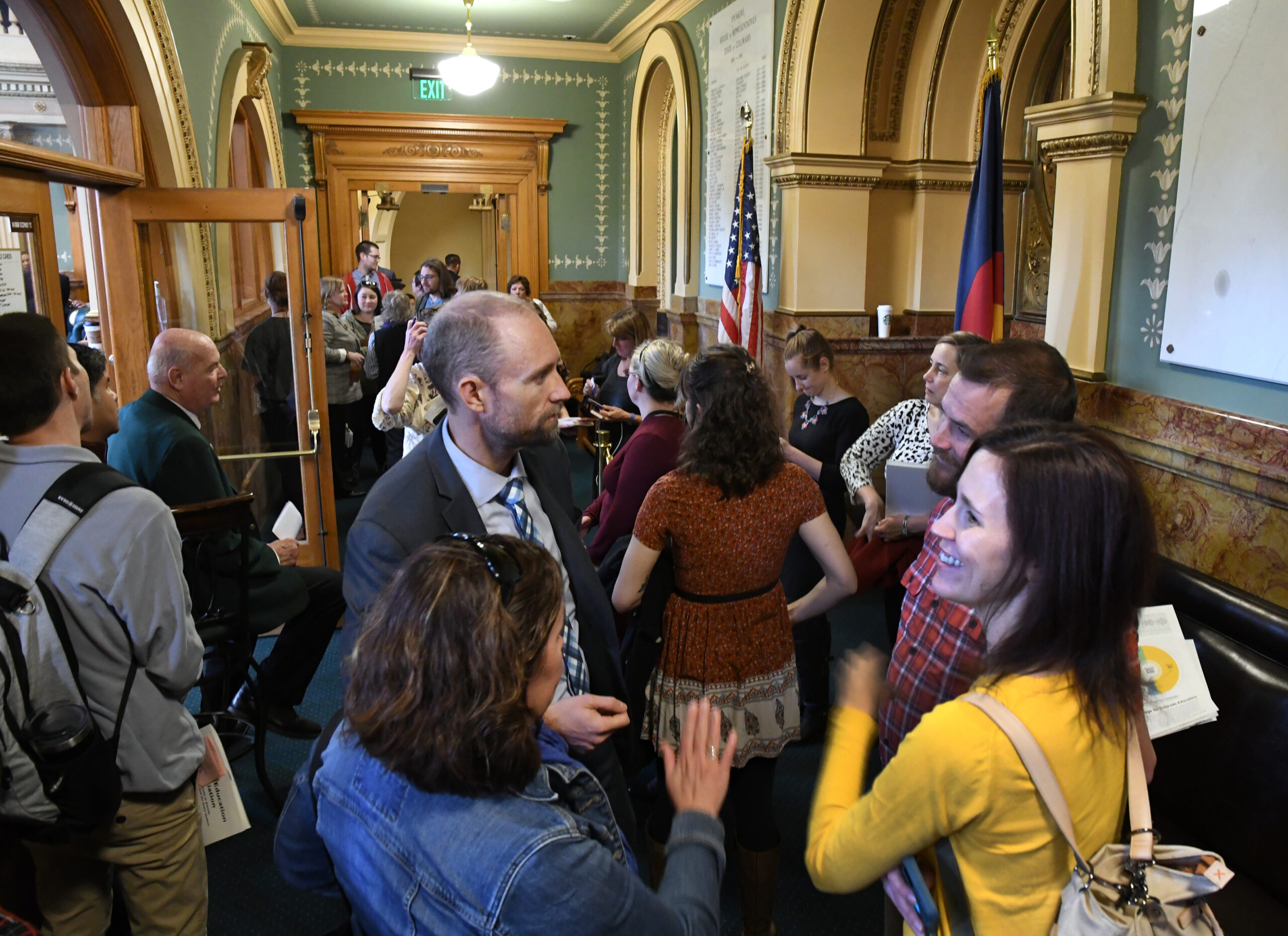
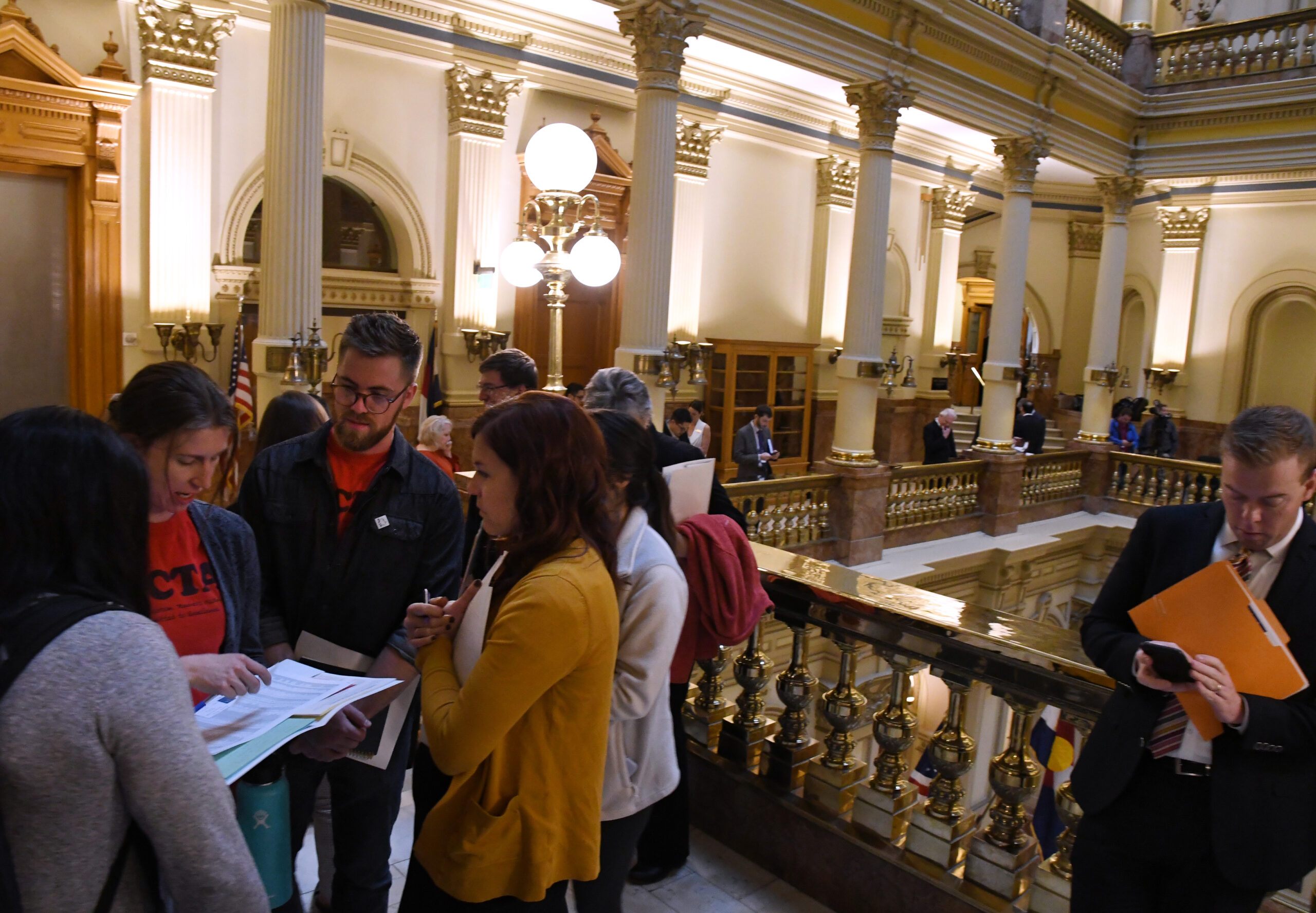
The same awkwardness, worry and action is true at the Colorado Capitol and across the globe as the deadly pandemic puts a chill on the face time that’s necessary to do the people’s business under the dark cloud of a potentially deadly virus.
Those healthy enough to withstand it risk being deadly carriers to those who can’t.
Gov. Jared Polis declared a state of emergency to combat the illness at the Capitol on March 10, two weeks after he advised Coloradans wash their hands in a response to a question at a press conference on health care affordability.
That was before an outbreak of the virus rippled across his state. When he announced the state of emergency, he said his administration had been preparing for it for months.
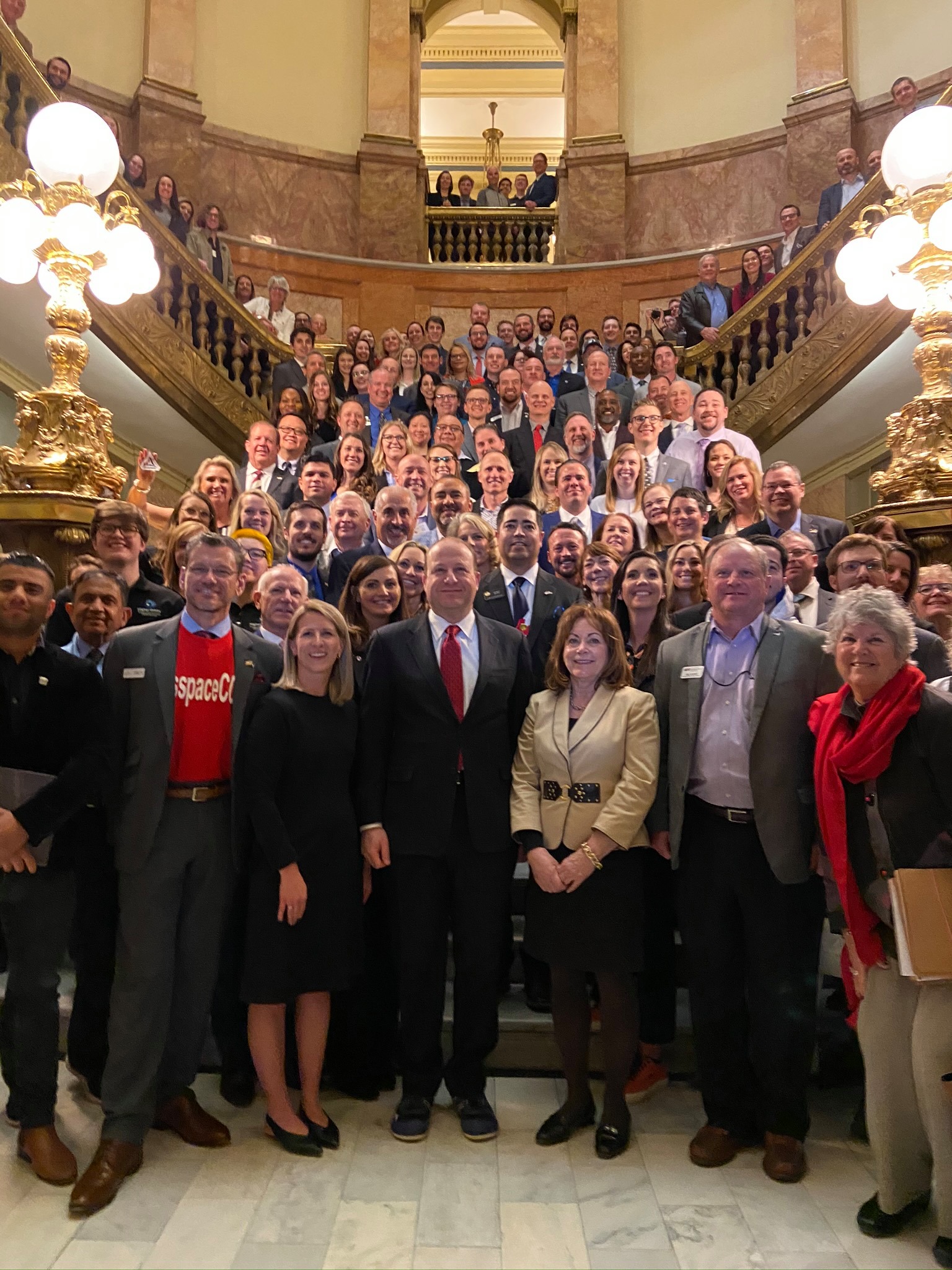
“We’re going to get through this together, but the actions we take in the next few days and weeks will really determine the trajectory of coronavirus in Colorado,” the governor said, not long before he posed for a picture with dozens of people celebrating Aerospace Day at the Capitol.
By the end of the next day, he was growing increasingly aggressive.
He recommended K-12 schools shut down for three days for disinfecting if a student or adult there tests positive. The governor told state agencies to come up with rules to safeguard places where older Coloradans congregate, including screening visitors, because older folks are at the greatest risk. By Friday, as presumed positive cases continued to climb, he pushed to ban gatherings of more than 250 people, unless the venues can ensure people can be spaced six feet apart.
He even said that if you’re older than 65, you can update your driver’s license online rather than wait in line at the Department of Motor Vehicles.
The emergency declaration allowed Polis to order paid sick leave for up to four days for people in the health care, food service, child care and hospitality industries who are awaiting test results. Under that declaration, which is in effect for 30 days unless he extends it, Polis also can access $450 million from the state’s reserves.
A memo issued by the legislature’s Legal Services staff said the governor also could access food and medicines, quarantine people and property and transfer money to the state disaster fund. The memo also said the governor could order hospitals to transfer or stop admitting patients and use his discretion on how to handle contaminated property, including destroying it.
The declaration also gives Polis the grim task of deciding how to safely deal with corpses and to decide when to tell the public that the crisis has passed.
The state opened up a drive-up testing centers for those sent there by their doctors.
In the Capitol, people aren’t yet sure where things will go next. Democratic House candidates – led by incumbent James Coleman and newcomers Iman Jodeh and John Ronquillo – began announcing they were canceling in-person campaign events, as the American Cancer Society turned its annual lobby day into a phone bank to lawmakers’ offices instead.
A Capitol ceremony to announce the state’s next music ambassador? Silenced.
On March 11, for another example, Senate Democrats spiked a planned press conference on air quality with environmental advocates. Why? The air at the Capitol might not be safe to breathe.
“We are trying to pare back our larger group events when we can due to coronavirus,” explained caucus communications director Bella Cumbest in an email.
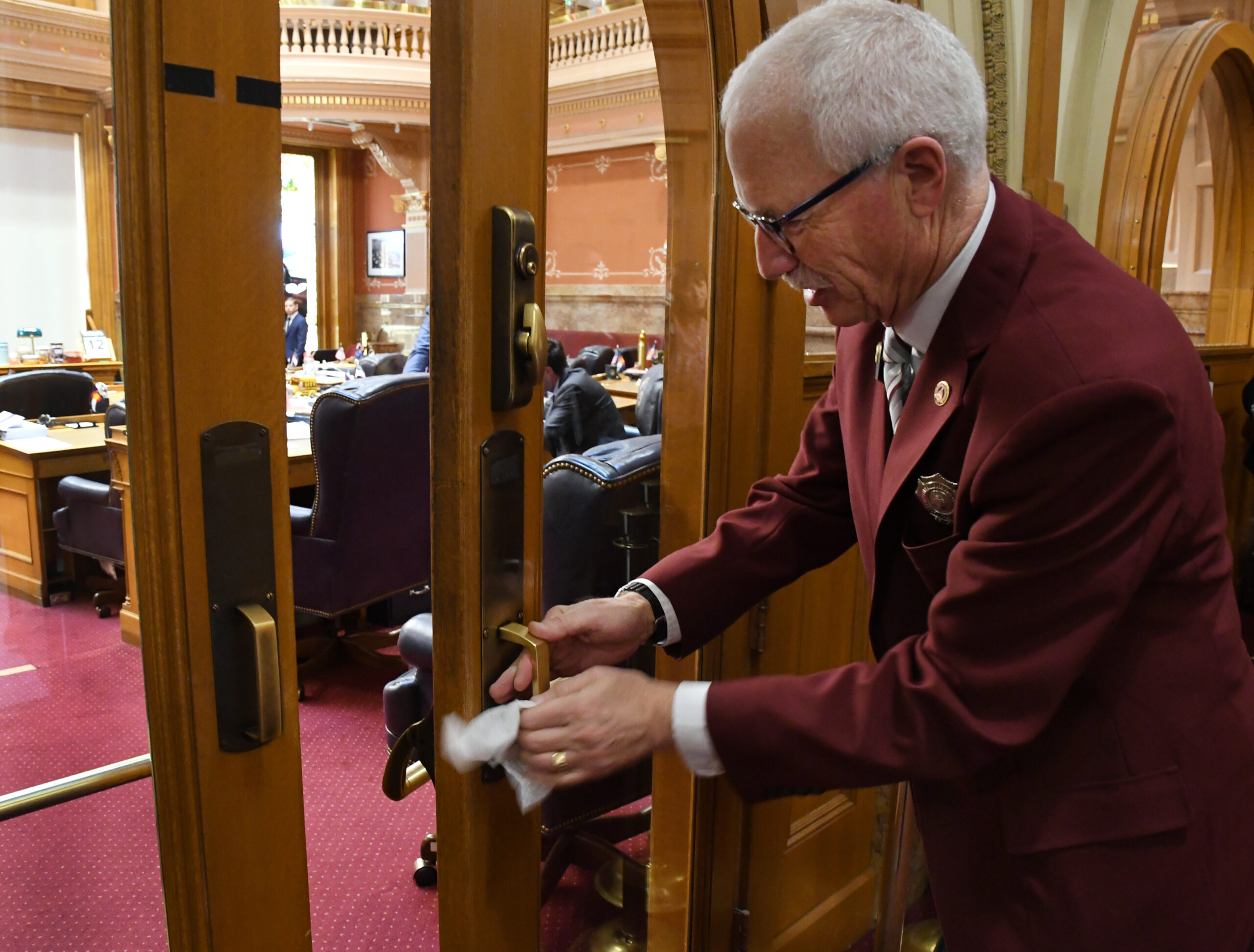
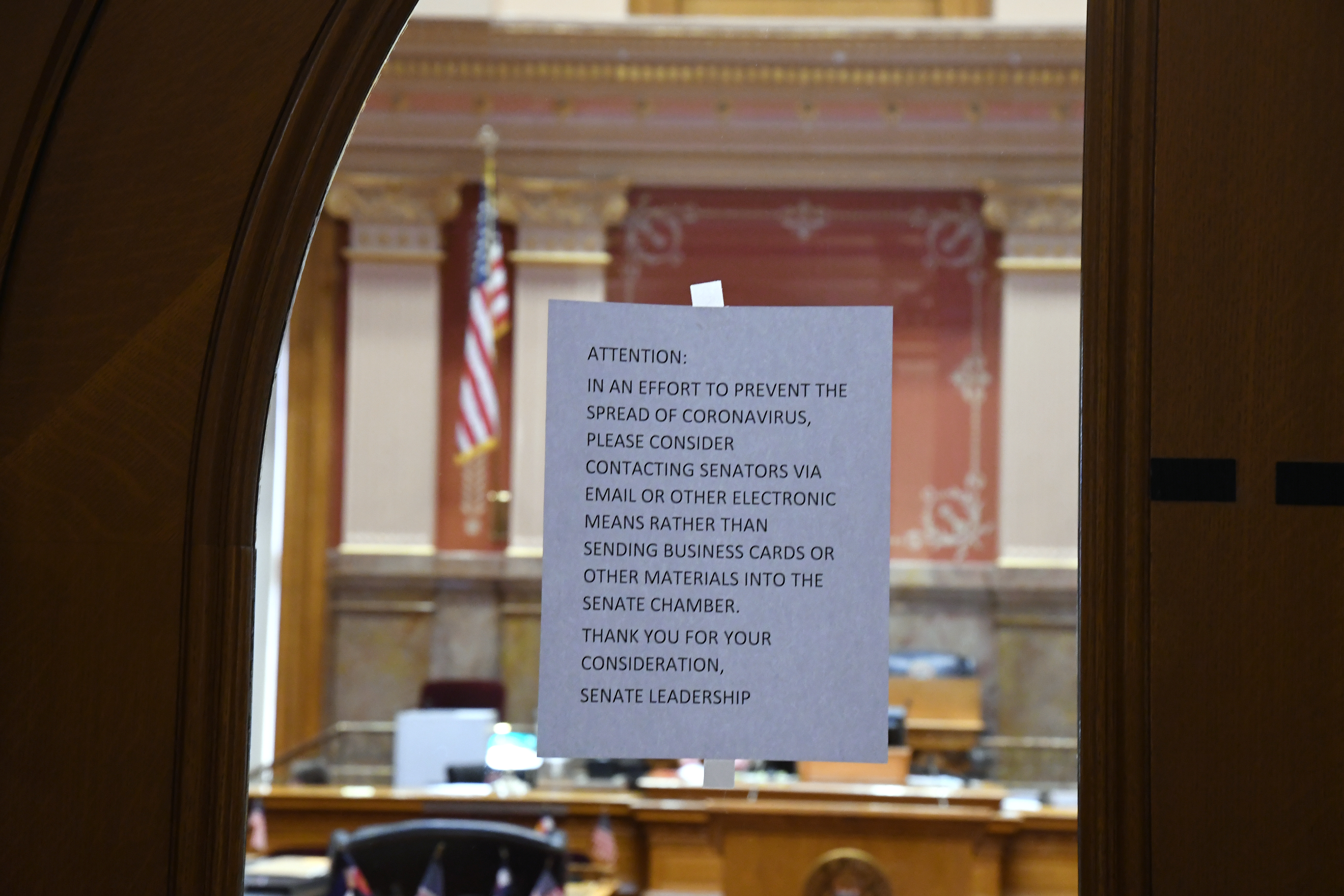
Campaign rallies on the Capitol steps have been nixed. Paper signs at the statehouse encourage constituents to contact their lawmakers by email, since even passing a note could spread the germs.
After the Illinois legislature canceled some work days, talk about doing the same intensified under Denver’s gold dome.
Uninhabitable Capitol
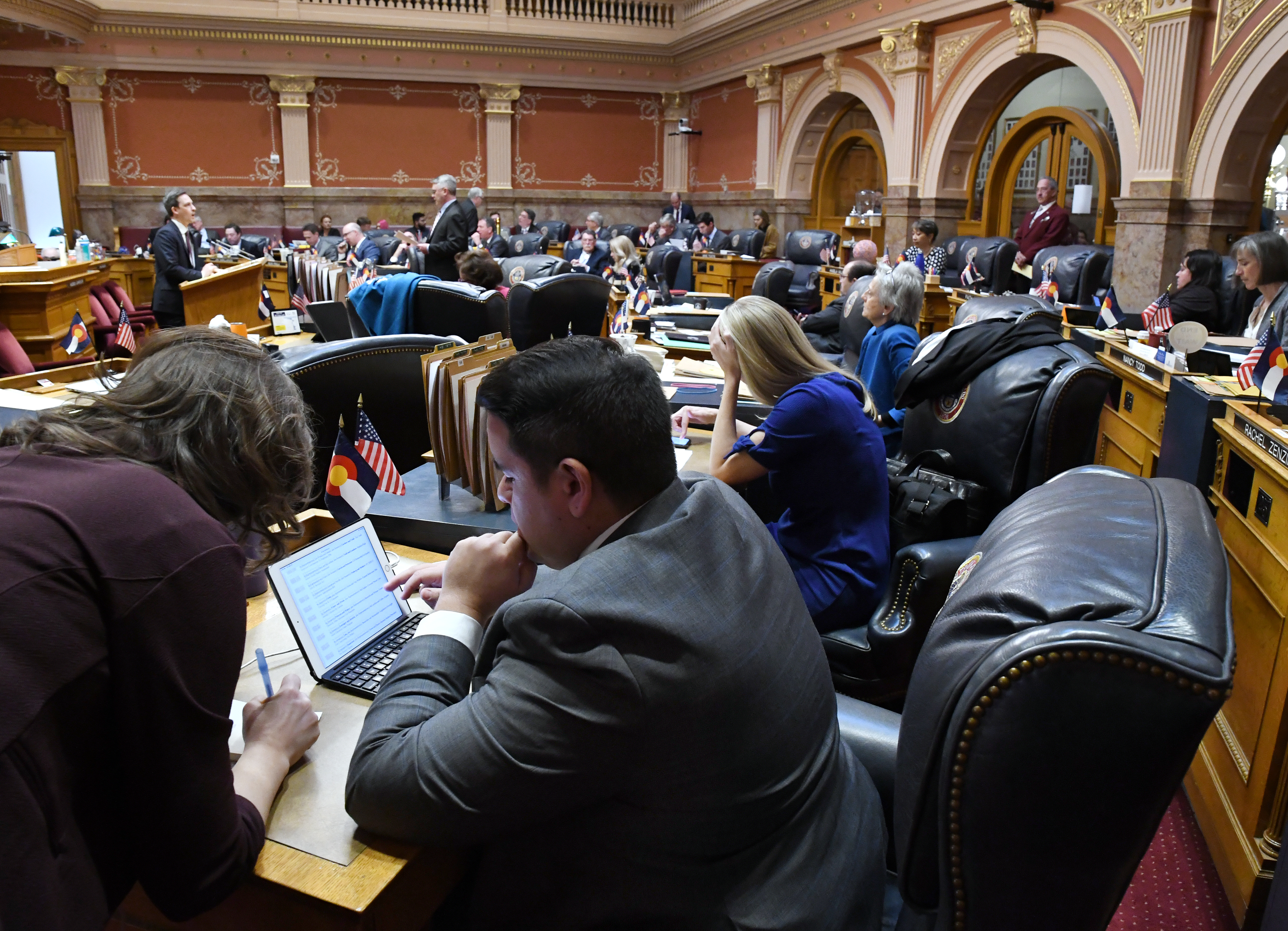
The session has shut down before, because of snow, but now lawmakers are questioning how to govern if the Capitol is uninhabitable.
Legislative leaders are facing that dilemma, and the answers aren’t simple.
Lawmakers have “continuity of operations” plans for the Capitol drawn up by six legislative leaders.
One of them, Senate Republican leader Chris Holbert of Parker, said the best way to keep people safe is by reducing the reasons for people to congregate at the Capitol, short of bans on meetings and passing notes.
He said the best thing lawmakers could do, individually, for their constituents was steer them to accurate information.
“Use hand sanitizer and be calm,” Holbert said on the Senate floor.
The A-bomb solution is hitting pause on the 120-day legislative session, which only recently moved into its back half. As of Thursday, the General Assembly is looking into the legalities surrounding the move to adjourn and pause the legislative calendar until they come back.
A long recess could mean lawmakers are working into the summer to finish up the constitutionally mandated 120 days, ending at the time many would need to be out on the campaign trail for the November election. All 65 seats in the House are up for election along with 18 in the Senate, including the five seats whose senators were appointed in 2019 and 2020.
Some things lawmakers can postpone; however, some they can’t.
Take the annual budget and the School Finance Act. A draft of the budget is due on March 23, and a balanced spending plan, by law, must be on the governor’s desk by the end of the session, whenever that is. Lawmakers always take the last revenue forecast, which is scheduled around March 20, as their last chance to check their numbers before putting out the next year’s budget.
The School Finance Act, which also has to be approved before the General Assembly adjourns for the year, isn’t likely to show up until after the budget is done or nearly so.
The continuity plan also allows bills that legislative leaders consider “mission critical” to be added to a short list, should the General Assembly need to act quickly to get its constitutionally mandated work done.
House Majority Leader Alec Garnett of Denver pointed out one of those mission-critical bills: the annual rule review bill. It gets little attention during the session, but it’s essential to the operations of virtually every state agency, from the Secretary of State’s office to the Department of Agriculture.
That bill gives the legislature the opportunity to approve hundreds of rules written by executive agencies between Nov. 1, 2018, and Nov. 1, 2019. For example, the Secretary of State’s office adopted or changed ruled prior to the 2019 elections. Without passage of the rule review bill, the clock would run out on all of those rules on May 15.
For now, lawmakers are taking it day by day. Several, including Reps. Dominique Jackson and Dafna Michaelson Jenet, have immune system issues that keep them out of the building from time to time. That’s also true for other Capitol regulars who asked not to be identified but have told Colorado Politics that they stay away when they fear their health is at risk.
Denver responds
The state’s largest city, an international crossroads that feeds a bustling winter tourist economy, has a lot on the line.
The City Council sent out an announcement the day after the emergency was declared, explaining that “out of an abundance of caution,” it would postpone all non-essential meetings and gatherings.
A council budget retreat at the Denver Zoo was put on ice on Friday the 13th, just to be safe.
“We are being cautious based on the recommendations of our public health department as we work together as a community to protect those at most risk from the COVID-19 virus,” Jolon Clark, the council’s president, said in a statement.
The city parks department also nixed its events at rec centers, from basketball games to public meetings. The city even put up a website page for information about postponements.
The Denver Public Library canceled all its programs, classes, events and outreach activities, including bookmobiles through April 12.
City Councilman Chris Hinds, who is immuno-compromised due to an injury that left him paralyzed, said his office is telecommuting indefinitely and, “in many ways, following the lead of stakeholders and constituents,” who are canceling meetings.
Councilman Kevin Flynn told Colorado Politics in an email that his office in Harvey Park is scheduling more meetings by phone and awaiting the delivery of an automatic hand sanitizer dispenser for the foyer.
Councilwoman Jamie Torres carried hand sanitizer in her bag before coronavirus became a worry. She said she’s had asthma since she was a kid, but now she’s being extra cautious.
She remains “more concerned about our vulnerable populations like the elders in the city and in my District and those who can’t take off work as easily or who are uninsured,” she said in an email.
Councilwoman Robin Kniech said the “No. 1 issue” on her mind surrounding coronavirus is the absence of paid sick days for many private sector workers across the city.
She’s bothered by the massive cancellation of city meetings, too.
“It will be important to transition to video conferencing and not just to cancel if we hope to keep democratic input happening, something that is common in national networks the city participates in, but not part of the city’s culture for engaging our own residents,” Kniech said. “It will be a test of our local democracy whether we can continue to move critical work along with new avenues for participation, or whether major delays in policy occur – skipping the engagement and remaining on schedule isn’t an option.”
Richard Scharf, president and CEO of Visit Denver, said in a statement that it’s too soon to know what economic impact of COVID-19 might have on the city.
“The primary focus of discussions with future meetings continues to be more about Denver’s preparedness than cancellation, and each organization is evaluating decisions from their own perspective while sharing our concerns for all who are affected and doing all they can to keep travelers and residents safe,” he stated.
Mayor Michael Hancock declared a 7-day state of emergency on Thursday to help free up additional resources to support the city’s emergency response efforts. On Friday, he ordered city venues – including Red Rocks Park & Amphitheater and Visitors Center, the Denver Performing Arts Complex, the Denver Coliseum, McNichols Civic Center Building and the Colorado Convention Center – to be closed until April 12.
Jail inmates are getting soap and water, but not hand sanitizer, because it’s loaded with alcohol, the Sheriff’s Department said. Hands can be sanitized in staff and lobby areas, however.
They’ve stepped up cleaning and sanitizing inmate areas, as well.
Law enforcement agencies are taking steps to identify detainees who might be sick or at risk before taking them to jail, on top of medical protocols at the jail.
Electioneering
Officials with Colorado’s Democratic and Republican state parties have been scrambling to figure out how to hold assemblies and conventions using alternative methods as the crisis is forcing cancellation of large gatherings.
State party officials have been working with legislators, the national parties and Polis, hoping to ensure candidates can be advanced to the June primary ballot amid the disruption to daily routine.
“The facts might change tomorrow,” Morgan Carroll, chair of the Colorado Democratic Party, told Colorado Politics. “The bottom line I would say is that we are pursuing every option that we possibly can through the legislature to make sure that we have all of our options.”
On Thursday, lawmakers began fast-tracking House Bill 1359, which would help county and state assemblies adjust their assembly and convention deadlines and methods to help avoid large gatherings. As little as 19 hours later on Friday, the bill had cleared the House and had initial approval in the Senate.
State law and party rules currently don’t allow the parties to convene nominating assemblies online or let delegates cast ballots remotely, raising concerns that party officials could be unable to nominate candidates if delegates stay home or authorities ban crowded events, as has happened around the country.
Following the March 7 precinct caucuses, the two major parties embarked on a heavy six-week schedule of assemblies and conventions at the county, district and state level to vote candidates onto the June primary ballot and nominate delegates to this summer’s national conventions.
A sense of urgency set in mid-week after Denver announced it was canceling its iconic St. Patrick’s Day Parade and Democratic presidential candidates Bernie Sanders and Joe Biden scrapped plans to hold campaign rallies.
“How do we make sure people have a voice and we can put people on the ballot without public health concerns?” Carroll asked. “But we also need to keep the wheels of democracy going forward as much as we can.”
State law offers candidates two paths to the ballot – gathering a sufficient number of valid signatures on nominating petitions or winning the support of enough delegates at assemblies. The deadline to turn in petitions is March 17, limiting the ability of candidates to switch to that route if parties are forced to cancel assemblies or enough delegates don’t attend, preventing the gatherings from achieving a quorum necessary to conduct business.
“We need to first figure out what’s possible and then decide what we want to do,” Carroll said. “We lack the full slate of options that we would like to have.”
Proxy democracy
Those options could include allowing for more extensive use of proxy votes than current rules permit, or even postponing or canceling in-person assemblies and instead conducting business by mail, online or using other methods, she said.
“There’s such a thing as under-reacting and such a thing as over-reacting, and we want to be surgically reacting,” she said. “It is a worst-case scenario to say we have cancellation, but when we say we want to have all options, that is an option.”
The executive director of the state GOP told party members on March 10 in an email that officials have been in contact with the Secretary of State’s Office and legislative leaders to determine what the unfolding crisis could mean for party’s “duty under state law to designate candidates to the primary election ballot.”
“Our duty to place our Republican candidates on the ballot is vitally important,” wrote said Lx Fangonilo. “For the time being – we are asking that you continue to proceed as normal with your local assembly planning and gathering.”
He added: “This said, every precaution, in accordance with the bylaws, should be made during these meetings to accommodate those who are unable to attend and protect the health of those who are in attendance.”
Party bylaws are governed by a mix of state statutes and national party rules, complicating efforts to change them quickly in reaction to something like a global pandemic.
The two parties’ bylaws differ in some particulars. The Democrats let each assembly delegate carry one proxy vote, for instance, potentially allowing ill or at-risk individuals to stay home, while the Republicans don’t currently permit proxy voting at assemblies.
“We want (the legislature) to give us an ability to extend or waive deadlines and to explicitly authorize the parties to do electronic voting, remote voting or mail balloting. I want all three, because there are some logistics,” Carroll said.
Calculated risks
El Paso County Democratic Party chair Electra Johnson noted the low turnout for the March 7 caucus, a missed opportunity for grassroots organizing that political organizations and the candidates they support depend on, she told Colorado Politics that evening.
Party officials collected up all the caucus packets at Gold Camp Elementary in Colorado Springs, where her precinct met, and set them aside untouched for three days, the estimated duration the virus can live on paper, she said.
“We’re not going to take any chances with that,” she said.
Colorado is getting just $9.8 million from the nearly $605 million President Trump provided to states for state and local health departments, part of an $8.3 billion disaster package. Wyoming, with about one-tenth Colorado’s population, got $4.5 million.
“Accurate and timely communication and collaboration on all levels continues to be critical as this situation progresses,” U.S. Rep. Scott Tipton, a Republican from Cortez, said in a statement about Colorado’s share of the grant money. “I appreciate CDC Director (Robert) Redfield and President Trump’s swift response to our delegation’s calls for additional resources in Colorado.”







10th Circuit rejects ‘penalty’ for children of naturalized citizens seeking visas
Michael Karlik
michael.karlik@coloradopolitics.com
Updated 15 hours ago
The Denver-based federal appeals court joined three of its peers earlier this month and determined the child of a newly naturalized U.S. citizen is not moved to a longer visa line as a result of his parent gaining citizenship, and...

Colorado committee votes to rename César Chávez Day to Farm Workers Day
Marianne Goodland
marianne.goodland@coloradopolitics.com
Updated 15 hours ago
A Colorado House committee has voted to rename the March 31 state holiday from César Chávez Day to Farm Workers Day, following a national shift prompted by sexual abuse allegations against Chávez. House Bill 1339 was introduced on Friday and...
Colorado Sen. Mike Weissman calls for cold water on heated hate speech
Marianne Goodland
marianne.goodland@coloradopolitics.com
Updated 18 hours ago
Likening the recent record-setting warm temperatures to hot political rhetoric, Colorado Sen. Mike Weissman, D-Aurora, pleaded for an end to death threats and other hate speech directed at lawmakers of both parties. “The increasingly tragic reality of our politics, however, like...

Ethics panel dismisses complaint against Colorado agency chief Dan Gibbs
Marianne Goodland
marianne.goodland@coloradopolitics.com
Updated 14 hours ago
A state ethics panel has dismissed a complaint against Dan Gibbs, executive director of the Colorado Department of Natural Resources. The complaint, filed in December 2021 by the Republican-affiliated group Defend Colorado, alleged Gibbs awarded the think tank Keystone Policy...

Denver airport hasn’t had notice ICE agents will assist TSA yet. Wait times are short, though
Bernadette Berdychowski
bernadette.berdychowski@denvergazette.com
Updated 17 hours ago
As President Donald Trump deployed immigration agents to help U.S. airports manage hours‑long security lines during the partial government shutdown, Denver International Airport remained relatively calm on Monday. At the nation’s third‑busiest airport, TSA PreCheck lanes remained open to start...
Appeals court recognizes longer window to sue insurers for withholding policy details
Michael Karlik
michael.karlik@coloradopolitics.com
Updated 10 hours ago
Colorado’s second-highest court split with its own prior decision earlier this month and concluded injured motorists have two years, not one, to sue insurance companies for withholding relevant information about an at-fault driver’s policy. In 2019, Colorado lawmakers enacted a measure to...

Trump open to $5 billion ICE funding cut if SAVE Act package passes
Zach LaChance, Washington Examiner
zach.lachance.washington.examiner@gazetteedit.wpenginepowered.com
Updated 21 hours ago
President Donald Trump signaled he is open to a $5 billion funding cut for U.S. Immigration and Customs Enforcement if the Senate passes the Save America Act, along with other amendments. “I don’t think we should make any deal with...

Appeals court decides free speech cases, error-prone judge reversed again | COURT CRAWL
Michael Karlik
michael.karlik@coloradopolitics.com
Updated 22 hours ago
Welcome to Court Crawl, Colorado Politics’ roundup of news from the third branch of government. The state’s Court of Appeals decided multiple cases implicating free speech rights, plus Colorado’s most error-prone judge was reversed on appeal yet again. Heard on...
It’s time to let unaffiliated voters caucus | Vince Bzdek
Vince Bzdek
vince.bzdek@gazette.com
Updated 22 hours ago
There’s no getting around it: Colorado’s 3,000 county caucuses, which just wrapped up recently, left half the electorate out in the cold. Since unaffiliated voters now make up 51% of all Colorado voters, a majority of Colorado electors are barred...

With new medical school set to open, Feinstein will step down as UNC president
Hap Fry, Special to The Gazette
hap-fry@gazette.com
Updated 15 hours ago
GREELEY • Dr. Andrew “Andy” Feinstein, the charismatic president of the University of Northern Colorado, has announced that he will step down from his leadership role just on the cusp of what is perhaps his signature accomplishment being realized. He’ll...
PREV
PREVIOUS

Colorado issues order limiting visits to nursing homes, assisted-living facilities to protect elderly
Nursing homes and assisted living facilities across the state and in Colorado Springs will be prohibiting friends and family members from visiting residents for social reasons to help prevent the spread of coronavirus among residents at highest risk. The Colorado Department of Public Health and Environment executive director signed an order Thursday stating that nursing […]

Colorado House introduces resolutions to pause session and seek Supreme Court guidance
The Colorado House has taken the first step to shutting down business for two weeks in light of the growing COVID-19 outbreak: a resolution to pause the session and a request to the Colorado Supreme Court on a constitutional question about what happens when they come back. House Joint Resolution 1007 is a simple one-pager […]