

BARTELS | ‘Mega Town Hall’ restores a sense of community

Child care. Homelessness. Affordable housing. The issues that elected officials and concerned citizens discussed over tamales and bagels on a Saturday morning weren’t too surprising – except for now and then.
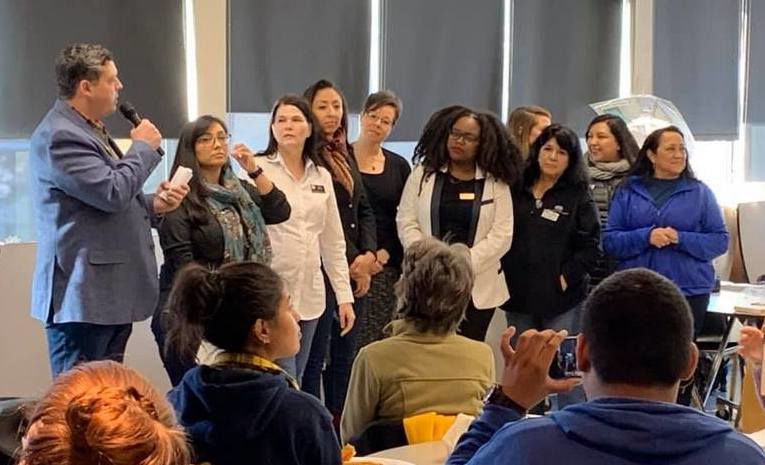
The “Mega Town Hall,” as it was billed, featured Denver state lawmakers, Denver City Council members and board members from the Regional Transportation District. Most hail from central and west Denver.
The biggest surprise for Rep. Alex Valdez:
“The number of people who communicated that they feel isolated by social media, and how they believe social media is leading people to lose the ability to have a productive conversation,” he said. “People seem ready to feel a real sense of community again.”
The meeting Feb. 8 at Valdez Elementary School in north Denver definitely felt like community. Children played in one corner. David Sabados, co-editor of the new Denver North Star newspaper, took pictures. Elected officials stayed put at tables and met with groups of constituents that rotated every 20 minutes.
Transportation. Tiny houses. The Taxpayer’s Bill of Rights, or TABOR, which they believe has crippled government from funding needed services. The discussions were friendly but at times intense.
Lawmakers often hold town halls with peers in neighboring districts, but they get asked questions better directed at Denver City Council or RTD board members. That’s why Sen. Julie Gonzales helped organize the Mega Town Hall.
She didn’t think of inviting Denver school board members until the last minute and they couldn’t attend. They will be given plenty of notice before the next meeting, Gonzales said.
I lived in north Denver for more than 20 years so I wasn’t surprised that the conversations veered left.
“I hope I never have to drive by a park again while a sweep is taking place; it’s heartbreaking,” Valdez said, referring to homeless camps.
And I thought to myself, “I hope I never have to drive by a park when the city is cleaning up after a sweep.”
In mid-January, city officials evicted campers from Liberty Park across from the state Capitol because of “hundreds of rats.” When Occupy Denver occupied that same park in 2011, stories about the feces clean-up were horrific.
Among those attending the town hall:
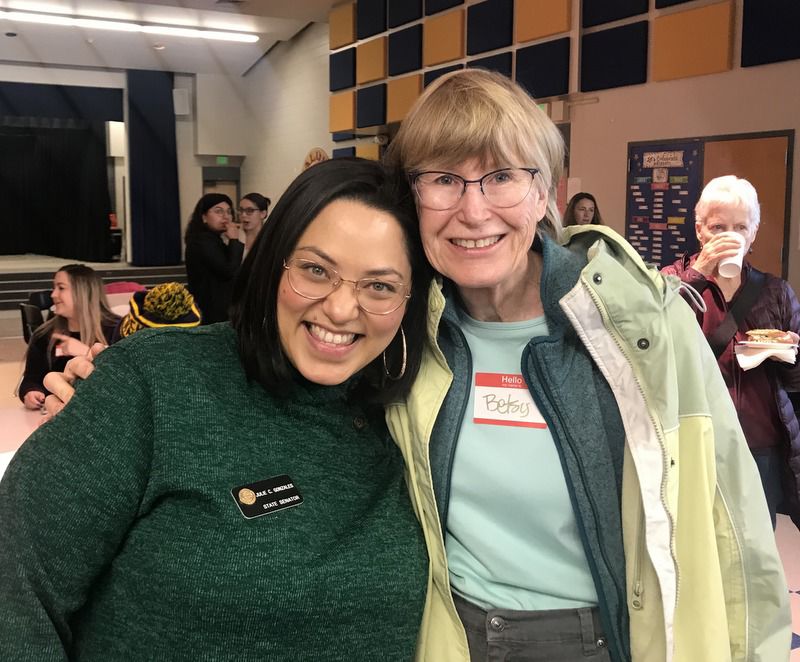
Betsy Daniel, the chair of House District 4, represented by Serena Gonzales Gutierrez. Daniel is getting an award in April at the Colorado Democratic Party’s Obama dinner for her volunteer work. “I have nothing but positive things to say about what Julia, Serena and Alex have started with public participation,” Daniel said.
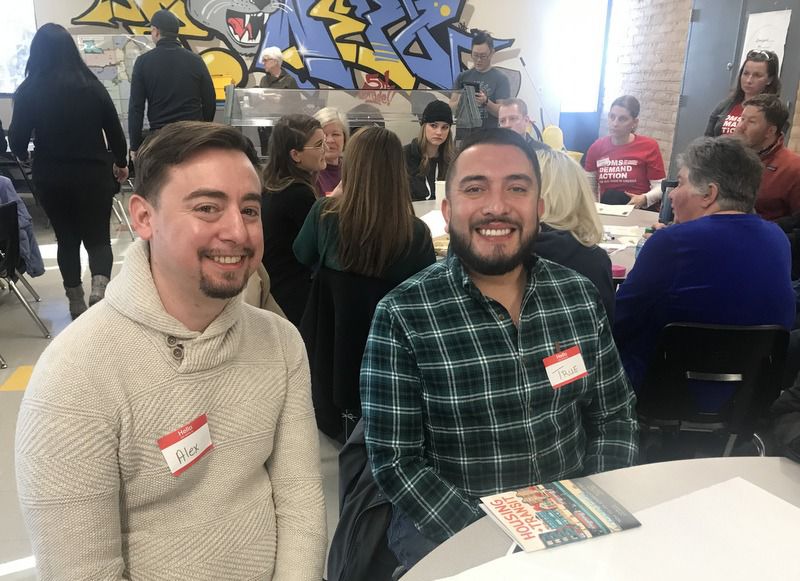
Alex Apodaca-Cobell and True Apodaca-Cobell, who both grew up in north Denver. They briefly lived in Adams County and have moved back to north Denver. Their main concerns: being able to afford a house and having a reliable transit agency.
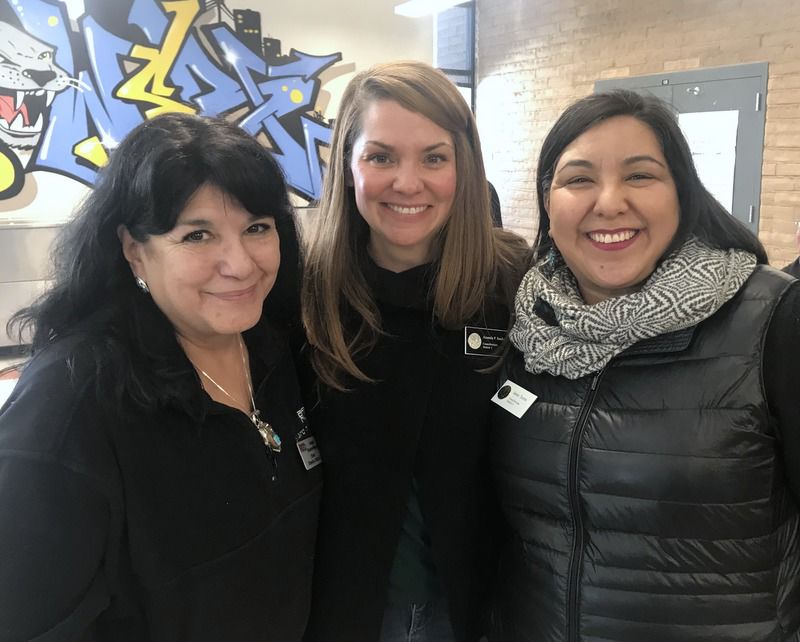
Mary Helen Sandoval, mother of north Denver City Councilwoman Amanda Sandoval. “Breaking into these small groups and having people say what was on their mind was really effective and energizing,” the elder Sandoval said.
The councilwoman said neighbors met neighbors and talked about a “pay as you throw” trash policy based on the amount of trash generated, and the need for more bike and pedestrian infrastructure throughout Denver.
Councilman Chris Hinds had planned to attend but couldn’t get out of his building because of the snow. Hinds uses a wheelchair and his predicament led to discussion about accessibility.
Income inequality. The proliferation of plastic. Rent control.
“I loved that so many people came out in the cold weather to share their input on many important community topics with the hope and expectation that these issues find their way to policy changes in work we do in city and state government,” Denver City Councilwoman Debbie Ortega said afterward.
Councilwoman Jamie Torres said her favorite moment was watching all the raised hands when Gonzales asked if this was their first town hall.
“Every day we are trying to reach new residents, and our job is to change our format and meet our residents in new ways. This was one great example of how we can do that,” she said. “Most town halls involve lots of speeches from electeds and I was excited that this one would not be that.”
Rep. Serena Gonzales-Gutierrez said one of her constituents talked about “decolonizing” events and spaces by acknowledging the original indigenous people who occupied the land.
“I think it’s important to never forget that, and I am even thinking of how this can be incorporated in our work every day,” she said.
After meeting with community members, elected officials shared what they heard.
RTD chairwoman Angie Rivera-Malpiede got a big laugh when she said she was heartened to hear how many people love the transit agency. The Regional Transportation District is going through rocky times. Ridership is down and fares are up.
The most worrisome moment for me: private prisons. It’s no surprise that folks want them to close and are grateful the legislature has taken up the effort, but I was alarmed at what seemed to be a lack of compassion for the communities where they are located.
Rural Colorado is not Denver. There aren’t signs on every other business begging for workers.
But for the most part, the town hall was exceptional in so many ways.
“There was this moment in one of the breakouts when my small group realized that I wasn’t going to respond to every individual comment, and the whole dynamic shifted,” Gonzales said.
“People started talking to each other. Within just a few minutes, one person talked about the importance of gun violence prevention policies, while another person said that they felt there was also a need for more mental health resources in schools. A third person chimed in to comment about the need to stop putting cops in schools and use the funding to instead hire more school psychologists and counselors.”
That afternoon, Gonzales got an email:
“That was the best organized and (most) worthwhile civic engagement event I’ve ever attended.”
That’s a sentiment shared by many who gave up their Saturday morning.


10th Circuit grants immunity to officers for fatal Manitou Springs shooting
Michael Karlik
michael.karlik@coloradopolitics.com
Updated 3 hours ago
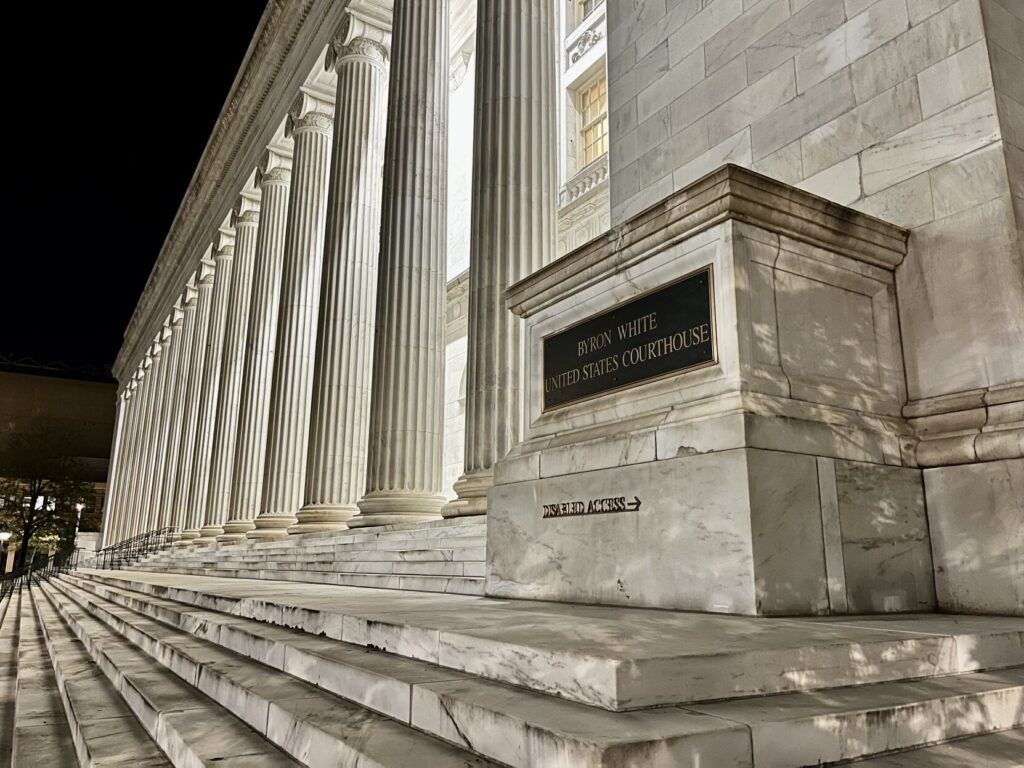
The Denver-based federal appeals court ruled on Wednesday that responding officers from Manitou Springs and El Paso County cannot be held constitutionally liable for shooting and killing a man after a 20-minute standoff. Wilford Deweese allegedly pulled out a gun...
10th Circuit rejects invitation for full-court review of tax-avoidance case
Michael Karlik
michael.karlik@coloradopolitics.com
Updated 11 minutes ago
The Denver-based federal appeals court declined to reconsider the standards for holding entities liable for their tax-avoidance schemes, with a majority of judges voting against full-court review on Monday. In April, a three-judge panel of the U.S. Court of Appeals...
GOP gubernatorial candidate Victor Marx pushes aggressive water-storage expansion at Colorado Water Congress
Marianne Goodland
marianne.goodland@coloradopolitics.com
Updated 4 hours ago
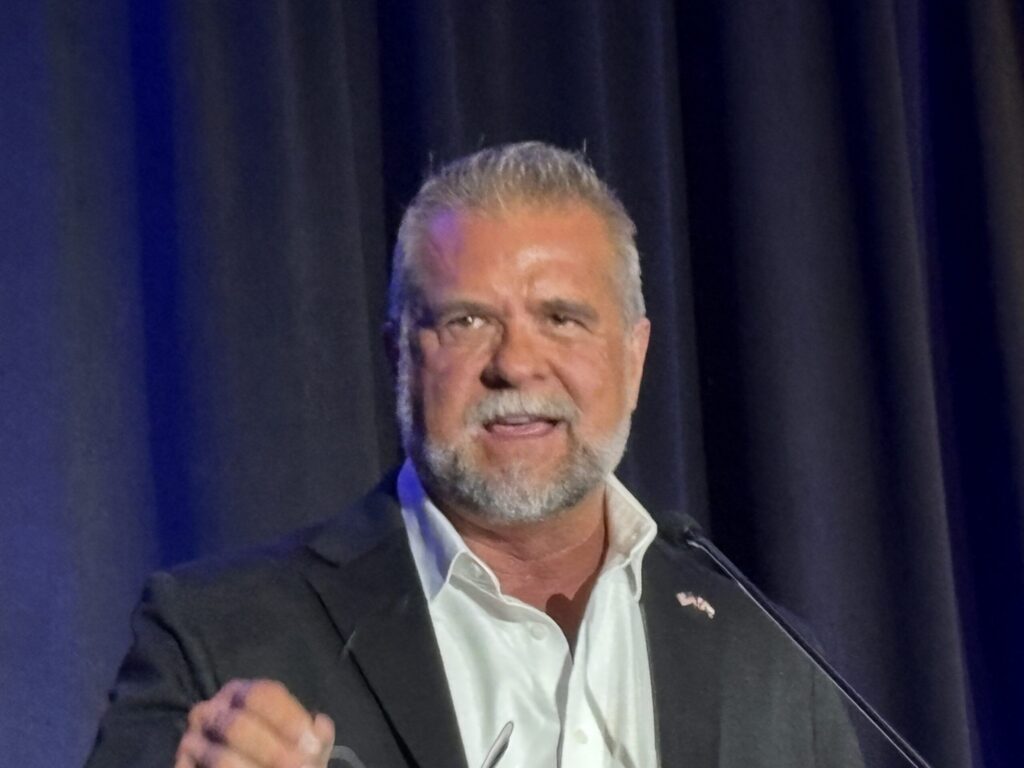
Victor Marx, the Republican nominee for governor, took the spotlight Wednesday during the opening day of the Colorado Water Congress, laying out how he says the state should approach its water future. Marx told the standing-room-only audience in Steamboat Springs...

Colorado AG sues GEO Group over noncompliance with tuberculosis investigation
Kyla Pearce
kyla.pearce@gazette.com
Updated 2 hours ago
The Colorado Attorney General’s Office on Wednesday filed a lawsuit against GEO Group, which operates the Aurora ICE Processing Center, alleging the company failed to comply with a state tuberculosis investigation. Weiser’s lawsuit demands that GEO provide “critical information” needed...

U.S. Rep. Lauren Boebert stresses storage, forest health and Upper Basin rights at Colorado Water Congress
Marianne Goodland
marianne.goodland@coloradopolitics.com
Updated 3 hours ago
Republican U.S. Rep. Lauren Boebert used her brief Wednesday appearance at Colorado Water Congress to tout her record on delivering water projects for the state and her district. Boebert, who is running for her second term representing Colorado’s 4th Congressional...

Trump has a 96% endorsement success rate. Here are the Republicans he’s backed who have lost
Mabinty Quarshie
mabinty-quarshie@coloradopolitics.com
Updated 6 hours ago
President Donald Trump’s 2026 primary endorsement success rate remains staggeringly high, but the president has seen a growing number of losses stack up in recent weeks. According to Ballotpedia, Trump has endorsed in 313 U.S. Senate, U.S. House, and state...
Colorado judge blasts state forensics lab in dismissing child sex case
Jenny Deam
jenny.deam@gazette.com
Updated 25 minutes ago
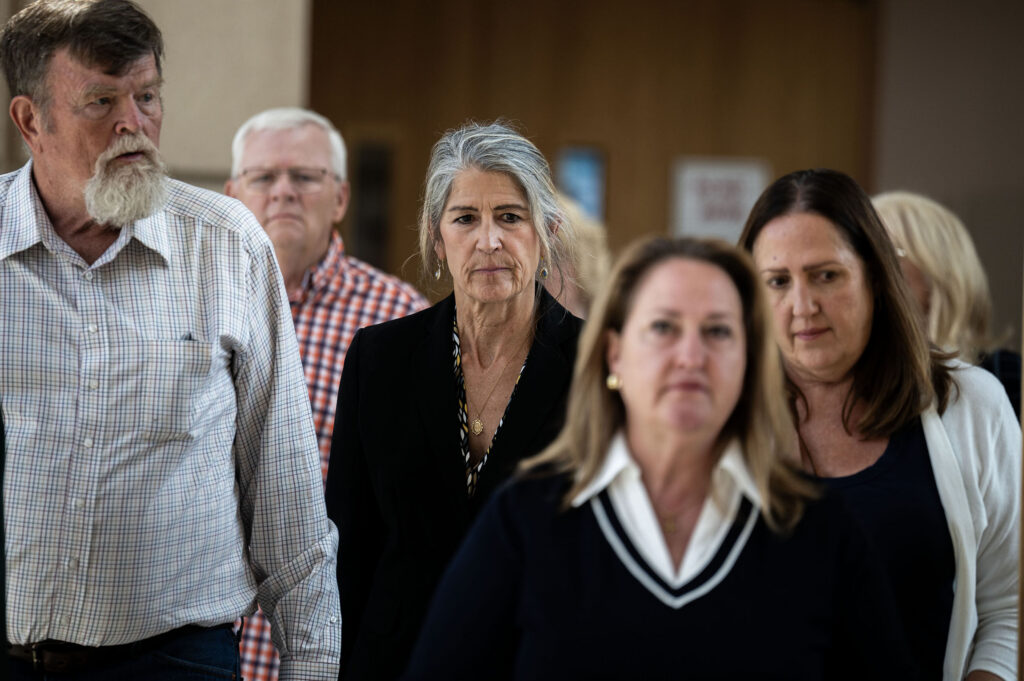
In a potentially widely consequential action, a Weld County district judge dismissed a child sexual assault case, citing the ongoing scandal at the Colorado Bureau of Investigation’s forensic lab that “has left a dark mark on the history of Colorado...

Colorado officials urge stronger water safety after 8 drownings and multiple Front Range rescues
Elizabeth Pond
elizabeth.pond@denvergazette.com
Updated 18 minutes ago
At least eight people have drowned in Front Range waters since mid-March, including two at Eleven Mile Reservoir, three at Cherry Creek Reservoir, one at Rockbridge Lake and two at Lake Pueblo State Park. In the wake of these deaths,...

Vehicle registration crackdown across Front Range starts next week
Nick Smith
nick-smith@coloradopolitics.com
Updated 8 hours ago
Colorado drivers with expired tags or unregistered vehicles still have time to get registered before a scheduled enforcement crackdown starts next week. According to an announcement from the Colorado Springs Police Department, a multi-agency enforcement effort will happen across the...

Aurora grapples with affordable housing needs, deficits
Kyla Pearce
kyla.pearce@gazette.com
Updated 8 hours ago
Aurora is grappling with affordable housing needs as demand for project funding increases and the state cuts grant money. Currently, the city needs about 12,000 affordable housing units, Martin Petrov at Aurora Housing Authority told members of the Housing, Neighborhood...
PREV
PREVIOUS

Amy Klobuchar announces campaign events in Colorado on Thursday
Fresh off the jolt an unexpectedly strong finish in New Hampshire, Democratic presidential candidate Amy Klobuchar is planning to hold a rally in Denver on Thursday, less than two weeks before the deadline to return Colorado’s primary ballots. The Minnesota senator plans to appear at an event in Denver at 5 p.m. on Thursday, sources […]

State statutes to honor disability advocate Carrie Ann Lucas
In 2018, the General Assembly approved an addition to statute to protect the rights of parents with disabilities. Under House Bill 18-1104, parents with disabilities have due process and equal rights under the law in matters of child welfare, foster care, family law, guardianship and adoption. CRS 24-34-805 would gain a new name, if Sen. Jessie […]