

HUDSON | Time to reassess the premise of public transit?
I recently stumbled across a list of Valentine greetings for economists. This serendipitous discovery is not only appropriate for February but one of the very few benefits of wasting time on the Internet.
Apparently intended to be funny is the message, “What do you say we re-measure our cross-elasticity?” – likely another case of being told something you already know in words you can’t comprehend.
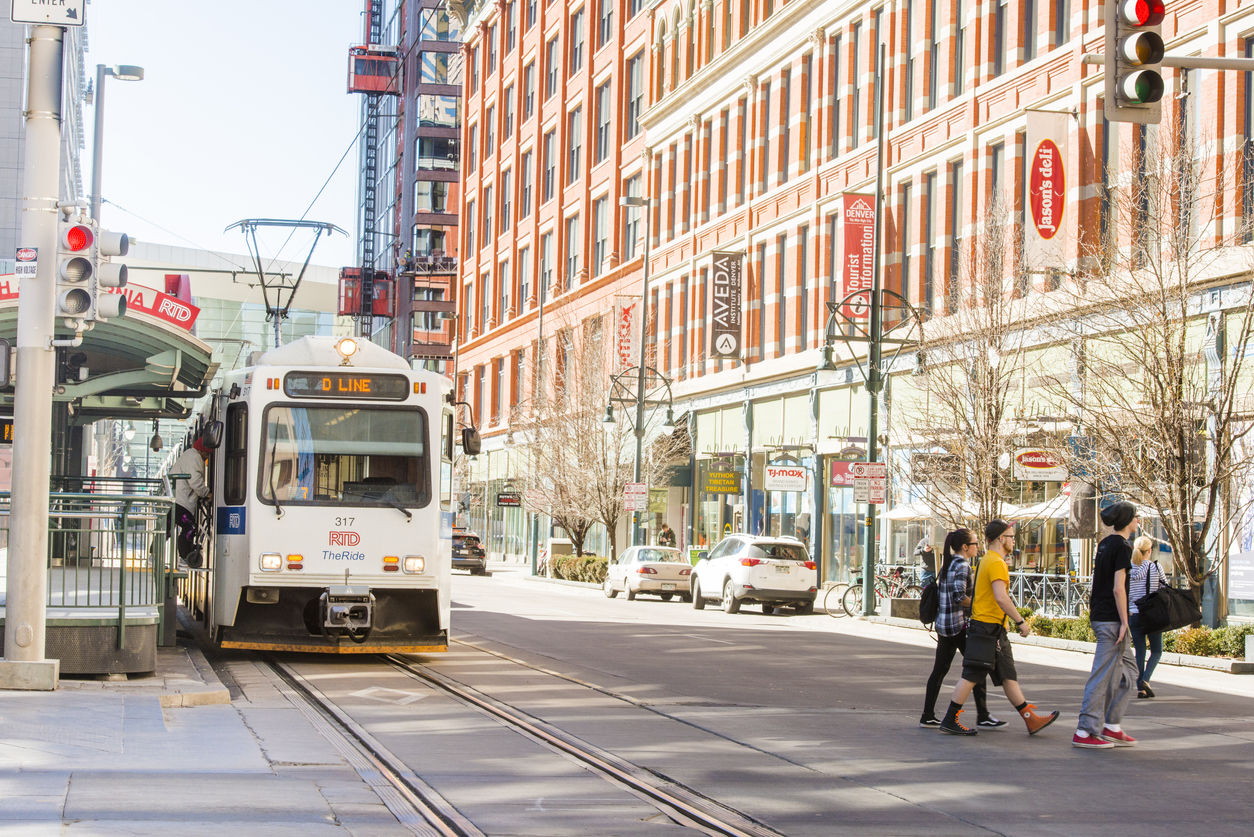
All this is preamble to acknowledging an observation from an economist regarding RTD’s dwindling ridership.
“This trend has been cropping up at transit properties across the country. We may be looking at RTD’s problems through the wrong end of the telescope. Are there changes in our economy and employment patterns pulling passengers out of their seats?” she suggested.
Stopping to consider her query, I began to wonder about the gig economy and all those Millennials working out of shared office spaces. Public transit is primarily designed to serve home to work commutes – carry your lunch pail to the bus, ride to work and then sit at your desk for eight hours before returning home.
Today’s solo entrepreneurs, who provide design services, IT expertise or other professional skills to small businesses, are frequently juggling a half dozen assignments at a time. They only rent a shared office space so they can include an address on their business cards, access a location where they can schedule meetings with clients and rely on a live human being to answer phone calls. At the end of their work day, they may spend a few hours driving for Uber or LYFT and schlep Grubhub deliveries into the evening. They damned well need their cars.
Public transit has always faced a “first mile/last mile” challenge. Getting to the train and then walking to the office from the train can be an issue – even more so in bad weather. Scooters have jumped into this gap. This is one of the reasons RTD has been taking a few tentative steps toward coordination with ride sharing services. Plagued with some of the highest fares in the nation, there are many short trips that are cheaper, faster and more comfortable in a car than they are if attempted by bus. Flexibility will never be transit’s long suit. As transit agencies attempt to navigate a rapidly transforming economy there is little consensus on what is the right thing to do.
There’s nothing quite like the laboratories of democracy. Kansas City just eliminated fares entirely. Elevators are provided for free, why not buses? Even with declining ridership, cities that invested in rail systems generally enjoy stronger economies. Their investments must be serving some economic demand. RTD, however, is uniquely handcuffed by fiscal restrictions adopted nearly 40 years ago. The requirement that 35% of its operating costs be generated from the farebox may have made sense then, perhaps not so much now. Both supporters and critics of transit are resistant to admitting it may be time for a complete re-examination of what the goals should be for public transit.
Goal identification requires asking the right questions. Who are we trying to serve? Who is actually dependent on transit access and what can they reasonably afford to pay? Who is still riding? Who quit riding and why? Are there ancillary benefits we are failing to measure? Parking capacity and congestion jump to mind. Is there a link between Colorado’s failure to adequately fund transportation and the current need to cut back on bus and train service at RTD? Is it TABOR, or a simple unwillingness on the part of voters to pay for what they tell pollsters they really want? There is undoubtedly a breakdown in communication between elected officials and voters. Leadership also appears in short supply.
For nearly a decade, governors have played Pontius Pilate when it comes to funding. Compare the “…we need to wait and see what voters are willing to support” handwringing we’ve witnessed with Roy Romer’s months-long oatmeal breakfast campaign taken each morning to persuade Adams County residents they should support a new Denver airport to replace Stapleton. Two more members added to an already unwieldy RTD Board are unlikely to influence a majority of elected members, no matter how brilliant their credentials. It’s probably time to take a deep breath and pause to figure out what is actually going on. We need answers, not finger pointing.
Disruption is an amoral interloper. Technology has proven as blind as justice.
Miller Hudson is a public affairs consultant and a former legislator. He can be reached at mnhwriter@msn.com.


Colorado Democrats, your time is coming | Jon Caldara
Jon Caldara
jon-caldara@coloradopolitics.com
Updated 20 hours ago
Hey, Colorado Democrats! All the fun you’ve had watching Republican dysfunction in Colorado for the last 20 years was just a preview of what is about to happen to you. The Colorado Republican Party no longer exists as a competitive...
The relevance of Watergate more than a half-century later | SONDERMANN
By Eric Sondermann
by-eric-sondermann@coloradopolitics.com
Updated 4 days ago
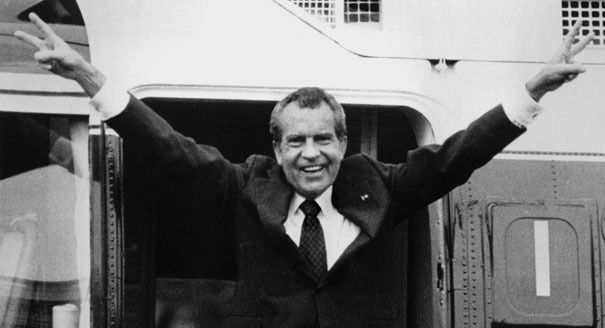
It was the scandal for which all other scandals are now named. In June 1972, a small group of Cuban burglars with high-level connections broke into the headquarters of the Democratic National Committee. Those headquarters were located in the Watergate...

Colorado must continue finding common ground on wildfire policy | GUEST COLUMN
Colorado Politics
colorado-politics@coloradopolitics.com
Updated 3 days ago
By John Herrick Colorado has never lacked for opinions about wildfire policy. We debate forest management, climate change, prescribed burns, land use, air quality and budgets. Those debates are familiar territory, but a new discussion is beginning to happen around...

Proposition NN is the best investment for Colorado’s students and schools | GUEST COLUMN
Colorado Politics
colorado-politics@coloradopolitics.com
Updated 3 days ago
By Justin Ogden Colorado families know what it means to make difficult budget decisions. Inflation has driven up the cost of groceries, housing, utilities and just about everything else. Families like mine work hard to stretch every dollar while still...
Were the primaries a preview for consequential general election? | Paula Noonan
Paula Noonan
paula-noonan@coloradopolitics.com
Updated 4 days ago
Colorado’s political future will go the way of this election. Historically, the state has not had both chambers controlled by a supermajority. This election may change that. The primaries suggest how the general election may play out. Democrats had solid...
Disagreement doesn’t have to mean disrespect | GUEST COLUMN
Colorado Politics
colorado-politics@coloradopolitics.com
Updated 4 days ago
By Vincent Atchity These days, it doesn’t take long to feel overwhelmed by politics. Turn on the news, scroll through social media or read the comments on almost any political post and you’ll find anger, outrage and personal attacks. For...

Keeping Colorado’s kids’ trust online | PODIUM
Colorado Politics
colorado-politics@coloradopolitics.com
Updated 5 days ago
By Stuart Jenkins Almost every day, the kids and teens we serve across Colorado are introduced to new generative artificial intelligence and other emerging technology, including conversational AI systems designed to simulate human conversation. These tools are no longer a...

Marx’s ‘through line’ predates Trump, connects to Maes | FEEDBACK
Colorado Politics
colorado-politics@coloradopolitics.com
Updated 5 days ago
Eric Sondermann is of course correct Victor Marx is an unserious, unelectable, embarrassing Republican nominee for governor of Colorado. But I respectfully submit that the “through line,” as Mr. Sondermann describes it, is not from Trump to Marx, despite their...

Cedric Pride’s blueprint for opportunity through the trades | The OpEdge Podcast
Tony Olivero
tony.olivero@gazette.com
Updated 5 days ago
Cedric Pride, CEO of the nonprofit Pride Initiative in Denver, joins The OpEdge with a blueprint for workforce development, skilled trades, and economic opportunity. Pride tells host and investigative columnist Jimmy Sengenberger why he believes the trades offer a path...
Colorado’s No. 1 education ranking should raise our ambition | GUEST COLUMN
Colorado Politics
colorado-politics@coloradopolitics.com
Updated 5 days ago
By Scott Laband Colorado has earned the right to celebrate its new No. 1 ranking in education from U.S. News & World Report. Gov. Jared Polis called it “one of the proudest moments” of his time in office and shared the...
PREV
PREVIOUS

BIDLACK | It's still all about plastics — how to dispose of them
Hal Bidlack If you are of a certain age, or older (hello, fellow boomers), you may recall the movie “The Graduate.” In that classic film, a young college graduate, played by Dustin Hoffman, gets advice from an older businessman about how to plan for a successful future. The older gent, Mr. McGuire, offers a single […]
OPINION | Out with fossils, in with renewables for the good of our members, our communities
Rick Gordon It’s no secret that over the past decade, costs, technologies, regulations and viewpoints have been shifting rapidly in the energy industry. Consumers and communities alike are demanding cleaner, cheaper energy sources. As a not-for-profit, four-state cooperative, Tri-State Generation and Transmission Association has an obligation to the members we serve to forge an innovative […]