

LEGISLATIVE PREVIEW | 10 things to watch in the 2020 session
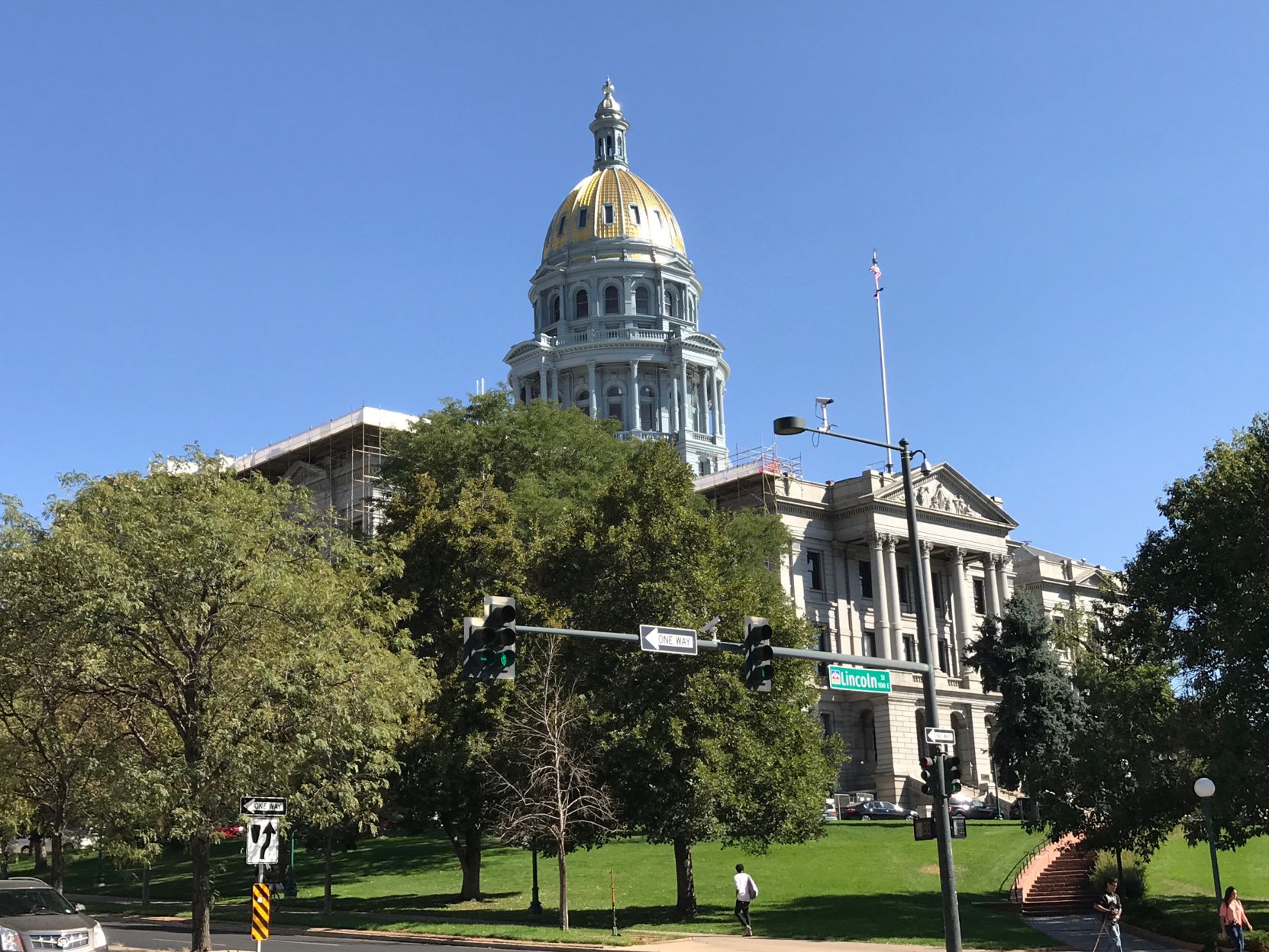

The Colorado license plate could flip from white mountains to green before a white sky if a bill planned for the 2020 legislative session becomes law.
Courtesy of the Colorado Department of Revenue
10. A new license plate
It’s not the biggest issue on the legislative docket, but every Coloradan who buys new license plates could be coughing up an extra $3.78 to the state. Why? Because a bipartisan legislative committee thought that the tags would be easier to read if, instead of white mountains and a green sky, they had green mountains and a white sky. A draft of the bill states, by the way, said it would “minimize potential lost registration revenue.” That means pay up. The extra bucks for new plates is expected to bring in an extra $362,918 in 2020, if the bill passes. The tags would roll out in the middle of the budget cycle. The next full fiscal year, they would bring in $725,836. The money would go to the state highway fund, as well as to cities and counties.
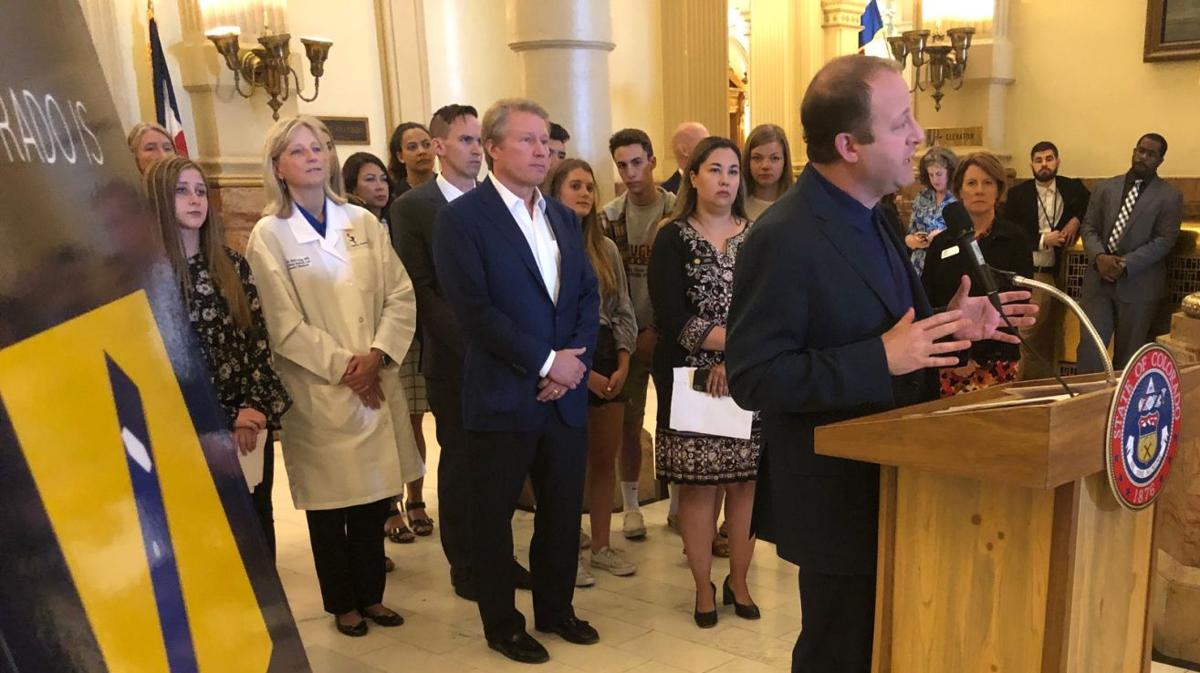
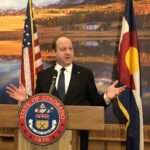
Gov. Jared Polis makes an announcement Wednesday at the Capitol regarding asking the state's voters to increase Colorado's tax on tobacco and put in place a new tax on popular nicotine vaping products at the state Capitol on April 24, 2019.
(Photo by Joey Bunch, Colorado Politics)
9. Vaping crackdown
At the end of the last session, Gov. Jared Polis got behind a push to put a tax on tobacco vaping products to pay for education and health programs, but the proposed ballot measure never made it out of the legislature in the waning days. The problem, teen usage, hasn’t gone away, and neither has the need for tax money to fight it and help schools. Moreover, a health scare from fatal lung illnesses from black-market vaping products also is pressing lawmakers to act. Expect a step, or at least a half-step for election-year appearances, in the upcoming session. Polis asked the state health department for a report on vaping in September.
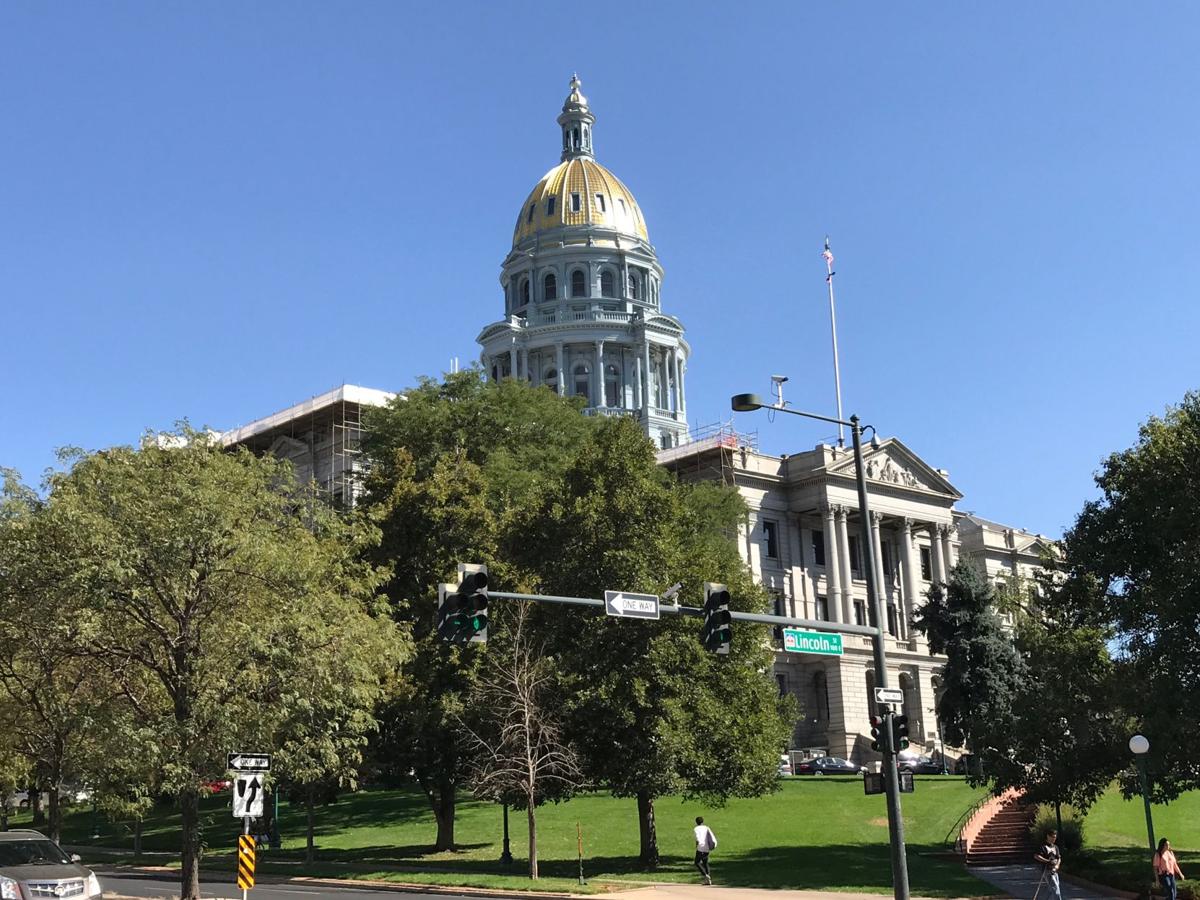
Lawmakers under the gold dome in Denver are expected to consider fees on government services during the session that begins Jan. 8, 2019.
Photo by Joey Bunch/Colorado Politics
8. Taking on TABOR
While Colorado’s economy continues to hum, the state’s Taxpayer’s Bill of Rights keep lawmakers’ hands off most of the revenue windfall, forcing rebates when the income from taxes exceeds a constitutional spending cap based on inflation and population growth. Voters sent a message last November, when they handily rejected the legislatively approved Proposition CC that would have allowed the state to keep TABOR refunds. That set some the governor and some lawmakers to thinking of ways to raise money for education, transportation and other aspects of state government put upon by growth. Businesses are bracing for “revenue enhancements” that don’t require voter approval. Also to watch: whether progressive groups will take a shot at tax changes at the ballot, ranging from changes to the state’s income tax structure to a full-blown repeal of TABOR. The Colorado Fiscal Institute filed a whopping 35 proposed ballot measures in the week before Christmas on changing state tax policy to enact a “fair and just” graduated income tax system.

In this June 27, 2017, photo, the proprietor of a medical marijuana dispensary prepares his monthly tax payment, over $40,000 in cash.
(AP Photo/Jae C. Hong, File)
7. Cannabis continuum
Besides a curb on teen vaping, the pot industry tells Colorado Politics to expect some sort of legislative declaration or incentive for the industry to foster social equity — meaning more minority representation in ownership and management — next session. Lawmakers also will examine residency exceptions for certain cannabis employees working for multi-state companies that have operations in Colorado and other states. The governor says the state also must continue to expand the industry’s access to capital and other services available to other industries and employers, though Colorado made progress last session and waits on the federal government, led by U.S. Sen. Cory Gardner, to do more on banking rules. But that’s unlikely to move past discussion, given the opposition from Sen. Mark Crapo, R-Idaho, who chairs the Senate Banking Committee.
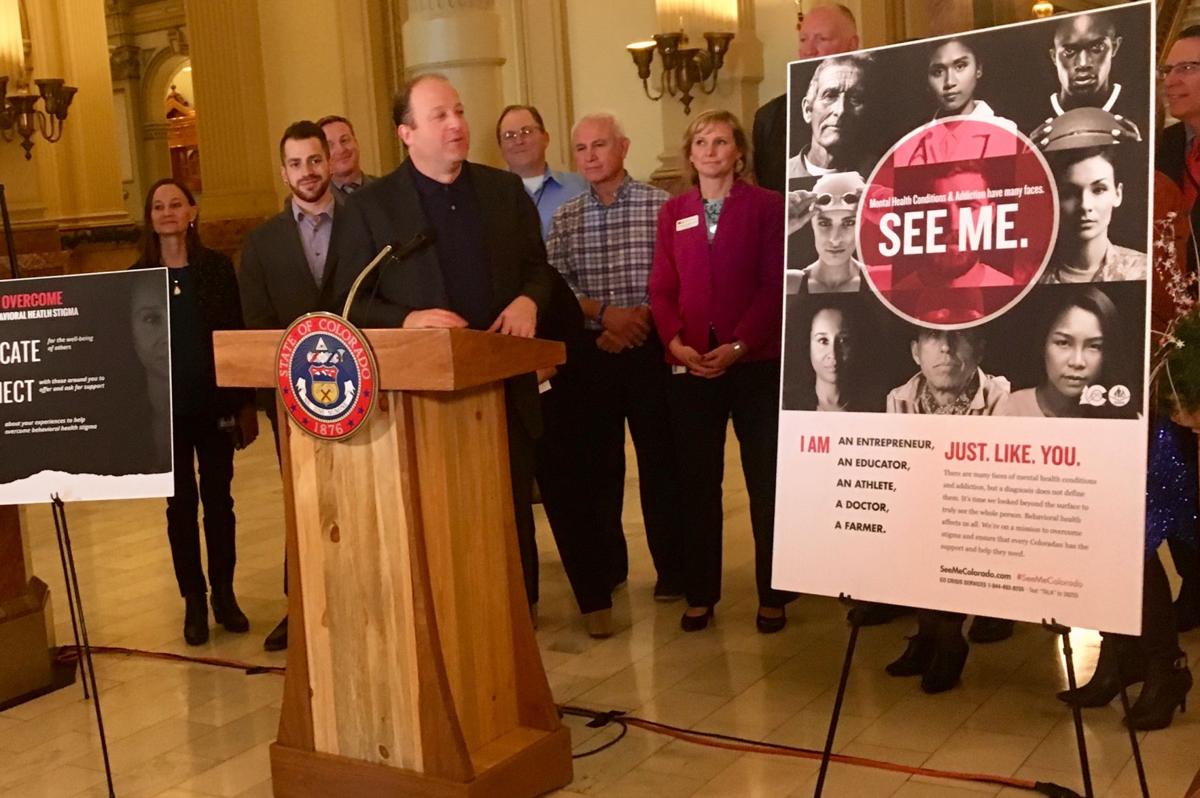
Gov. Jared Polis, standing with the Colorado Behavioral Health Task Force, announces the "SEE ME" campaign to erase the stigma of mental illness and encourage people to ask for help.
Michael Karlik, Colorado Politics
6. Mental health
The issue touches almost every aspect of Colorado life, from lost time at work to suicides among school students, from the cities to the mountains and plains. Mental health care advocates tell Colorado Politics they are looking to close gaps in coverage and find the missing pieces in the puzzle to help more people in 2020. Bills in the works include measures to set a minimum standard for mental health training for educators, allow some caregivers to work in more situations than they can currently, and establish an alternative transportation system for individuals experiencing crises. Another proposal would require licensed teachers and principals to take at least one class involving mental health aspects as part of their regular recertification process, and another would help provide transportation to help for people in crisis.

5. Education
Teachers want raises. Lawmakers want to pay down their constitutionally required debts to the education system. Parents want a slow roll on tuition increases for higher learning, and Republicans plan to press for more equity for charter schools and rural districts, as well as promote apprenticeships and high school-community college partnerships to trim tuition costs for parents. Polis said he thinks there’s more to do on early childhood education, where the foundation blocks are placed for a lifetime of learning. In other words, it’s the same-old, same-old under the Gold Dome in Denver.

A Colorado Department of Transportation crew blasts one of two massive rocks that closed Colorado 145 on May 24. The rock on the right, at 8.5 million pounds, will be left where it is and the road will be relocated around it.
Photo courtesy CDOT.
4. Transportation
Despite billions in state highway needs, there are not a lot of bold initiatives on the front burner for this legislative session. Yes, Polis is promising more than $555 million in new funding for the state’s overcrowded and aging transportation system, but most of that money is the result of 2017’s Senate Bill 267. Republicans plan to ask for another $300 million this year, but with the governor and the Democrats making big, expensive promises on other fronts, don’t look for more big bucks to flow into highways this year.
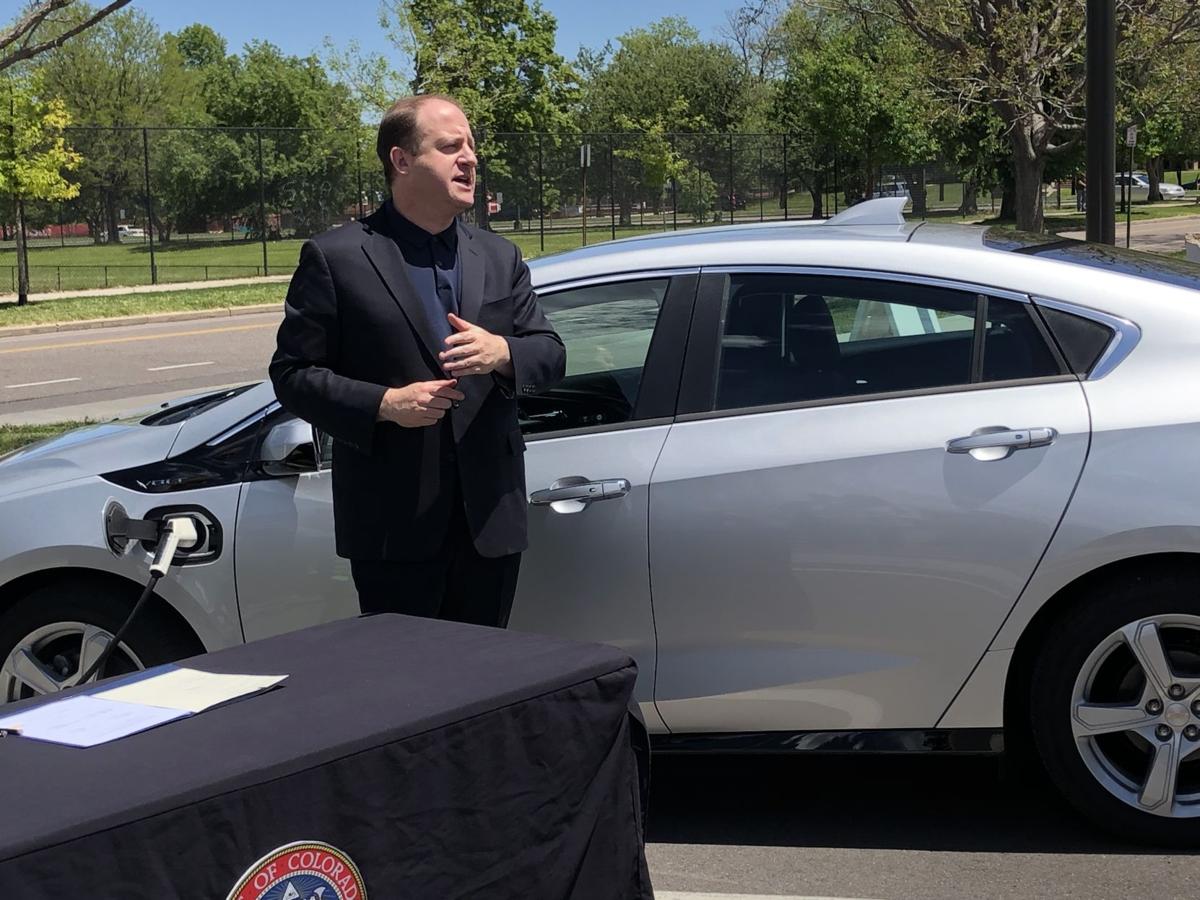
Gov. Jared Polis arrives in an electric vehicle to sign bills to boost their use in Colorado on May 31, 2019.
Photo by Joey Bunch/Colorado Politics
3. Being green
No one expects to drop another Senate Bill 181, the big bill that gave more authority over oil and gas to local governments, or legislation as far-reaching as the state’s new Climate Action Plan, but the governor is far from done on the environmental front. His goal is to get the state to 100% renewable energy by 2040 as well as clamping down on the Front Range’s air quality non-attainment for ozone. He can’t afford to take a session off completely. As far as the state has gone on electric vehicles in 2019, expect them to go even further to increase their availability and use in 2020.
“More importantly we’re preparing Colorado for success in the future with lower rates, with sustainable green energy, doing our part on clean air and climate and creating good green jobs in Colorado that will never be outsourced,” the governor said.
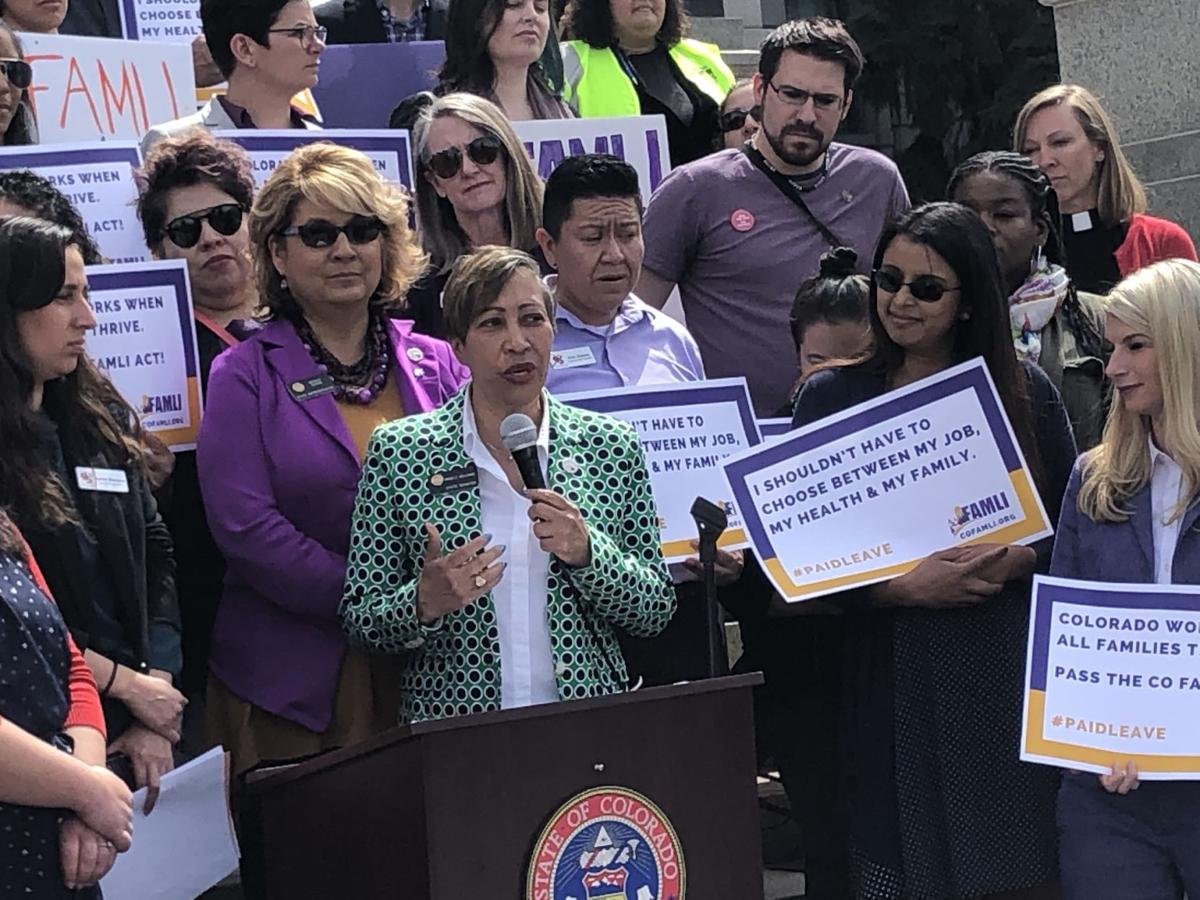
State Sen. Angela Williams, D-Denver, speaks at a statehouse rally for a Colorado paid family leave program on April 9, 2019.
Photo by Joey Bunch/Colorado Politics
2. Family and medical leave
This was the great unkept promise made by Democrats left at the end of the last session. When it became apparent that business interests were opposed and the Democratic governor was skeptical last spring, the idea was demoted from a new state program to provide a paid leave insurance program for all Colorado workers to a study. The study, however, found that the program would be remarkably expensive. Polis told reporters at the governor’s mansion before Christmas that he’s looking for an iteration of the bill that costs the state little or nothing. Premiums for employees and employers, however, could be high, around 1% of workers’ pay, according to a report released in December. How this plays out could prove the most divisive bill of the session — business versus social interests, progressives against everyone else, Democrats versus their promises.
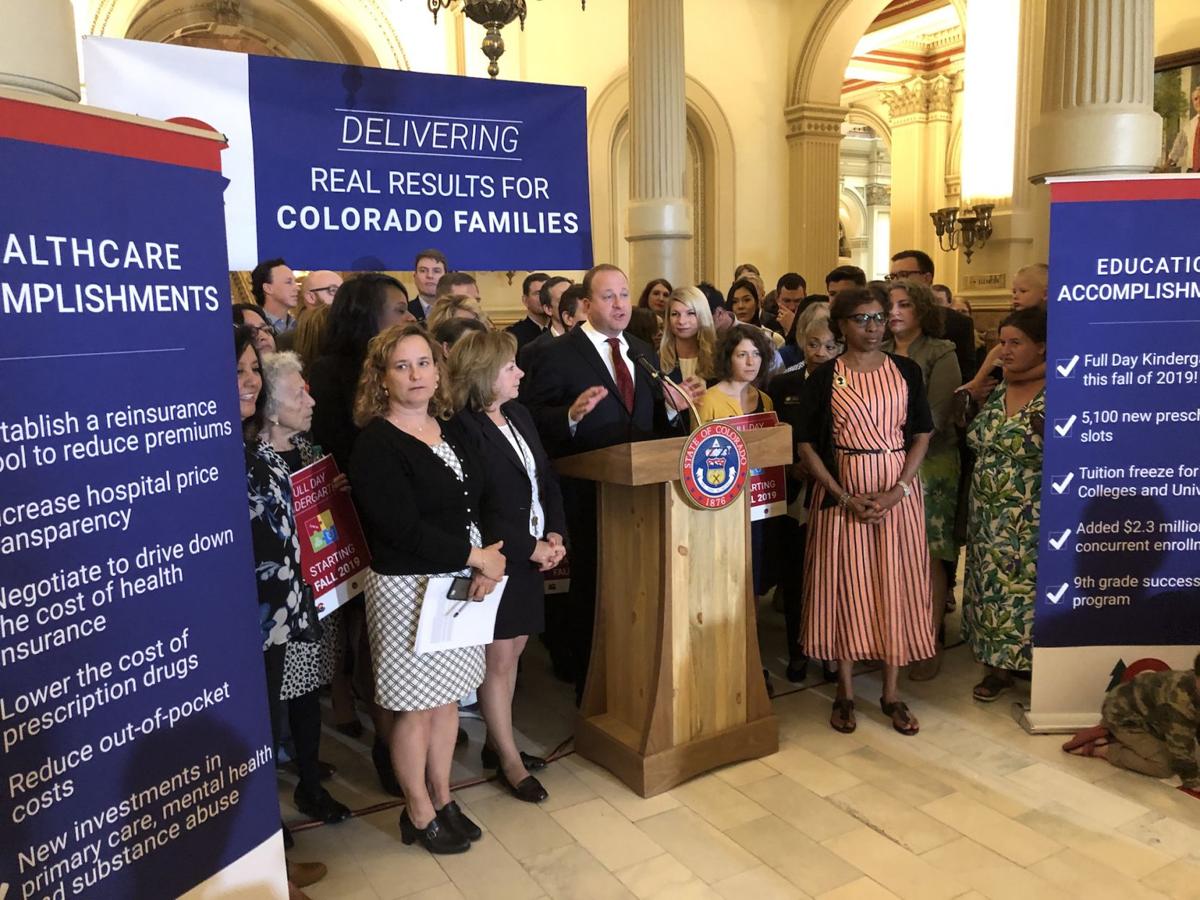
Gov. Jared Polis celebrates with fellow Democrats at the state Capitol after passing a raft of health care-related legislation at the end of the 2019 legislative session.
Photo by Joey Bunch/Colorado Politics
1. Health care
State lawmakers dropped a lot on the system — hospitals, insurance and drug prices — in the 2019 legislative session. It remains to be seen what they could possibly do to top it in 2020 when it comes to new ideas. Instead, they will continue working on what they’ve started: launching a state public-private option insurance program to offer below-market rates, continue the effort to bring cheaper Canadian drugs to Colorado and improving transparency on hospital prices. It’s one thing to pass all that; now comes the work of implementing it. Expect bills to grease the skids and kick the tires on the big initiatives of 2019.
“We’re not going to give up on saving people money on health care,” Polis said. “We’re going to double down and continue on that work.”

The Colorado license plate could flip from white mountains to green before a white sky if a bill planned for the 2020 legislative session becomes law.
10. A new license plate
It’s not the biggest issue on the legislative docket, but every Coloradan who buys new license plates could be coughing up an extra $3.78 to the state. Why? Because a bipartisan legislative committee thought that the tags would be easier to read if, instead of white mountains and a green sky, they had green mountains and a white sky. A draft of the bill states, by the way, said it would “minimize potential lost registration revenue.” That means pay up. The extra bucks for new plates is expected to bring in an extra $362,918 in 2020, if the bill passes. The tags would roll out in the middle of the budget cycle. The next full fiscal year, they would bring in $725,836. The money would go to the state highway fund, as well as to cities and counties.

Gov. Jared Polis makes an announcement Wednesday at the Capitol regarding asking the state’s voters to increase Colorado’s tax on tobacco and put in place a new tax on popular nicotine vaping products at the state Capitol on April 24, 2019.
9. Vaping crackdown
At the end of the last session, Gov. Jared Polis got behind a push to put a tax on tobacco vaping products to pay for education and health programs, but the proposed ballot measure never made it out of the legislature in the waning days. The problem, teen usage, hasn’t gone away, and neither has the need for tax money to fight it and help schools. Moreover, a health scare from fatal lung illnesses from black-market vaping products also is pressing lawmakers to act. Expect a step, or at least a half-step for election-year appearances, in the upcoming session. Polis asked the state health department for a report on vaping in September.

Lawmakers under the gold dome in Denver are expected to consider fees on government services during the session that begins Jan. 8, 2019.
8. Taking on TABOR
While Colorado’s economy continues to hum, the state’s Taxpayer’s Bill of Rights keep lawmakers’ hands off most of the revenue windfall, forcing rebates when the income from taxes exceeds a constitutional spending cap based on inflation and population growth. Voters sent a message last November, when they handily rejected the legislatively approved Proposition CC that would have allowed the state to keep TABOR refunds. That set some the governor and some lawmakers to thinking of ways to raise money for education, transportation and other aspects of state government put upon by growth. Businesses are bracing for “revenue enhancements” that don’t require voter approval. Also to watch: whether progressive groups will take a shot at tax changes at the ballot, ranging from changes to the state’s income tax structure to a full-blown repeal of TABOR. The Colorado Fiscal Institute filed a whopping 35 proposed ballot measures in the week before Christmas on changing state tax policy to enact a “fair and just” graduated income tax system.

In this June 27, 2017, photo, the proprietor of a medical marijuana dispensary prepares his monthly tax payment, over $40,000 in cash.
7. Cannabis continuum
Besides a curb on teen vaping, the pot industry tells Colorado Politics to expect some sort of legislative declaration or incentive for the industry to foster social equity — meaning more minority representation in ownership and management — next session. Lawmakers also will examine residency exceptions for certain cannabis employees working for multi-state companies that have operations in Colorado and other states. The governor says the state also must continue to expand the industry’s access to capital and other services available to other industries and employers, though Colorado made progress last session and waits on the federal government, led by U.S. Sen. Cory Gardner, to do more on banking rules. But that’s unlikely to move past discussion, given the opposition from Sen. Mark Crapo, R-Idaho, who chairs the Senate Banking Committee.

Gov. Jared Polis, standing with the Colorado Behavioral Health Task Force, announces the “SEE ME” campaign to erase the stigma of mental illness and encourage people to ask for help.
6. Mental health
The issue touches almost every aspect of Colorado life, from lost time at work to suicides among school students, from the cities to the mountains and plains. Mental health care advocates tell Colorado Politics they are looking to close gaps in coverage and find the missing pieces in the puzzle to help more people in 2020. Bills in the works include measures to set a minimum standard for mental health training for educators, allow some caregivers to work in more situations than they can currently, and establish an alternative transportation system for individuals experiencing crises. Another proposal would require licensed teachers and principals to take at least one class involving mental health aspects as part of their regular recertification process, and another would help provide transportation to help for people in crisis.

5. Education
Teachers want raises. Lawmakers want to pay down their constitutionally required debts to the education system. Parents want a slow roll on tuition increases for higher learning, and Republicans plan to press for more equity for charter schools and rural districts, as well as promote apprenticeships and high school-community college partnerships to trim tuition costs for parents. Polis said he thinks there’s more to do on early childhood education, where the foundation blocks are placed for a lifetime of learning. In other words, it’s the same-old, same-old under the Gold Dome in Denver.

A Colorado Department of Transportation crew blasts one of two massive rocks that closed Colorado 145 on May 24. The rock on the right, at 8.5 million pounds, will be left where it is and the road will be relocated around it.
4. Transportation
Despite billions in state highway needs, there are not a lot of bold initiatives on the front burner for this legislative session. Yes, Polis is promising more than $555 million in new funding for the state’s overcrowded and aging transportation system, but most of that money is the result of 2017’s Senate Bill 267. Republicans plan to ask for another $300 million this year, but with the governor and the Democrats making big, expensive promises on other fronts, don’t look for more big bucks to flow into highways this year.

Gov. Jared Polis arrives in an electric vehicle to sign bills to boost their use in Colorado on May 31, 2019.
3. Being green
No one expects to drop another Senate Bill 181, the big bill that gave more authority over oil and gas to local governments, or legislation as far-reaching as the state’s new Climate Action Plan, but the governor is far from done on the environmental front. His goal is to get the state to 100% renewable energy by 2040 as well as clamping down on the Front Range’s air quality non-attainment for ozone. He can’t afford to take a session off completely. As far as the state has gone on electric vehicles in 2019, expect them to go even further to increase their availability and use in 2020.
“More importantly we’re preparing Colorado for success in the future with lower rates, with sustainable green energy, doing our part on clean air and climate and creating good green jobs in Colorado that will never be outsourced,” the governor said.

State Sen. Angela Williams, D-Denver, speaks at a statehouse rally for a Colorado paid family leave program on April 9, 2019.
2. Family and medical leave
This was the great unkept promise made by Democrats left at the end of the last session. When it became apparent that business interests were opposed and the Democratic governor was skeptical last spring, the idea was demoted from a new state program to provide a paid leave insurance program for all Colorado workers to a study. The study, however, found that the program would be remarkably expensive. Polis told reporters at the governor’s mansion before Christmas that he’s looking for an iteration of the bill that costs the state little or nothing. Premiums for employees and employers, however, could be high, around 1% of workers’ pay, according to a report released in December. How this plays out could prove the most divisive bill of the session — business versus social interests, progressives against everyone else, Democrats versus their promises.

Gov. Jared Polis celebrates with fellow Democrats at the state Capitol after passing a raft of health care-related legislation at the end of the 2019 legislative session.
1. Health care
State lawmakers dropped a lot on the system — hospitals, insurance and drug prices — in the 2019 legislative session. It remains to be seen what they could possibly do to top it in 2020 when it comes to new ideas. Instead, they will continue working on what they’ve started: launching a state public-private option insurance program to offer below-market rates, continue the effort to bring cheaper Canadian drugs to Colorado and improving transparency on hospital prices. It’s one thing to pass all that; now comes the work of implementing it. Expect bills to grease the skids and kick the tires on the big initiatives of 2019.
“We’re not going to give up on saving people money on health care,” Polis said. “We’re going to double down and continue on that work.”

Colorado needs a sane, viable opposition party | SONDERMANN
By Eric Sondermann
by-eric-sondermann@coloradopolitics.com
Updated 4 days ago
If you are upset with the increasing regulatory burden in Colorado, the exodus of too many large employers, accelerating property taxes, the condition of the roads, and all of the funding for transit schemes with low demand, of course, you...
Colorado Politics Calendar May 11-17
Rachael Wright, Special to Colorado Politics
rachael.wright@coloradopolitics.com
Updated 3 days ago
CoPo’s weekly political calendar will help you find political and public-policy events throughout Colorado. It includes candidate and issue campaign events, public policy meetings, court hearings, state and local party conventions, assemblies, debates, rallies, parades, speaking engagements, traveling dignitary appearances,...
NRA carves out early success story battling 1981 Colorado gun legislation | A LOOK BACK
Rachael Wright, Special to Colorado Politics
rachael.wright@coloradopolitics.com
Updated 2 days ago
Forty-Five Years Ago This Week: After House Bill 81-1542, which would have mandated detention for juveniles carrying concealed weapons, cleared the Senate Judiciary Committee, Sen. Paul Powers, R-Denver, said he had received 45 letters per day denouncing the legislation. And...
It’s almost Sine Die and it can’t come soon enough | Capitol M | Week of May 9, 2026
Marianne Goodland
marianne.goodland@coloradopolitics.com
Updated 2 days ago
The lighter side of the state Capitol, usually. At first, May the Fourth might have been a bit of a disappointment. Usually, there’s a lot of Star Wars foolishness on this particular day, but early on, it was low-key. The...
TABOR showdown: Senate moves bill forward, Advance Colorado prepares for legal action
Marianne Goodland
marianne.goodland@coloradopolitics.com
Updated 13 hours ago
Despite objections from legislative staff and Republican opposition, Senate Democrats on Friday moved forward with a proposal to reroute $306 million in taxpayer refunds. Already, critics are preparing to sue over the proposal that seeks to take $300 million in Taxpayer’s...
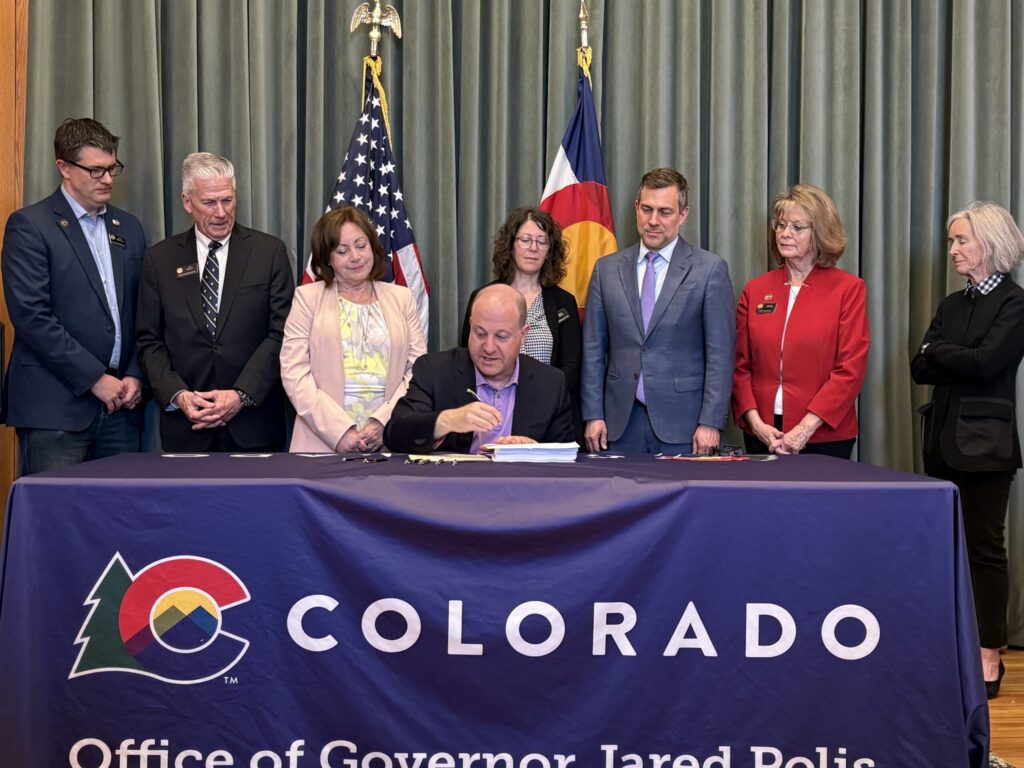
Colorado governor signs $47 billion budget in which ‘nobody won’
Marianne Goodland
marianne.goodland@coloradopolitics.com
Updated 13 hours ago
Gov. Jared Polis on Friday officially signed a $46.87 billion spending plan for the Colorado state government in the next fiscal year. His signature is the culmination of months of work by legislators, who resorted to cuts, transfers and other...
Latest Pinnacol proposal shifts sponsors, cuts state benefits and triggers union standoff
Marianne Goodland
marianne.goodland@coloradopolitics.com
Updated 17 hours ago
Colorado’s long‑running bid to let Pinnacol Assurance break away from state control is suddenly in jeopardy, as a newly revised bill — stripped of the payouts and structural changes once central to the deal — has triggered fresh tensions among...
Denver could be back in DNC spotlight 20 years later
Deborah Grigsby
deborah.smith@denvergazette.com
Updated 18 hours ago
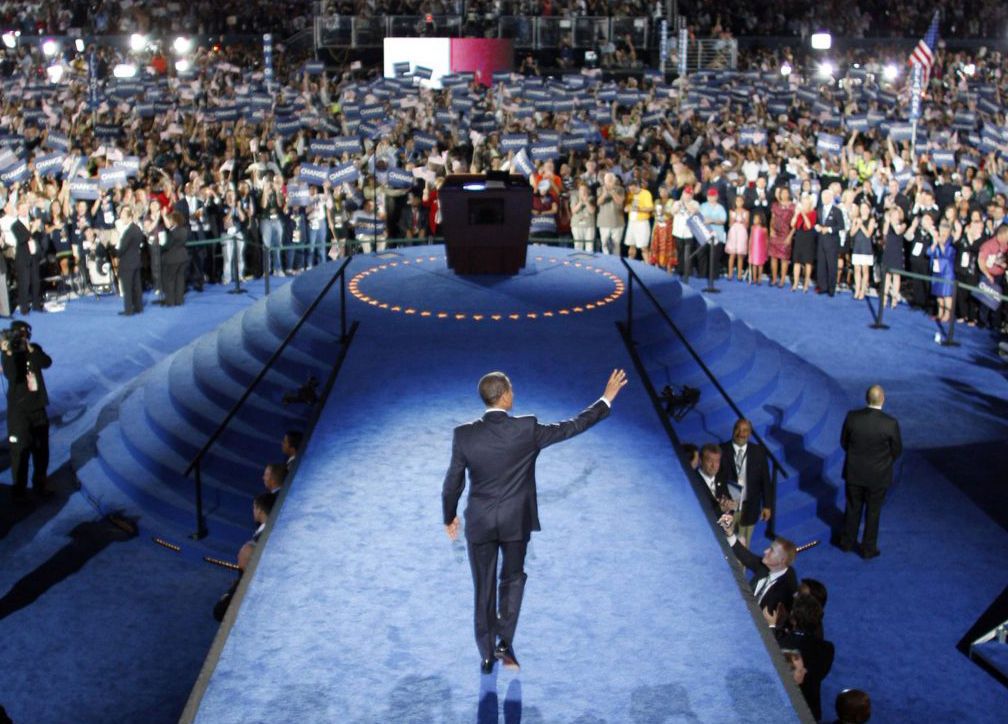
It’s been nearly two decades since Denver shared the spotlight as host to the 2008 Democratic National Convention — and a lot has happened in the city since then. But not major party conventions. In fact, before 2008, Denver hadn’t...
Bill permitting lawsuits against ICE agents reaches Gov. Jared Polis’ desk
Marissa Ventrelli
marissa.ventrelli@coloradopolitics.com
Updated 13 hours ago
Colorado lawmakers advanced two high‑profile measures Thursday — one seeks to reshape how the state manages its strained prison population and another allows Coloradans to sue federal immigration agents for alleged constitutional violations. The state policymakers sent both bills to...

Mike Lindell’s lawyer sanctioned again over flawed case citations
Michael Karlik
michael.karlik@coloradopolitics.com
Updated 19 hours ago
A federal judge financially sanctioned a lawyer for MyPillow CEO Mike Lindell for a second time on Thursday for including a “materially incorrect citation” in a case filing. U.S. District Court Judge Nina Y. Wang imposed a $5,000 fine on...
PREV
PREVIOUS

Oil and gas setbacks proposed again for the 2020 ballot
A loss on the 2018 ballot and wins in the Legislature last year won’t deter a citizen advocacy organization from trying again to establish setbacks for oil-and-gas operations from homes, schools and businesses. Colorado Rising, the same organization behind Proposition 112 two years ago, said Tuesday it would seek voter approval this November for the […]
State officials react to closure of Cheyenne Mountain prison
State officials are reacting to the announcement that GEO will close the Cheyenne Mountain Re-entry Center in southeastern Colorado Springs. The company announced Tuesday morning it had sent a 60-day notice to the Department of Corrections, announcing the facility — designed for inmates who are preparing to re-enter society after serving their time — would […]