

TRAIL MIX | 5 viral moments in March defined 2019

With 2019 firmly in the rear-view mirror, the roiling cauldron of events that shaped Colorado’s political scene is more clearly coming into focus.
The year began with the swearing-in of Democrat Jared Polis, the state’s first gay governor, and Jena Griswold, the first Democrat elected secretary of state in 60 years, and a General Assembly with a female majority for only the second time in the nation’s history. It ended with two Colorado congressmen helping draw the partisan distinctions surrounding the impeachment of a president, as U.S. Reps. Joe Neguse, a Lafayette Democrat, and Ken Buck, a Windsor Republican, staked out their party’s positions in historic House Judiciary Committee hearings.
In between, there were instances that helped define 2019.
One was on Oct. 23 when U.S. Rep. Doug Lamborn delivered Chick-fil-A to Republican lawmakers who had stormed the secure facility in the Capitol basement where House committees were holding closed-door impeachment hearings.
Another was when Denver mayoral candidate Jamie Giellis stumbled over an answer in a May 14 interview, as the political neophyte struggled to remember what the initials NAACP stood for, giving Michael Hancock’s campaign an opening to divert attention from the incumbent’s simmering scandals and widespread discontent over Denver’s direction under Hancock.
Need proof Denver voters were ready to throw curve balls? Just a week before Giellis’ flub, the city passed a ballot measure to decriminalize psychedelic mushrooms, becoming the first jurisdiction in the country to do so.
But no other time was more critical than a three-week period in March, when a series of events took place that perhaps best embody the politics of the final year of a whipsaw decade, while casting a shadow into the new year dawning.
Warning: Some objects are closer than they appear.
March 11 — Senate Democrats take speed reading to new heights. Facing a state government entirely controlled by Democrats in the wake of the 2018 election, Republicans at the Capitol used every tool at their disposal to slow down the legislative process and force the majority to reckon with the minority. The standoff peaked midway through the session when GOP senators invoked an obscure clause in the state constitution to demand that bills be read at length before lawmakers voted on them, gumming up the Democrats’ rush to pass major legislation.
Democratic leadership responded by feeding the bills into computers programmed to spit out the gibberish on the Senate floor in what a judge later ruled was an “incomprehensible speed.” Republicans sued and won a court order declaring the Democrats’ too-clever-by-half move unconstitutional, preserving at least one arrow in the opposition’s quiver.
March 13 — The Bomb Cyclone. As a freak weather phenomenon that was later determined to have been the strongest Colorado storm ever recorded bore down on the state, Senate President Leroy Garcia dismayed observers by keeping the Senate in session while the rest of the state hunkered down. Still smarting from Republicans’ mounting delay tactics, Garcia forced the chamber and Capitol staff to conduct business as usual even as the weather turned positively frightful.
Plenty of factors contributed to the demise of legislation to require businesses to provide paid family and medical leave to employees, one of the Democrats’ signature 2019 proposals, but holding a poorly attended hearing on the bill while the storm outside was one hammerhead short of a Sharknado didn’t help.
March 14 — U.S. Sen. Cory Gardner votes against blocking President Trump’s emergency declaration. After criticizing Trump’s order shifting billions of dollars from the Pentagon budget to fund construction of sections of steel fence at the Mexican border, Gardner fell in line with the administration and OK’d the move, prompting The Denver Post to publish an editorial rescinding its 2014 endorsement of the Republican.
There were more viral moments in 2019 that brought to life Gardner’s evolution, from calling on Trump to end his presidential campaign in 2016 when the “Access Hollywood” tape surfaced — refusing to answer a gaggle of reporters’ questions about the propriety of Trump asking a foreign leader to investigate a political rival comes to mind — but in a state where the president remains wildly unpopular, Gardner’s bid for a second term in 2020 could hinge on his decision to throw in with Trump.
March 15 — Jared Polis signs National Popular Vote Act. It wasn’t one of the flashiest or most contentious legislative battles as it moved through the legislature, but a bill that would join Colorado to a national compact pledging the state’s Electoral College votes to the presidential candidate who wins the most votes nationwide, rather than the candidate who carries the state, could prove among the most consequential. Republicans immediately seized upon the bill as an indisputable example of Democratic “over-reach” and vowed to overturn it with a 2020 referendum.
The measure to keep the law from going into effect soon qualified for the ballot with the highest number of petition signatures ever gathered by volunteers in Colorado, setting up a contest Republicans are confident will motivate occasional voters in November with a simple argument, asking if Colorado voters want to let voters in California and New York determine who wins the White House.
March 30 — Ken Buck teaches Democrats to spell recall. The three-term GOP congressman was elected chairman of the Colorado Republican Party in a four-way race that went down to the wire, eventually prevailing over state Rep. Susan Beckman in a series of votes of the party’s state central committee. Rumor has it that the former Weld County district attorney is teeing up a rematch with Democratic U.S. Sen. Michael Bennet in 2022, but it was a line in Buck’s speech that echoed through the year.
“We’re going to teach (Democrats) how to spell R-E-C-A-L-L,” he said to wild applause, describing the Republican response to losing elections up and down the ballot in the last election.
Six recall attempts later, Buck’s promise rings hollow, though one Democratic lawmaker targeted with a recall, former state Rep. Rochelle Galindo of Greeley, resigned her seat after criminal charges surfaced during the campaign. The other recall efforts — against Polis, Garcia, state Rep. Tom Sullivan of Centennial and state Sens. Pete Lee of Colorado Springs and Brittany Pettersen of Lakewood — failed, some spectacularly. Organizers behind the campaign to recall Garcia, who won election in 2018 to his Pueblo seat without a Republican opponent, needed 13,506 valid signatures to force an election but after much bluster on Oct. 18 turned in just four valid signatures.
Colorado Politics Must-Reads:


10th Circuit grants Boulder-Weld district’s fire chief immunity for firing union leader
Michael Karlik
michael.karlik@coloradopolitics.com
Updated 4 hours ago
The Denver-based federal appeals court decided on Monday that the chief of a fire protection district spanning Boulder and Weld counties could not be held liable for terminating a union leader through the process outlined in the collective bargaining agreement....
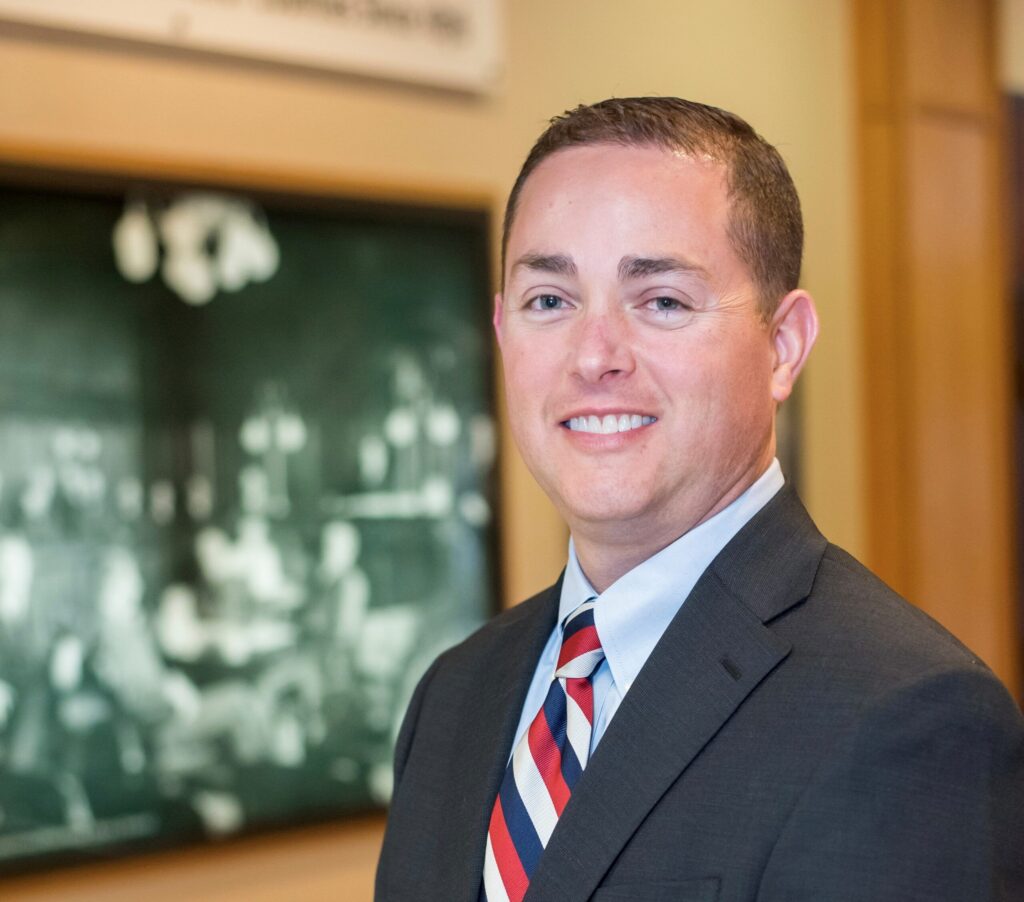
Michael Allen says a weakened justice system, rising crime drove him to run for attorney general
Thelma Grimes
thelma.grimes@coloradopolitics.com
Updated 3 hours ago
Michael Allen said he is running for attorney general because he believes Colorado’s criminal justice system has been weakened by recent legislation and that rising crime is directly increasing the cost of living. A Navy veteran and longtime prosecutor, Allen...

Colorado House ethics committee delays hearing to allow Rep. Lindsay to seek legal counsel
Marianne Goodland
marianne.goodland@coloradopolitics.com
Updated 7 hours ago
The Colorado House ethics committee voted Monday to pause the ethics complaint against Rep. Mandy Lindsay while she seeks legal counsel. The hearing was scheduled to begin with two days of testimony, during which Lindsay could present evidence and call...

State Supreme Court oral arguments, 10th Circuit nominee recuses from cases | COURT CRAWL
Michael Karlik
michael.karlik@coloradopolitics.com
Updated 1 hour ago
Welcome to Court Crawl, Colorado Politics’ roundup of news from the third branch of government. The state Supreme Court will hear its last set of oral arguments this week before breaking for the summer, and the nominee for a vacancy...
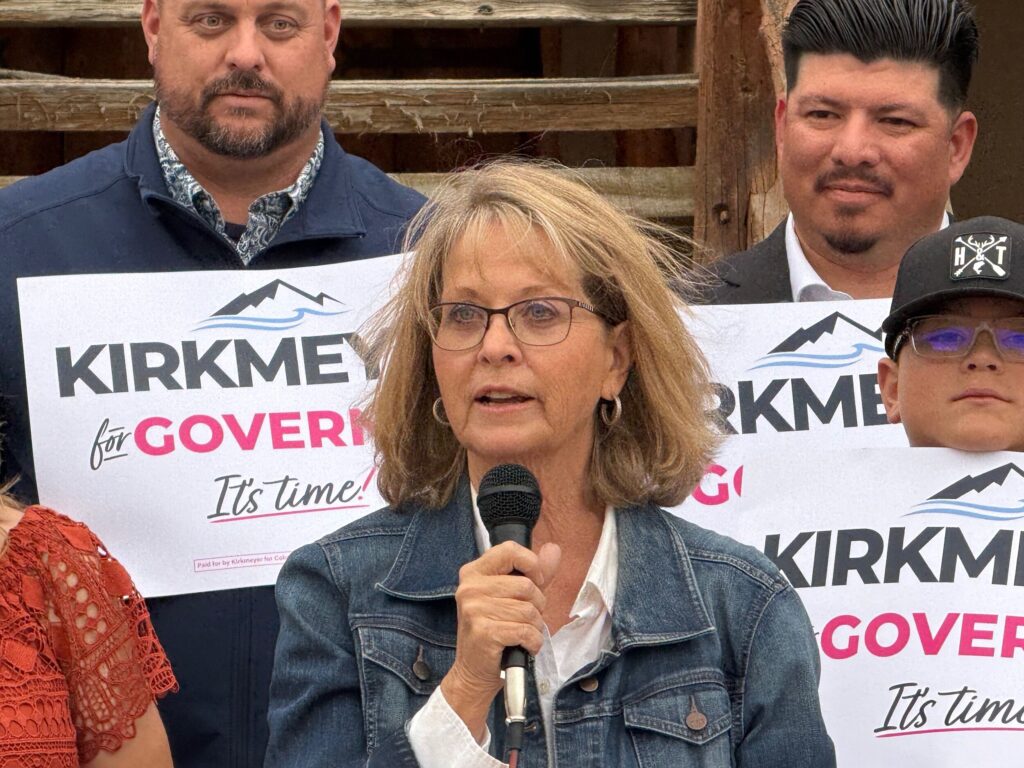
‘Peaking at the right time’: Barbara Kirkmeyer is confident as ballots go out
Thelma Grimes
thelma.grimes@coloradopolitics.com
Updated 3 hours ago
Calling 2026 an “interesting” year, Sen. Barbara Kirkmeyer said the race for the Republican nomination has taken her from a “bizarre debate” to a broader effort to maintain the party’s integrity, while making the case that she’s ready to lead...
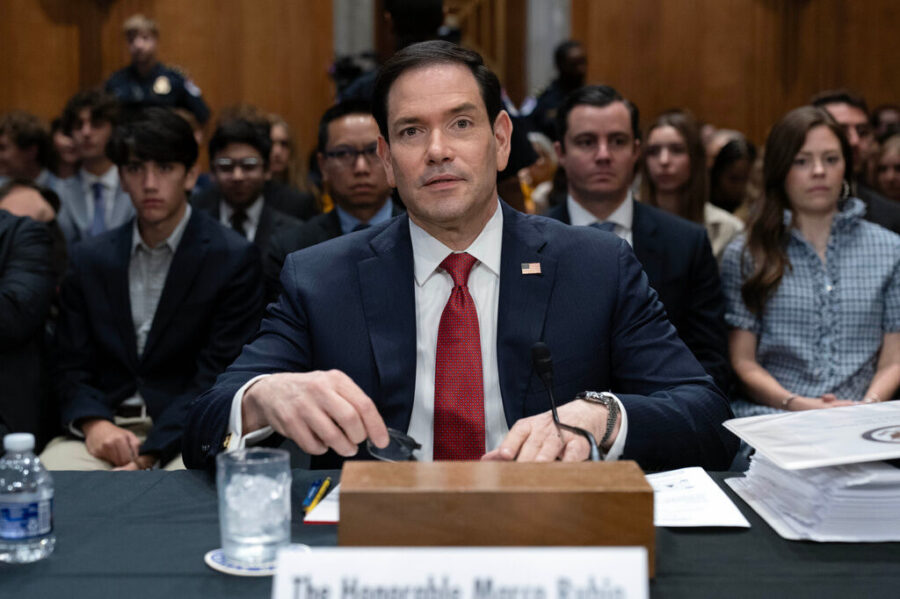
Sheehy calls for Rubio to take over Iran negotiations if Vance can’t swing it
Claire Carter, Washington Examiner
claire.carter.washington.examiner@gazetteedit.wpenginepowered.com
Updated 9 hours ago
Sen. Tim Sheehy (R-MT) on Monday suggested Secretary of State Marco Rubio should be waiting in the wings to handle negotiations with Iran if Vice President JD Vance can’t get a long-term agreement with Tehran over the finish line. Vance...
Rural frustration, parental rights shape Scott Bottoms’ pitch ahead of Colorado’s gubernatorial primaries
Thelma Grimes
thelma.grimes@coloradopolitics.com
Updated 3 hours ago
With just weeks before Colorado’s June primary, Republican gubernatorial candidate state Rep. Scott Bottoms is spending nearly all his time on the road — literally crisscrossing the Western Slope and eastern plains — in a final push to connect with...

Appeals court adopts federal standard for jail deaths under Colorado law
Michael Karlik
michael.karlik@coloradopolitics.com
Updated 1 hour ago
Colorado’s second-highest court decided last month that the standard used by federal courts for assessing whether government officials may be liable for constitutional violations upon the death of a jail detainee also applies to claims made under the Colorado Constitution....

District court judges weighing Trump policies face repeated slap downs by appeals courts
Kaelan Deese, Washington Examiner
kaelan.deese.washington.examiner@gazetteedit.wpenginepowered.com
Updated 9 hours ago
Federal district court judges reviewing President Donald Trump’s immigration agenda and other contested policies are increasingly being checked by appeals courts, raising questions as to whether some members of the federal judiciary are implementing the law or seeking partisan ends....
Registered voters on the eve of the 2026 primaries | Cronin & Loevy
Tom Cronin Bob Loevy
tom-cronin-bob-loevy@coloradopolitics.com
Updated 2 days ago
The Colorado Secretary of State’s Office has published the latest voter registration figures for the state and its counties as of June. Colorado ranks among the highest states for independent, or unaffiliated, voters. Only Alaska and Massachusetts have more. New Hampshire, New Jersey, Maine and Oregon also rank highly. So here...
PREV
PREVIOUS
LEGISLATIVE PREVIEW 2020: Business bills to watch
The business community will have a lot to keep an eye on for the 2020 legislative session, with bills targeting plastics, union votes, the family and medical leave program and the health insurance public option topping the list. On Jan. 8, the first day of the legislative session, a task force that has been working […]
Committee won’t recommend changes to Colorado’s school finance formula
A special committee charged with changing Colorado’s outdated formula for distributing money to schools will not recommend any legislation in 2020. The Democratic chair of the bipartisan Interim Committee on School Finance, state Rep. Julie McCluskie of Dillon, said the group ran out of time. Reaching the end of the third year of what started […]