

LEGISLATIVE PREVIEW 2020: Business bills to watch
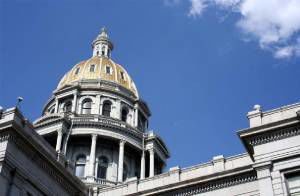
The business community will have a lot to keep an eye on for the 2020 legislative session, with bills targeting plastics, union votes, the family and medical leave program and the health insurance public option topping the list.
On Jan. 8, the first day of the legislative session, a task force that has been working throughout the summer and fall on the family and medical leave program is expected to submit its recommendations to the General Assembly on how to structure that program.
The task force is the result of 2019 legislation that attempted to set up the program. But with major opposition from business groups over cost and duplication of efforts, the bill was watered down to a study that has been in the works since July.
The task force was made up of representatives from business groups, progressive nonprofit organizations and labor, so it didn’t have a monolithic view of the program. In fact, several representatives came from some of the proposed program’s toughest critics, including the Colorado Chamber of Commerce and the Colorado chapter of the National Federation of Independent Business.
The task force hired an actuary, AMI Risk, to provide an analysis of a state-run program with “low-benefit” and “high-benefit” options. The final report showed the state costs would exceed the original estimate from the 2019 legislation by more than $200 million for the low-benefit program, and more than $1 billion higher for the high-benefit option.
It would also be more expensive for employers and employees, who would pay into the plan for a year under the state-run option before any benefits would be paid.
The low-benefit plan would provide up to six weeks of paid leave per occurrence or up to 12 weeks per year; the high-benefit plan would provide up to 14 weeks of paid leave per occurrence or up to 28 weeks per year.
“Obviously, we will be watching that closely and waiting on task force recommendations,” said Loren Furman, senior vice president for state and governmental relations at the Colorado Chamber.
Business organizations also will be keeping watch on the public option plan released in November and which will be major legislation in 2020. It’s expected to be a significant talking point for Gov. Jared Polis in his State of the State address.
Under a report from the Colorado Department of Health Care Policy and Financing and the state’s Division of Insurance, the public option plan would provide at least two health insurance carriers in every county for those who buy their own health insurance. Eventually, the plan would be expanded to the small- and medium-sized business market.
It’s envisioned as a public-private partnership, but the private side has its concerns. The Colorado Hospital Association, in a letter in October, said the plan “prioritizes lower premiums at the expense of patient access and choice.”
They’re putting their money behind their concerns. Two groups, Colorado’s Health Care Future and Partnership for America’s Health Care Future Action, which are funded by health insurance, hospitals and pharmaceutical companies, have launched a six-figure ad buy criticizing the plan on Denver’s broadcast TV stations (KCNC, KMGH, KUSA and KDVR) and in radio ads in Colorado Springs and Pueblo (KVOR, KKFM and KATC).
There’s also a bill in the works to change the state’s anti-discrimination act that was revised in 2013. At that time, the law was revised to allow employees in small businesses of 15 employees or less to sue for employment-related discrimination, and added the awarding of compensatory and punitive damages, and of attorney’s fees, for violations. Business groups in 2013 vehemently opposed the changes, and some believe that the 2020 version will be more strict.
Labor unions are angling for changes to the state’s Labor Peace Act and legislation that is expected in 2020 could attempt to modify the requirements for a second election. Under the law, when a union wins certification under the federal National Labor Relations Act, it must also win a second election, through a secret ballot, before it can propose a collective bargaining agreement.
A poll conducted in December by NFIB showed strong opposition from small businesses to such changes.
Other legislation being watched by businesses: changes to the state’s law around banning plastics.
Current law prevents local governments from enacting their own bans on plastics, such as polystyrene or plastic grocery bags, but legislation in 2020 is expected to lift that prohibition. On Jan. 1, the city and county of Denver will implement a city resolution that charges a fee for plastic grocery bags, in line with what Aspen and Boulder are already doing. That’s expected to have a significant impact on retailers.
There’s also bills coming from interim committees on changes to the state’s tax laws.
From the Sales and Use Tax Simplification Task Force: a bill that would “hold harmless” businesses that make errors in figuring out what taxes to pay to which jurisdictions when those errors come from the state’s GIS database.
Rep. Tracy Kraft-Tharp, D-Arvada, pointed out that an audit several years ago found businesses were having problems figuring out which jurisdictions they owed taxes to. A notable case was a portion of Arvada that is in Adams County rather than in Jeffco. Kraft-Tharp noted that those errors can follow a business for up to seven years. The bill mandates that the Department of Revenue’s GIS database be 95% accurate.
Five bills are expected to come out of the Tax Expenditure Evaluation Committee, including a change to the state sales tax exemption on long-term lodging. Another bill requires that the state sales tax exemption on energy apply only to metered energy.
Colorado Politics Must-Reads:


10th Circuit grants Boulder-Weld district’s fire chief immunity for firing union leader
Michael Karlik
michael.karlik@coloradopolitics.com
Updated 5 hours ago
The Denver-based federal appeals court decided on Monday that the chief of a fire protection district spanning Boulder and Weld counties could not be held liable for terminating a union leader through the process outlined in the collective bargaining agreement....

Michael Allen says a weakened justice system, rising crime drove him to run for attorney general
Thelma Grimes
thelma.grimes@coloradopolitics.com
Updated 4 hours ago
Michael Allen said he is running for attorney general because he believes Colorado’s criminal justice system has been weakened by recent legislation and that rising crime is directly increasing the cost of living. A Navy veteran and longtime prosecutor, Allen...

Colorado House ethics committee delays hearing to allow Rep. Lindsay to seek legal counsel
Marianne Goodland
marianne.goodland@coloradopolitics.com
Updated 9 hours ago
The Colorado House ethics committee voted Monday to pause the ethics complaint against Rep. Mandy Lindsay while she seeks legal counsel. The hearing was scheduled to begin with two days of testimony, during which Lindsay could present evidence and call...

State Supreme Court oral arguments, 10th Circuit nominee recuses from cases | COURT CRAWL
Michael Karlik
michael.karlik@coloradopolitics.com
Updated 2 hours ago
Welcome to Court Crawl, Colorado Politics’ roundup of news from the third branch of government. The state Supreme Court will hear its last set of oral arguments this week before breaking for the summer, and the nominee for a vacancy...
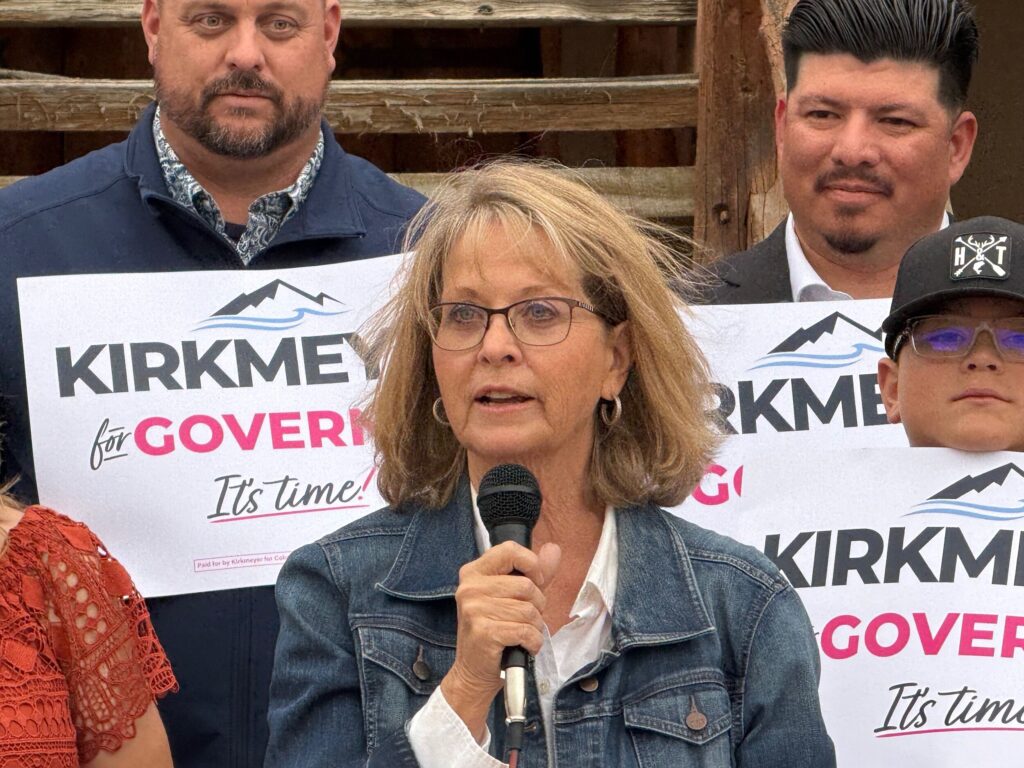
‘Peaking at the right time’: Barbara Kirkmeyer is confident as ballots go out
Thelma Grimes
thelma.grimes@coloradopolitics.com
Updated 4 hours ago
Calling 2026 an “interesting” year, Sen. Barbara Kirkmeyer said the race for the Republican nomination has taken her from a “bizarre debate” to a broader effort to maintain the party’s integrity, while making the case that she’s ready to lead...
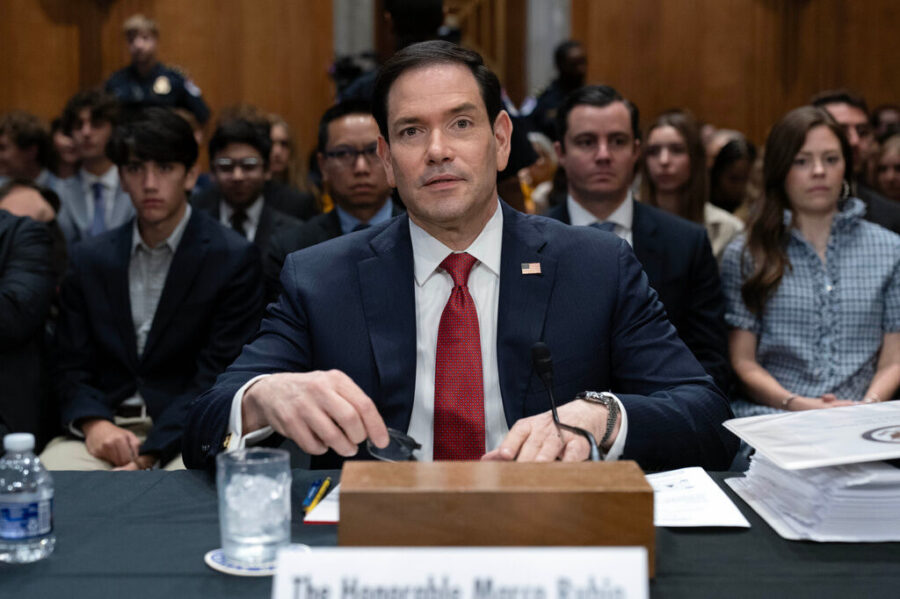
Sheehy calls for Rubio to take over Iran negotiations if Vance can’t swing it
Claire Carter, Washington Examiner
claire.carter.washington.examiner@gazetteedit.wpenginepowered.com
Updated 10 hours ago
Sen. Tim Sheehy (R-MT) on Monday suggested Secretary of State Marco Rubio should be waiting in the wings to handle negotiations with Iran if Vice President JD Vance can’t get a long-term agreement with Tehran over the finish line. Vance...
Rural frustration, parental rights shape Scott Bottoms’ pitch ahead of Colorado’s gubernatorial primaries
Thelma Grimes
thelma.grimes@coloradopolitics.com
Updated 4 hours ago
With just weeks before Colorado’s June primary, Republican gubernatorial candidate state Rep. Scott Bottoms is spending nearly all his time on the road — literally crisscrossing the Western Slope and eastern plains — in a final push to connect with...

Appeals court adopts federal standard for jail deaths under Colorado law
Michael Karlik
michael.karlik@coloradopolitics.com
Updated 2 hours ago
Colorado’s second-highest court decided last month that the standard used by federal courts for assessing whether government officials may be liable for constitutional violations upon the death of a jail detainee also applies to claims made under the Colorado Constitution....

District court judges weighing Trump policies face repeated slap downs by appeals courts
Kaelan Deese, Washington Examiner
kaelan.deese.washington.examiner@gazetteedit.wpenginepowered.com
Updated 10 hours ago
Federal district court judges reviewing President Donald Trump’s immigration agenda and other contested policies are increasingly being checked by appeals courts, raising questions as to whether some members of the federal judiciary are implementing the law or seeking partisan ends....
Registered voters on the eve of the 2026 primaries | Cronin & Loevy
Tom Cronin Bob Loevy
tom-cronin-bob-loevy@coloradopolitics.com
Updated 2 days ago
The Colorado Secretary of State’s Office has published the latest voter registration figures for the state and its counties as of June. Colorado ranks among the highest states for independent, or unaffiliated, voters. Only Alaska and Massachusetts have more. New Hampshire, New Jersey, Maine and Oregon also rank highly. So here...
PREV
PREVIOUS
Conservative advocacy group alleges Jeffco elections are unreliable
The national conservative organization Judicial Watch says Colorado’s Jefferson County is one of 19 counties in five states that don’t comply with federal election law. The allegation is that the county and state don’t do enough to purge ineligible voters, meaning people who have died or moved. Judicial Watch alleges there are more registered voters in […]
TRAIL MIX | 5 viral moments in March defined 2019
With 2019 firmly in the rear-view mirror, the roiling cauldron of events that shaped Colorado’s political scene is more clearly coming into focus. The year began with the swearing-in of Democrat Jared Polis, the state’s first gay governor, and Jena Griswold, the first Democrat elected secretary of state in 60 years, and a General Assembly […]