

Drought report shows tough days ahead for Southwestern Colorado
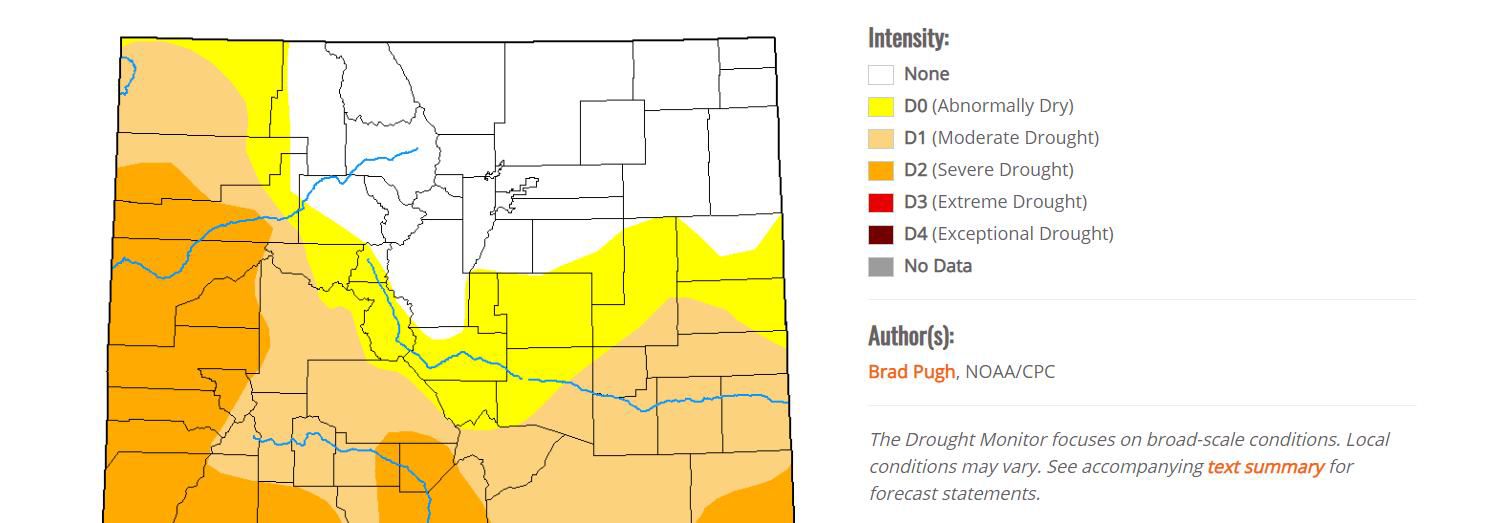
Thursday’s report from the United States Drought Monitor shows the month of December has not been kind to most of Colorado.
Drought conditions statewide have jumped to 68% of the state, with potential impacts on dryland and winter farming and ski areas.
But it’s better than a year ago, when 84% of the state was in drought and more than half of the state in severe drought. It wasn’t until March when snowpack and precipitation started to improve Colorado’s water conditions, and those conditions continued to improve until the state came out of drought for the first time in 20 years.
Colorado stayed drought-free for eight weeks, from May through July. In a two week period — from March 12-26 — Colorado went from 83% in drought to 25% in drought.
The Dec. 26 drought map reports that 20% of the state is in severe drought, stretching from southern Rio Blanco County in northwestern Colorado along the western border of the state to the New Mexico state line.
The low snowpack affects counties such as San Miguel, home to Telluride, one of the state’s most popular ski resorts. The resort reported a 33-inch base and an inch of new snow in the last 24 hours. That’s about eight inches less than Aspen/Snowmass and seven inches less than Vail.
The Drought Monitor report on Thursday notes that severe drought conditions could lead to stunted rangeland growth; impacts on dryland crops, which includes winter wheat; a longer wildfire season; lower river flows; and a limited ski season.
But it isn’t only southwestern Colorado that’s in drought. Moderate drought is now covering all of southern and southeastern Colorado. Abnormally dry conditions — the lowest level of drought — encompasses all of El Paso County and east to the Colorado-Kansas state line.
The 31.72% of the state that isn’t in drought includes Summit County, most of Eagle County, the Front Range from the Wyoming state line to Park County, and all of northeastern Colorado.
The Drought Monitor is a jointly operated service of the National Drought Mitigation Center at the University of Nebraska-Lincoln, the National Oceanic and Atmospheric Administration, and the U.S. Department of Agriculture.
Drought conditions in the Four Corners region (Colorado, Utah, Arizona and New Mexico, which all rely on the Colorado River) are the worst in the entire nation, according to Thursday’s report.
Colorado Politics Must-Reads:


US and Iran to cease strikes and discuss Strait of Hormuz this week: Report
Carter Schroppe
carter.schroppe@washingtonexaminer.com
Updated 50 minutes ago
Officials from the United States and Iran will meet in Qatar this week to discuss the Strait of Hormuz after agreeing to “halt strikes” following a weekend of intermittent fighting between the two countries. The meeting, scheduled for Tuesday in...
Congress is struggling to get its work done and a new report argues for 21st-century upgrades
Kevin R. Kosar
kevin-r-kosar@coloradopolitics.com
Updated 54 minutes ago
The news coming from Capitol Hill over the past couple of weeks has left much to be desired. Congress has had difficulty discharging its lawmaking duties. The Senate’s appropriations committee is at loggerheads over how much spending to authorize. The...
Supreme Court rules constitutional privacy protections apply to cellphone users location history
The Associated Press
the-associated-press@coloradopolitics.com
Updated 1 hour ago
WASHINGTON (AP) — The Supreme Court held Monday that constitutional privacy protections extend to cellphone location information, ruling in the case of a bank robber whose identity was discovered through a geofence warrant. Justice Elena Kagan wrote for the 6-3...
Colorado justices say group that spent $4M on ballot initiatives does not have to disclose donors
Michael Karlik
michael.karlik@coloradopolitics.com
Updated 1 hour ago
The Colorado Supreme Court ruled on Monday that an organization that spent $4 million to advocate on ballot initiatives in the 2020 election is not required to disclose its donors and spending. The Supreme Court acknowledged that multiple factors suggested...
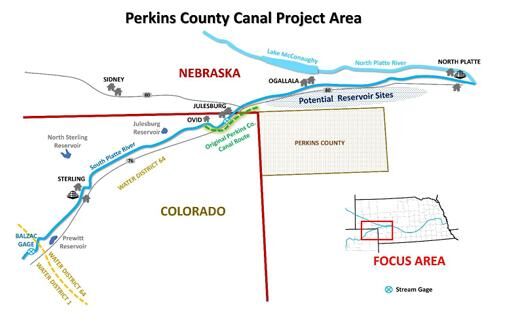
Colorado–Nebraska water clash heads to US Supreme Court as canal fight intensifies
Marianne Goodland
marianne.goodland@coloradopolitics.com
Updated 2 hours ago
The U.S. Supreme Court on Monday agreed to hear Nebraska’s lawsuit against Colorado over the Perkins County canal, a move that advances a legal dispute likely to take years to resolve. The proposed Perkins County canal would run through land...
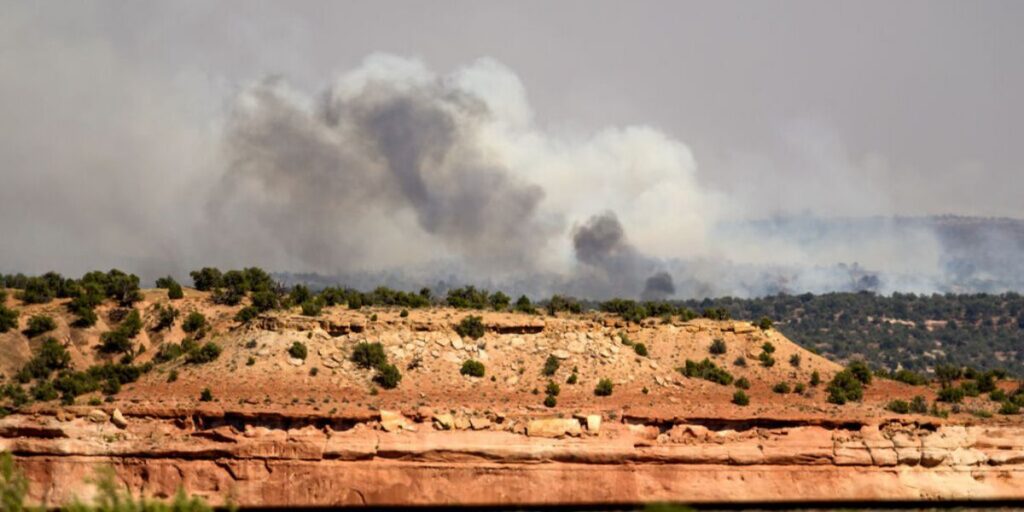
Jared Polis to visit Snyder Mesa Fire as blaze tops 29,000 acres
Nicholas Fogleman
nicholas.fogleman@denvergazette.com
Updated 1 hour ago
Gov. Jared Polis is scheduled to visit the Snyder Mesa Fire Incident Command Post in Fruita Monday afternoon and provide an update on firefighting efforts as the wildfire continues to burn in western Colorado. Polis is expected to be joined...
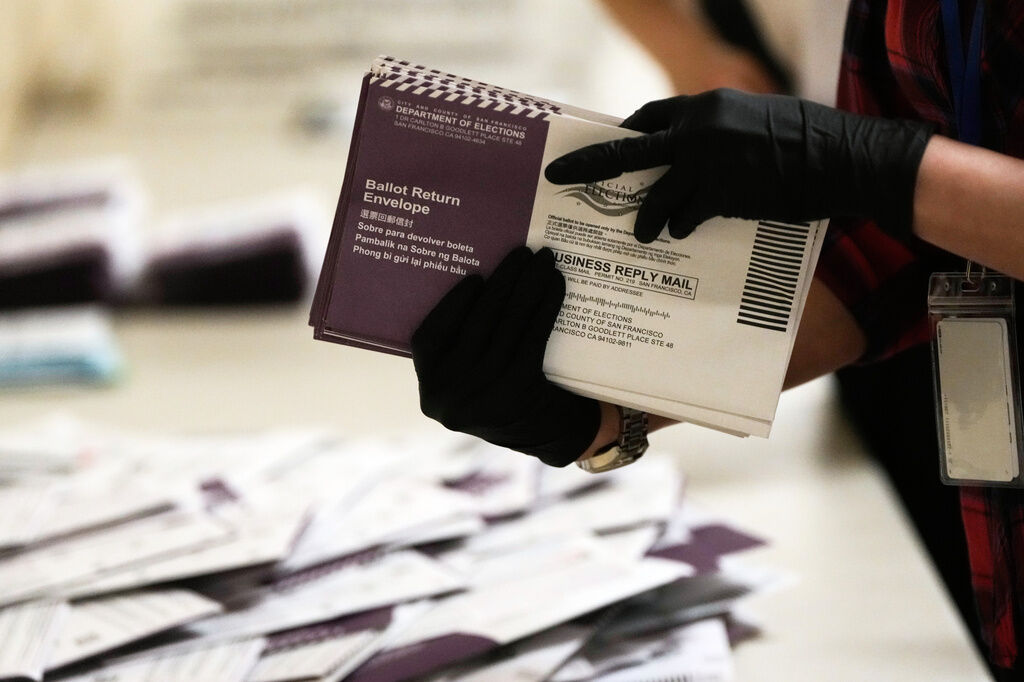
Supreme Court rules states can count late-arriving mailed ballots, rejecting Trump-led challenge
The Associated Press
the-associated-press@coloradopolitics.com
Updated 4 hours ago
WASHINGTON (AP) — The Supreme Court on Monday ruled that states can count ballots that arrive after Election Day, a persistent target of President Donald Trump. The 5-4 decision rejected a Republican-led attack on laws in more than half the...
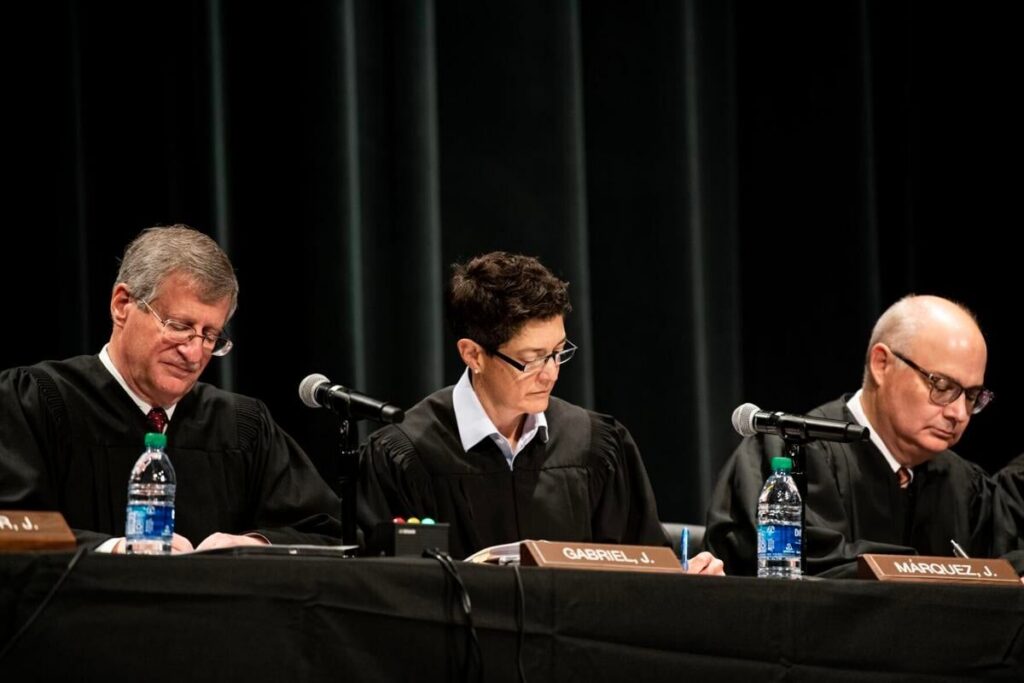
Colorado Supreme Court: Redistricting plans for 2028 election cannot proceed under state constitution
Michael Karlik
michael.karlik@coloradopolitics.com
Updated 2 hours ago
The Colorado Supreme Court blocked all attempts at redrawing congressional district boundaries for the 2028 election from reaching the ballot on Monday, concluding each of the proposed ballot measures violated the constitutional single-subject requirement. The court considered five distinct, but...
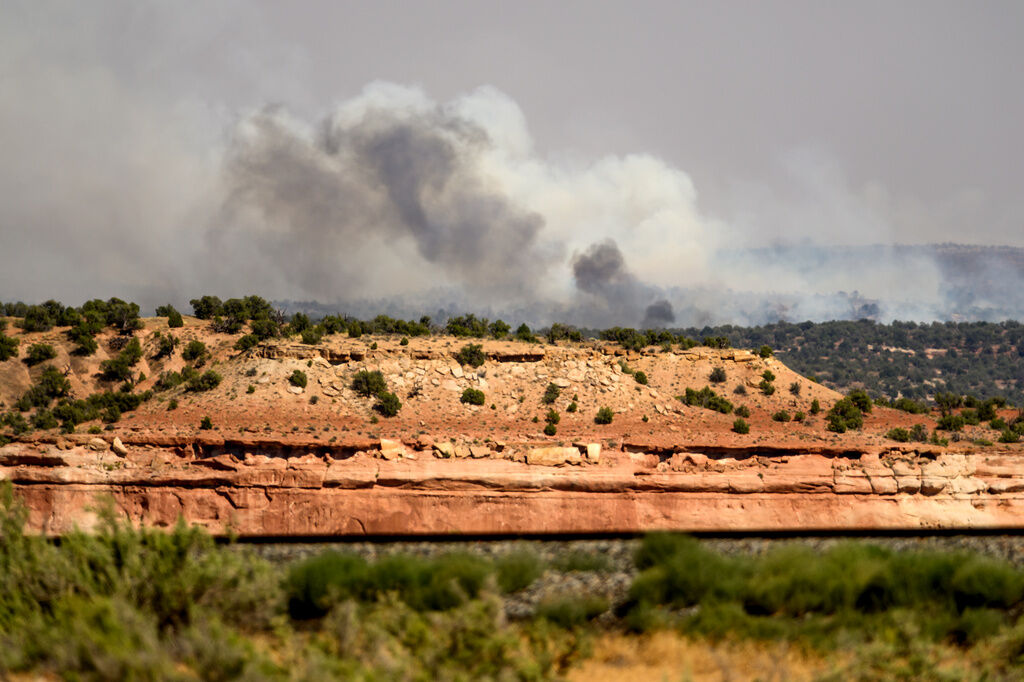
3 firefighters who died fighting Snyder Mesa fire identified; one once worked as a snowmaker in Vail
Rachael Wright, Special to Colorado Politics
rachael.wright@coloradopolitics.com
Updated 1 hour ago
Federal authorities on Monday identified the three firefighters who died responding to the Knowles Fire at the Colorado-Utah border. The U.S. Department of the Interior said the three wildland firefighters were assigned to the Rifle Helitack crew. “ (They) engaged...
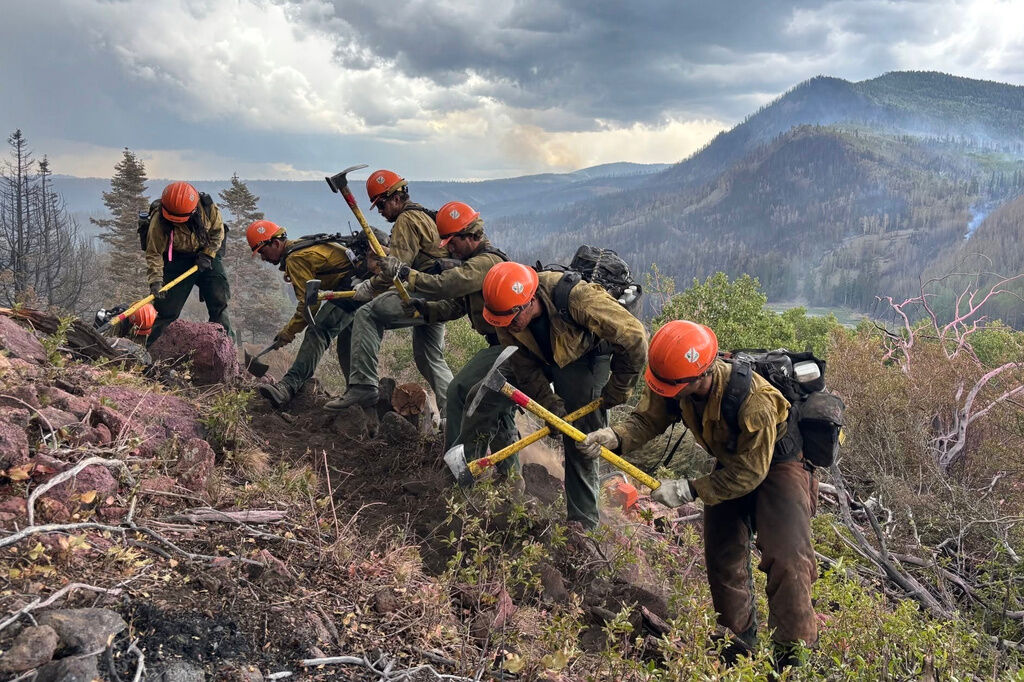
Colorado, Utah mourn after 3 firefighters killed in wildfires
Nicholas Fogleman
nicholas.fogleman@denvergazette.com
Updated 21 hours ago
Gov. Jared Polis on Sunday mourned the deaths of three firefighters killed while battling a wildfire on the Colorado-Utah border, calling the loss a tragedy for the state and the firefighting community. The firefighters died Saturday while responding to a...
PREV
PREVIOUS

LEGISLATIVE PREVIEW 2020: Full Colorado Politics coverage of the issues to come
Colorado Politics is going deep into the analysis of the major issues facing lawmakers and Gov. Jared Polis before the four-month legislative session gavels in on Jan. 8. Check back for more links to these topics and even more legislative coverage: DEC. 11 • ROADS TO NOWHERE: With the defeat of Proposition CC, where does the state […]

Pinnacol releases 'market-based' estimate of paid family and medical leave program
A new estimate of the costs of a paid family and medical leave program from Pinnacol Assurance shows a market-based approach might result in lower costs and premiums for a low-benefit program, but much higher costs and premiums for a “Cadillac”-type plan. Pinnacol, the state’s largest provider of worker compensation insurance, used much of the […]