

“We’re listening to you.” Administrator of clergy abuse fund opens up about compensation process
Camille Biros helped distribute more than $7 billion to the victims of 9/11. Then she steered $6 billion in compensation after the 2010 Deepwater Horizon oil spill in the Gulf of Mexico.
Now, Biros and her associate, Kenneth Feinberg, have an open checkbook from the Catholic Church in Colorado to fairly compensate the survivors of clergy sex abuse.
“It’s sort of on-the-job training,” said Biros, who received no formal education in working with sex assault survivors. “If you sit across from somebody who is 65 years old-mostly men-someone who was abused 40 years ago, and within five minutes of discussing what happened to them, they just break down in uncontrollable sobs.”
Beginning in fall 2016, Biros has received 3,000 claims from sex abuse victims as her firm handled survivor compensation from Catholic dioceses in New York, Pennsylvania, California, New Jersey, and now Colorado. Victims’ ages range from five years old to age 17.
The average time to receive a payout after filing a claim is 90 to 120 days, although Biros said that a deadline for Pennsylvania cases resulted in a last-minute increase in filings, which could delay the process.
Roughly 15 percent to 20 percent of the time, victims meet with Biros and Feinberg in person. In Colorado, she anticipates those meetings might take place over Skype or teleconferencing. Doing so is voluntary-the whole process is voluntary-but it gives the survivors a chance to tell Biros about their claim.
“We don’t question them when we have these meetings. It’s not an interrogation,” she said. “We’re just there to listen and if there are any more details they can provide which will help us in determining their claim, then that’s what we want to know.”
How does she know whether the sob story she is hearing in her office is genuine?
“I think anyone who’s a human being can sit there and make a determination that this person is not making this story up,” she said.
In Colorado, Biros derives the known victim population from information provided by the dioceses. A report from the attorney general’s office released on Wednesday identified 166 known victims of clergy sex abuse since 1950.
People who have not yet reported their abuse may still file claims, which must be postmarked by Jan. 31, 2020.
A group of nine to 10 people in Biros’s D.C. office examines the details of each claim. She described them as “solid, smart people,” not all of whom are lawyers. None of them, she said, was trained formally about sex assault survivor’s trauma.
The group studies the age of the victim, the nature of the abuse, and the duration. They also take into account the effects of the trauma on the person’s life, and try to treat similar cases as closely as possible.
Then Biros and Feinberg make the final determination of an award.
“There are abuse cases where there are just a kiss or an arm around someone. That level of abuse doesn’t rise to the level of somebody who was raped when they were six years old,” she said. “All of it is despicable. But what I’m saying is in order to provide an amount of compensation, we have to make distinctions.”
The highest amount Biros has handed out is $500,000. The Catholic Church in Colorado has not put a limit on how much money Biros can offer individually or in total.
If claimants are unhappy with the decision, they may come back to Biros and Feinberg with additional details about their case-therapy records, journal entries-demonstrating the extent of their victimization.
The survivor narratives are not the only evidence Biros considers. The Catholic Church provides Biros with the initial information about the known victims from its own investigations, and gets the opportunity to tell the diocese’s side of the story too.
Does the Church’s narrative ever change her decisions for how much money to award?
“Almost never.”
The Colorado Coalition Against Sexual Assault identifies the feeling that adults will not believe them as a reason why minors do not come forward to speak about their sex assaults. Biros and Feinberg have built a mechanism into their procedure to ensure that they are only hearing from legitimate claimants.
“We require that the individual who wants to file a claim notify the DA’s office, even though it happened 20, 30 years ago,” she said. “Because we want them to be on record.
The dioceses also must report new claims of abuse to their district attorney.
Biros said that the Church’s handling of the abusive priests also plays a role in evaluating cases.
“There are victims who are almost more upset by the fact that the only way that priest was in that school or that parish was because he was moved there because of some other incidents of abuse at a different location,” she said.
“It’s horrifying, actually. It’s horrifying to listen to what happened to their lives and how a lot of them were very good students and were hopeful to become X, Y, and Z in their adult professional lives, and they believe this truly was an impediment to them doing that,” she added.
Some of the claimants turn to drugs and alcohol to cope with their trauma. Because the cases Biros evaluates are beyond the statute of limitations, lawsuits with multimillion-dollar payouts and calculations of years of lost productivity are not part of the procedure.
No one has to accept her money, but there is not a Plan B for survivors. Colorado Attorney General Phil Weiser has said that because of statutory constraints, his priority is to ensure that victims can tell their stories. The special master’s report did not state that charges are warranted on cases that, as documented so far, happened in 1998 or earlier.
Really, a check may be less powerful than the recognition of someone’s trauma that the check signifies.
“It’s really about the acknowledgement that this happened to them,” Biros said. “The validation and verification that yes, we’re independent administrators and we’re listening to you. We’re looking at the documents and we’re saying, ‘yep, this happened to you. You’re eligible. And we’re going to offer you some compensation.'”

Regulators knew this marijuana product was harming people. It stayed on shelves for more than a year
Christopher Osher
chris.osher@gazette.com
Updated 20 hours ago
Colorado’s Marijuana Enforcement Division can take months or even years to issue formal safety warnings about marijuana products even when it receives reports that the products are harming people’s health, The Denver Gazette and ProPublica found. This article was produced...
Appeals court reinstates Mesa County defendant’s request for DNA testing under new Colorado law
Michael Karlik
michael.karlik@coloradopolitics.com
Updated 16 hours ago
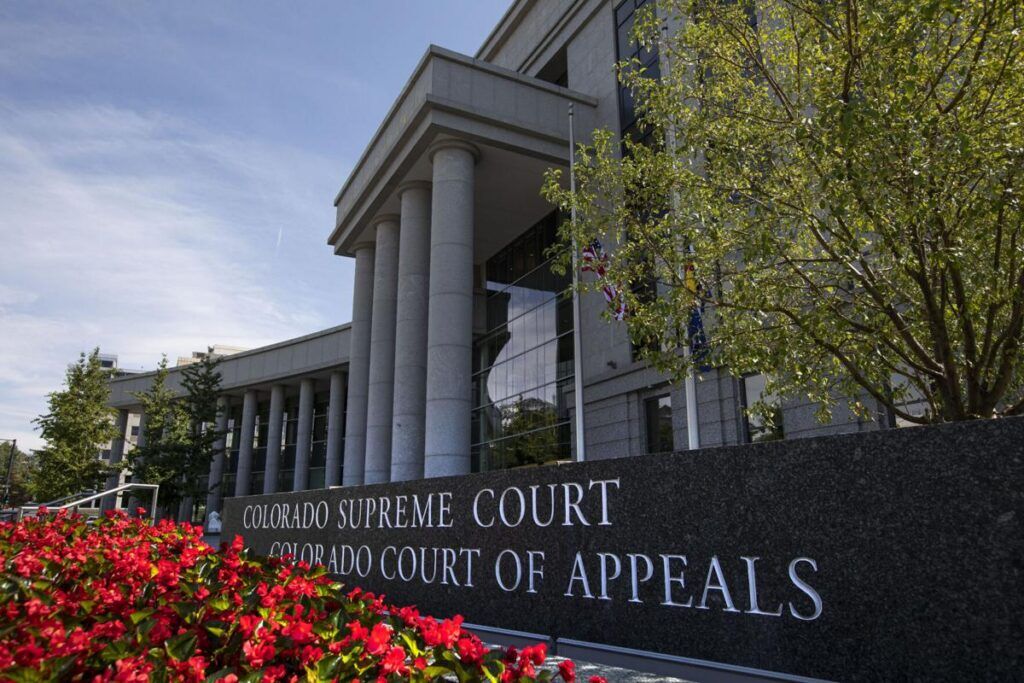
Colorado’s second-highest court revived a Mesa County defendant’s petition for DNA testing in his three-decade-old attempted murder case on Thursday, concluding that a trial judge wrongly interpreted a recent Colorado law in dismissing the request outright. Jurors convicted Billy Joe...
Appeals court reverses Denver juvenile’s conviction due to improper expert testimony
Michael Karlik
michael.karlik@coloradopolitics.com
Updated 16 hours ago
Colorado’s second-highest court reversed a juvenile defendant’s conviction for unlawful sexual contact on Thursday after an expert witness’s testimony improperly suggested the child victim was telling the truth. The defendant, identified as S.H-S., was around 16 years old when he...

Judge orders home confinement for Barry Morphew
Dennis Huspeni
dennis.huspeni@gazette.com
Updated 18 hours ago
An Alamosa County district judge has ordered home confinement for Barry Morphew, who is accused of murdering his wife. Barry Morphew, 59, faces a first-degree murder charge in the death of his wife, Suzanne Morphew, who disappeared Mother’s Day weekend...
Bipartisan Colorado leaders press FEMA for disaster declaration amid widespread wildfire damage
Marissa Ventrelli
marissa.ventrelli@coloradopolitics.com
Updated 19 hours ago
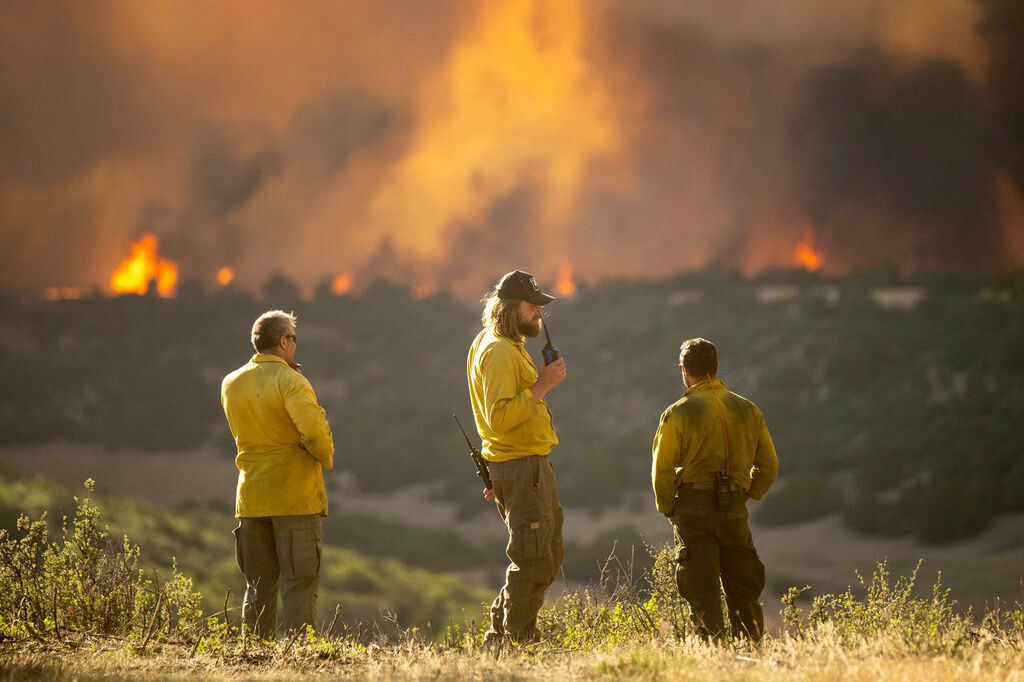
Colorado leaders are renewing their push for federal disaster assistance after the Aspen Acres and Gold Mountain fires burned more than 140,000 acres across three counties in June and July. The state has submitted 173 letters from elected officials and...
Appeals court says jury does not need to view porn to determine if it ‘obscene’
Michael Karlik
michael.karlik@coloradopolitics.com
Updated 19 hours ago
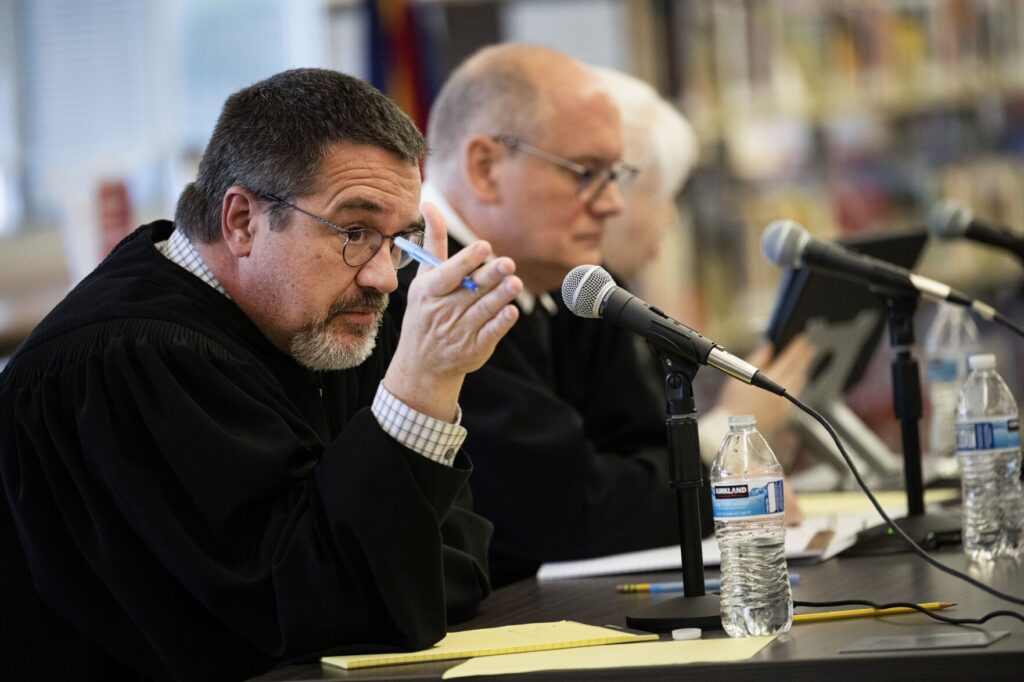
Colorado’s second-highest court ruled for the first time on Thursday that a jury does not always need to view pornographic material to determine if it meets the criteria for obscenity. Mesa County jurors found Shayla Ann Simpson guilty of child...

Ikon Pass company Alterra to move into former Denver Post building, create downtown ‘outdoor hub’
Bernadette Berdychowski
bernadette.berdychowski@denvergazette.com
Updated 19 hours ago
What was once the home of two of Colorado’s longest-running daily newspapers could soon become a central location for the state’s ski resort and outdoor companies, city and state leaders said Thursday. Alterra Mountain Co. is moving its headquarters to...
Fentanyl sentencing, tax overhauls and transgender‑related issues anchor Colorado’s 14 ballot measures
Marissa Ventrelli
marissa.ventrelli@coloradopolitics.com
Updated 20 hours ago
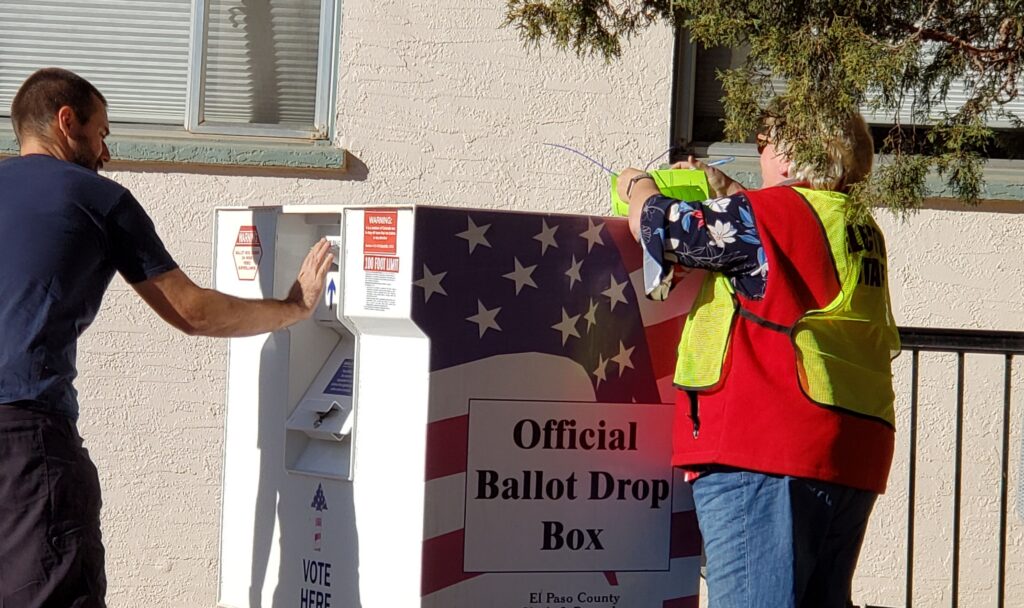
Fourteen statewide ballot measures await Colorado voters this November, offering a mix of criminal justice crackdowns, tax overhauls, and constitutional tweaks that ensure no one will accuse the ballot of being boring this year. Colorado’s 14 statewide ballot measures match...
Colorado sues to stop Trump’s ban on Medicaid dollars paying for minors’ transgender transition
Thelma Grimes
thelma.grimes@coloradopolitics.com
Updated 17 hours ago
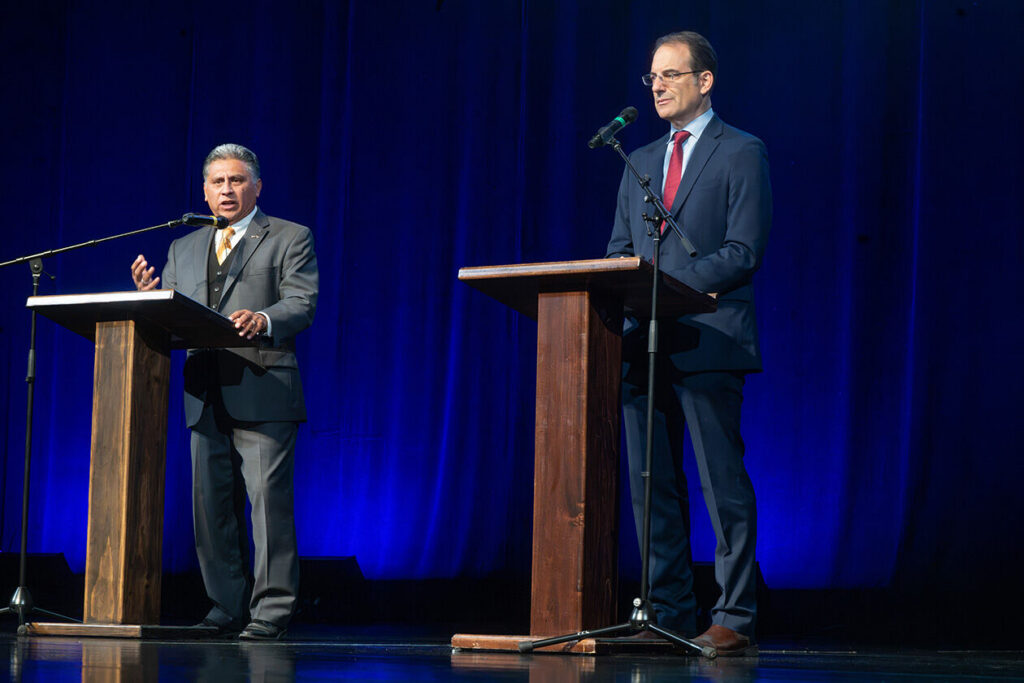
Colorado on Wednesday filed yet another lawsuit against the Trump administration — this time to stop a new rule that prohibits Medicaid dollars from paying for transgender transition services for minors. The question of transgender services has increasingly become a...

Castle Rock Town Council passes measure expanding authority over school-designated land and funds
Nicholas Fogleman
nicholas.fogleman@denvergazette.com
Updated 19 hours ago
The Castle Rock Town Council passed an ordinance Tuesday that gives the council broader authority to repurpose land and cash designated for school facilities. Douglas County School District officials argue the move would allow the town to do so without...
PREV
PREVIOUS

Official: Solving wild horse problem will take $5B, 15 years
RENO, Nev. – It will take $5 billion and 15 years to get an overpopulation of wild horses under control on federal lands across the West, the acting head of the U.S. Bureau of Land Management said Wednesday, adding that several developments have made him more optimistic about his agency’s ability to get the job […]

Teachers in Park County end strike without pay raises, contract
Teachers in the Park County Re-2 district based in Fairplay are returning to work Thursday with neither the professional agreement nor the pay raises they sought when they started their strike on Oct. 14. This marks the end of the longest teacher strike in Colorado in decades and the first in recent years to end […]