

BIDLACK | Let students bring their Bibles to school. And their Korans, and …

One of the items in my job description here at Colorado Politics is that I should strive to offend and irritate as many readers as possible (Ed: no, that’s not correct at all). If we stay away from references to each other’s mothers and our favorite sports teams (Go Broncos, still!), we can have interesting and informative discussions on important subjects. We can debate the role of the Fed in determining our monetary policy. We can disagree over, say, the role of Saudi Arabia in Yemen, and we can debate the government’s proper role in dealing with vaping. Do you see what all those issues and more have in common? They are all issues with facts and data that can be reviewed and argued. We can quarrel about what we think the various facts are, but for the most part, we accept that there are facts that exist.
Which, of course, brings me to the role of religion in politics and how religious beliefs can really mess up a political discussion.
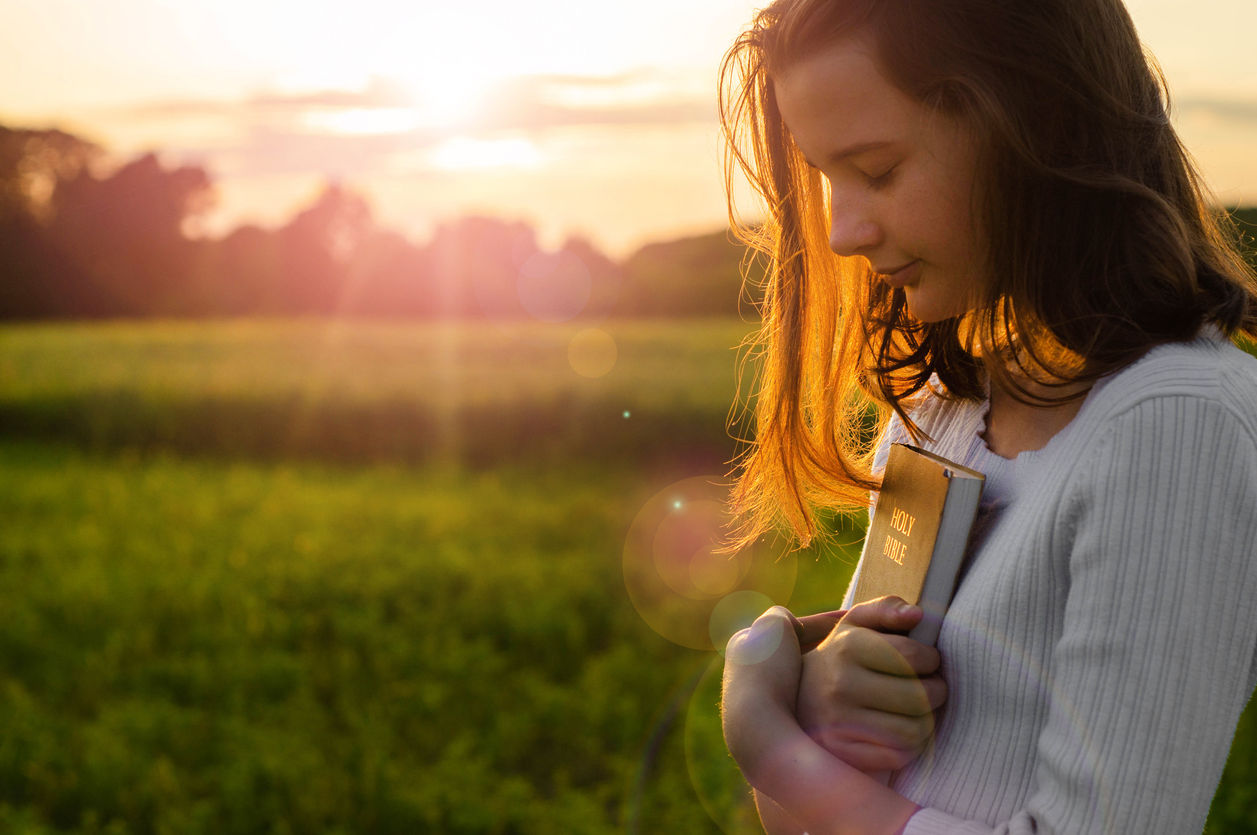
Recently, Colorado Politics ran a story with the title, “Students take a stand on religious freedom during Bring Your Bible to School Day.” Now, I can almost feel many of you shifting uncomfortably in your chairs as you read this. Good, that’s the point. Few subjects elicit a level of personal passion equal to that created by a discussion of religion. If you read the story cited above, you know that Focus on the Family, a Colorado Springs-based religious organization, promoted its 6th annual “Bring your Bible to School” day, urging students to bring their Bibles and to discuss their faith with their fellow students.
For many of you, dear readers, that idea sounds like a very fine idea. And as the article points out, the students are to engage in their discussions of faith during lunch and other break times, not during class. And that is the same and equal treatment you would get for any such “bring your…” day.
So, when does it get tricky? Well, religion brings a very awkward dynamic to political discussions. In large measure I believe this stems from the certainty that (in my view) far too many have that their religion is the correct one, as proven in their religious text, and the other religions are false. Yet, these same people insist that those other folks cannot use their religious scripture to “prove” otherwise.
I bring this up because the “BYBTSD” event is, in and of itself, just fine. Well, that is to say, it is just fine if other students are also allowed to have a day about their religious beliefs (with the same restrictions about math class and such). The problem is that, given the profoundly personal and intense feelings that one’s faith may create, a great deal of intolerance pops up, and attempts to influence political behaviors and actions.
Back when I was teaching the Constitution at the Air Force Academy, I did a rather bold thing (at least in hindsight it appears so). On the day we were going to discuss the separation of church and state, I told the students that because this was such a contentious subject, ripe with opportunities to be offended or to offend, I thought it might be a good idea to start class with a small prayer for peace, love, and understanding. Typically, given the ratio of liberal to conservative students at a military academy, I’d see my one or two liberal kids look offended, while many of my conservative students readily bowed their heads with an attitude suggesting that finally they were being heard. I then began my “prayer…”
“Oh great lord Satan,” I said.
I never once got farther than that, as was my intention. Instantly, the heads shot up and outrage filled many faces. Oh, are you bothered by that, I’d ask. Inevitably, this would generate a discussion about them being ok with a prayer, as long as it was their prayer. Thus, I hoped, I made the point about why government must always be neutral toward religion, because otherwise someday, the government might “pick” the “wrong” religion, from your point of view.
The Supreme Court ruled long ago that religious activity was not inherently prohibited from government actions, such as education in schools. To be legal, the action 1) had a secular purpose (e.g., teaching history of a region), 2) did not fundamentally advance or hinder religion, and 3) does not create “excessive government entanglements” with religion. As you can imagine, it’s the 3rd one that often gets us into trouble.
So, what’s the point of all this? That students should be able to bring their Bibles to school, but also their Korans, their Vedas, their Sutras, or their Archie comics, of that’s what they believe, or disbelieve. And this challenge extends from schools to the White House. Can you believe whatever you want? Yes. Can you compel others to believe the same? No.
That sounds simple, but the simplest things can be the most complicated.
Hal Bidlack is a retired professor of political science and a retired Air Force lieutenant colonel who taught more than 17 years at the U.S. Air Force Academy in Colorado Springs.


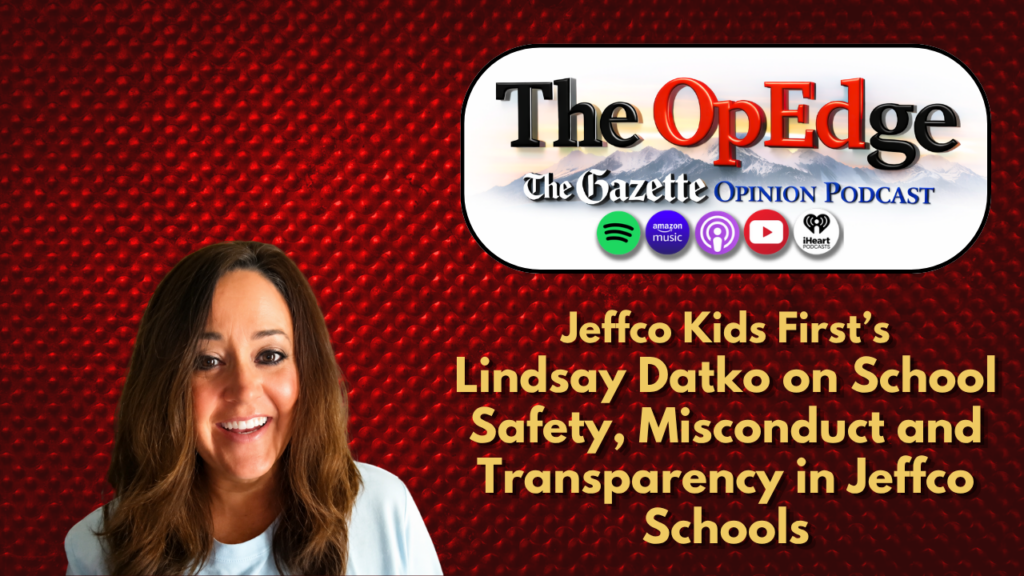
Lindsay Datko on school safety, misconduct and transparency in Jeffco schools | The OpEdge Podcast
Tony Olivero
tony.olivero@gazette.com
Updated 19 hours ago
Jeffco Kids First founder Lindsay Datko joins The OpEdge to explore concerns about school safety, staff misconduct and transparency in Jefferson County Schools. Datko tells host and investigative columnist Jimmy Sengenberger why she believes Colorado’s second-largest district has too often...

Candidate’s disturbing anti-animal agriculture history | Rachel Gabel
Rachel Gabel
rachel-gabel@coloradopolitics.com
Updated 3 days ago
Rep. Manny Rutinel has busted out a cowboy hat for campaign photos and has thrown it into the ring to represent Colorado’s 8th Congressional District in D.C. He is endorsed by U.S. Sen. Cory Booker, a New Jersey democrat who serves on the Committee...

Marx, Bottoms, a primary death wish for Colorado GOP | Dick Wadhams
Dick Wadhams
dick-wadhams@coloradopolitics.com
Updated 3 days ago
Colorado Republicans stand on the brink of total irrelevance and embarrassment if they nominate one of the two nonsensical, buffoonish candidates running for governor, Victor Marx and Scott Bottoms. Republicans are already in a very defensive, tenuous position as Democrats...

Remember the grassroots reason for DEI | Miller Hudson
Miller Hudson
miller-hudson@coloradopolitics.com
Updated 2 days ago
The Trump administration’s jihad against Diversity, Equity and Inclusion (DEI) programs has metastasized into the most unexpected corners of American life. Yet, before examining this policy “incursion,” it’s worthwhile to examine the roots of DEI which reach back more than...

Why I’m voting Democrat | Jon Caldara
Jon Caldara
jon-caldara@coloradopolitics.com
Updated 5 days ago
It makes no sense to be a Republican in Colorado. Or a Democrat for that matter. On the day I turned 18, even before I bought my first legal 3.2 beer (remember 3.2 beer?), I went to the courthouse and...

A primary brings out primal instincts | SONDERMANN
Eric Sondermann
eric-sondermann@coloradopolitics.com
Updated 6 days ago
There are no Stanley Cup finals or NBA title showdowns involving local teams this June. In their place, we are inundated with primary election campaign ads. Coloradans can be excused for missing the diversion and alternate programming. But life can...
Colorado’s role in Spirit Airlines’ demise should not be ignored | GUEST COLUMN
Colorado Politics
colorado-politics@coloradopolitics.com
Updated 5 days ago
By Robin Rossenfeld At a time when Colorado families are already struggling with rising transportation costs, the collapse of Spirit Airlines could not come at a worse moment. According to the U.S. Bureau of Labor Statistics, prices in the Denver-Aurora-Lakewood...
How would Weiser, Bottoms, Bennet, Kirkmeyer address Colorado’s affordability problem? | Paula Noonan
Paula Noonan
paula-noonan@coloradopolitics.com
Updated 6 days ago
It’s decision time in Colorado as primary election ballots hit mailboxes this week. Democrats will pick their candidates in every statewide race, and Republicans select candidates for governor and Attorney General. GOP operatives wanted to exclude unaffiliated voters from their...
The new Trustees Report is a wake-up call for Congress | GUEST COLUMN
Colorado Politics
colorado-politics@coloradopolitics.com
Updated 6 days ago
By Sara Schueneman Every year, the Social Security Trustees Report provides an important snapshot of the long-term outlook for one of America’s most popular and important initiatives. This year’s report sends a clear message: Congress needs to act. The latest...
Colorado lupus patients can’t afford ‘most favored nation’ drug pricing | PODIUM
Colorado Politics
colorado-politics@coloradopolitics.com
Updated 6 days ago
By Kristy Kibler When you live with lupus, you learn quickly waiting is not an option. Lupus is unpredictable: flares can escalate overnight, organs can be damaged quickly, and access to the right treatment at the right time can determine...
PREV
PREVIOUS
OPINION | Former Colorado House Speaker Ruben Valdez made friends wherever he went
Morgan Smith Ruben is gone. It’s hard to believe. I’ve been driving up to Denver to see him since April when Miller Hudson told me that he was sick. In fact, I was about to call him and see if I could visit this Friday when I received the message from his granddaughter, Amber that […]

FEEDBACK | The Colorado Secure Savings Plan makes sense
I was pleased to read the recent op-ed in Colorado Politics from a small business owner who supports giving employees more options to save at work (“THE PODIUM | Secure Savings Plan would level the field for small businesses – like mine,” Oct. 2). There are more people now than ever working for small businesses – many […]