

Denver City Council OKs short-term contracts with for-profit halfway house operators (VIDEO)

The Denver City Council voted unanimously Monday night to approve short-term contracts with two for-profit operators of local halfway houses.
The contracts are stopgap measures that will ensure that the 500 or so people who now live in the facilities will be able to stay there while the city explores alternatives to the corporate contractors.
“OK, we stop this. What do we do?” Reverend Leon Kelly, who works with many residents of the halfway houses, asked the council before the vote. “I am speaking for those that feel like we are just collateral damage in this war.”
One contract, a $2 million agreement with GEO Group’s Community Education Centers, will last through this year. The other, with CoreCivic, is worth nearly $6.7 million and will expire at the end of June.
Many of the people crowding the council chambers applauded the decision, which came just weeks after the council voted against renewing agreements with GEO and CoreCivic amid concerns about what some alleged were substandard conditions at other facilities the companies operate.
Now, the city is “on a different course,” said Council President Jolon Clark.
A 13-member committee, including members of the council and community leaders, will look at “other options available” for the operation of the halfway houses, said Greg Mauro, director of the Denver Division of Community Corrections.
The committee will also reexamine the city’s land use and zoning rules for halfway houses, Mauro said.
“We have to get this right,” he said. “It’s going to be painful. We will see a reduction in services in the short term.”
Councilwoman Candi CdeBaca, a vocal critic of the companies, emphasized that the council is sending a message that it won’t renew the contracts in the future.
“We need to be able to hold our providers accountable in a way that serves our local government and serves the people in corrections with high quality standards,” said CdeBaca.
Altogether, the Denver facilities operated by both companies serve roughly 1,000 people a year. CoreCivic has about 360 beds and GEO has about 160.
Some of the residents have been released from state prisons and are preparing to finish their sentences. Others are serving time at the halfway houses as an alternative to imprisonment.
Two residents of GEO facilities who spoke to the council praised the company.
“I was in prison 10 years, lost,” said one woman, who added that she’s since improved her relationship with her family and gotten a job. “Now, I am one of the best people I can be, and I thank God for GEO.”
But complaints from others in the halfway houses show discontent with the facilities. Residents have expressed a variety of concerns, from the quality of food to being forced to do manual labor, according to grievances Councilman Chris Hinds reviewed at the meeting.
“I want to make sure we put people above profit,” Hinds said. “It’s well-documented that these companies, at a national level, are problematic.”
In response, Mauro said that the offenders are typically required to do routine household chores. He said that many different entities monitor and oversee the halfway houses, from Denver Building and Neighborhood Inspections to the state’s Division of Criminal Justice.
Candace Bailey, who went to a halfway house after she was incarcerated in the early 2000s, compared the existing community corrections system to “a new form of penitentiary” that allows for the “warehousing of human beings.”
She called on the city to find community-based alternatives.
“We have community members who are out here doing the work who have experience from inside the walls,” she told the council. “We can either feed the system, or we can do something completely different.”
Following the meeting, a GEO spokesman issued a statement:
“Tonight, residents from [the] Tooley Hall and Williams Street [halfway houses] finally had a chance to speak to Denver City Council. Unfortunately, many others were not allowed to share their stories and successes with the same city council members who criticized those facilities blindly. Fortunately, this contract extension will help provide certainty to our residents and their families and we welcome the city’s support. We hope these same elected officials give our residents and employees a voice in the future.”



Regulators seek public input for massive Montana-Wyoming oil pipeline proposal | OUT WEST ROUNDUP
The Associated Press
the-associated-press@coloradopolitics.com
Updated 6 days ago
WYOMING Massive oil pipeline proposed State and federal officials are seeking public comment on the proposed Bridger Pipeline Expansion project to carry Canadian crude from the border in Phillips County, Montana, to a terminal near Guernsey in Wyoming. The massive...

Mysterious letter causes uproar, investigation in Mesa County GOP | A LOOK BACK
Rachael Wright, Special to Colorado Politics
rachael.wright@coloradopolitics.com
Updated 4 days ago
Twenty Years Ago This Week: An unregistered activist group calling themselves ‘The Colorado Republican Caucus’ mailed letters to at least 160 Republicans in Mesa County calling various Grand Junction Republicans “turncoats” and “traitors.” “The danger was that the letters were...

Colorado Politics Calendar Apr. 20-26
Rachael Wright, Special to Colorado Politics
rachael.wright@coloradopolitics.com
Updated 4 days ago
CoPo’s weekly political calendar helps you find political and public policy events throughout Colorado. It includes candidate and issue campaign events, public policy meetings, court hearings, state and local party conventions, assemblies, debates, rallies, parades, speaking engagements, traveling dignitary appearances,...

A happier budget week | Capitol M | Week of April 18, 2026
Marianne Goodland
marianne.goodland@coloradopolitics.com
Updated 3 days ago
It’s budget time at the state Capitol, and generally, it’s a humorless situation. It certainly was that way in the House last week, with a 15-hour reading of the long bill at 661 pages that resulted in lawmakers having to...

Colorado lawmakers advance bill to tackle Colorado’s prison capacity issues
Marianne Goodland
marianne.goodland@coloradopolitics.com
Updated 2 days ago
As lawmakers move the 2026–27 state budget toward completion, they are intensifying efforts to address overcrowding and capacity challenges within the Department of Corrections and related agencies—issues that have contributed to increased spending in the budget. The state Senate on...
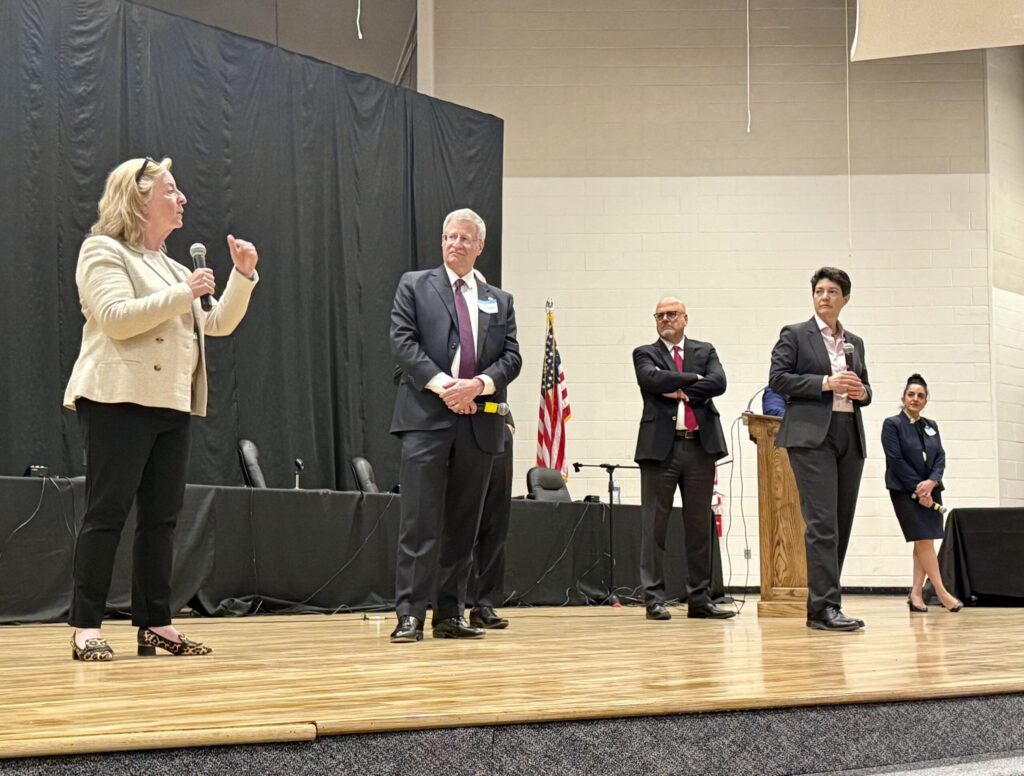
Colorado justices, lawyers speak with rural students through outreach program
Michael Karlik
michael.karlik@coloradopolitics.com
Updated 19 hours ago
Members of the Colorado Supreme Court appeared before students from eight rural schools on Thursday to hear a pair of cases, field questions, and mark the first time the state’s newest justice participated in the long-running program. “I had such...

Democrats want Colorado colleges to provide medication abortion
Marissa Ventrelli
marissa.ventrelli@coloradopolitics.com
Updated 2 days ago
A bill proposing to require Colorado colleges and universities to provide abortion medication services cleared a legislative committee on Thursday. Advocates said the measure — which exempts religious-based institutions but applies to public, private, and community colleges — will improve...

Trump ‘in discussions’ with IRS to cut deal in tax record lawsuit
Brady Knox, Washington Examiner
brady.knox.washington.examiner@gazetteedit.wpenginepowered.com
Updated 2 days ago
President Donald Trump is in talks with the Internal Revenue Service to strike a deal over the release of his tax records. The news was revealed in a legal filing, where his legal team said they were in “discussions” with...
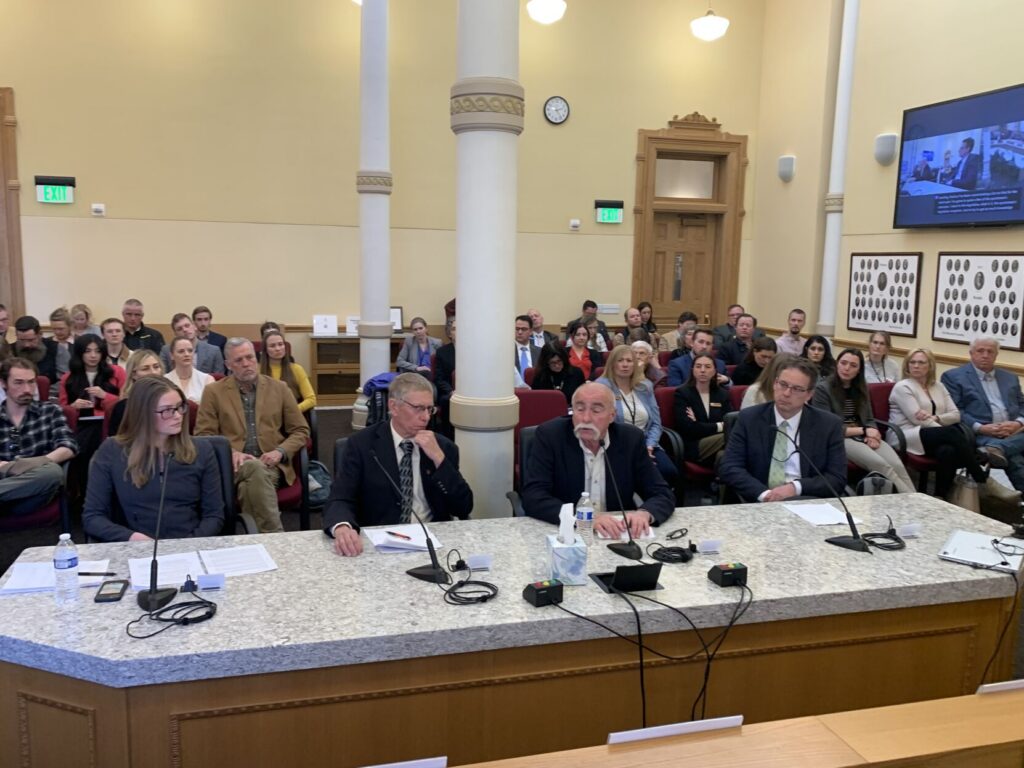
Governor’s wildlife commission picks face pushback ahead of Colorado Senate hearing
Marianne Goodland
marianne.goodland@coloradopolitics.com
Updated 2 days ago
Colorado’s largest coalition of hunters, anglers, and wildlife conservation groups is urging state lawmakers to reject two of Gov. Jared Polis’ latest nominees to the Colorado Parks and Wildlife Commission, setting up a contentious confirmation hearing before the Senate Agriculture...
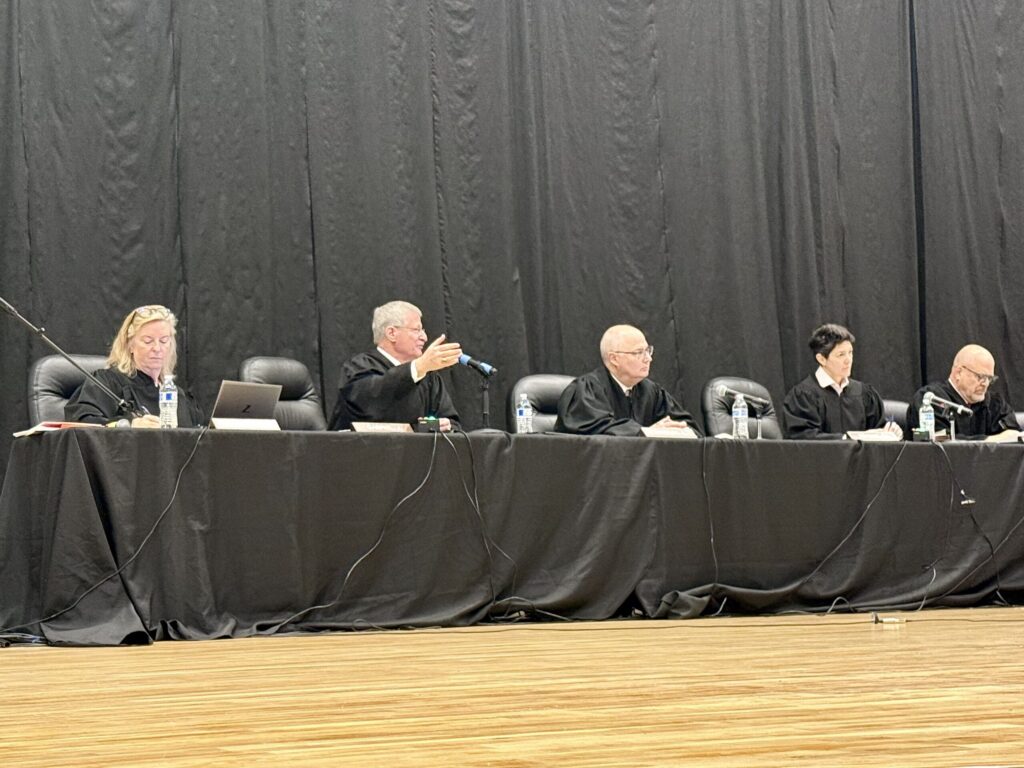
Colorado justices skeptical of snowboarder’s bid to revive injury lawsuit after signing new waiver
Michael Karlik
michael.karlik@coloradopolitics.com
Updated 19 hours ago
The Colorado Supreme Court seemed to agree on Thursday that a plaintiff is not entitled to continue his snowboarding injury lawsuit because he purchased another pass in the middle of litigation that released all past legal claims. “It says you’re...
PREV
PREVIOUS

Gabby Giffords to Colorado crowd: 'Be bold, be courageous' on gun control
Former U.S. Rep. Gabrielle “Gabby” Giffords and other survivors of gun violence exhorted a crowd in Aurora on Monday to keep fighting for “sensible” gun control legislation. The Gun Safety Town Hall drew a standing-room-only audience of more than 300 to the Aurora Association of Realtors offices, amid heavy security. Stopping gun violence takes courage, […]

Lakewood struggles to put housing development cap in place
Lakewood is running into road blocks while establishing a housing cap. The city’s voters approved a measure in July that limits new housing construction to 1% annually. The move came as Denver and surrounding cities grapple with growing pains from population increase. At a City Council meeting on Monday, council members discussed establishing the cap, debating language […]