

COLORADO ROUNDUP: Inmate held in solitary 35 years dies; city won’t appeal topless ban
FLORENCE
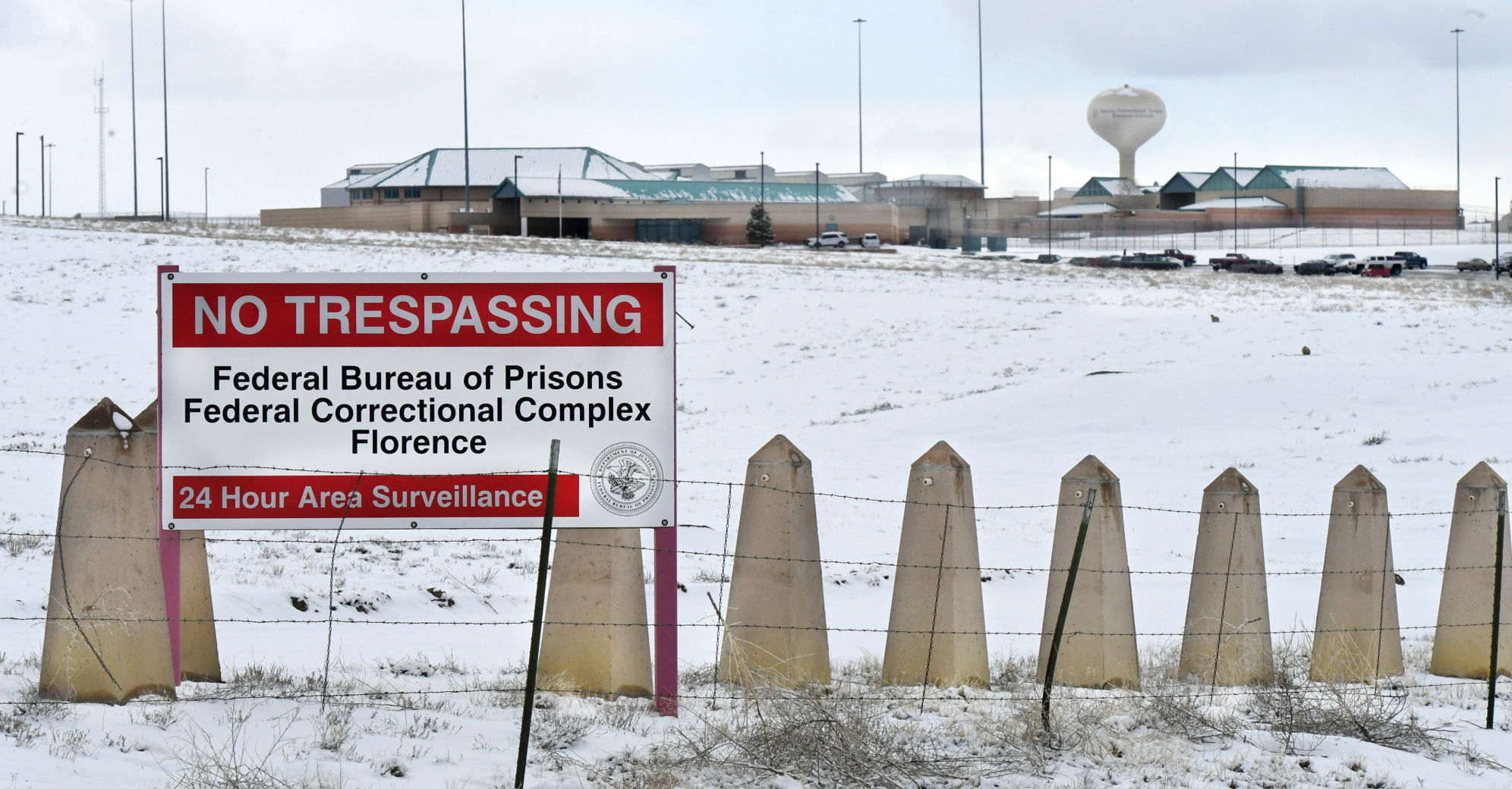
Federal inmate with longest solitary confinement dies
An inmate at the “Supermax” prison who had been held in solitary confinement longer than any other federal prisoner has died at the age of 67.
Thomas Silverstein, who was held in solitary confinement for 35 years, was admitted to a suburban Denver hospital in February to undergo surgery and died in intensive care recently.
He entered prison in 1978 on an armed robbery conviction and was later found guilty of killing two inmates and a prison guard.
With no federal death penalty in place at the time of the guard’s slaying, the Bureau of Prisons instead put Silverstein in indefinite solitary confinement, where he remained until he was hospitalized.
He was moved to “Supermax” in Florence — officially known as the United States Penitentiary Administrative-Maximum Facility — in 2005 and was housed in a soundproof cell.
DENVER POST
FORT COLLINS
Council will not go to Supreme Court on topless ban
The Fort Collins City Council has decided not to seek a U.S. Supreme Court review of a ban on women going topless in public.
The 4-3 vote leaves the city an option to seek a Supreme Court ruling if settlement agreements with advocacy group Free The Nipple-Fort Collins fail.
Activists sued the city in 2016 after the council updated its public indecency ordinance in 2015 but preserved a ban on topless women in public.
Activists say the ban treats women and men differently under law.
A federal district court ordered an injunction in 2017 prohibiting the city from enforcing the ban.
The federal 10th Circuit Court of Appeals ruled against the city in February, applying the decision to seven states.
COLORADOAN
LA PLATA COUNTY
BP fined $68K for byproduct spills
BP America Production Co. has been fined $68,000 for three spills of an oil and gas byproduct in southwestern Colorado.
BP has agreed to spend about $12.5 million by 2022 to repair or replace 17 miles of pipelines in La Plata County.
State records show cracked pipelines caused produced water and other substances to be released in the county in April 2018, November 2018 and April 2019.
A BP attorney told the state Oil and Gas Conservation Commission that pipelines are cracking from the stress of ground movement.
DURANGO HERALD
HIGHLANDS RANCH
Construction workers find dinosaur fossils
Construction workers have unearthed fossils that experts say could be from a rare horned dinosaur.
The Denver Museum of Nature and Science said that it is exploring the construction site near a retirement community in Highlands Ranch where a dinosaur’s lower leg bone and several ribs were found.
Fossil expert Natalie Toth said the fossils could be from a torosaurus – a dinosaur similar to the triceratops but differentiated by three bones.
Toth says the fossils seem to be intact, so crews are hoping to uncover the entire dinosaur.
The fossils are embedded in a 66- to 68-million-year-old rock layer.
Toth says fossils in the formation are from dinosaurs that were among the last “walking around before the big extinction.”
KDVR-FOX31
SUMMIT COUNTY
Cluster of mumps cases confirmed
Health officials have confirmed a cluster of mumps cases among employees and their associates at the Arapahoe Basin ski resort.
The first case of mumps connected to the resort surfaced in April, and five others were confirmed in the last few weeks.
Sara Lopez, Summit County’s public health nursing manager, says the risk of contracting the disease at A-Basin or elsewhere in the county is minimal, but people should be vaccinated.
Mumps spreads through saliva, meaning it can be transmitted by touching contaminated surfaces and through coughing, sneezing and kissing.
A-Basin representatives say the ski area is working with state and county health officials to keep guests safe.
SUMMIT DAILY
STATEWIDE
Colorado drought-free with heavy mountain snowpack
A heavy mountain snowpack has helped Colorado shake free of drought that covered much of the state just months ago.
The Department of Agriculture’s latest update of drought conditions shows a fraction of 1% of the Colorado is still experiencing drought. In February, more than two-thirds of the state was experiencing drought.
Mountain snowpack levels are high statewide and particularly in the southwest.
As the snow melts, more water will be available for agriculture and for cities and towns to store in reservoirs.
THE ASSOCIATED PRESS


Federal judge directs plaintiff to revise complaint alleging Denver officers’ constitutional violations
Michael Karlik
michael.karlik@coloradopolitics.com
Updated 1 hour ago
A federal judge directed a defendant to revise his allegations on Wednesday to more precisely state what two Denver officers and the city itself allegedly did to violate his constitutional rights by facilitating his prosecution for murder until prosecutors dropped...
Federal judge explores new sanctions against ex-Colorado judicial discipline director
Michael Karlik
michael.karlik@coloradopolitics.com
Updated 2 hours ago
A federal judge on Wednesday directed Colorado’s former judicial discipline director, for the third time this year, to explain why she should not sanction him for his latest conduct in his litigation against the state’s judiciary. Christopher S.P. Gregory, who served...

Colorado joins lawsuit challenging changes to Endangered Species Act
Marissa Ventrelli
marissa.ventrelli@coloradopolitics.com
Updated 2 hours ago
Colorado once more joined a coalition of states challenging the Trump administration — this time on proposed rules regarding the Endangered Species Act. The pair of lawsuits challenge new rules made under Interior Secretary Doug Burgum, who earlier said the...

Boebert challenger Eileen Laubacher says she’ll ‘break through the noise’ in Democrat’s 1st TV ad
Ernest Luning
ernest.luning@coloradopolitics.com
Updated 20 minutes ago
Democratic congressional candidate Eileen Laubacher says she’ll take a different approach than her opponent in a campaign ad released Wednesday that opens with a cacophonous series of videos featuring Republican U.S. Rep. Lauren Boebert. “Eileen’s had enough of the noise...

Colorado congressman asks DOJ to investigate violent student ICE walkout
Nico Brambila
nico.brambila@denvergazette.com
Updated 1 hour ago
U.S. Rep. Jeff Crank is asking the Justice Department to investigate violence at last week’s anti-ICE student walkout in Denver, including whether outside organizations helped organize, fund, or influence the demonstration. Crank sent a letter Tuesday requesting the investigation to...

General election season is here. Where does mail-in voting stand?
David Zimmermann
david-zimmermann@coloradopolitics.com
Updated 5 hours ago
As the general election season approaches, the legal question surrounding the new U.S. Postal Service mail-in ballot requirements remains up in the air. With the case playing out in the courts, mail-in voting has not been changed substantially despite President...
10th Circuit orders second look at immunity for Kiowa County deputy over fatal vehicle crash
Michael Karlik
michael.karlik@coloradopolitics.com
Updated 15 minutes ago
The Denver-based federal appeals court directed a trial judge on Tuesday to further analyze whether a Kiowa County deputy and the sheriff’s office may be sued for a fatal vehicle collision. The Colorado Governmental Immunity Act generally shields government entities and public...
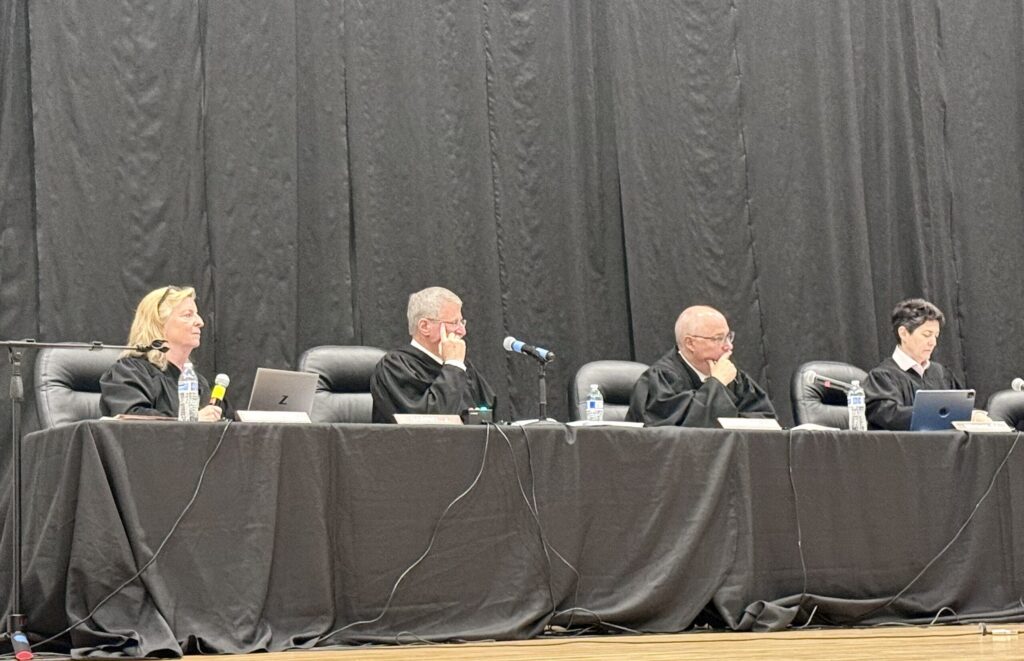
Colorado justices to hear appeal in Kendrick Castillo death lawsuit, ‘fugitive’ rule
Michael Karlik
michael.karlik@coloradopolitics.com
Updated 17 minutes ago
The Colorado Supreme Court announced on Tuesday that it will decide whether it was proper to dismiss a lawsuit over the 2019 shooting death of Kendrick Castillo after the defendants paid the maximum amount of damages available to Castillo’s parents,...

Two more wolves killed by Colorado wildlife staff
Marianne Goodland
marianne.goodland@coloradopolitics.com
Updated 1 day ago
Two yearling wolves from the Copper Creek and Three Creeks packs in Pitkin and Rio Blanco counties, respectively, were killed by Colorado Parks and Wildlife staff on Monday. That brings to 19 the number of wolves that have died under...

Federal judge dismisses Douglas County’s challenge to collective bargaining law
Nicholas Fogleman
nicholas.fogleman@denvergazette.com
Updated 9 hours ago
A federal judge dismissed claims brought by the Douglas County Board of Commissioners alleging that a state law granting county employees the right to organize and join labor unions violates free speech protections and conflicts with federal labor law. Douglas...
PREV
PREVIOUS

DENVER RUNOFF 2019: Perl, Lopez compete for clerk and recorder
Denver’s runoff race for the Clerk and Recorder’s Office pits longtime city official and community organizer Paul Lopez against prominent Colorado lawyer and government ethics watchdog Peg Perl. Lopez and Perl emerged out of the first round of spring Denver municipal elections held on May 7 as the top two vote-getters for the office, with […]

Mueller: Special counsel probe did not exonerate Trump
WASHINGTON – Special counsel Robert Mueller said Wednesday he believed he was constitutionally barred from charging President Donald Trump with a crime but pointedly emphasized that his report did not exonerate the president. He cautioned lawmakers who have been negotiating for his public testimony that he would not go beyond his report in the event […]