

Q&A with Kathleen Curry | An independent voice amid the partisan divide
To look at the numbers, it would seem much of Colorado’s electorate has given up on the two-party system. The state’s unaffiliated voters are now more numerous than those in either major political party – by at least a quarter of a million – and pollsters and pundits predict their ranks will continue to swell at the expense of both parties.
Of course, that hasn’t slowed the perennial partisan grudge match pitting red against blue; it proceeds unabated – seemingly oblivious to the state’s largest voting bloc. Colorado’s No. 2-ranked Democrats and No. 3-ranked Republicans fuss, fume and feud with each other as always at the Capitol, on the campaign trail and in our mailboxes. Observers of the surreal spectacle must wonder if the participants are whistling past the graveyard – or if they tacitly have accepted defeat, knowing there’s only so much they can do about the real elephant in the room.
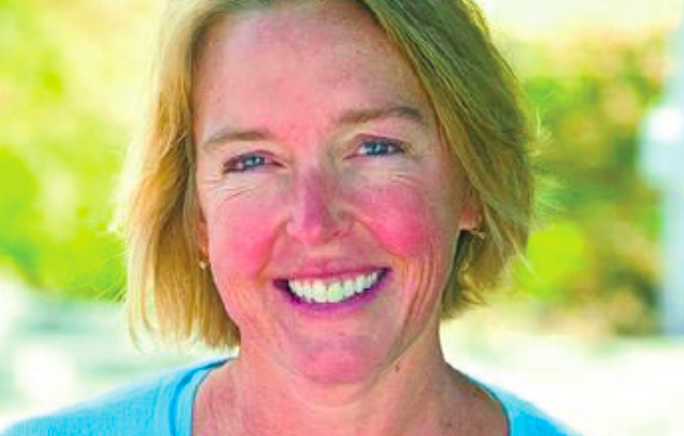
Kathleen Curry was caught in that chasm of cognitive dissonance when, in 2009, midway into her third term representing rural District 61 in the state House, she’d had enough – and left the Democratic Party. A water wonk married to a rancher, she had gone to the Capitol in the first place to serve as a policy maker, not a political player. She was prepared to pursue the interests of her vast district, not the party hierarchy.
The Gunnison lawmaker finished her term registered as an unaffiliated. She stood for re-election in 2010 as an independent write-in candidate for what was to be her last term in the House, but her former party put another candidate up against her and won by a slim margin.
Curry made another attempt at the post in 2012, but the boundaries of the district had been changed substantially by then, and she lost again given what was now a lack of name recognition alongside all the other institutional barriers to “third party” candidates.
Curry emerged from that school of hard knocks with a resolve to champion similarly independent-minded candidates for office, and she now serves on the steering committee of an upstart endeavor that brings together like-minded Coloradans from both parties. She tells us more about that project in today’s Q&A. She also offers insights into the mind of the unaffiliated voter; she updates us on the issues that rouse rural Colorado, and she shares with us whether, for all she’s been through, she’ll ever run for office again.
Kathleen Curry
- Founding member, Steering Committee for Unite Colorado.
- Served in the Colorado House of Representative, 2005-2011, as a Democrat and then as an unaffiliated. Before leaving the Democratic Party, served as House speaker pro tempore.
- Small-business owner in Parlin, near Gunnison, and co-owner, Tomichi Creek Natural Beef.
- Member, Advisory Board, Colorado Water Resources Research Institute.
- Holds a bachelor of science degree in agriculture and natural resource economics from the University of Massachusetts at Amherst; holds a master’s degree in water resources planning and management from Colorado State University.
?CP: Recap why you left your former party and what common themes you saw between your own experience and that of some contemporaries who also bolted from their parties – former Durango state Sen. Ellen Roberts, from the Republicans, and former Wheat Ridge state Sen. Cheri Jahn, from the Democrats.
Curry: Back in 1999, I decided that it would be a better fit for me to serve as an unaffiliated member of the General Assembly (I was in my second year of my third term in the House). I ended up changing my registration because of pressure to take into account the financial supporters of the party when deciding what kind of legislation I wanted to run. Because I believe that a representative’s top priority should be the needs of their constituents – I felt that I needed to make a change.
I know that Sens. Roberts and Jahn also focused on policy, as opposed to politics, but I can’t speak to exactly why they made their decisions to be nonpartisan. My current line of thinking is that the issue really isn’t your affiliation per se, it is more about how you do the job. Most importantly – Colorado is a diverse state, and this diversity should be reflected in the makeup of our representative form of government. ?
CP: Tell us about Unite Colorado, the role you play in it and what you hope it will accomplish.
Curry: Unite Colorado emerged organizationally over a year ago in response to the conspicuous absence of unaffiliated elected officials at the state level. As the name implies, this nonpartisan organization has the overarching goal of bringing Coloradans together to address Colorado’s policy challenges.
The priority the first year was to build networks and to recruit and support unaffiliated candidates. I serve on a steering committee for the organization, which enables me to weigh in on the direction of the group and the activities that are underway.
We learned a lot from the 2018 election cycle and are in the process of setting future goals and objectives. One major takeaway from the election is that unaffiliated candidates are able to compete effectively under certain circumstances. By that I mean unaffiliated candidate success is a factor of whether or not a particular district has been heavily gerrymandered to support one particular outcome; whether or not the candidate can get their name and message out to enough potential supporters, and whether or not the voters are receptive to non-partisan candidates.
I believe that in the future, Unite Colorado will be a major player in the political arena in light of the fact that partisan politics continues to decline in popularity among the voting public. My hope is that the group will continue to fill a void in Colorado by supporting potential and existing elected officials who are focused on policy and their districts as opposed to the parties themselves.
?CP: Colorado trails only Alaska among U.S. states in the percentage of voters who register unaffiliated; they now account for over 38 percent of all voters in the Centennial State – outnumbering Democrats and Republicans. What is driving their explosive growth? What segments of our state’s population are prominent in their ranks?
Curry: Off the top of my head, I think that voters are doing several things when they register as unaffiliated. Some want to keep their options open. Some are people that do not identify philosophically with either party. Some are rebelling against two party dominance. I wish I had a definitive answer to this question! My impression is that there are different reasons for everyone – with one unifying thread: They don’t consider themselves a member of any one party.
My understanding is that young voters are the fastest-growing population segment choosing to register as unaffiliated.
?CP: You were a voice for rural Colorado in the state House. You’re a small-town shop owner; you’re married to a rancher, and by dint of your higher education as well as years of policy engagement, you know your left bank from your right when it comes to water issues. In a commentary for us last fall, you wrote that two key challenges facing much of rural Colorado are water and health care. Both are perennially in peril.
Does the urban-suburban majority in Colorado’s legislature get that? Did last fall’s election and its resulting shakeup of state government have any impact on the willingness of state policy makers to address rural concerns?
Curry: First, I think the majority does understand the health care issue and is working hard to address the high costs that rural Coloradans wrestle with. I truly appreciate that. Secondly – water is on their minds as well. Several of the members brought progressive water legislation this year in order to address concerns that their constituents brought to them. There was some discussion regarding the state Water Plan, declining storage in Lake Powell and Colorado River compact compliance.
But really the focus this year was more on education and issues that the urban members consider to be more pressing in their districts. Plus, the oil and gas legislation kind of sucked the oxygen out of the Capitol for a while, and the good snowpack this year delayed the sense of urgency.
I can’t answer the question of whether or not the majority cares about water. I think some definitely do, and that others may not consider it a priority. For me though, the makeup of the Colorado Water Conservation Board and the executive branch appointments at the Department of Natural Resources are equally as important, and I would offer that the administration has put people in place that I believe care about and respect rural perspectives. ?
CP: Is Colorado a better or worse place to live now than when you moved back to the state to attend grad school at CSU in the early ’90s?
Curry: If I say better in some ways and worse in others, then I sound just like a typical politician! I liked it 25 years ago when Loveland had 30,000 people, and driving on I-25 wasn’t such a nightmare.
The thing I absolutely care the most about is agriculture, and when I compare today’s agricultural opportunities to where we were at in the ’90s I prefer the earlier time. I have the utmost respect for the families that are still on the land, raising food for this country. I understand that a combination of market forces and the needs of growth are driving the decline, but as agricultural operations and communities become more scarce, it makes me profoundly sad.
?CP: Will you ever run for elective office again?
Curry: I think I have one more race in me. I loved working on policy and trying to help the people who elected me. I am not sure where I fit in now, but I would like to serve the public again in some capacity.

Finding of no discrimination against former Cherry Creek Schools principal upheld
Michael Karlik
michael.karlik@coloradopolitics.com
Updated 52 minutes ago
The Denver-based federal appeals court agreed on Friday that a judge properly resolved a former Cherry Creek School District administrator’s claims of discrimination in the district’s favor based on employees’ “loss of confidence” in her leadership. Linda Maccagnan was a...

What to know before Colorado’s new law on semiautomatic firearms goes into effect
Marissa Ventrelli
marissa.ventrelli@coloradopolitics.com
Updated 1 hour ago
A Colorado law passed in 2025 established new requirements for individuals planning to purchase semiautomatic weapons. Here’s what residents should know before Senate Bill 003 goes into effect on Aug. 1. From a ban to a training course For decades,...

Campaign launched to redirect $1 billion in TABOR refunds to education
Marissa Ventrelli
marissa.ventrelli@coloradopolitics.com
Updated 2 hours ago
A coalition that includes the state teachers’ union on Tuesday launched a campaign for a ballot proposal that would reduce more than $1 billion in taxpayer refunds and spend the money on education. The measure is among several campaigns taking...
Arapahoe County murder prosecution botched a second time as appeals court reverses for same mistake
Michael Karlik
michael.karlik@coloradopolitics.com
Updated 4 hours ago
Colorado’s second-highest court reversed a man’s felony murder conviction for the second time on Thursday after an Arapahoe County prosecutor made the same mistake that triggered reversal of the defendant’s first conviction years earlier. Although David Alberto Garcia was not...

Trump alleges ‘deep state’ suppressed Chinese interference in 2020 election
The Washington Examiner
the-washington-examiner@coloradopolitics.com
Updated 22 hours ago
President Donald Trump used a primetime address to allege the “deep state” suppressed Communist Party of China attempts to meddle in the 2020 election. As Trump made the allegations of election interference from the White House’s East Room, he declassified...

WATCH: Trump speaks on elections in primetime address
The Associated Press
the-associated-press@coloradopolitics.com
Updated 23 hours ago
WASHINGTON (AP) — President Donald Trump will deliver a primetime address Thursday that he says will include a focus on elections. The speech comes as he’s escalated calls for Republicans to pass tighter federal voting rules for November’s midterm elections....
Federal judge dismisses lawyer’s disability discrimination claims against judge
Michael Karlik
michael.karlik@coloradopolitics.com
Updated 3 hours ago
A federal judge dismissed a lawyer’s discrimination claims last month against a judge in El Paso County who allegedly failed to provide reasonable accommodations for her long COVID disability. Andrea M. Hall sued District Court Judge Chad Miller and his...
As Trump targets DEI programs, Polis says he worries about federal dollars used as ‘political football’
Marissa Ventrelli
marissa.ventrelli@coloradopolitics.com
Updated 1 day ago
Colorado’s governor has officially opposed a proposed White House rule that would change procedures for grants, cooperative agreements and other forms of federal financial assistance. Gov. Jared Polis said the proposal from the White House Office of Management and Budget...
Ex-Broncos linebacker’s discrimination lawsuit returned to Colorado court
Michael Karlik
michael.karlik@coloradopolitics.com
Updated 23 hours ago
A federal judge returned a former Broncos linebacker’s disability discrimination lawsuit to state court last month, rejecting the NFL defendants’ attempt to keep the case in federal court. Randy Gregory, who played for the Broncos between 2022 and 2023, sued...

Signatures submitted to cap Colorado’s income tax rate
Marissa Ventrelli
marissa.ventrelli@coloradopolitics.com
Updated 4 hours ago
The group behind a ballot measure aiming to cap the state’s income tax at the current rate has submitted signatures from voters to election officials for review, part of the tug and pull in Colorado between opposing political forces fighting...
PREV
PREVIOUS

20-year-old Denver school board candidate leading in fundraising
A progressive young candidate who graduated from one of Denver’s most storied high schools and now works at another has raised the most money thus far out of the four candidates running for school board in Colorado’s largest district. Tay Anderson raised $13,912 in the last six months, all from individual donors, many giving just […]

Colorado State Board weighs outside manager for troubled Adams 14
Colorado’s top education officials have already said they don’t think Florida-based MGT Consulting has the necessary experience to turn around the state’s most troubled district. This week, they’ll have to decide if they’ll approve the for-profit company anyway. This isn’t the first time this year that Adams 14 has come before the State Board of […]