

OUT WEST ROUNDUP | Nebraska inaction on medical pot could backfire; Arizona restricts cellphone use while driving
NEBRASKA
State’s tough approach to medical marijuana may backfire
LINCOLN – Year after year, Nebraska’s conservative lawmakers have rejected measures calling for limited and highly regulated medical marijuana.
They’re poised to do it again, but their decision this year could have the unintended consequence of ushering in one of the most unrestricted medical marijuana laws in the country.
If so, Nebraska will join a growing number of conservative states with unusually easy marijuana access, all because red-state lawmakers refuse to touch the issue and thereby make way for ballot initiatives.
Since 2010, Nebraska legislators have rejected medical marijuana bills three times, and advocates tried again this year, but with a threat: Lawmakers could approve a bill that requires people to get a state-issued registry card, limits the potency of marijuana, allows its use only for certain medical conditions and lets patients have no more than 8 ounces of the drug in their home, or supporters would place a measure with almost no restrictions on the ballot.
From the experience in other states, there is general agreement that Nebraska voters would approve such a ballot measure. A ballot measure that passed overwhelmingly in Oklahoma allows any doctor to prescribe marijuana for any health complaint.
Opponents, including Republican Gov. Pete Ricketts, say they want nothing to do with marijuana, even if the result is dispensaries opening everywhere selling to anyone claiming a minor ailment.
The draft Nebraska ballot measure would guarantee a constitutional right to use and grow marijuana if a doctor recommends it with no restrictions on what diseases qualify. It would only ban smoking the drug in public places.
If voters approve it in the 2020 general election, patients would be free to grow an “adequate” supply.
ARIZONA
State lawmakers OK ban on cellphone use while driving
PHOENIX – The small list of states that allow either texting while driving or hand-held cellphone use is shrinking after the Arizona House overwhelmingly approved a cellphone use ban and sent it to Republican Gov. Doug Ducey for his expected signature.
Arizona, Missouri and Montana had been the only three states that hadn’t banned texting while driving. Arizona will join 16 others that bans all use of a hand-held cellphones while driving.
The House rejected a weaker ban on cellphone use, but approved legislation that strengthens the state’s overarching distracted driving law on a 31-29 party line vote.
Bills to restrict phone use while driving have been introduced for a decade but haven’t advanced amid concerns by Republicans about creating a “nanny state” that overregulates behavior.
Supporters of the ban pointed to the death of a police officer in January after a distracted driver lost control and struck him on a Phoenix-area freeway. Relatives of Salt River tribal police officer Clayton Townsend and others who have died in distracted driving crashes gave emotional testimony, carrying photos of their loved ones around the Capitol.
The hand-held phone use ban bars drivers holding it unless the vehicle is stopped. Calls to 911 would be allowed. Police could issue warnings until 2021, when they could begin writing tickets carrying fines of $75 to $149 for a first offense and up to $250 for a second.
NEW MEXICO
County declares state of emergency regarding immigration
ALAMOGORDO – A southern New Mexico county has demanded that Gov. Michelle Lujan Grisham use the National Guard to re-open Customs and Border Patrol checkpoints that were closed in March.
Otero County recently declared a state of emergency, noting the need for open checkpoints to stop drugs and illegal activity at the border, the Alamogordo Daily News reported.
Checkpoints in the area shut down as agents were pulled to help process an influx of migrants claiming asylum at the border.
Otero County Commission Chairman Couy Griffin said if the county’s demand is not met soon, it will provide its own security for the checkpoints. Griffin also threatened taking legal action against the state.
Governor’s office spokesman Tripp Stelnicki said the National Guard “does not and would not operate federal checkpoints.”
Grisham announced in February that she withdrew the 118 remaining National Guard troops from New Mexico’s border with Mexico, denying President Donald Trump’s contention that a crisis was ongoing at the border.
WYOMING
State Supreme Court will hear ‘stand your ground’ case
The Wyoming Supreme Court has agreed to review prosecutors’ appeal in a murder case that a Natrona County judge dismissed on the basis of a new Wyoming law.
According to a filing in the court’s public docket, the court agreed to take up a request filed by the Wyoming Attorney General’s office in March. In that request, the state’s lawyers had asked the court to review Judge Catherine Wilking’s dismissal of the first-degree murder case against Jason T. John, of Casper, who shot and killed Wesley Willow in a north Casper trailer park last year.
Assistant Attorney General Samuel Williams and Natrona County Assistant District Attorney Kevin Taheri argued in their request for review that Wilking misapplied the law when she dismissed the case against John.
The Natrona County District Attorney’s office in August charged John with the single felony after he shot and killed Willow at his north Casper trailer. John’s attorney, Tim Cotton, argued that a law instituted by Wyoming lawmakers about a month before the shooting protected John from prosecution.
In the first judicial test of the new law, which expanded Wyoming’s self-defense doctrines, Wilking dismissed the case but noted the dearth of Wyoming case law to inform her decision.
In the state’s March filing, attorneys argued John agreed to fight Willow, goaded him into a confrontation and prepared for that confrontation. The state also noted that John continued firing at Willow after he was already incapacitated.
MONTANA
Rodeo head calls bull after lawmakers’ cowboy vote
HELENA – The head of the Professional Bull Riders Association thinks Montana lawmakers really stepped in it when they rejected a measure to recognize the fourth Saturday in July as the “National Day of the Cowboy.”
Professional Bull Riders Association CEO Sean Gleason tells The Great Falls Tribune he “has a burr in his saddle” after the state House vote and he considered moving this weekend’s PBR event in Billings next year.
Gleason says in a Facebook post that he reconsidered because he couldn’t abandon the fans “over the small-minded act of short-sighted politicians.”
The House rejected the resolution after some legislators wanted to add “cowgirl” because the resolution wasn’t inclusive enough.
Montana would have been the 15th state to participate in observing the National Day of the Cowboy.


Colorado to get $615M from Meta child safety settlement
Thelma Grimes
thelma.grimes@coloradopolitics.com
Updated 11 hours ago
The parent company of Facebook and Instagram will pay hundreds of millions of dollars to Colorado, part of an $18 billion multistate deal, in which the company also agreed to adopt extensive child-safety changes to its operations. The settlement ended...
Colorado’s chief federal judge orders return of wrongfully deported man, second judge to explore ‘series’ of violations
Michael Karlik
michael.karlik@coloradopolitics.com
Updated 13 hours ago
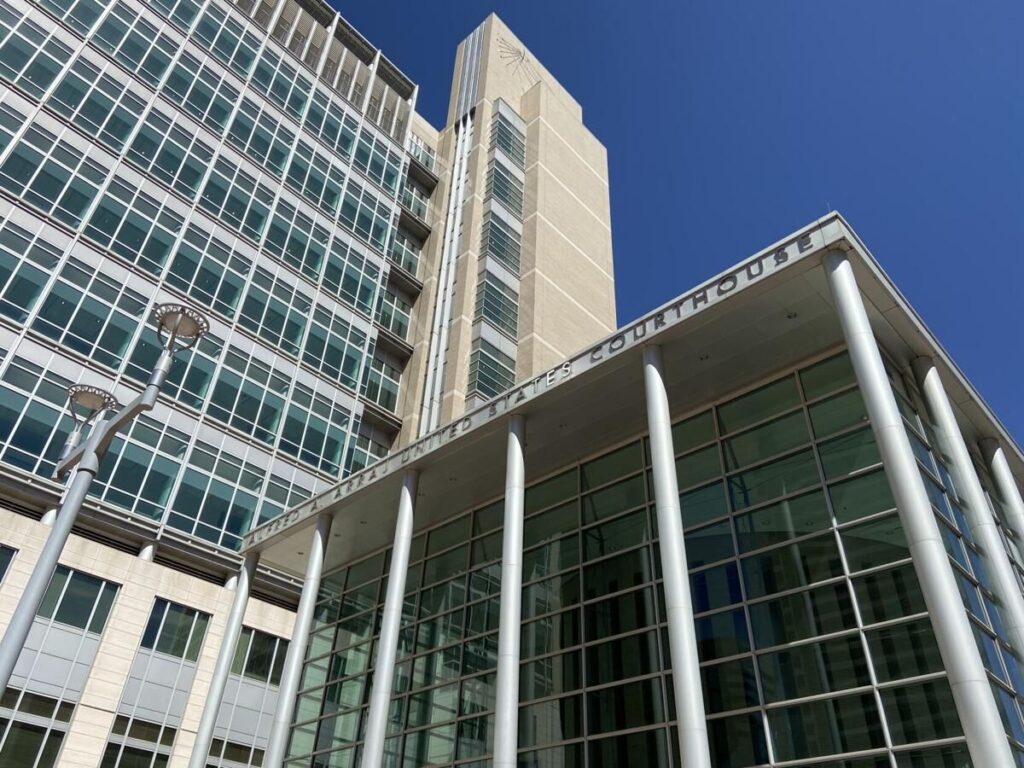
Colorado’s chief federal judge took the extraordinary step of directing the government on Tuesday to do everything it can to return a man it deported in violation of his order. At the same time, Colorado’s chief magistrate judge has set...

Counties warn CPW that new comment limits sideline local governments
Marianne Goodland
marianne.goodland@coloradopolitics.com
Updated 11 hours ago
The September meeting of the Colorado Parks and Wildlife Commission will feature newly revised public‑comment rules — changes introduced by chair Jay Tutchton of Bent County, who announced them without first discussing the revisions publicly with the rest of the...

Controversial two-bag furbearer limit heads to CPW meeting under legal threat
Marianne Goodland
marianne.goodland@coloradopolitics.com
Updated 11 hours ago
Next week’s Colorado Parks and Wildlife Commission meeting in La Junta is likely to open under the cloud of threatened legal action. Safari Club International and the Sportsmen’s Alliance Foundation warned the commission this month that its July vote imposing...

Golden to pay $155,000 to fired city manager
Matt Kyle
matt.kyle@denvergazette.com
Updated 13 hours ago
The Golden City Council on Tuesday approved a roughly $155,000 severance payout to former city manager Scott Vargo, who was fired earlier this month following a “racist incident” at a city fire station. The payout is part of a separation...

Trump says the US doesn’t need Canada. America’s economy says otherwise.
The Associated Press
the-associated-press@coloradopolitics.com
Updated 14 hours ago
TORONTO (AP) — U.S. President Donald Trump says his country does not need Canada. But every day, roughly 4 million barrels of Canadian crude oil flow south, helping fuel American cars, trucks and airplanes and supply U.S. industry. And oil...
USPS ballot rule faces lawsuit from Colorado, other states
Thelma Grimes
thelma.grimes@coloradopolitics.com
Updated 12 hours ago
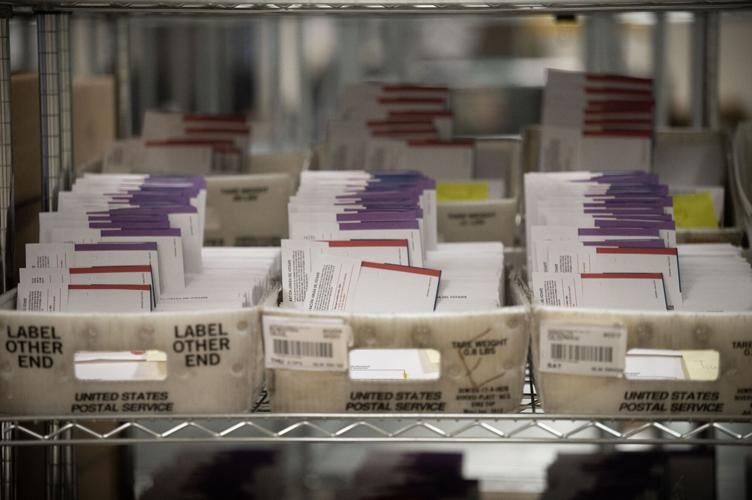
Colorado, along with 25 other states, filed a lawsuit against the U.S. Postal Service to challenge a new rule that seeks to restrict the mailing of ballots to American citizens in an eligible voters list. Colorado relies heavily on the...

FDA approves landmark pancreatic cancer drug that’s shown to improve survival
The Associated Press
the-associated-press@coloradopolitics.com
Updated 14 hours ago
WASHINGTON (AP) — The Food and Drug Administration on Wednesday approved a groundbreaking new drug for advanced pancreatic cancer, offering U.S. patients a more effective treatment against one of the deadliest types of cancer. FDA officials gave expedited approval to...
Trump defends pause on beef tariffs: Prices are ‘coming down very rapidly’
Naomi Lim
naomi-lim@coloradopolitics.com
Updated 17 hours ago
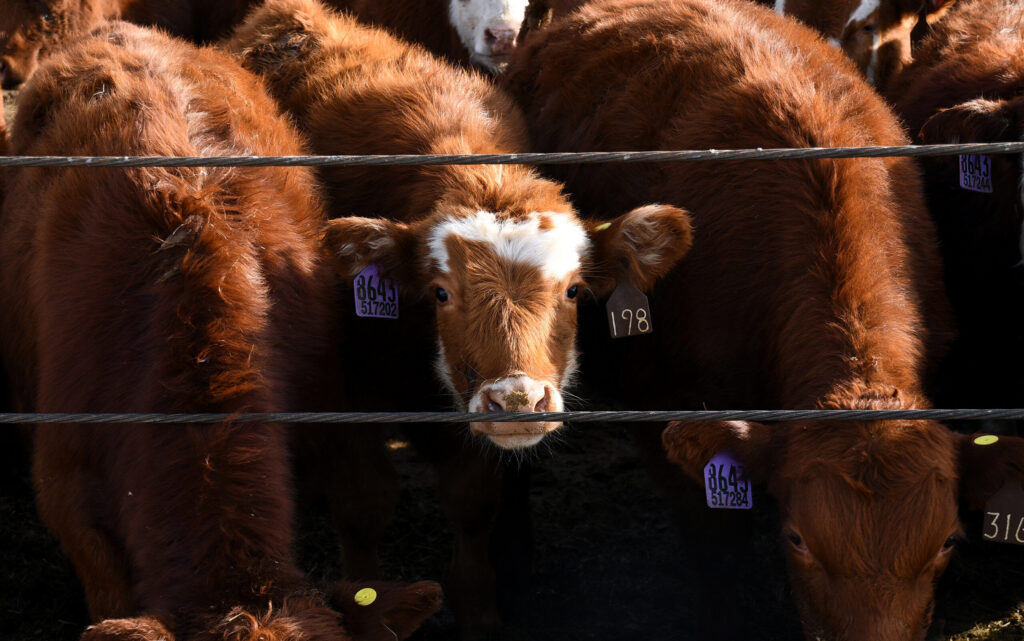
President Donald Trump defended his decision to pause tariffs on some beef imports, even as Republicans criticize the decision. “Prices are coming down very rapidly, and now beef is starting to come down,” Trump told The Glenn Beck Program on...
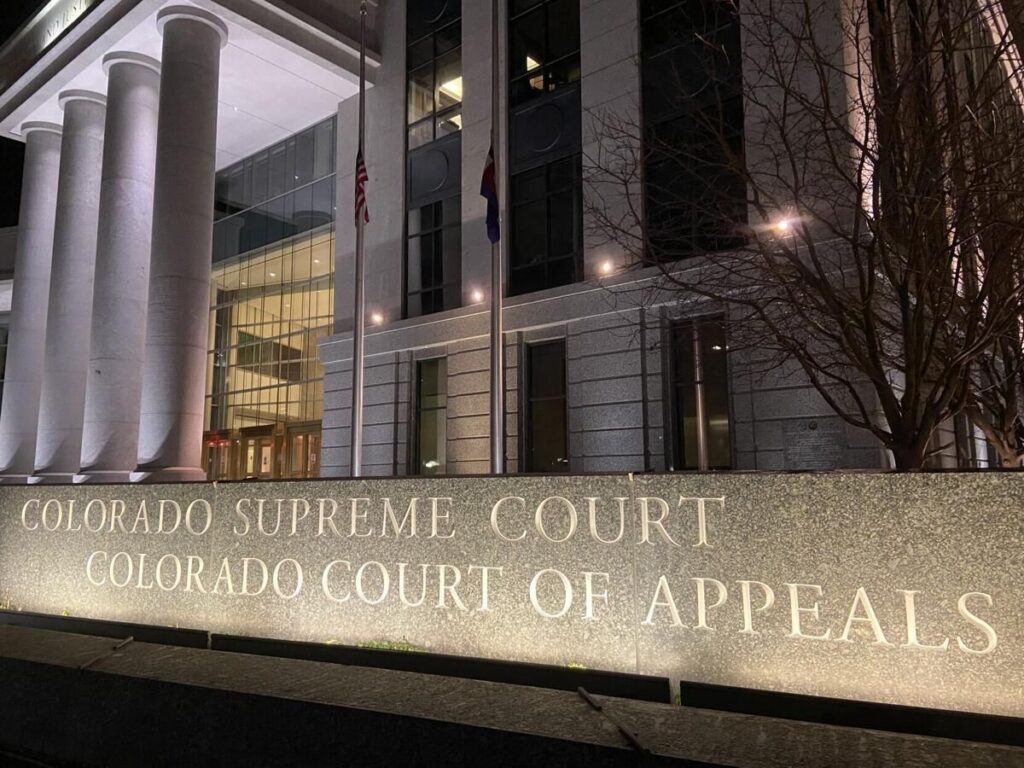
Denver murder, assault convictions reversed due to faulty jury instructions
Michael Karlik
michael.karlik@coloradopolitics.com
Updated 12 hours ago
Colorado’s second-highest court reversed a defendant’s convictions for murder and assault last week after concluding a Denver judge incorrectly omitted key jury instructions that could have affected the verdict and sentencing. Stephen C. Swainson fatally stabbed Israel Casillas in downtown...
PREV
PREVIOUS

Trump set to speak at 2019 Air Force Academy graduation
?President Donald Trump will deliver the Air Force Academy’s graduation speech on May 30, the White House confirmed Thursday. Trump bumped expected speaker Vice President Mike Pence from the podium for the ceremony in Falcon Stadium, where about 1,000 seniors will pin on the rank of 2nd lieutenant. It will be Trump’s first stop in […]

Part of this Denver teacher’s platform for school board? A $5,000 raise for every teacher
A Denver teacher who wants to reduce educator turnover and opposes school closures has entered the race for an at-large seat on the Denver school board. Anna DeWitt teaches French at North High School. She is running for the school board seat currently held by Happy Haynes, who is barred by term limits from running […]