

CAMPAIGN FINANCE REFORM | Joshua Dunn: Get money out of politics? A fool’s errand


Editor’s note: Now through Wednesday, Colorado Politics presents eight perspectives on campaign finance reform.
Just as the sun rises in the east, somewhere, someone is bemoaning – again – the influence of money on politics.
These people also think that this time, as opposed to all their previous efforts, they have the solution to this problem. Like socialists who swear that the catastrophe of 20th century socialism wasn’t “real socialism,” campaign finance reformers always promise that this time they’ll get it right. Good luck with that.
Trying to limit the influence of money on politics is a fool’s errand unless – and only unless – you are willing to limit the power of government.
Even the Center for Responsive Politics, an enthusiastic supporter of campaign finance reform, says, “As surely as water flows downhill, money in politics flows to where the power is.” If that is the case, then the problem is not money, but power.
To limit the influence of money on politics, you must first limit the influence of politicians, which means reducing the power and scope of government. From what I can tell, however, the people who want to “get money out of politics” only want to increase the size of government to make it even more meddlesome. The more government regulates us, the more special interests have an incentive to manipulate that regulation for their own benefit.
In fact, trying to limit the influence of money on politics would itself increase the reach and power of government. Those with the resources to manipulate the regulatory environment will be the ones that benefit. Ordinary citizens of ordinary means certainly do not have the resources to hire the small armies of handsomely compensated attorneys necessary to legally comply with our Byzantine and opaque campaign finance laws.
Campaign finance regulations have, in fact, created the very problems that supporters of more regulation want to fix. Instead of giving to political parties and candidates, who can be held accountable, our campaign finance laws encourage donors to give to outside groups. These are the same groups that proponents of more regulation complain about.
Every election cycle, I’m interviewed by reporters about these terrible groups with benign names like “Coloradans for Good Things.” Wouldn’t it be nice if instead of giving to these groups, donors supported candidates and parties? Yes, it would be. Why don’t they? Campaign finance restrictions.
Ironically, these laws also give enormous advantages to incumbents and the personally wealthy. Incumbency bequeaths huge benefits on candidates. It costs a lot of money to get the same name recognition as an incumbent. And incumbents have lots of time while they are in office to build massive war chests from donors. Thus, incumbents enter most campaigns with an established brand and deep pockets. Perhaps it’s not surprising that the loudest calls for restricting campaign spending often come from those already in office.
As well, for decades, the Supreme Court has made it clear that individuals cannot be limited in how much they spend of their own money on their own campaigns. It’s their money after all.
But frankly, all of these practical problems with campaign finance laws pale in comparison to their constitutional ones. In a free society the presumption should be that citizens or groups of citizens should be, you guessed it, free to engage in the political process.
Even if you believe that money is not speech, it is still impossible to engage in meaningful expression without spending money. Waving signs on the street corner is not exactly an effective way to broadcast your message. Speech requires money and the First Amendment has something important to say about that.
In the end, there is no idyllic world where citizens can engage in politics that does not require spending money. However, if supporters of campaign finance reform would instead like to constrain the power of government to make spending money on politics pointless, I would happily join their cause.
Joshua Dunn is professor and chair of the Department of Political Science and director of the Center for the Study of Government and the Individual at the University of Colorado at Colorado Springs.

Federal judge dismisses ex-Colorado judicial discipline director’s conspiracy lawsuit
Michael Karlik
michael.karlik@coloradopolitics.com
Updated 6 hours ago
A federal judge dismissed a lawsuit from Colorado’s former judicial discipline director on Tuesday, finding that he failed to adequately state claims for conspiracy or constitutional violations. Christopher S.P. Gregory, who served as the executive director of the Colorado Commission on Judicial...
Federal judge allows retaliation claims to proceed against prison officials
Michael Karlik
michael.karlik@coloradopolitics.com
Updated 4 hours ago
A federal judge agreed last week that a man incarcerated at Sterling Correctional Facility had credibly alleged that employees retaliated against him for filing grievances, including by taking away his disability accommodations and turning off his electricity. Louis Peoples Jr.,...
Treasury releases five-step guidance for employers to make contributions to Trump Accounts
Christian Datoc
christian-datoc@coloradopolitics.com
Updated 10 hours ago
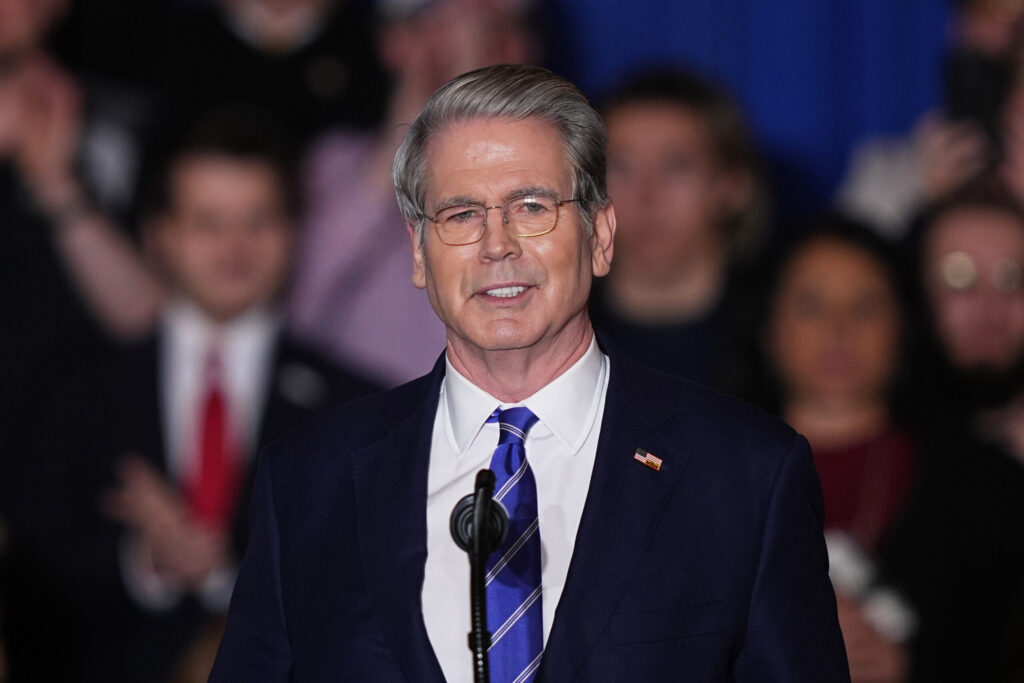
Treasury Secretary Scott Bessent published new guidance Tuesday outlining the specific steps employers must take to contribute to employee Trump Accounts. The accounts, one of the most popular provisions included in President Donald Trump’s One Big Beautiful Bill Act, are...

Denver schools to refinance bonds to create capacity for future borrowing
Nico Brambila
nico.brambila@denvergazette.com
Updated 7 hours ago
Less than two years after voters approved a record $975 million school bond, Denver Public Schools is refinancing older debt — a move district officials say will save taxpayers money while creating capacity for another bond election. The district has...

Russia frees imprisoned US Marine over health concerns
Brady Knox
brady-knox@coloradopolitics.com
Updated 11 hours ago
Russia freed former U.S. Marine Robert Gilman upon the urging of U.S. officials so he could receive medical care in the United States. Gilman, 32, was released after 1,666 days in prison, having been arrested on Jan. 17, 2022. Eric...

Colorado students push AI task force as schools navigate new tech era
Marissa Ventrelli
marissa.ventrelli@coloradopolitics.com
Updated 4 hours ago
A group of students is urging lawmakers to establish a task force on artificial intelligence in education to advise districts on how to ensure that pupils and educators use the technology effectively without becoming overly reliant on it. The students...

Parker data center could get $19M tax rebate from Douglas County
Nicholas Fogleman
nicholas.fogleman@denvergazette.com
Updated 13 hours ago
At a time when Denver and Front Range governments are restricting or banning data center development, Douglas County commissioners are poised to approve a $19.3 million tax rebate agreement Tuesday for a new data center under construction in Parker. The...

Denver City Council rejects contract that would have given video maker 8-year deal
Deborah Grigsby
deborah.smith@denvergazette.com
Updated 16 hours ago
Denver’s Office of Human Resources will have to get creative to attract new city employees and place them in “hard-to-fill” jobs after a proposed five-year contract extension, valued at $600,000, failed to gain favor with the Denver City Council. The...
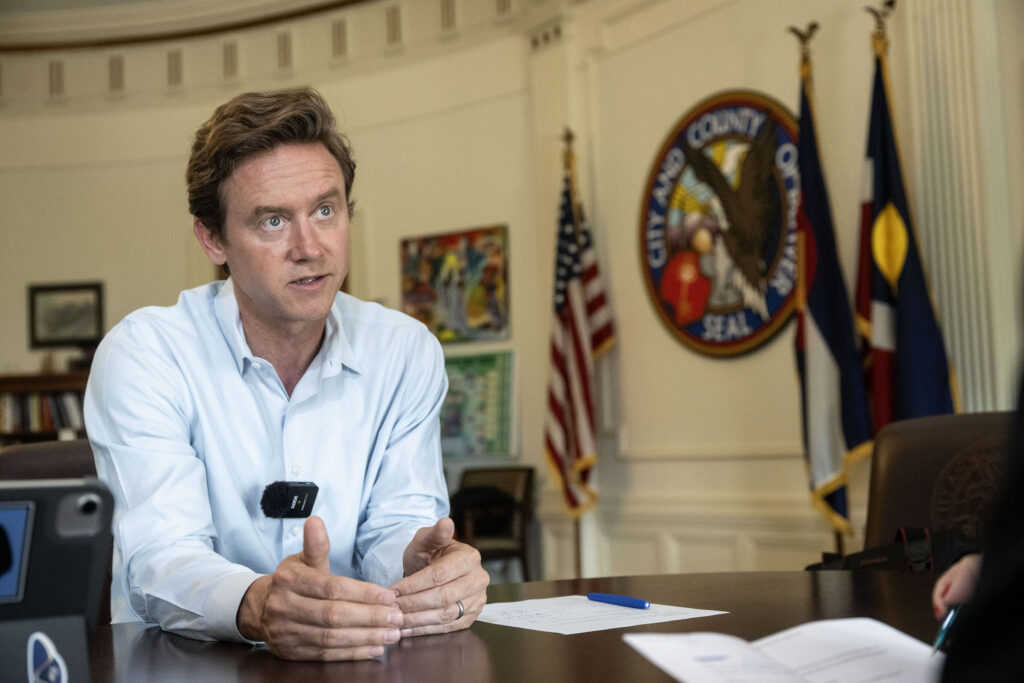
Denver Mayor Mike Johnston files to run for reelection in 2027
Michael Braithwaite
michael.braithwaite@gazette.com
Updated 16 hours ago
Denver Mayor Mike Johnston officially filed his paperwork Monday to run again for Denver’s mayoral office next year. The filing comes weeks after Johnston confirmed to The Denver Gazette that he would seek reelection as he focuses the final year...

U.S. Rep. Lauren Boebert’s son arrested, faces charges of sexual exploitation of minor
Matt Kyle
matt.kyle@denvergazette.com
Updated 1 day ago
U.S. Rep. Lauren Boebert’s son Tyler Jay Boebert has been arrested and accused of recording and sharing a video depicting himself having intercourse with a minor, according to court records. The case originated in Garfield County in Western Colorado and...
PREV
PREVIOUS

CAMPAIGN FINANCE REFORM | Amanda Gonzalez: Denver charts a new course
Amanda Gonzalez Editor’s note: Now through Wednesday, Colorado Politics presents eight perspectives on campaign finance reform. Too often in today’s state of politics, too many voters feel like their voices are not being heard in government. It often seems like big-money special-interest groups write the political rules on the backs of dark-money checks, while the […]

Colorado bases would see building boom under Pentagon's 2020 budget plan
Schriever Air Force Base would see a $148 million building boom, and $71 million would go to Fort Carson under a budget proposal offered by the Pentagon on Tuesday. The $750 billion Defense Department budget aims to deter growing threats from China and Russia, said Elaine McCusker, the military’s top accountant. “China and Russia will […]