

Window for bipartisan compromise with Trump and in Congress narrows
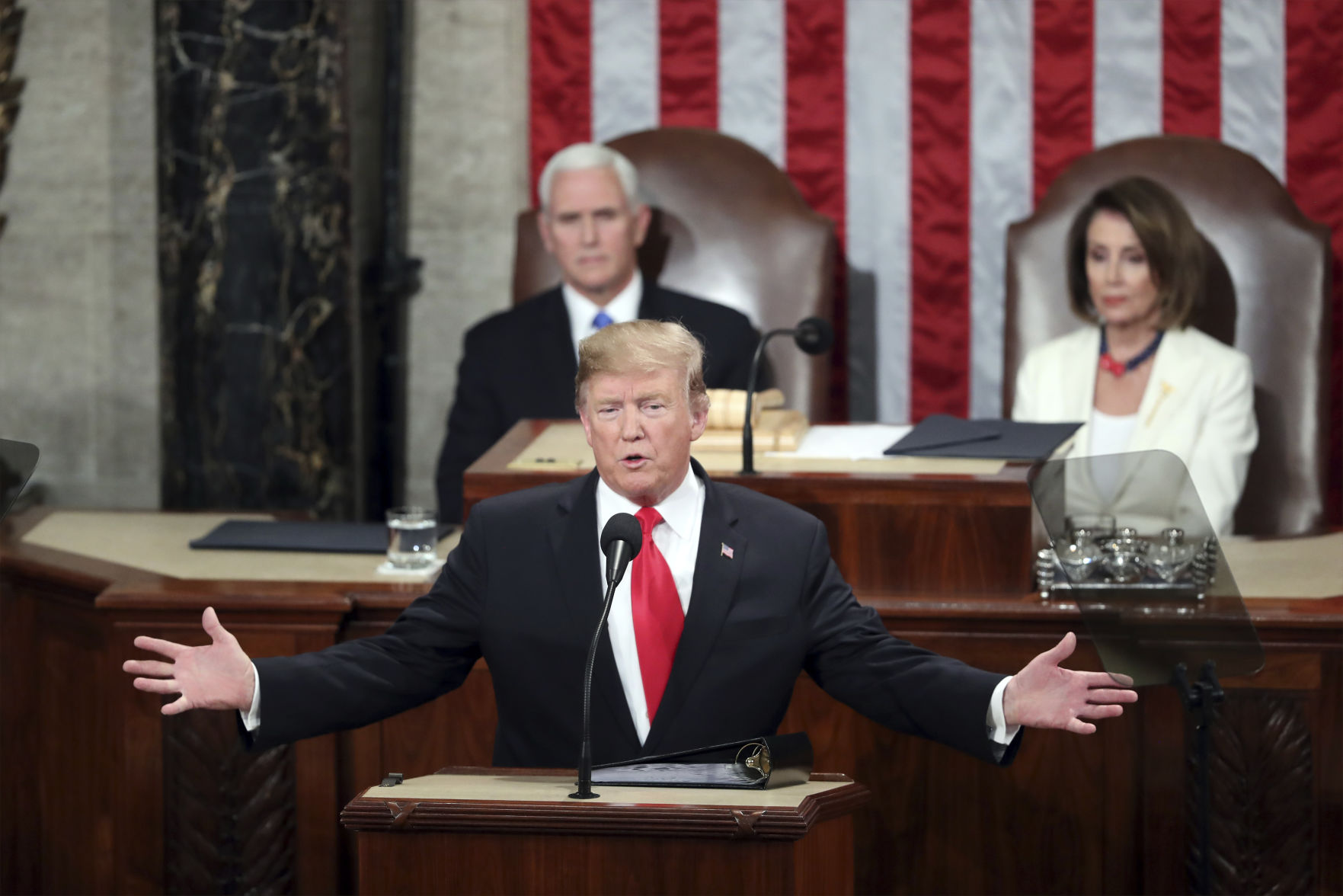
WASHINGTON – Intensifying partisan pressure in Congress is further clouding prospects for any major legislative compromises with the White House in the few months before the 2020 election cycle consumes Capitol Hill.
President Trump, Senate Republicans, and Democrats now in control of the House began the year with a short list of shared policy goals, including investing in infrastructure and lowering the cost of prescription drugs.
But House Democrats’ ratcheting up of investigations into the Trump administration, along with a possible rules change by Senate Republicans to speed up confirmation of nominees, is fueling a more partisan climate that is expected to make legislating more challenging.
Already, “the antagonism level has reached a fever pitch. In theory it’s hard to imagine a lot of complicated things getting done,” said Stewart Verdery, a former GOP Senate aide and now chief executive of Monument Advocacy, a bipartisan lobbying group.
Increasing partisan pressure is only going to heighten the animosity, Verdery said. “Democrats are not going to be very excited to give the president legislative wins,” he said, adding that “the president is not likely to react well to wide-ranging attacks on his family and businesses.”
Trump indicated Tuesday that House Judiciary Committee Chairman Jerrold Nadler’s request for records from more than 80 people and organizations related to Trump’s business dealings didn’t leave him inclined toward bipartisan compromise.
“It’s too bad because I’d rather see them do legislation,” Trump said of House Democrats. “We have so many things – actually things that we agreed on, like infrastructure. But they want to focus on nonsense.”
The White House didn’t respond to a request for comment Wednesday.
House Democrats maintain they can conduct oversight probes of Trump and his administration without sacrificing their ability to work with him on legislation, but they acknowledge the difficulty.
“This is our challenge,” said Rep. Jamie Raskin (D., Md.), a member of the Judiciary Committee, saying Democrats must press their policy agenda on issues including gun control and health care while “at the same time we are defending the Constitution and the Bill of Rights against corruption and lawlessness in the executive branch of government.”
The House Ways and Means Committee held a hearing Wednesday to examine potential methods of paying for a major infrastructure package, long the biggest obstacle on an issue that has bipartisan support.
While many lawmakers are skeptical that an infrastructure deal will come together, some are hopeful that Trump might embrace a way to deliver on an unfulfilled promise from his 2016 campaign-to inject $1 trillion or more into the nation’s roads, dams, airports and bridges.
“It could be a parade that they could run and get in front of,” said Rep. Earl Blumenauer (D., Ore.), referring to the Trump administration.
Many House Democrats believe passing bipartisan legislation will help protect their vulnerable colleagues up for re-election in the most competitive districts.
“If we don’t do something about prescription drugs, the American people are going to be very upset,” said Rep. Debbie Dingell (D., Mich.)
Across the Capitol, a crop of Senate Republicans up for re-election next year in swing states are also seeking opportunities to promote bipartisan activity. But comity in the Senate may also take a hit if Republicans go forward with a rule change allowing them to confirm some lower-level nominees more quickly. The proposal would cut the amount of time the chamber has to consider many nominees after a key procedural vote to two hours from 30 hours.
“If we don’t do that, we’re going to be so wrapped up on confirmations that there wouldn’t be any opportunity to do anything else anyways,” said Sen. Kevin Cramer (R., N.D.).
Many lawmakers already were pessimistic about what could be accomplished in the time between the five-week government shutdown that ended last month and the 2020 election cycle, which traditionally leaves congressional leaders reluctant to force lawmakers to take tough votes. Democratic presidential primary debates are set to begin in June.
The biggest hurdle may be what Trump is willing to accept in policy negotiations. His shifting stance during the shutdown left Republicans guessing over what would end the standoff.
“I have very low expectations, even for 2019, on policy,” said Sen. Chris Murphy (D., Conn.). “The Republicans are so afraid of moving independently of Trump and nobody has a clue on where he stands on any of these big issues, so Republicans don’t want to commit themselves without knowing.”
Congress faces a few must-pass legislative tasks this year, which most lawmakers are fairly confident will get completed, though not necessarily on time or without a fight. The latest two-year budget deal expires at the end of September, forcing lawmakers to strike an agreement on new funding levels to avoid deep spending cuts established in 2011.
Congress will also have to raise the federal borrowing limit, which was technically reinstated Saturday after being suspended for about a year. For now, the Treasury Department is deploying extraordinary measures to conserve cash and keep making on-time payments, but it will likely have exhausted those steps around the end of September or early October, according to a Congressional Budget Office estimate last week.
Ted Mann of The WSJ contributed.


Colorado to get $615M from Meta child safety settlement
Thelma Grimes
thelma.grimes@coloradopolitics.com
Updated 8 hours ago
The parent company of Facebook and Instagram will pay hundreds of millions of dollars to Colorado, part of an $18 billion multistate deal, in which the company also agreed to adopt extensive child-safety changes to its operations. The settlement ended...

Colorado’s chief federal judge orders return of wrongfully deported man, second judge to explore ‘series’ of violations
Michael Karlik
michael.karlik@coloradopolitics.com
Updated 10 hours ago
Colorado’s chief federal judge took the extraordinary step of directing the government on Tuesday to do everything it can to return a man it deported in violation of his order. At the same time, Colorado’s chief magistrate judge has set...

Counties warn CPW that new comment limits sideline local governments
Marianne Goodland
marianne.goodland@coloradopolitics.com
Updated 8 hours ago
The September meeting of the Colorado Parks and Wildlife Commission will feature newly revised public‑comment rules — changes introduced by chair Jay Tutchton of Bent County, who announced them without first discussing the revisions publicly with the rest of the...

Controversial two-bag furbearer limit heads to CPW meeting under legal threat
Marianne Goodland
marianne.goodland@coloradopolitics.com
Updated 8 hours ago
Next week’s Colorado Parks and Wildlife Commission meeting in La Junta is likely to open under the cloud of threatened legal action. Safari Club International and the Sportsmen’s Alliance Foundation warned the commission this month that its July vote imposing...

Golden to pay $155,000 to fired city manager
Matt Kyle
matt.kyle@denvergazette.com
Updated 10 hours ago
The Golden City Council on Tuesday approved a roughly $155,000 severance payout to former city manager Scott Vargo, who was fired earlier this month following a “racist incident” at a city fire station. The payout is part of a separation...

Trump says the US doesn’t need Canada. America’s economy says otherwise.
The Associated Press
the-associated-press@coloradopolitics.com
Updated 11 hours ago
TORONTO (AP) — U.S. President Donald Trump says his country does not need Canada. But every day, roughly 4 million barrels of Canadian crude oil flow south, helping fuel American cars, trucks and airplanes and supply U.S. industry. And oil...

USPS ballot rule faces lawsuit from Colorado, other states
Thelma Grimes
thelma.grimes@coloradopolitics.com
Updated 9 hours ago
Colorado, along with 25 other states, filed a lawsuit against the U.S. Postal Service to challenge a new rule that seeks to restrict the mailing of ballots to American citizens in an eligible voters list. Colorado relies heavily on the...

FDA approves landmark pancreatic cancer drug that’s shown to improve survival
The Associated Press
the-associated-press@coloradopolitics.com
Updated 11 hours ago
WASHINGTON (AP) — The Food and Drug Administration on Wednesday approved a groundbreaking new drug for advanced pancreatic cancer, offering U.S. patients a more effective treatment against one of the deadliest types of cancer. FDA officials gave expedited approval to...

Trump defends pause on beef tariffs: Prices are ‘coming down very rapidly’
Naomi Lim
naomi-lim@coloradopolitics.com
Updated 14 hours ago
President Donald Trump defended his decision to pause tariffs on some beef imports, even as Republicans criticize the decision. “Prices are coming down very rapidly, and now beef is starting to come down,” Trump told The Glenn Beck Program on...
Denver murder, assault convictions reversed due to faulty jury instructions
Michael Karlik
michael.karlik@coloradopolitics.com
Updated 9 hours ago
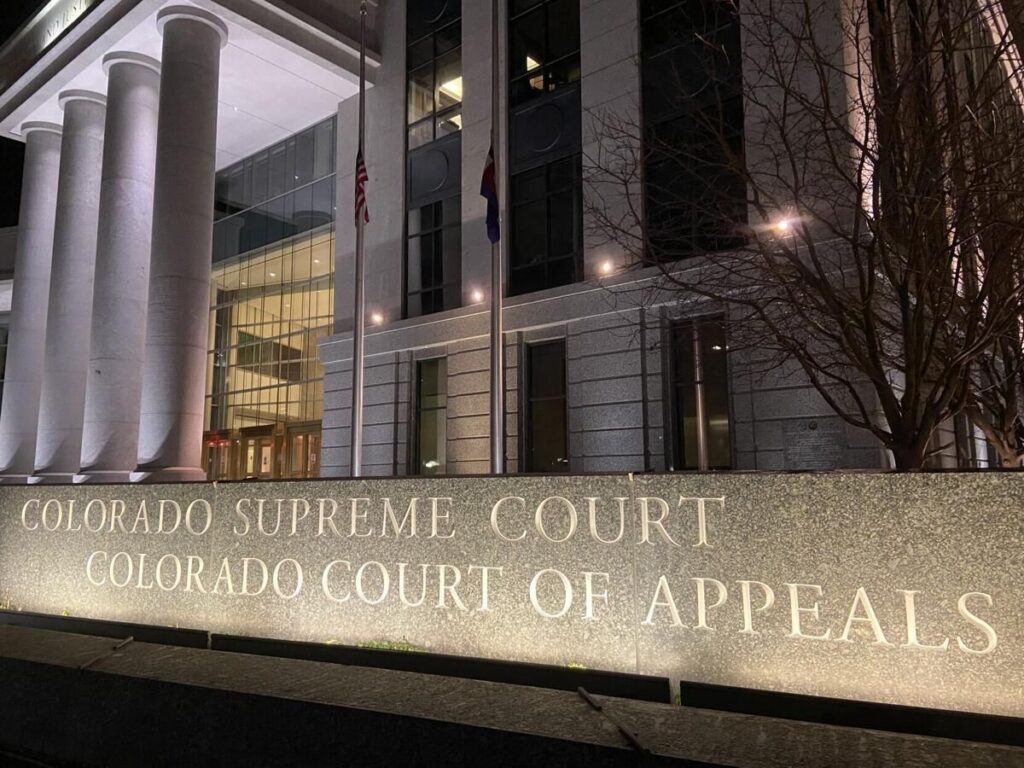
Colorado’s second-highest court reversed a defendant’s convictions for murder and assault last week after concluding a Denver judge incorrectly omitted key jury instructions that could have affected the verdict and sentencing. Stephen C. Swainson fatally stabbed Israel Casillas in downtown...
PREV
PREVIOUS

OUT WEST ROUNDUP | New Mexico honors farmworker activist; Utah nears stronger beer; Nebraska may recall recalls
NEW MEXICO State honors Dolores Huerta as birthplace sits vacant SANTA FE – Dolores Huerta, the Mexican-American social activist who formed a farmworkers union with Cesar Chavez, was honored by state lawmakers, some of whom vowed to work to save her birthplace that now sits abandoned. The 88-year-old advocate and one of the most recognizable […]

Colorado's hospital provider fee is legal, Denver judge rules
Colorado’s hospital provider fee does not violate the Taxpayer’s Bill of Rights (TABOR), and legislation passed in 2017 to move the fee into an enterprise fund is also legal, a Denver District Court judge has ruled. The TABOR Foundation initially sued the state Department of Health Care Policy and Financing, then-Treasurer Walker Stapleton and the Colorado […]