

Interview: Interior secretary nominee from Colorado says he will balance energy, environment
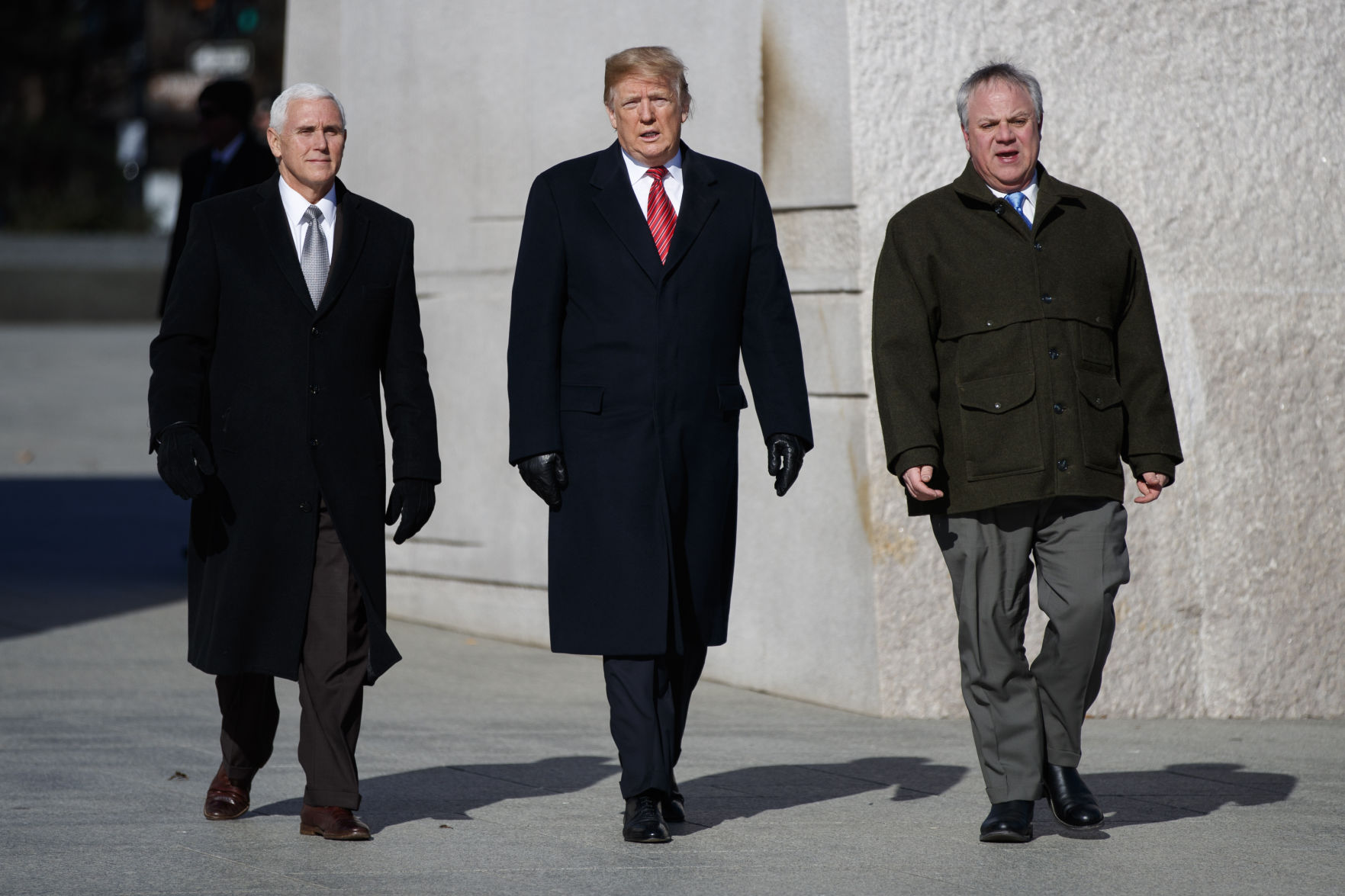
WASHINGTON – The former oil industry lobbyist now in charge of the Interior Department says he’s prepared to balance the interests of environmentalists against an administration that has put a priority on opening public lands to energy development.
David Bernhardt, a Colorado native and formerly with Denver law firm Brownstein Hyatt Farber Schreck, has represented oil producers and pipeline companies and, as the No. 2 at Interior, helped lead an effort to reopen millions of acres of public lands to drillers and miners.
But in his first full-length interview since President Trump nominated him to formally take over as interior secretary, Bernhardt acknowledged that his department has “room to grow” on wildlife protections and environmental stewardship.
“At the end of the day, the secretary’s job and the department’s job is one of balance,” Bernhardt told The Wall Street Journal. “You have to harmonize.
“We have a very balanced agenda and that’s where we’re headed.”
> RELATED: Trump to name Colorado native to lead Interior department
The Interior Department oversees millions of acres across Colorado, including the national parks and wildlife refuges, as well as public lands administered by the Bureau of Land Management. It also oversees energy development on federal lands in the state.
A 49-year-old lawyer who grew up in Rifle on the Western Slope and attended University of Northern Colorado, Bernhardt was the top deputy to Secretary Ryan Zinke until early January, when Zinke resigned amid ethics investigations. The acting secretary since then, Bernhardt was tapped by Trump Monday to be promoted officially, pending Senate confirmation.
Both of Colorado’s senators — Republican Cory Gardner and Democrat Michael Bennet — voted to confirm Bernhardt as deputy Interior secretary in July 2017, but most of Bennet’s Democratic colleagues opposed the nominee, as did several environmental groups. The confirmation vote was 53-43.
Many environmentalists are skeptical of Bernhardt. He is considered by both allies and opponents to be among the most knowledgeable lawyers in his field and the mastermind behind many Interior initiatives, several of which infuriated environmentalists during Zinke’s tenure and when Bernhardt worked for the George W. Bush administration.
Any outreach on environmental issues now is likely just a move to ease what is likely to be a contentious Senate confirmation process, said Jeff Ruch, executive director of Public Employees for Environmental Responsibility, which represents government employees in environmental fields. The Senate hasn’t yet set a date for its hearing.
“He was driving the policy. There’s no reason to trust him,” Ruch said. “He’s done more to undermine the mission of the department than any living individual. … If he’s confirmed, nothing will change.”
> RELATED: Ex-Interior chief Zinke defends legacy; Colorado historian questions claims
Conservation is a core mission of the Interior Department, which oversees vast swaths of the country, but it has taken a public back seat in an administration that has promoted an “energy dominance” agenda. The department made several proposals to help oil and gas producers, including opening up nearly all the country’s offshore areas for oil and gas drilling and rolling back climate policy.
The emphasis on energy won’t change, Bernhardt said, but that doesn’t mean the department can’t also champion conservation.
“I really believe it’s a false choice to say it’s one or the other,” he added. “We have room to work together in a unified way on a lot of things.”
> RELATED: Interior’s No. 2 man sees Washington from a Colorado point of view
Bernhardt spent part of the week calling environmental groups to promise their priorities won’t be left out, either. That means more work with the states on land conservation, keeping development out of the path of migrating animals and addressing a backlog of maintenance of national parks, Bernhardt said.
Bernhardt’s phone calls went to a handful of groups often connected with hunters and fishers: the Theodore Roosevelt Conservation Partnership, Ducks Unlimited and the National Wildlife Federation. Several other groups, like the Natural Resources Defense Council, have already announced opposition to his nomination.
Zinke made similar pledges that many environmentalists felt went unfulfilled in favor of helping fossil fuel industries. That disappointed even some right-leaning conservation groups that originally supported Zinke.
Bernhardt will need to come through with a lot of funding to back up his promises, said Whit Fosburgh, chief executive of the Theodore Roosevelt Conservation Partnership. Overhauled protections for the sage grouse, which Interior proposed in December, need more than $200 million in federal funds over four years to protect the bird and other affected species, he said.
And Bernhardt now will be primarily responsible for putting serious enforcement provisions behind protections for migrating animals, and for support to states that may want broader wildlife protections or environmental mitigation for drilling and mining on public lands.
“Over the last two years of working with him, he has never told us something and then turned around and done something else,” Fosburgh said. “So I trust him, and if he’s saying he’s making a priority of something, then I think he’ll put forward his best effort to do it.”



Homeless recruits of ‘The Program’ say they were told to sign NDAs amid investigations in Colorado
David Migoya
david.migoya@gazette.com
Updated 10 hours ago
Several formerly homeless people — each drawn into an Aurora-based enterprise known as “The Program” that promised free housing and cash in return for letting a home-health business administer prescriptions they were given — said they were pressed into signing...
Homeless recruits of ‘The Program’ say they were told to sign NDAs amid investigations in Colorado
David Migoya
david.migoya@gazette.com
Updated 10 hours ago
Several formerly homeless people — each drawn into an Aurora-based enterprise known as “The Program” that promised free housing and cash in return for letting a home-health business administer prescriptions they were given — said they were pressed into signing...
Trump’s 10th Circuit nominee declines to name 2020 election winner, defends immigration decisions
Michael Karlik
michael.karlik@coloradopolitics.com
Updated 10 hours ago
President Donald Trump’s nominee to the Denver-based federal appeals court declined to say who won the 2020 presidential election during his appearance before the U.S. Senate Judiciary Committee on Wednesday, and defended his recent rulings in immigration detention cases. U.S....
Colorado repeals attorney immigration attestation law after one year
Nico Brambila
nico.brambila@denvergazette.com
Updated 9 hours ago
One year and 12 days. That’s how long a Colorado law requiring attorneys to certify they would not use court data for federal immigration enforcement remained on the books before lawmakers repealed it. Gov. Jared Polis signed the initial legislation,...
Colorado’s ‘right to natural gas’ measure submits signatures to qualify for November ballot
Marissa Ventrelli
marissa.ventrelli@coloradopolitics.com
Updated 12 hours ago
A natural-gas rights initiative backed by Advance Colorado is likely headed to the November ballot, triggering a parallel campaign by environmental groups seeking to impose new liabilities on oil and gas operators. Petitions for Initiative No. 177 were turned in...

Economists: Colorado budget improves slightly, but deficits still loom
Marianne Goodland
marianne.goodland@coloradopolitics.com
Updated 12 hours ago
State economists reported a stronger-than-expected bump in general fund revenue driven largely by higher individual income tax collections, yet warned that Colorado remains on track to begin the next fiscal year with a sizable shortfall. State economists upgraded “significantly” the...

Colorado law allowing lawsuits against ‘conversion therapy’ providers takes effect July 1
Marissa Ventrelli
marissa.ventrelli@coloradopolitics.com
Updated 12 hours ago
With a new law taking effect July 1, Colorado is creating a legal pathway for people to sue licensed providers of “conversion therapy,” even as debate over the practice’s constitutionality continues in the wake of a recent U.S. Supreme Court...
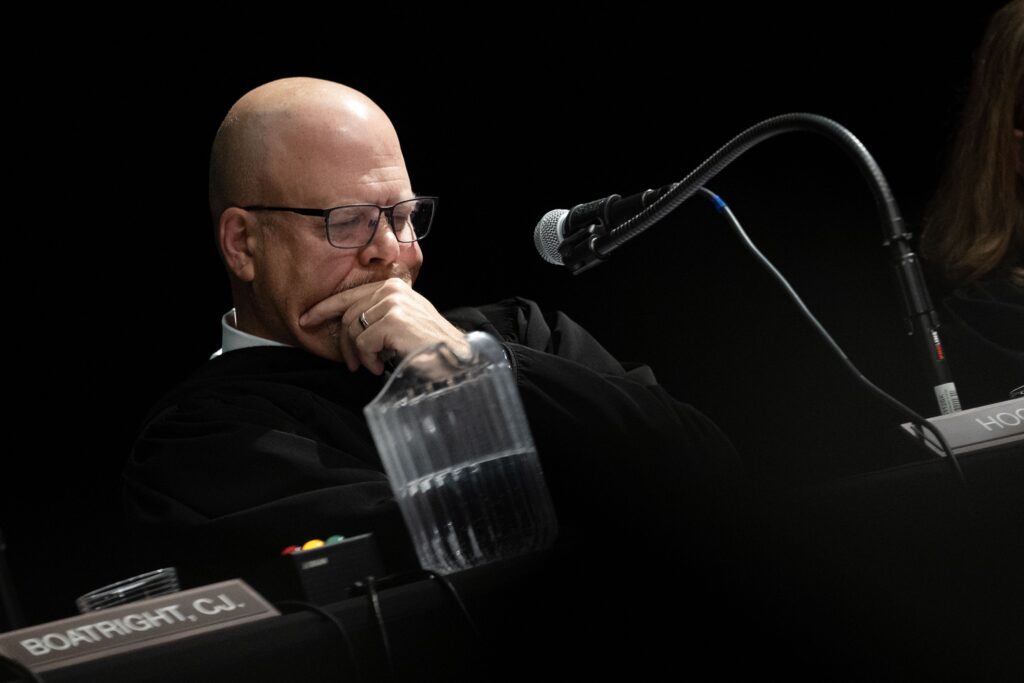
Colorado justices expand ability for civil defendants to avoid participating, win after trial
Michael Karlik
michael.karlik@coloradopolitics.com
Updated 4 hours ago
The Colorado Supreme Court decided on Tuesday that a civil defendant, whose non-participation in the case meant that he legally admitted to the sexual assault allegations against him, could nonetheless prevail after he showed up to testify at trial. A...
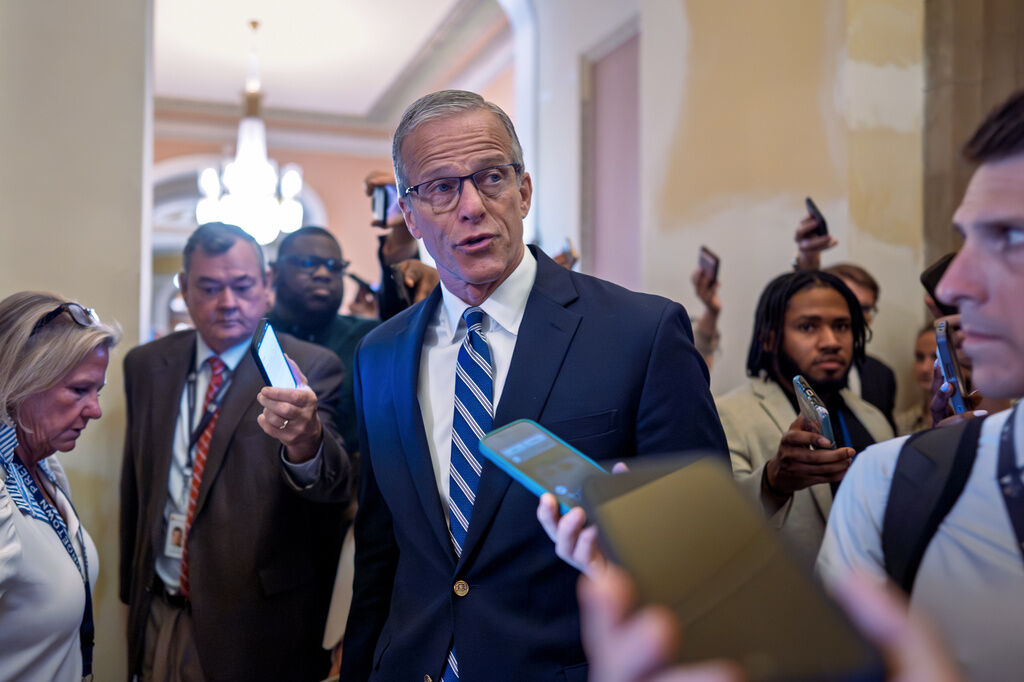
Trump heads to Senate as GOP grows more willing to challenge White House
Naomi Lim
naomi-lim@coloradopolitics.com
Updated 15 hours ago
President Donald Trump normally summons congressional Republicans to the White House, but on Wednesday, he is making a rare trip to Capitol Hill to have lunch with GOP senators. And at least publicly, there is one agenda item. “We’re just...

Trump blasts oil companies for not lowering prices to consumers, accuses them of price gouging
Washington Examiner Staff
washington-examiner-staff@coloradopolitics.com
Updated 15 hours ago
President Donald Trump criticized “big oil companies” for not lowering prices for consumers, even though oil purchase costs have dropped. He accused oil companies of price gouging consumers, ordered the Department of Justice to investigate current practices, and demanded that...
PREV
PREVIOUS

Polis names human services, personnel chiefs
Gov. Jared Polis has announced new heads of the Colorado Department of Human Services and the Colorado Department of Personnel and Administration. Here is Friday’s announcement from the governor’s office: Michelle Barnes, executive director of the Department of Human Services Michelle Barnes was the President/Founder of Interim Leadership Solutions where she led organizations through leadership […]

El Paso County GOP picks new leaders; chair promises support for Gardner, Trump
The El Paso County Republican Party is under new leadership as of Saturday, when hundreds of the county party’s members voted in a new chair and secretary and re-elected the party’s vice chair. Longtime GOP operative Tamra Farah will take over as chair; Mary Bradfield held her position as vice chair; and former county commissioner […]