

OUT WEST ROUNDUP | Oklahoma prosecutors resist push for prison alternatives
OKLAHOMA
Prosecutors resist push for prison alternatives
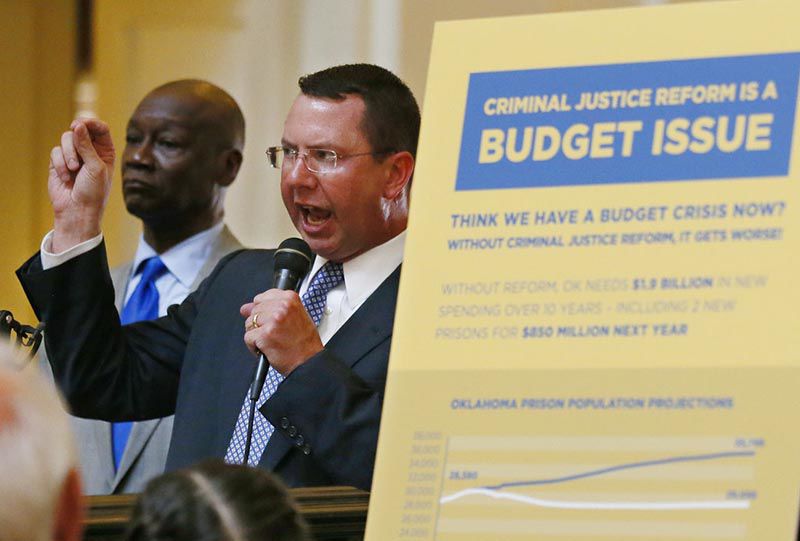
OKLAHOMA CITY – Since the days of frontier justice, lawmakers in conservative Oklahoma have viewed harsh prison sentences as the politically expedient solution to crime, including nonviolent offenses.
That approach has imposed a high price, leaving the state with the nation’s highest incarceration rate, overcrowded prisons and skyrocketing costs. Now, after years of steady debate, there’s growing agreement – even among conservatives – that changes are needed.
But the fragile consensus has crashed headlong into a towering obstacle: The entrenched ideology of the state’s top prosecutors, many of whom have made political careers out of padding their conviction rates.
The Republican governor, Mary Fallin, backs the push to steer more nonviolent offenders into alternatives to prison. And in 2016, a ballot measure to reduce penalties for drug possession and property crimes passed with nearly 60 percent support, even though district attorneys and law enforcement were fiercely opposed.
Those changes and others the Legislature approved this year are expected to slow the prison population’s growth. But it is still on pace to expand by 25 percent by 2026.
Many of the conservative lawmakers who opposed changes to the criminal justice system in the past have left office. And both major candidates running to replace the term-limited Fallin have voiced strong support for lowering Oklahoma’s incarceration rate.
“Right now, we’re incarcerating people we’re mad at. We’re not really afraid of them,” said Tulsa businessman Kevin Stitt, the Republican candidate for governor. “I’ll lead on this effort to turn that around.”
Still, the district attorneys wield tremendous power and influence over state lawmakers and policymakers. Although district attorneys stand for election every four years, they often don’t draw an opponent. Of the 27 in office, only eight are being challenged in this year’s election.
After a package of bills aimed at reducing the prison population gained bipartisan support last year, a prosecutor-turned-legislator managed to bottle them up in a committee, despite the objections of the governor. When similar bills were introduced again this year, district attorneys worked to water them down.
WYOMING
State sues opioid manufacturer alleging deceptive marketing
The state Attorney General’s Office has filed suit against Purdue Pharma, alleging the drugmaker of deceptively marketed opioid painkillers in Wyoming.
The lawsuit, filed in Laramie County Circuit Court, accuses Purdue of misrepresenting the risks and benefits of the drugs. It further alleges Purdue convinced doctors to prescribe higher doses of opioids to more patients over longer periods of time.
The lawsuit also contends Purdue targeted vulnerable populations like the elderly and veterans and encouraged doctors to treat signs of addiction as symptoms of pain that needed more treatment.
Those actions, the suit argues, violate the Consumer Protection and Medicaid False Claims Acts.
In a statement, Purdue said it shared Wyoming’s concerns about the opioid crisis but vigorously denied the state’s allegations.
Purdue manufactures OxyContin and other opioids. The company earned $1.8 billion from OxyContin last year, according to Vox and Bloomberg.
In its announcement, Michael’s office noted that admission in Wyoming drug treatment programs for opiate addictions have risen five-fold between 2005 and last year. Deaths from opioid poisoning have also grown since 2005.
While the lawsuit targets only Purdue, Michael said his office is actively investigating other drugmakers while monitoring ongoing settlement discussions between those companies and a coalition of attorneys general from across the country.
The Northern Arapaho Tribe filed its own lawsuit against drugmakers in April.
Mormon Tabernacle Choir changes its name in rebranding
For generations it was known as the Mormon Tabernacle Choir. But now the tune has changed.
The Church of Jesus Christ of Latter-day Saints announced recently it was formally switching the name of the world-famous choir to the Tabernacle Choir at Temple Square, as part of a rebranding effort by the Utah-based church to eliminate the name “Mormon” as a general reference and to instead only call the faith by its formal name.
It’s one of the most high-profile name changes since the church’s president, Russell M. Nelson, announced in August that only the full name – the Church of Jesus Christ of Latter-day Saints – will be used.
Nelson said in a recent talk in Montreal that the “name of the church is not negotiable” and that it being called the Mormon Church was “an error that crept in over the ages.”
“We know it’s going to be a challenge to undo tradition of more than 100 years,” Nelson said. “The Lord has told us what his church shall be called.”
The new name for the choir references the historic Salt Lake Tabernacle at its location on Temple Square in Salt Lake City.
According to the church, Mormon was one of the prophets who compiled the historical and religious records of the faith that were eventually translated by founder Joseph Smith and became the foundational text for the Book of Mormon.
Irene Caso, spokeswoman for the church, said the Mormon term was a “nickname” that has been used as shorthand for decades.
The choir consists of about 360 members and has performed at many high-profile events including the 2002 Winter Olympics in Salt Lake City and at presidential inaugurations ranging from President Reagan’s to the 2016 inauguration of President Trump.
Environmental groups question refinery near national park
BISMARCK, North Dakota – Environmental groups opposing the site of an oil refinery being developed near Theodore Roosevelt National Park in western North Dakota want a judge to reconsider his recent recommendation that state regulators dismiss the groups’ challenge.
Administrative Law Judge Patrick Ward in a nonbinding ruling said the state’s Public Service Commission doesn’t have jurisdiction in the dispute because Meridian Energy Group is planning a refinery with a capacity below a threshold in state law that requires a site permit.
The Environmental Law and Policy Center and Dakota Resource Council in recent filings say Meridian didn’t update the state Health Department about its decision to lower the refinery’s capacity below the threshold, indicating the project might end up being larger than the company maintains.
Meridian’s initial plans for the $800 million refinery called for a processing capacity of 55,000 barrels per day, above the 50,000-barrel threshold in state law requiring a site permit. The company has since reduced the stated capacity to 49,500 barrels, just under the threshold, but its permit to build from the Health Department still has the 55,000-barrel figure.
Meridian CEO William Prentice has signed an affidavit saying the company has “no current plans” for any expansion beyond 49,500 barrels per day. Meridian attorneys also maintain the company had no reason or requirement to report to state health officials that it was reducing the scope of the project.
The company’s attorneys wrote that “there is no suggestion that a reduction of the Davis Refinery’s operating capacity would result in greater pollutants.”
Meridian began site work this summer for the refinery 3 miles from the park. Opponents fear pollution will mar the park’s scenery and erode the air quality at the state’s top tourist attraction. Meridian disputes that and says the environmental groups are engaging in “a continued effort to stymie progress.” The company hopes to begin operating the refinery in 2020.
State touts tourism as key economic driver
ALBUQUERQUE – State officials say tourism accounted for a $6.6 billion boost to New Mexico’s economy last year.
Gov. Susana Martinez says that represents the seventh consecutive year of growth for the industry and its largest annual economic impact to date.
She released the 2017 numbers during a recent visit to Albuquerque, which hosts one of the state’s most popular events – a weeklong balloon fiesta that draws tens of thousands of spectators.
Martinez described tourism as a key economic driver for New Mexico, saying more dollars find their way into the state’s communities as more people visit.
The three largest sectors for visitor spending in 2017 were lodging, food and beverage and retail. Recreation also saw growth.
Visitor spending in 2017 generated $662 million in state and local taxes.


Federal judge hears arguments about Colorado’s 3-day gun purchase waiting period
Michael Karlik
michael.karlik@coloradopolitics.com
Updated 5 hours ago
A federal judge heard arguments on Monday about the constitutionality of a 2023 Colorado law that generally imposes a three-day waiting period on firearm purchases after the initiation of a background check. The test that the U.S. Supreme Court created...

U.S. Supreme Court clears way for Trump mail voting order in advance of midterms
Wire Services
wire-services@coloradopolitics.com
Updated 9 hours ago
WASHINGTON • The U.S. Supreme Court on Monday cleared the way for President Donald Trump to move ahead with an executive order that seeks to restrict the mailing of ballots to American citizens in an eligible voters list. The executive...

Colorado Supreme Court intervenes in Weld County prosecution dismissed due to Missy Woods misconduct
Michael Karlik
michael.karlik@coloradopolitics.com
Updated 9 hours ago
The Colorado Supreme Court ordered a Weld County trial judge last week to respond to the district attorney’s claim that he improperly dismissed a criminal case because of “outrageous” conduct by the Colorado Bureau of Investigation. Daniel Lee Eatinger stood...

Trump opens ‘economic D-Day’ offensive against Iran as war nears six-month mark
Christian Datoc
christian-datoc@coloradopolitics.com
Updated 14 hours ago
President Donald Trump is seeking to increase the financial pressure on Iran with new secondary sanctions on nations and foreign actors propping up the regime’s economy as the war between the United States and Tehran nears the six-month mark. Treasury...

Trump announces 50% tariffs on Canadian cars, auto parts, and steel
Naomi Lim
naomi-lim@coloradopolitics.com
Updated 14 hours ago
President Donald Trump escalated the trade war with Canada after talks collapsed last week, announcing Monday that the United States would impose 50% tariffs on cars, trucks, automotive components, and steel starting Jan. 1, 2027. “Canada has been ripping off...

Iran puts out propaganda video tracking Barron Trump’s location, offering $10 million for his assassination
Timothy Nerozzi
timothy-nerozzi@coloradopolitics.com
Updated 15 hours ago
The Islamic Revolutionary Guard Corps is putting a hit out on President Donald Trump’s son, Barron Trump, with an inflammatory video claiming to track his location. State-run television in Iran is broadcasting a propaganda video claiming to show the locations...
Nevada sues Trump administration over Colorado River cuts
Marianne Goodland
marianne.goodland@coloradopolitics.com
Updated 7 hours ago
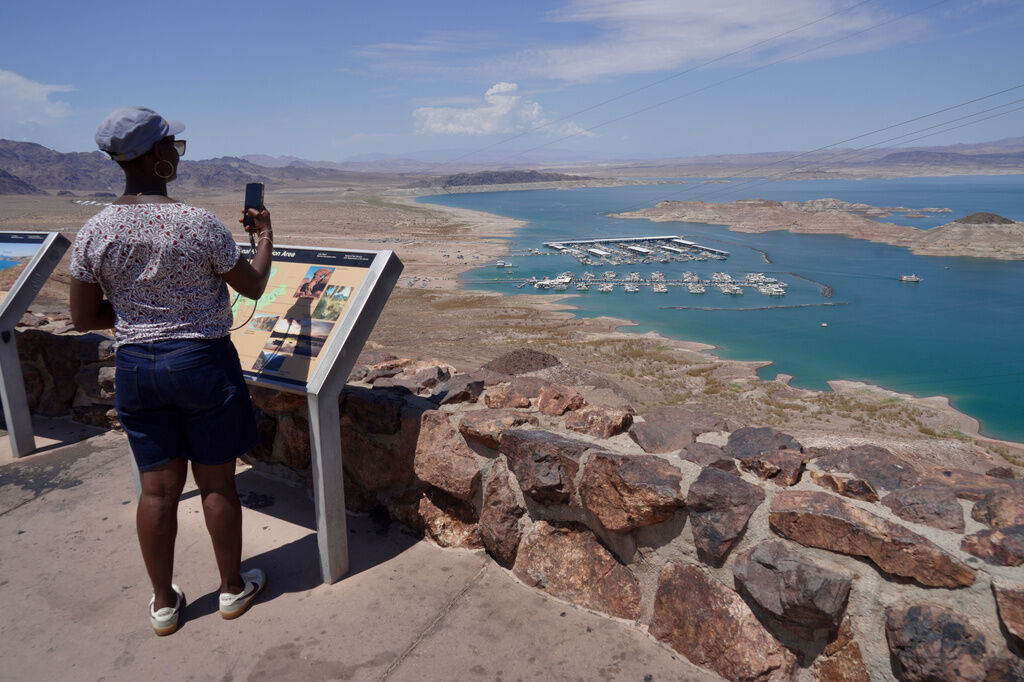
On Monday, the state of Nevada filed a lawsuit against the Trump administration and Interior Secretary Doug Burgum, seeking to block the Colorado River management plan. On Friday, Burgum released a “record of decision” that would reduce water allocations to...

Healthcare Freefall: Longer drives, fewer options for maternity care in Colorado
Thelma Grimes
thelma.grimes@coloradopolitics.com
Updated 17 hours ago
Editor’s Note: Colorado’s healthcare system is entering a period of accelerating instability — a “tsunami,” as multiple leaders describe it — driven by collapsing hospital finances, shrinking Medicaid reimbursements, disappearing services and a political fight over who is responsible for...
Polis requests federal disaster declaration for Colorado wildfires and floods
9News
9news@coloradopolitics.com
Updated 11 hours ago
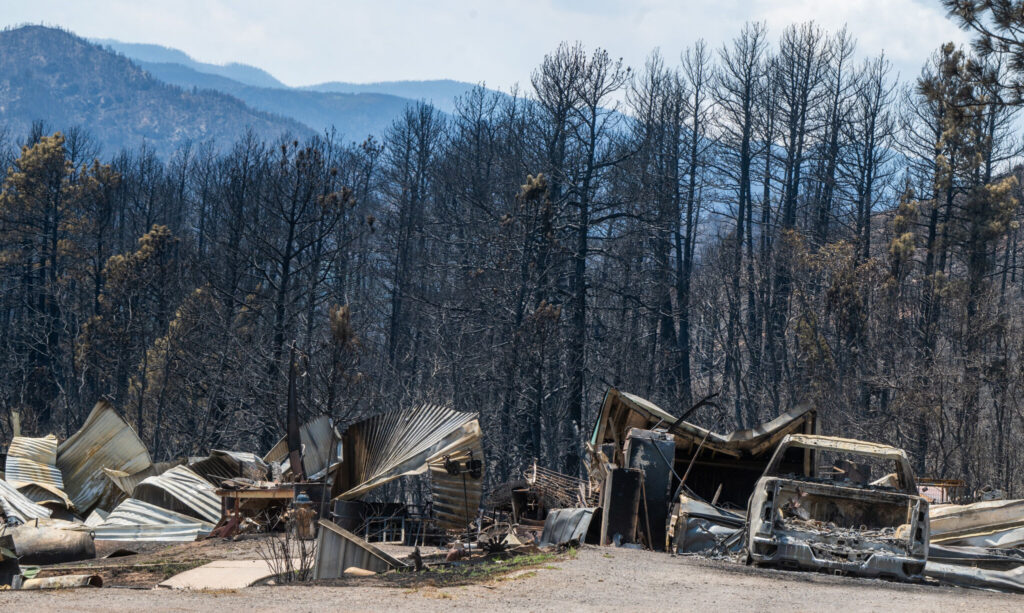
On Sunday, Gov. Jared Polis officially requested a Major Disaster Declaration from President Donald Trump and the Federal Emergency Management Agency to support recovery from two wildfires and the subsequent flooding and debris flows on both burn scars. Polis requested a declaration...
US strikes another boat in eastern Pacific, killing two, Pentagon says
The Associated Press
the-associated-press@coloradopolitics.com
Updated 18 hours ago
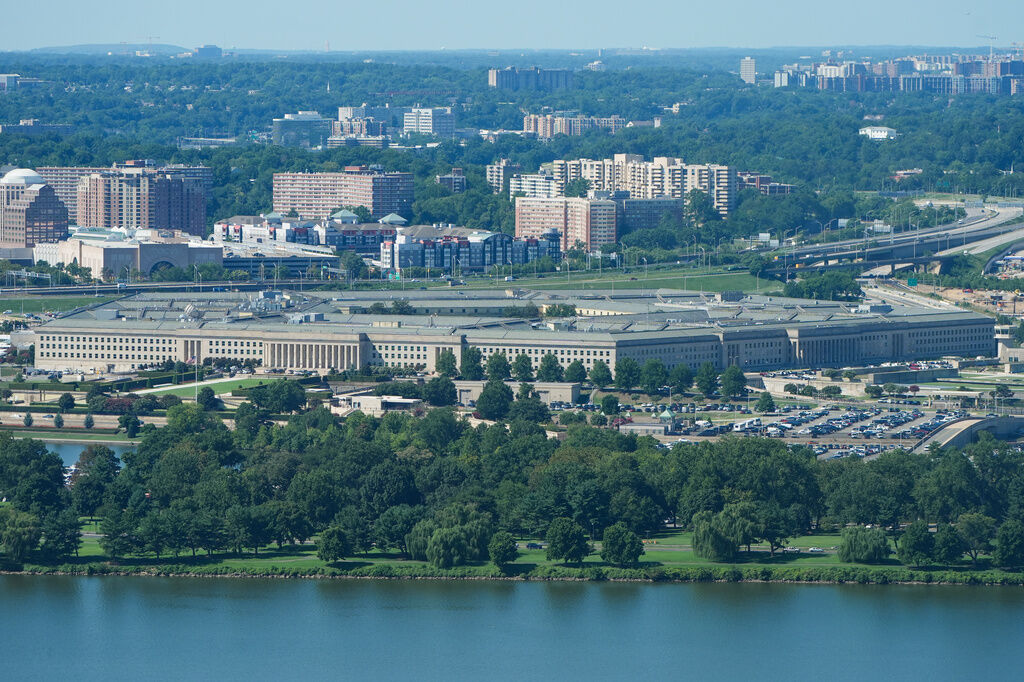
U.S. forces have struck another vessel in the eastern Pacific, killing two people the Pentagon says were trafficking drugs. The U.S. Southern Command announced the strike in a social media post early Monday. The death toll from the Trump administration’s...
PREV
PREVIOUS

Keating/OnSight poll: 8-point advantage for Polis in governor's race
Democrat Jared Polis holds an 8-percentage-point advantage over Republican Walker Stapleton in the Colorado governor’s race, and an even wider advantage among people who already have voted, according to a poll from Colorado firms released Thursday. The live telephone survey of 517 Colorado adults was conducted Oct. 25-30 by Telluride-based Keating Research Inc. and Denver-based […]
The Colorado Springs Gazette: Attorney general candidate Phil Weiser represented a monstrous predator
The Democratic Attorneys General Association insists it is not true. Retired law professor Phil Weiser, they tell us, did not fight for the convicted molester of children ages five and six. The controversy surrounds an ad paid for by the Colorado Freedom Independent Expenditure Committee, which details Weiser’s representation of child molester Anthony Warnick. Weiser, […]