

INSIGHTS | Denver mayor’s race should pack a punch for Hancock

A year ago, Democrats were talking about the trajectory of Michael Hancock’s political bottle rocket, and whether it made sense for him to seek a third term as Denver’s mayor or move on to a higher office.
Hancock was talked about as a potential gubernatorial candidate, potentially the state’s first black governor. Instead, Jared Polis, is on the doorstep of becoming the state’s first Jewish and first gay governor.
Others who know these things said then that no one should be surprised if the mayor waits until 2020 to take on Republican incumbent Cory Gardner to return the U.S. Senate seat back to Democrats, after Gardner took it from Mark Udall in 2014.
> RELATED: Denver Mayor Michael Hancock makes his re-election bid official
The two-term mayor, instead, might be in for the fight of his political life to stay relevant between now and next May’s city elections. Hancock has a resume he can run on, but he will also have quality opponents with the money and manpower to pick his record apart.
This is new. John Hickenlooper served two terms as mayor before he ran and won the governor’s office in 2010. When Wellington Webb sought a third term in 1999, the economic landscape was much the same one Hancock enjoys today. Webb collected 81 percent of the vote in the four-way race.
Hancock will face politically amplified charges that he hasn’t managed the city’s growth well, preferring developers over neighborhoods. His opponents will say he doesn’t respect women or the dignity of his office. They will say he operates the city within a bubble of close advisers. I know that because his opponents and anti-Hancock operatives are already saying that to me.
> RELATED, from November 2017: Michael Hancock’s big agenda
Four years ago when he ran for re-election, Hancock faced under-funded candidates who didn’t pose much of a threat. In 2011 he beat Chris Romer, the son of former Democratic Gov. Roy Romer, by an easy margin. Hancock called himself “a poor kid from northeast Denver.”
This time around, there are at least two candidates – and another well-known name I hear could be announcing, once this November’s election is past – who are anything but Palookas in this prize-fight.
One is Penfield Tate III, a political household name in this city. He’s the former state legislator and high-profile aide to former Denver Mayor Federico Peña. Tate’s father was the first black city council member and mayor in Boulder. The younger Tate ran for mayor in Denver in 2003, one of seven candidates in a field that included Hickenlooper.
> RELATED: Penfield Tate: Denver’s poor planning drove him to run for mayor
Then there is Lisa Calderón, who is lightning in a bottle. A criminal justice activist, Calderón concedes she won’t have big dollars to take down the incumbent. However, she commands an army of alliances from her life in community activism. She is known for her work with the Colorado Latino Forum.
“We’ll have to do with people what they do with money,” Calderón told me.
> RELATED: Another candidate emerges for Denver mayor
The race also includes lesser-known, likely lesser-financed candidates Marcus Giavanni, Kalyn Heffernan and Stephan Evans, who goes by Chairman Seku.
I wanted to talk to Hancock about all this. He wasn’t available all week. His campaign spokesman said the mayor was traveling and busy, but we could connect sometime later.
Hancock has reminded voters where the city was when he took office. The recession blew a $100 million hole in the city’s 2012 budget, forcing the elimination of about 100 jobs and furloughs for other city workers. In his State of the City address in July, he spoke of the thousands of “affordable housing units” and rent assistance his administration had championed.
> RELATED: Mayor Hancock cites ‘bold aspirational goals’ for Denver
But more than anything, when Hancock hits the campaign trail, expect him to talk about equity, as a counter to the city’s gentrification. He will talk about giving more people who already live here an equal shot at better housing, education, transportation and the spoils of growth.
It’s about time, Tate told me soon after he got in the race.
“We’ve grown and developed so much, but we’ve ignored what I call the human infrastructure of the city.” Tate said. “That is how people live and that’s how they’re impacted. For instance, we’ve been in such a rush to bring jobs to town but we haven’t been talking about workforce development or job training to help the people who are already here.”
Hancock also will face his #MeToo moment. In February he admitted sending inappropriate texts to a female subordinate, Detective Leslie Branch-Wise, six years earlier when she was assigned to his security detail.
Hancock apologized profusely to the detective, his family and the city.
Calderón said her reasons for running were a culmination of concerns, but the first thing she listed was “the lack of accountability for the sexual harassment” from Hancock.
“Just talking to a lot of women who were just feeling left unprotected as city workers if they are sexually harassed by elected officials,” Calderón explained about the ranking the issue so high.
She and Tate agreed that the public has been left out of the decisions that feed the development of their neighborhoods.
“We talk a lot about PPPs, public-private partnerships,” she said. “I want to add a fourth P – people.”
Such campaign rhetoric could spell trouble for the incumbent.


Judge grants partial injunction to GEO in fight against state health inspection law
Kyla Pearce
kyla.pearce@gazette.com
Updated 9 hours ago
A judge ruled Thursday that The GEO Group does not have to follow parts of a new state law requiring more frequent health and safety inspections at the U.S. Immigration and Customs Enforcement processing center in Aurora. Under the order...

Parker man faces 20 years to life for serial sexual assaults
Nicholas Fogleman
nicholas.fogleman@denvergazette.com
Updated 11 hours ago
A 25-year-old Parker man who sexually assaulted three women in 2025 pleaded guilty Wednesday and will serve 20 years to life in prison. Javier Rodriguez-Andrade pleaded guilty to charges stemming from three sexual assaults involving women ages 19 to 24. ...

Buttigieg performs best among Democrats against Rubio or Vance in possible 2028 contest: Poll
David Zimmermann
david-zimmermann@coloradopolitics.com
Updated 13 hours ago
Former Transportation Secretary Pete Buttigieg appears to be the Democratic Party’s best chance at winning the presidency against Secretary of State Marco Rubio or Vice President JD Vance in 2028, according to a poll released on Thursday. In hypothetical matchups...

Douglas County moves to Stage 1 fire restrictions following recent rain
Nicholas Fogleman
nicholas.fogleman@denvergazette.com
Updated 11 hours ago
Douglas County has downgraded its fire restrictions from Stage 2 to Stage 1 on Thursday following recent rainfall and moderate fire conditions, according to the Douglas County Sheriff’s Office. The change applies to unincorporated Douglas County, as well as the...
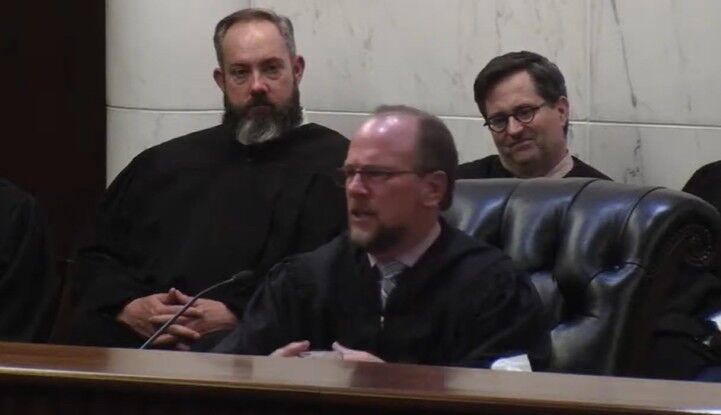
Divided appeals court upholds warrantless DNA collection in Colorado cold case, cautions of government overreach
Michael Karlik
michael.karlik@coloradopolitics.com
Updated 10 hours ago
Colorado’s second-highest court upheld the warrantless collection of a suspect’s DNA from a discarded soda can as constitutional on Thursday, while warning about potential abuse of DNA privacy in the absence of further guardrails. By 2-1, a three-judge Court of...

Democratic gubernatorial candidate Phil Weiser promises to appoint rural outreach director, water adviser
Marianne Goodland
marianne.goodland@coloradopolitics.com
Updated 10 hours ago
Democratic gubernatorial candidate and current Attorney General Phil Weiser told the Colorado Water Congress Thursday he intends to appoint a rural outreach director and a water policy adviser should he win the election in November. Weiser’s speech at the Steamboat...
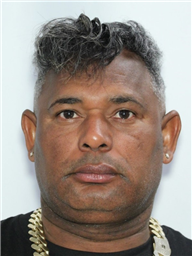
Man charged in Northglenn homicide of wife
Matt Kyle
matt.kyle@denvergazette.com
Updated 11 hours ago
A man has been formally charged with murder and burglary relating to a homicide last week in Northglenn. Alexei Munive-Rodriguez, 48, was arrested Sunday after he was at large following the homicide, which occurred Friday. Police were dispatched around 10:30...

Attorney General candidates present priorities at Colorado Water Congress
Marianne Goodland
marianne.goodland@coloradopolitics.com
Updated 10 hours ago
The two major-party candidates for attorney general — Republican Michael Allen, the district attorney for Teller and El Paso counties, and Democratic Secretary of State Jena Griswold — on Thursday outlined their priorities at the Colorado Water Congress. Griswold attended...

US aircraft carrier arrives in Middle East, relieving long-deployed USS Lincoln
The Associated Press
the-associated-press@coloradopolitics.com
Updated 15 hours ago
WASHINGTON (AP) — The Asia-based USS George Washington aircraft carrier is now operating in the Middle East, the U.S. military said Thursday, relieving a long-deployed carrier following reports of mental health challenges and supply shortages aboard while it was supporting...

Denver named finalist for 2028 Democratic Convention site
Thelma Grimes
thelma.grimes@coloradopolitics.com
Updated 9 hours ago
The Mile High City competes with Boston and Philadelphia The list of cities being considered to host the 2028 Democratic National Convention has narrowed even further, with Denver making the cut as one of the final three, along with Boston...
PREV
PREVIOUS

DEAR GOVERNOR, from BILL OWENS | Take time to sit at your desk and do your job
Colorado Politics presents eight contributed essays offering guidance to Colorado’s next chief executive from some of the state’s best political minds. CLICK HERE for more. I have always believed that ex-governors should adhere to my dad’s instructions to us kids when my folks were having friends over: “Children, tonight you should be seen but not […]

Pot, property values focus of upcoming Colorado trial
A federal trial in Colorado could have far-reaching effects on the United States’ budding marijuana industry if a jury sides with a couple who say having a cannabis business as a neighbor hurts their property’s value. The trial set to begin Monday in Denver is the first time a jury will consider a lawsuit using […]