

Candidates talk policy and politics in NE Colorado forum
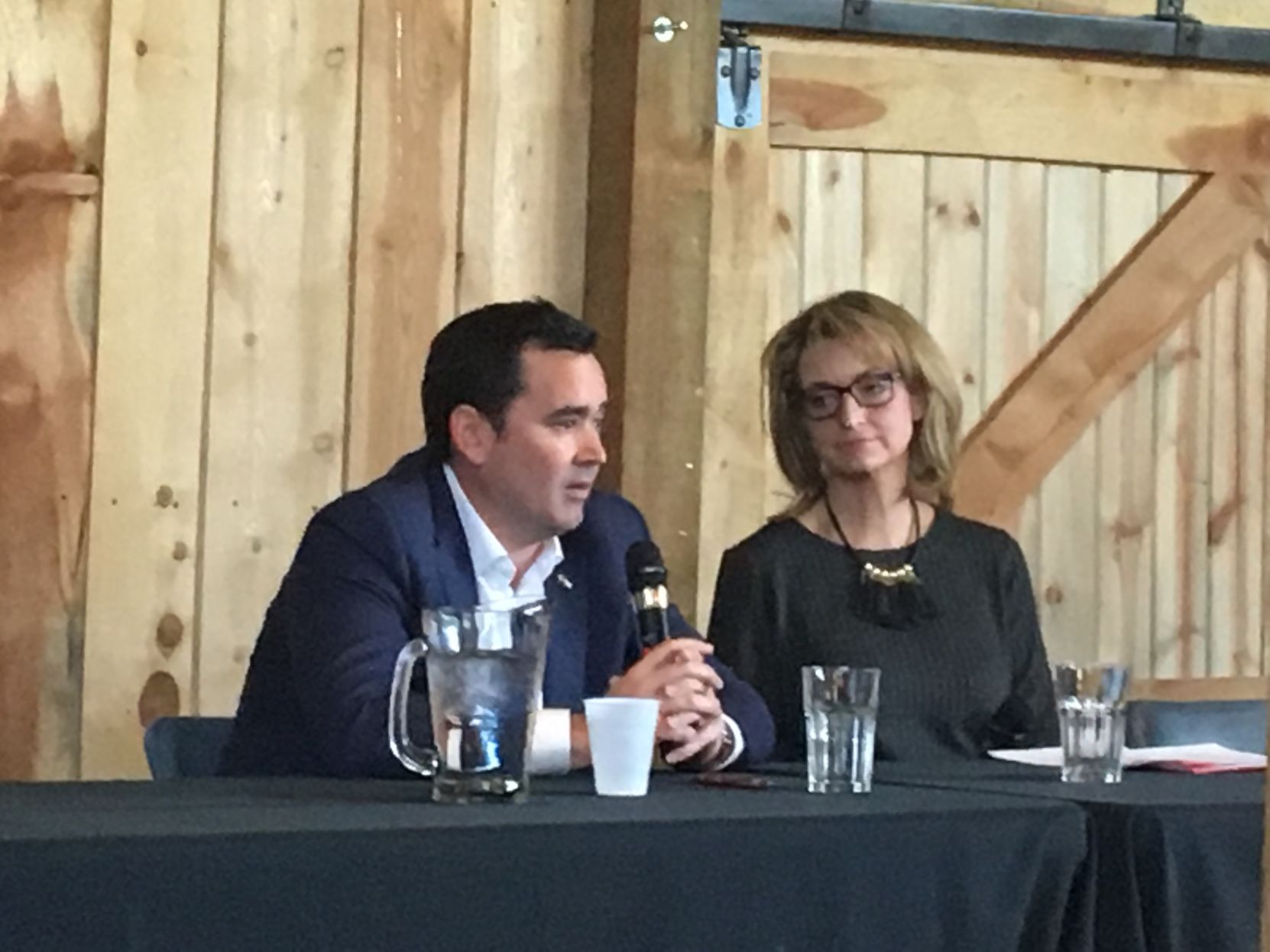
GREELEY – Water, transportation, energy and Colorado’s public-employee pension system were among the topics discussed by candidates for four statewide races during a Friday forum.
The forum was hosted by Pro15, an advocacy group (formerly known as Progressive 15), on public policy and other issues for 15 northeastern Colorado counties. It was one of the final debates of the 2018 election season for the candidates for governor, treasurer, attorney general and secretary of state.
There were only light fireworks between the two candidates for governor, Democrat Jared Polis and Republican Walker Stapleton of Denver. Stapleton, the Colorado state treasurer, hit first with attacks on Polis over his renewable energy policy, and on whether Polis supports a major water project in northern Colorado and how he would pay for some of his ideas.
Polis, Boulder’s congressman, avoided attacking back, instead focusing on issues such as how broadband will help rural communities diversify economically, as well as how his renewable energy plan will benefit farmers and ranchers and provide jobs for their children and grandchildren. It will “complement the cyclical nature” of oil and gas pricing, he said.
Stapleton criticized Polis for not supporting more water storage, such as through the Northern Integrated Supply Project (NISP), which seeks to build two new reservoirs in northern Colorado.
Stapleton also pledged to pay for the $100 million needed by the state water plan through the estimated budget surplus that could come from the federal tax plan passed by Congress last December. “We will be able to fund the water plan for many years to come” from that surplus, he said.
Polis replied that he fully supports the water plan, which includes a call for more storage, and that he has worked to bring people “around the table” to work on NISP.
> RELATED: CAPITOL M | Celebrating (or hoping to survive) the last few weeks of the election season
The candidates differed on one of the two transportation measures on the November ballot. Proposition 109 would pay for $3 billion in bonding for road and bridge projects through existing state revenues.
Stapleton supports the measure, billed as “Fix Our Damn Roads,” because it would sidestep new taxes. He said there are several different potential revenue sources for transportation and other infrastructure projects, including money from the federal tax plan, revenue from taxing sports gambling if Colorado legalizes it, and changes to how the state handles medical marijuana, which he called a broken regulatory system.
The Republican also said the state Department of Transportation lacks accountability and transparency, and that the agency’s spending should be subject to the same approval process as other state agencies.
Polis said he opposes 109, arguing it would put the state $3 billion in debt and make it harder to fund the state water plan. It also, he said, would put the state in debt that will be harder to repay when the next economic downturn happens, which he called “fiscally irresponsible.”
Neither candidate supports Proposition 110, also known as “Let’s Go, Colorado,” which seeks a sales tax hike that would pay for $6 billion in transportation projects, although Polis has said he favors the concept of a dedicated revenue source for transportation.
Stapleton also told the audience that a 100 percent renewable energy mandate that he said was proposed by Polis isn’t possible. “We don’t have the capacity to get from 65 percent to 100 percent,” he said, because the wind doesn’t blow nor does the sun shine all the time. “Hardworking Coloradans will end up paying more for utility bills, to heat homes and that takes away economic opportunity,” he said.
Polis said his renewable energy plan would not create a mandate. The goal, he said, would mean “good green jobs that can never be outsourced” to other countries, energy independence and sustainable low energy rates. He pointed to a recent visit with Xcel Energy, in which he was told that new wind energy production costs 20 percent less than coal.
To the oil and gas and coal industry, Polis said the challenge will be how to find ways to find jobs for those workers.
“I value the skills of oil and gas and coal workers,” Polis said. “As we build out the new energy economy, we need to match good paying jobs with those who have those skills.”
The candidates mostly agreed about the negative impact of trade tariffs imposed by the Trump administration that have hurt Colorado’s agriculture industry, particularly wheat, corn and pork exports.
Stapleton pledged to stand up “to misguided farm policies” without naming Trump by name. “We should be willing to take on president of any party who engages in trade wars and unilateral imposition of tariffs,” said Polis.
The forum also hosted the candidates for attorney general and state treasurer, and incumbent Secretary of State Wayne Williams.
The treasurer candidates, Democrat Dave Young and Republican Brian Watson, sparred over their approaches to the Colorado Public Employees Retirement Association, or PERA, the state-worker pension plan, as well as management of the Great Colorado Payback program, which has come under fire in recent months for lagging responses to Coloradans who attempt to claim their property.
Watson attacked Young for voting against Senate Bill 200, the PERA reform measure passed on the last day of the 2018 legislative session. Young maintained he didn’t have all the financials he needed to support the measure, but said Friday he now supports the plan. He pointed out that as a member of the legislature’s Joint Budget Committee, he voted for a $225 million boost to PERA in the 2018-19 budget.
In response to a question on what they’d do in their first 90 days, Watson said he would meet with the PERA board and with the treasurer’s staff. “I know exactly what’s going on,” said Young, given his six years of experience on the JBC that included working with the treasurer’s staff. “I don’t need to sit down on day one to figure that out…I already know what’s working and what isn’t.”
In the debate between the attorney general candidates Republican George Brauchler and Democrat Phil Weiser, Brauchler rolled out his standard attack on Weiser’s lack of criminal prosecution experience. Weiser, however, responded that only a small sliver of the attorney general’s job is in criminal prosecution. It’s “your responsibility to offer professional legal advice,” Weiser said, adding that’s something the current attorney general has withheld because of her political differences with Gov. John Hickenlooper.
Brauchler said he wants to break the attorney general’s office out of an “1860 model” and set up satellite offices around the state. “Rural jurisdictions deserve better,” he said. Such a model would allow the office to better tackle issues like black market marijuana and the state’s opioid criss, he explained.
Weiser said he would go a step further, by allowing the staff to telecommute or work within partner agencies.
Both candidates also addressed their views on Roe v. Wade as a matter of law. Brauchler said as a federal law it is “the law of the land. It sets up the standard for which all other laws get measured” on a woman’s right to choose, he added.
Weiser pointed out the time will come – likely at the U.S. Supreme Court – when Colorado will be asked if it stands with Roe v. Wade or against it. Colorado will have to weigh in, he said, and the state will need an attorney general who will defend a woman’s right to choose.
Williams had the podium to himself during the candidates’ forum. According to Pro15 executive director Cathy Shull, his opponent, Democrat Jena Griswold, had committed to the event last summer but three weeks ago pulled out, citing a prior commitment.
Williams touted his office’s successes in election security and pointed out that his opponent hasn’t always voted, most recently in the 2014 elections.

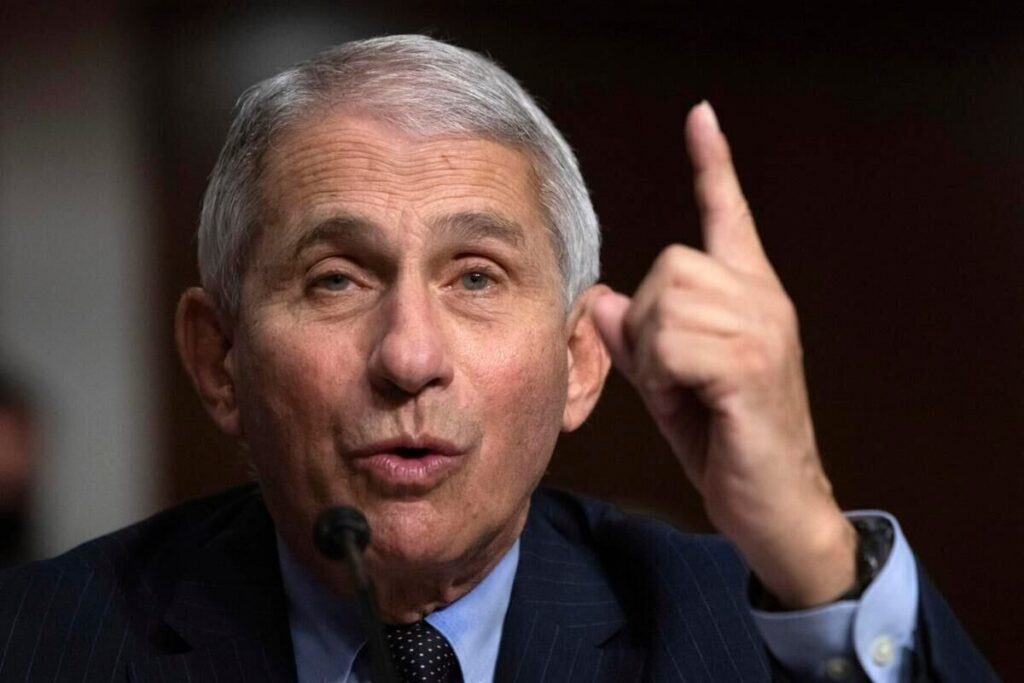
Fauci’s private COVID-19 diaries: Six takeaways on fame, prize money and the lab leak debate
The Washington Examiner
the-washington-examiner@coloradopolitics.com
Updated 1 hour ago
Anthony Fauci’s private writings from 2020 and beyond portray a public health official who was fixated on his growing celebrity while privately grappling with a pandemic response he believed was chaotic, leaderless and consumed by internal rivalries. The writings of...

Denver City Council sends Xcel franchise deal to voters
Deborah Grigsby
deborah.smith@denvergazette.com
Updated 34 minutes ago
This November, Denver voters will decide whether to renew the city’s longstanding franchise agreement with Xcel Energy. Members of the Denver City Council approved on Monday sending a proposed 20-year franchise agreement with Xcel that would deliver more than $180...

Denver weighs permanent restriction on low-level traffic stops
Deborah Grigsby
deborah.smith@denvergazette.com
Updated 33 minutes ago
A Denver City Council committee is considering permanently limiting certain types of low-level traffic stops used to investigate unrelated crimes and requiring better public reporting about why such stops happen. Members of the Budget and Policy Committee on Monday were...

Fort Carson soldiers develop app to plan convoys as part of Next Generation Command and Control
Mary Shinn
mary-shinn@coloradopolitics.com
Updated 24 minutes ago
Planning the details of a military convoy with numerous vehicles, personnel, weapons, radios and other details can take a platoon leader three days. In addition to plotting a safe route, leaders need to map out checkpoints to track the convoy’s...
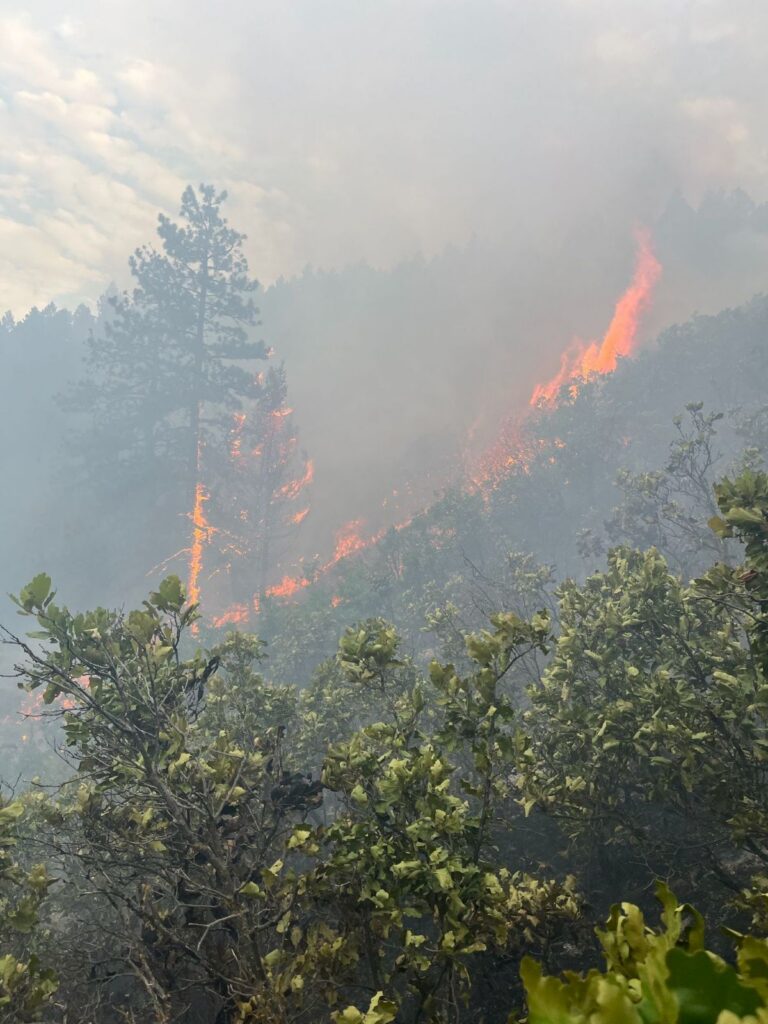
Penley fire near Sedalia reaches 75% containment
Nicholas Fogleman
nicholas.fogleman@denvergazette.com
Updated 29 minutes ago
Fire crews battling the Penley fire west of Sedalia made significant progress overnight, holding the wildfire at about 3 acres and reaching 75% containment Monday, according to Douglas County officials. The fire, which sparked Sunday west of Sedalia, prompted evacuation...
Colorado board permits state to appeal injunction against arthritis drug price cap
Marissa Ventrelli
marissa.ventrelli@coloradopolitics.com
Updated 8 minutes ago
A Colorado board voted Friday to allow the Attorney General’s Office to fight an injunction against a price cap on a drug that treats arthritis. A U.S. district court judge had granted the company Amgen a preliminary injunction, temporarily blocking...

Federal judge rejects constitutional claims, ‘expressions of hatred’ by Club Q defendant
Michael Karlik
michael.karlik@coloradopolitics.com
Updated 16 hours ago
A federal judge rejected a defendant’s claims that he received constitutionally ineffective assistance of counsel while facing federal hate crime and firearms charges for murdering five people at a Colorado Springs LGBTQ nightclub in 2022. Anderson Lee Aldrich is serving...

Divided 10th Circuit upholds Colorado congestion fee on car rentals
Michael Karlik
michael.karlik@coloradopolitics.com
Updated 12 hours ago
The Denver-based federal appeals court concluded on Monday that a 2024 “congestion impact fee” that lawmakers imposed on short-term vehicle rentals did not conflict with a federal prohibition on certain airport-related charges. Beginning in the 1970s, Congress began limiting the...

Space Force should measure workforce needs as it prepares to double in size, GAO report says
Mary Shinn
mary-shinn@coloradopolitics.com
Updated 21 hours ago
The Space Force needs more people. It’s just not precisely sure how many more. A Government Accountability Office report released earlier this month found that the youngest and smallest military branch does not have a process to consistently or accurately...

Colorado schools receive $24 million for free meals program
Marissa Ventrelli
marissa.ventrelli@coloradopolitics.com
Updated 16 hours ago
The Colorado Department of Education is providing Colorado schools with nearly $24 million in grant funding to implement a free lunch program. Approved by voters in 2022, the Healthy School Meals for All provides free breakfast and lunch to all...
PREV
PREVIOUS

Major Republican funding group cuts off support for Mike Coffman
The campaign arm of Republicans in the U.S. House of Representatives is dropping its financial support for U.S. Rep. Mike Coffman, the GOP incumbent who has represented Colorado’s battleground 6th Congressional District for five terms, Colorado Politics has confirmed. The National Republican Congressional Committee (NRCC) is canceling $1 million in TV advertising and redirecting the […]

How Colorado's ski industry became virtually drought-proof
By Jason Blevins, The Colorado Sun, via Associated Press Reservoirs have turned to dust. Farmers have fallow fields. But don’t expect the skiing to languish. Ski resorts have spent many decades amassing water rights and water storage and continuously upgrading snowmaking systems to make the state’s vibrant, multi-billion-dollar resort industry virtually immune to drought. “I […]