

Feds: Russian hackers targeted Colorado Springs anti-doping agency

Russian military intelligence targeted the Colorado Springs-based U.S. Anti-doping Agency with a four-year hacking and smear campaign, claims a federal indictment unsealed Thursday.
The indictment, handed down by a grand jury in Pennsylvania, charges seven Russian military intelligence agents with “computer hacking, wire fraud, aggravated identity theft, and money laundering.” Federal prosecutors say the goal was to discredit the Anti-doping Agency after it “exposed a Russian state-sponsored athlete doping program.”
“These illegal and malicious acts were a desperate attempt to divert attention away from Russia’s state-sponsored doping program and were part of a broader scheme of corrupt and unethical behavior by the Russian government to manipulate international Olympic sport,” the Anti-doping Agency said in a Thursday statement.
The hacking program kicked off as investigators with the World Anti-Doping Association probed reports of state-sponsored use of illegal performance-enhancing drugs by Russian athletes at the 2014 Winter Games in Sochi, Russia. That investigation led to Russian athletes being banned from the 2016 games.
The Justice Department says Russian hackers targeted the Colorado Springs agency and other athletes and entities with attempts to hack email systems, obtain medical and other records and invade social media accounts. The Anti-doping Agency, which monitors U.S. athletes for drug use, partners with the U.S. Olympic Committee, also in Colorado Springs, to keep drugs out of the games.
If this hacking scheme sounds familiar, it should. Hackers in the anti-doping case are tied to “Fancy Bear,” a Russian hacking operation that U.S. intelligence officials say worked to sway the 2016 U.S. presidential election. Two of the seven intelligence agents charged in the sports-hacking scheme also were charged in the investigation by Special Counsel Robert Mueller.
As part of the sports hacking, the Justice Department says, Russian agents worked in Brazil during the 2016 summer games, using systems including hotel wifi networks to gather dirt.
The hacked information that was shared selectively with the media in a bid to discredit doping allegations against the Russian Olympic squad.
Attorney General Jeff Sessions said the hackers targeted several U.S. entities, from the Colorado Springs agency to the Pennsylvania-based Westinghouse Electric Corp.
“State-sponsored hacking and disinformation campaigns pose serious threats to our security and to our open society, but the Department of Justice is defending against them,” Sessions said.
Vance Brown, who heads the Colorado Springs-based National Cybersecurity Center, said the hacking in Colorado Springs should be a wake-up call to area businesses and nonprofits.
“Everybody needs to up their game and take this very seriously,” Brown said.
But Fancy Bear’s involvement in targeting Colorado Springs “is certainly not surprising,” he said. “Russian interference is a real thing.”
The Russian hacking revelation comes after the International Olympic Committee lifted its ban on Moscow-sponsored teams and last month dropped a suspension of the Russian anti-doping program.
In February, the IOC ruled that Russian teams will compete in the 2020 Tokyo games. The decision sparked ire among American officials, with the outgoing chairman of the U.S. Olympic Committee’s board slamming the decision.
“Suggesting that Russia has lived up to its obligations is disingenuous,” Larry Probst said last month at the Olympic Assembly in Colorado Springs.
It remained unclear Wednesday whether Russia could face more Olympic sanctions over the hacking scheme.
The U.S. Anti-doping Agency said the indictments alone could slow sporting shenanigans.
“Those who attempt to violate the rights of clean athletes and corrupt the integrity of sport will be held accountable for their actions,” the agency said in a news release.



Fishing closures are becoming routine as record heat warms rivers in the US West | OUT WEST ROUNDUP
Ernest Luning
ernest.luning@coloradopolitics.com
Updated 3 days ago
MONTANA Fishing restricted as rivers warm LIVINGSTON — Trout need cool water to survive, but record heat this summer has driven water temperatures to lethal levels for fish. Wildlife officials are banning fishing during certain hours on rivers and streams...

Colorado measure redirects sales tax revenue from sporting goods, equipment to conservation programs
The Denver Gazette
the-denver-gazette@coloradopolitics.com
Updated 16 hours ago
A proposal to redirect sales tax revenues from sporting goods and equipment toward wildfire and conservation programs will appear on the ballot this November, election officials in Colorado confirmed. The measure, if approved by voters, would reduce the amount available...
Firefighters’ deaths prompt debate over 100% suppression wildfire strategy
Rachael Wright, Special to Colorado Politics
rachael.wright@coloradopolitics.com
Updated 13 hours ago
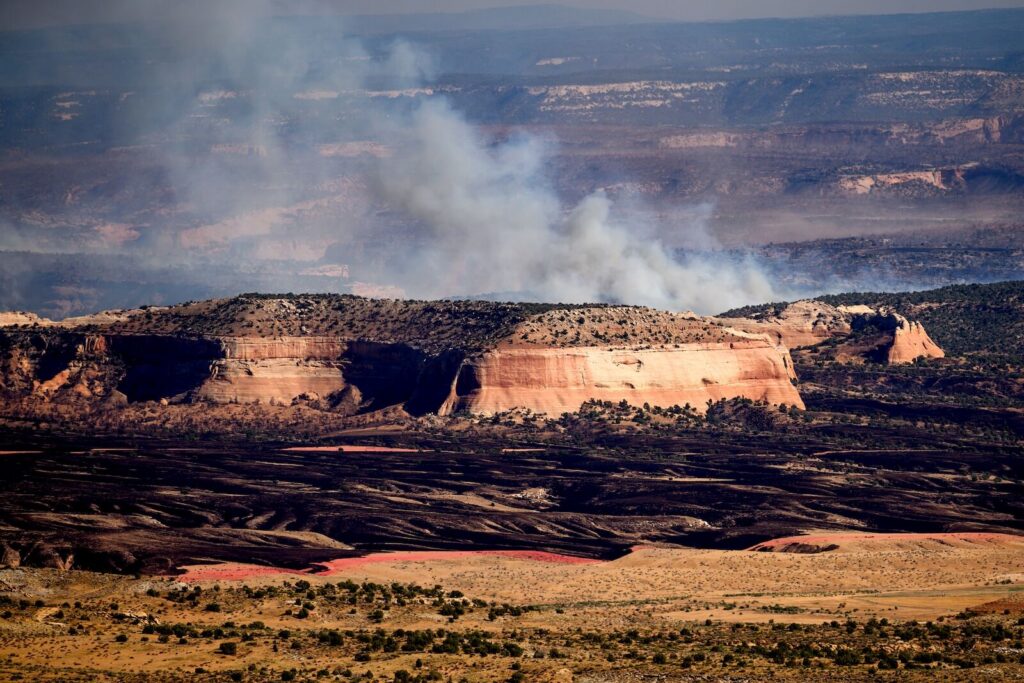
On July 22, 2026, the chief of the U.S. Forest Service testified before a House Agriculture subcommittee that his agency pursues a “full suppression” strategy to contain all fires while they are still small, rather than allowing them to burn...

A summertime all-you-can-eat political buffet | SONDERMANN
Eric Sondermann
eric-sondermann@coloradopolitics.com
Updated 5 days ago
We find ourselves in the doldrums of August with a complete dearth of political news. Yeah, right. These days, that train never stops moving. It is a 24/7/365 express amplified by 24/7/365 media. Let me respond with one of my...

GOP worker pleads guilty to campaign funds embezzlement scheme | A LOOK BACK
Rachael Wright, Special to Colorado Politics
rachael.wright@coloradopolitics.com
Updated 5 days ago
Forty-five Years ago this week: After pleading not guilty to a Denver federal grand jury indictment of five counts of bank embezzlement, Eve Lynn Lincoln, a Colorado Republican Party employee, decided to plead guilty to one count: using bank credit...
Schoolchildren’s presence at child sex-related trial did not harm Arapahoe County defendant, appeals court says
Michael Karlik
michael.karlik@coloradopolitics.com
Updated 2 days ago
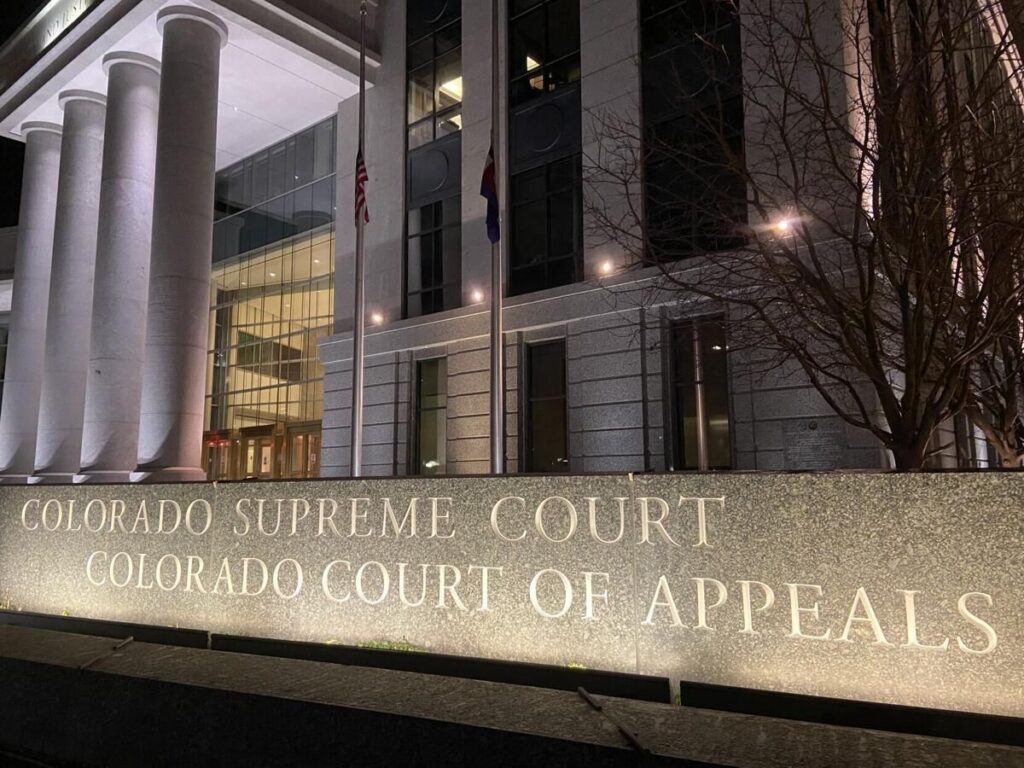
Colorado’s second-highest court decided on Thursday that the presence of a group of schoolchildren on the first day of a child sexual exploitation trial did not violate an Arapahoe County defendant’s constitutional right to a fair trial. Prosecutors charged Jerry...
Appeals court cites week-old Colorado law to reinstate child neglect case at child, father’s request
Michael Karlik
michael.karlik@coloradopolitics.com
Updated 1 day ago
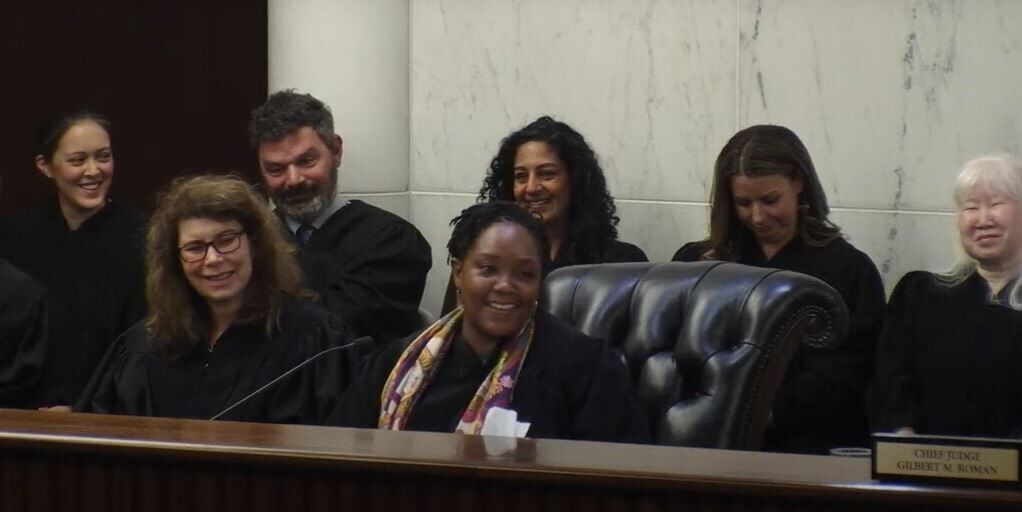
Colorado’s second-highest court invoked a new state law for the first time on Thursday and reinstated a child neglect case that both the child and her father wished to reopen. House Bill 1227 took effect on Aug. 12, reversing a...

Democratic candidate in Colorado’s 4th CD urges long-term water planning
Marianne Goodland
marianne.goodland@coloradopolitics.com
Updated 1 day ago
The Democrat hoping to become the next representative of Colorado’s 4th Congressional District on Thursday made her case on the final day of Colorado Water Congress in Steamboat Springs. Eileen Laubacher, who spent 34 years in the U.S. Navy and...

Castle Rock council declines to censure member accused of misconduct
Nicholas Fogleman
nicholas.fogleman@denvergazette.com
Updated 3 days ago
A Castle Rock Town Council meeting Tuesday became consumed by allegations that a councilmember attempted to trade a town policy decision for the withdrawal of a recall effort against him. The allegations against Councilmember Mark Davis surfaced during public comment...

Proposal to cap Colorado income tax rate qualifies for November ballot
Thelma Grimes
thelma.grimes@coloradopolitics.com
Updated 21 hours ago
Election officials on Thursday confirmed that the proposal to cap the state’s income tax at the current rate submitted signatures and voters will consequently decide its fate this November. The fight over tax rates is part of the tug and...
PREV
PREVIOUS

Congress OKs safety upgrades after Colorado helicopter crash
FRISCO – Congress has passed a measure requiring safer fuel systems in new helicopters, a response to a crash in Colorado. The Summit Daily News reports the Senate gave final approval to the provision Wednesday. President Donald Trump is expected to sign it into law. Colorado Democratic congressmen Ed Perlmutter and Jared Polis added the […]

Colo. AG candidates trade barbs, talk priorities at Denver debate
Candidates for Colorado attorney general knocked each other and disagreed over how the state’s top law enforcement official can best serve the people at a Wednesday night debate in Denver. Republican candidate George Brauchler hammered home his courtroom experience at the debate, hosted by the Federalist Society, a conservative legal group. He also noted that […]