

Colorado set to become first state to let homeowners store energy in batteries

A bill aimed at giving Colorado homeowners the right install electric storage batteries – a first in the nation -received final passage Monday with strong bipartisan support and is one its way to the governor.
Sponsored by Sens. Stephen Fenberg, D-Boulder, and Kevin Priola, R-Henderson, the “Allow Electric Utility Customers Install Energy Storage Equipment” bill passed the House 45-18 after sailing through the Senate 30-5 in February.
Senate Bill 9 directs the Colorado Public Utilities Commission to set rules on the installation, interconnection, and use of “customer-sited distributed electricity storage systems.”
“States allow home storage, but we are the first state in the country to say that people have a right to storage,” Fenberg said.
Priola said there was broad support because the bill “touches both ends of the political spectrum. The left sees it as a new technology that addresses clean energy and climate and the right sees it as individual independence, a backup for snowstorms and blackouts.”
There has been growing interest on the part of homeowners, particularly those who have solar panels, to add storage batteries. With the entry of companies like Tesla Inc., maker of upscale electric vehicles into the market, home batteries were “becoming trendy like an iPhone,” Fenberg said.
Utilities have responded warily to the trend, requiring extra meters and equipment for some home battery installations. “I think utilities were trying to figure out how it fit into their business,” Fenberg said. “Some of it was protectionism.”
The sponsors worked with both Xcel Energy and Black Hills Energy, the two investor-owned utilities that would come under PUC regulations, to smooth out details, Priola said. Neither company opposed the legislation.
The legislation directs the utilities commission to set rules to make sure installation of storage is “simple, streamlined, and affordable” and that it does not require the installation of additional meters.
“Colorado is a leader in the transition to clean, renewable energy so this bipartisan bill makes good sense,” said Amelia Myers, an energy advocate for Conservation Colorado. “By allowing folks who have solar panels on their homes to store the extra energy they generate during the day for use at night, we are giving homeowners energy independence, supporting the use of renewables, and taking one more step toward cleaning our air.”


10th Circuit upholds finding of no misconduct against Colorado federal judge
Michael Karlik
michael.karlik@coloradopolitics.com
Updated 10 hours ago
A judicial committee for the Denver-based federal appeals court upheld the chief judge’s finding last week that a federal judge in Colorado did not engage in misconduct by handling a civil case involving other attorneys and judges in the state....
Denver mayor says city police will detain ICE officers using ‘excessive force’
Deborah Grigsby
deborah.smith@denvergazette.com
Updated 9 hours ago
Denver Mayor Mike Johnston on Thursday outlined his city’s response to immigration enforcement operations, including intervening to stop federal officers when local police observe them using “excessive” force. Johnston also said the city will not allow federal authorities to “stand...
SCOTUS whisperer? Justice Carlos Samour may get second opportunity to turn state dissent into national precedent
Michael Karlik
michael.karlik@coloradopolitics.com
Updated 14 hours ago
For the second time in two years, Justice Carlos A. Samour Jr. occupies an unusual position: Having his dissent in a Colorado Supreme Court case potentially forming the basis of U.S. Supreme Court precedent. Earlier this week, the nation’s highest...
Republicans roll out first ad pinning Democrats for not standing during State of the Union
Emily Hallas, Washington Examiner
emily.hallas.washington.examiner@gazetteedit.wpenginepowered.com
Updated 15 hours ago
A conservative group is launching a sweeping ad campaign on Thursday, seeking to capitalize on Democrats‘ refusal to stand during a portion of President Donald Trump’s State of the Union address centered on illegal immigration. American Sovereignty created a message...
Rubio says any future nuclear proliferation deals have ‘to involve’ China and Russia
Washington Examiner Staff, Washington Examiner
washington.examiner.staff.washington.examiner@gazetteedit.wpenginepowered.com
Updated 15 hours ago
During a visit to the Caribbean on Wednesday, Secretary of State Marco Rubio was asked about recent talks in Geneva regarding weapons of mass destruction and the prospect of future nuclear weapons agreements. He responded that any such deal would...
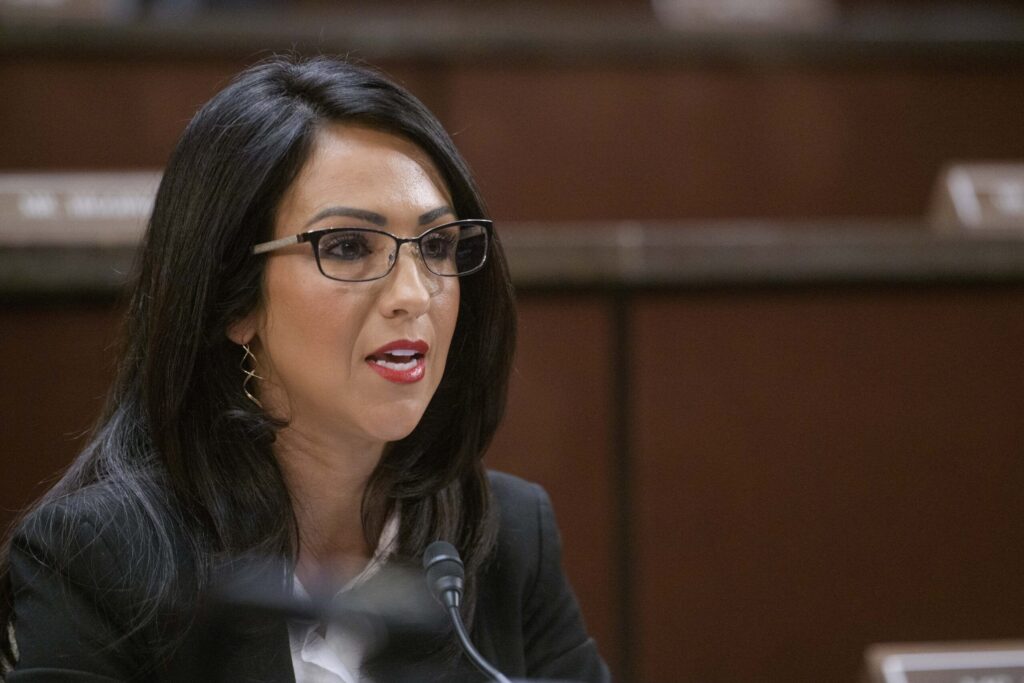
Hillary Clinton deposition paused after Lauren Boebert allegedly leaks photo from inside hearing
Molly Parks, Washington Examiner
molly.parks.washington.examiner@gazetteedit.wpenginepowered.com
Updated 15 hours ago
The House Oversight Committee has paused the deposition of former first lady and Secretary of State Hillary Clinton on Thursday after political commentator Benny Johnson shared a photo on social media of the closed-door hearing. Rep. Lauren Boebert (R-CO), who...

Colorado district attorneys oppose bipartisan bill limiting government access to bought data
Marissa Ventrelli
marissa.ventrelli@coloradopolitics.com
Updated 16 hours ago
A bipartisan coalition of Colorado lawmakers is advancing a bill that would prohibit police from purchasing personal consumer data without a warrant, setting up a clash with prosecutors who warn the measure could hamper criminal investigations. House Bill 1037, sponsored...

Lawmakers propose raising excise taxes on alcohol, marijuana to fund mental health spending
Marissa Ventrelli
marissa.ventrelli@coloradopolitics.com
Updated 16 hours ago
Colorado lawmakers hope to refer a measure to the November ballot that would increase excise taxes on alcohol and marijuana, with the revenue going toward mental health and civil commitment facilities around the state. House Bill 1301, sponsored by Rep....
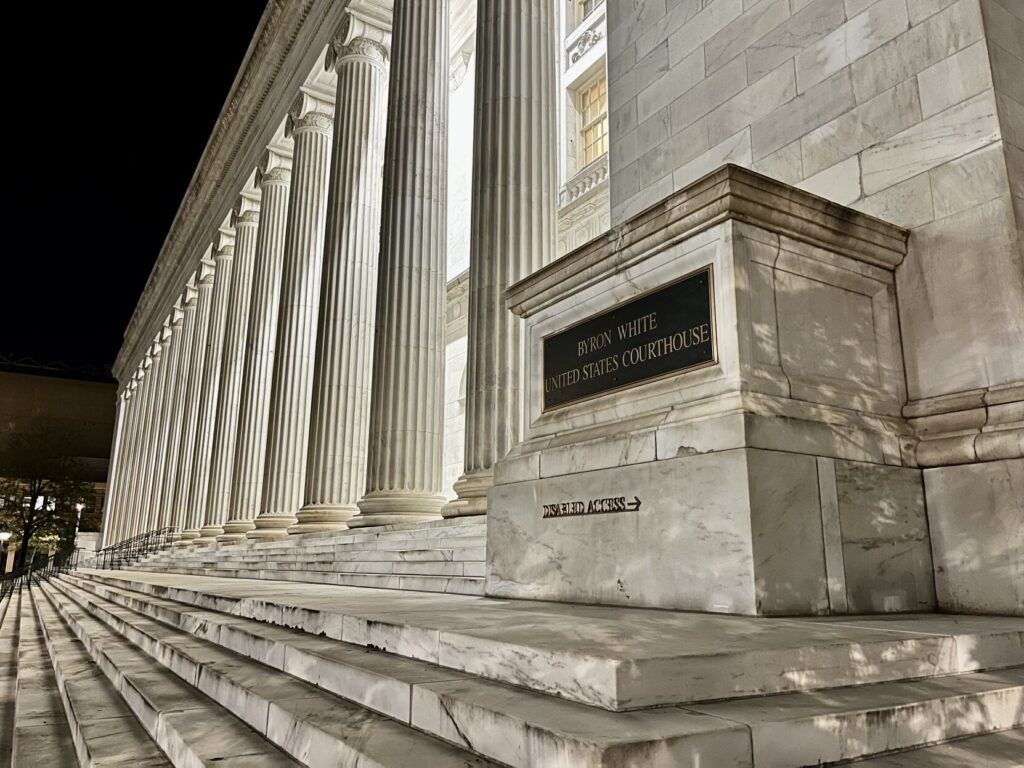
10th Circuit appoints ex-Colorado solicitor general to argue issue after federal government declines
Michael Karlik
michael.karlik@coloradopolitics.com
Updated 1 day ago
The Denver-based federal appeals court took the unusual step earlier this month of appointing an attorney to independently argue a key issue in a criminal sentencing appeal after the government indicated it would not contest the defendant’s view of the...

Greeley voters halt landmark development project
Hap Fry, Special to The Gazette
hap-fry@gazette.com
Updated 1 day ago
GREELEY – The landscape-altering Cascadia development project has been put on ice, according to unofficial results of a city referendum on the project Tuesday. The proposed development would have included an 8,600-seat multiuse arena and ice center that would be home to the Colorado Eagles,...
PREV
PREVIOUS

Colorado Ethics Commission again delays decision on Sen. Vicki Marble's alleged ethics violation
A decision on an ethics violation complaint levied against Republican Sen. Vicki Marble of Fort Collins is yet another month away, after the members of the Colorado Independent Ethics Commission decided they need more time to hammer out an opinion on the alleged violation. A month ago, a bet that the commission would vote to […]

Rep. Dave Williams heads to the White House to talk immigration
State Rep. Dave Williams, R-Colorado Springs, is scheduled to be at the White House Thursday to talk immigration with President Trump’s Domestic Policy Council. Williams has been a proponent of ending so-called sanctuary cities in Colorado, sponsoring unsuccessful legislation last year to allow public officials to be arrested if local policies on undocumented immigrants permit […]