

Conservation bills in Congress could benefit Colorado

WASHINGTON – Colorado lawmakers and conservation officials are pinning their hopes for additional federal funding of wildlife conservation on two bills recently introduced in Congress.
One of them would redirect about $29 million a year to Colorado from fees paid by companies that extract energy and minerals from federal lands.
Much of the money would be funneled to Colorado Parks and Wildlife.
“This would be a game changer in Colorado for many species identified in our State Wildlife Action Plan and our conservation work across Colorado,” said Lauren Truitt, spokeswoman for Colorado Parks and Wildlife.
The Wildlife Action Plan sets priorities for the state’s conservation needs. It also seeks to coordinate efforts among the wildlife conservation community.
In Colorado, conservation is a higher priority than for many states because of vast tracts of land and water set aside for wildlife preservation, according to conservation officials.
“With nearly 30 million acres of public land, an estimated 39 thousand miles of accessible trails and a very active state, outdoor recreation is crucial to Colorado,” Truitt said. “Hunting, fishing, wildlife viewing and state park visits benefit Colorado’s economy by contributing $6.1 billion annually.”
State officials described a more grandiose plan in their 2014 State Comprehensive Outdoor Recreation Plan. If it is carried out as projected, it could generate $34 billion a year for the state, Truitt said.
“As for outdoor recreation in Colorado, it is a major economic driver for both urban and rural communities,” she said.
Nationwide, the bill, H.R. 4647, would contribute $1.3 billion a year in royalties from energy and mineral companies to the federal Wildlife Conservation Restoration Program.
The guidelines for spending the money would require that the supplemental funds be used to manage fish and wildlife species of “greatest conservation need.” State fish and wildlife agencies would determine which species qualify.
Threatened and endangered species in Colorado include the greater sage grouse, prairie chickens, kit foxes and fish such as the Rio Grande chub and the plains minnow.
Sponsors of the bill, U.S. Reps. Jeff Fortenberry, R-Neb., and Debbie Dingell, D-Mich., said the funds would help conserve more than 12,000 species of fish and wildlife and their habitats.
Their legislative proposal was based on a recommendation by a business group called the Blue Ribbon Panel on Sustaining America’s Diverse Fish and Wildlife Resources. It was co-chaired by former Wyoming Governor Dave Freudenthal.
“The approach is unique because it calls for early action to save struggling wildlife, rather than waiting until species are on the brink of extinction and need expensive emergency room measures to recover,” said Collin O’Mara, president of the National Wildlife Federation.
A second congressional bill, H.R. 2591, seeks to encourage more conservation funding from hunting and fishing licenses.
“That one is really well-supported in Colorado,” said state Rep. Jim Wilson, R-Salida.
Under current legislation of the 1937 Pittman-Robertson Act, the federal government matches revenue states receive from hunting and fishing licenses. The federal funds come from taxes on guns, ammunition and fishing tackle.
The money is then given to state fish and wildlife agencies for their conservation efforts.
The Pittman-Robertson Act is credited with saving the white-tailed deer, wild turkeys and wood ducks from being hunted to extinction.
However, the Pittman-Robertson Act does not allow the money to be used for public outreach programs to recruit more hunters, fishermen and recreational shooters. The pending congressional bill would remove the restriction.
“I think what they’re going to try to do is to provide the state the tools they need,” Wilson said. “If you increase the participation, then you increase the revenue.”
He described himself as “a rifle hunter, a pistol hunter a bow hunter. I do it all.”
Wilson added that he is only “cautiously optimistic” Congress will enact the new bill into law.
“When you’re dealing with the federal government, don’t count your chickens before they’re hatched,” he said.



Group submits signatures for proposed Colorado graduated income tax
Marianne Goodland
marianne.goodland@coloradopolitics.com
Updated 11 hours ago
The measure, which eliminates Colorado’s flat tax, is expected to raise $2 billion in new revenue The proposal to amend the Colorado constitution to change the state’s flat rate into a graduated income tax came in under the wire Monday,...
10th Circuit weighs Gross Reservoir expansion, judge’s ‘punishment’ of Denver Water
Michael Karlik
michael.karlik@coloradopolitics.com
Updated 9 hours ago
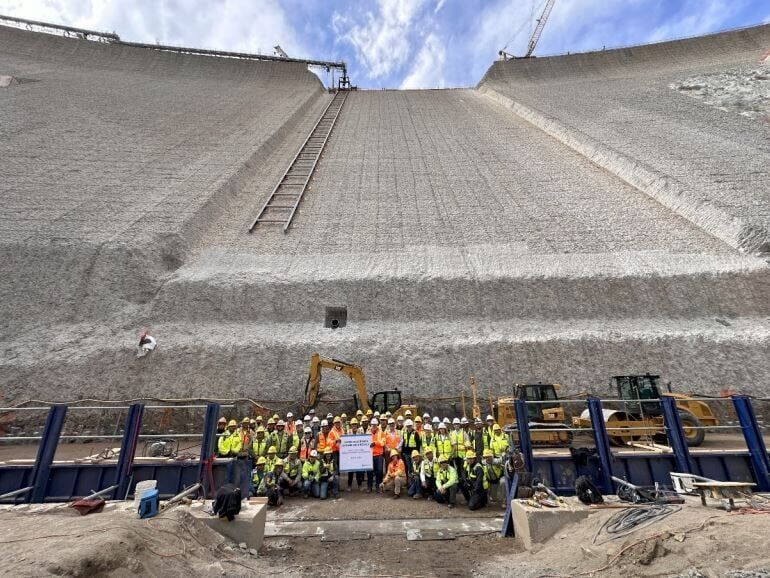
Members of the Denver-based federal appeals court considered on Friday whether they could intervene in an ongoing infrastructure project to enlarge a Boulder County dam after a trial judge deemed the underlying permit unlawful nearly two years ago. Denver Water...

Democratic group maps out path to Colorado House and Senate supermajorities
Marissa Ventrelli
marissa.ventrelli@coloradopolitics.com
Updated 12 hours ago
A national organization that works to elect Democrats to state legislatures has its sights on Colorado, unveiling a road map to establish a supermajority in both the House and Senate. Democrats have held a majority in the House since 2013...

10th Circuit upholds federal prohibition on juvenile handgun possession
Michael Karlik
michael.karlik@coloradopolitics.com
Updated 14 hours ago
The Denver-based federal appeals court concluded on Monday that Congress acted within its constitutional powers to make it a crime for juveniles to possess handguns in most instances. The decision from the U.S. Court of Appeals for the 10th Circuit...

Board of Peace demands Netanyahu cease Gaza airstrikes
The Washington Examiner
the-washington-examiner@coloradopolitics.com
Updated 15 hours ago
The Board of Peace is struggling to get Israel on board with its peace plan for Gaza as Israeli militia airstrikes continue to bombard the war-torn strip despite expectations for a ceasefire and de-escalation. Gaza City was hit repeatedly by...

Trump wants to give Iran ‘last chance’ to strike a deal before ‘decapitation’
Christian Datoc
christian-datoc@coloradopolitics.com
Updated 16 hours ago
President Donald Trump said this week’s talks with Iran will be the “last chance” for the Middle Eastern country to avoid a severe escalation in the war. Trump called off plans to strike Iran’s energy infrastructure over the weekend after...
Fauci told Congress higher COVID-19 fatality rate than he calculated in diary: ‘More like 0.2-0.3%’
Mia Cathell
mia-cathell@coloradopolitics.com
Updated 16 hours ago
Dr. Anthony Fauci privately calculated that COVID-19 had a significantly lower fatality rate than what he told Congress a month later at the outset of the pandemic. On March 11, 2020, the day that the World Health Organization declared COVID-19...

Senate advances judicial nominee, Montezuma County judge agrees to discipline | COURT CRAWL
Michael Karlik
michael.karlik@coloradopolitics.com
Updated 17 hours ago
Welcome to Court Crawl, Colorado Politics’ roundup of news from the third branch of government. A U.S. Senate committee advanced a judicial nominee from Colorado, plus a Montezuma County judge agreed to receive discipline for his misconduct that stops short...

Tunnel to Towers brings 9/11 steel to Denver
Nicholas Fogleman
nicholas.fogleman@denvergazette.com
Updated 20 hours ago
A nationwide tour commemorating the 25th anniversary of 9/11 brought a piece of the World Trade Center to Denver on Saturday as the Tunnel to Towers Foundation hosted a ceremony at the Wings Over the Rockies Air & Space Museum....
Top officials in Arizona’s Maricopa County agree on how to oversee elections | OUT WEST ROUNDUP
The Associated Press
the-associated-press@coloradopolitics.com
Updated 6 days ago
ARIZONA Officials agree on election oversight PHOENIX — Election officials in Arizona’s most populous county reached an agreement a week before the state’s July 21 primary on how to jointly oversee the vote, ending a prolonged legal battle. Republican Maricopa...
PREV
PREVIOUS

Centrist Project launches initial Colorado slate of unaffiliated legislative candidates, announces name change
The nonprofit formerly known as the Centrist Project, a group working to elect nonpartisan officials nationwide, on Monday unveiled a slate of four unaffiliated Colorado candidates running this year for the Legislature in the opening salvo of its assault on the two major parties’ unbroken rule of the state’s government. It also announced it’s changing […]

Cynthia Coffman appeals to disappointed Hillary Clinton voters in New York Times column
Sometimes you have to see your reflection, Colorado, to know what you look like. That was the case in the New York Times Sunday Review when op-ed columnist Frank Bruni reflected on the state of our political landscape. The piece, titled “The State Where Everyone Wants to be Governor,” is an interesting read for Mile […]