

SLOAN: Trump’s biggest successes in 2017 may have come in spite of him

If it were necessary to uncover a single word to define President Donald Trump’s inaugural year, it would have to be “incongruity.”
On one hand, we behold the burlesque Trump; the bombastic populist, the undisciplined, impulsive social media presence, the somewhat child-like figure who lacks the support of much of his own party – an impetuous caricature, one which the media and the left wish obsessively to cultivate, and with whose association Trump himself does little to reject.
And yet. And yet there is the gestating list of successes: an economy finally on its feet and growing; the undoing of the most egregious and legally questionable of the Obama era executive orders; the rollback of superfluous regulatory millstones; judicial appointments, including one to the Supreme Court, signaling a needed return to a constructionist judiciary; the military defeat of ISIS (better referred to by the derogatory Daesh, one small but significant thing the Obama administration got right in foreign policy), utterly inconceivable as little as a year ago; the realization of a long-standing and long-overdue U.S. policy of finally placing our embassy in Israel’s capital, and the restoration of tattered relations with the one functioning democracy in the region; and, at year’s end, the realization of another long-overdue policy – effective, economically sound tax reform.
How to account for this discrepancy, between clownish image and good policy? It is rather difficult, after all, to believe that this might somehow be all part of a larger plan on the part of the Donald; that he is, behind the façade, a master strategist of sorts.
For political observers surveying the past year in search of commentary, this disparity has not gone unnoticed. Ari Fleischer expressed it in football terms, likening the President’s first year (quarter, if you will) to a team that advances the ball downfield, only to keep losing yardage to avoidable penalties (he brilliantly equates the impulsive and petty tweets to “unnecessary roughness” penalties), many of which, while delivered by decidedly partial referees, were nonetheless earned. Daniel Henninger, in the Wall Street Journal, wrote of it as two presidencies in one year, existing in parallel; he writes of a “Trump of Twitter, who lives in a dark and deeply personal pool of feuds and fulminations” juxtaposed against a Trump of accomplishment. Henninger attributes the emergence of the latter presidency largely to the discipline instilled by retired General John Kelly, the clean-up chief of staff who adopted the job of bringing order to a chaotic White House in July.
…Trump … for all his bluster, has a decentralizing administration which, if he simply keeps out of its way, will start to drain power out of Washington, returning authority to the states where it belongs.
The best analysis, of course, comes from National Review’s Jonah Goldberg, who poses the question of whether the litany of successes happened because of the president, or in spite of him. Goldberg points out that few of these accomplishments had much at all to do with Trump; it was Congressional Republicans, not Trump, who got tax reform done; it was the military leadership, not it’s commander in chief, who defeated ISIS; it was, in large part, the sages at the Federalist Society who put up names for judicial appointments.
I believe Goldberg has it right. Trump, as many predicted, is fulfilling the role of figurehead, while wiser, more experienced people around him are doing the day-to-day work of executing a more realistic, effective agenda.
This is a hopeful sign that America, even her government, remains much more than the presidency – reassurance that the system which the framers vouchsafed us is built to continue, regardless (to a point) of who helms the executive branch. This is why Trump, despite his many…many…. faults, is inherently less dangerous than Mrs. Clinton would have been, or Mr. Obama was. Clinton, like Obama, sought concentration of power in Washington; Trump on the other hand, for all his bluster, has a decentralizing administration which, if he simply keeps out of its way, will start to drain power out of Washington, returning authority to the states where it belongs.
The more authority the federal government sheds, the more important state governors become. The dominant problem for governors during the past 70 years or so has been the lack of room in which to actually govern, so much of the energy and tax money having been pre-empted by Washington. It is possible – dare we hope – that a small amount of that energy and power may trickle back to the states; making it all the more important to elect governors who will not only know how best to use that power, but also possess the restraint necessary to avoid the abuse and excess which historically tempts those who find themselves with a surfeit of authority.
Trump, alas, will continue to be Trump; but Bannon and his ilk have been shown the door by the adult conservatives in the room, who continue to do their good work within the administration and, at times, in Congress. If they continue to succeed, they will make Mr. Trump less and less relevant; and our decisions in the state next November more and more so.

CoComandering? | Miller Hudson
Miller Hudson
miller-hudson@coloradopolitics.com
Updated 2 days ago
At 8 a.m., Friday morning, Aug. 28, 70 or 80 mostly bleary-eyed visitors to the Transportation Technology Center outside Pueblo packed a conference room to attend the Front Range Passenger Rail District’s (FRPRD) Board meeting. With the exception of those...

Even Dem court couldn’t abide theft of GOP seats | Dick Wadhams
Dick Wadhams
dick-wadhams@coloradopolitics.com
Updated 1 day ago
Thanks to the Colorado Supreme Court, Colorado voters will be able to reaffirm their support for the Independent Congressional Redistricting Commission after the court struck down the Democratic scheme to steal three Republican congressional seats. Billionaire-funded national Democratic groups from...

Chaotic meeting began with attempt to squelch public comment | Rachel Gabel
Rachel Gabel
rachel-gabel@coloradopolitics.com
Updated 1 day ago
When Attorney General Phil Weiser takes the governor’s office in January, he must immediately address the chaos of the latest round of appointees to the Colorado Parks and Wildlife Commission to assure stakeholders he’s willing to put pressure on the...

Graduated income tax proposal is a flat tax in disguise | Jon Caldara
Jon Caldara
jon-caldara@coloradopolitics.com
Updated 4 days ago
“Youth is wasted on all the wrong people.” That’s one of my favorite lines from “It’s a Wonderful Life.” The older I get, the less it sounds like a joke. Every generation inherits victories it did not win. Young Americans...
AI optimism vs. anxiety — podcasters debate this every night | Tom Cronin
Tom Cronin
tom-cronin@coloradopolitics.com
Updated 2 days ago
President Donald Trump, CNBC’s “Mad Money” host Jim Cramer and entrepreneurial “accelerationists” celebrate the AI revolution and the infrastructure data-center build-out. Cramer recently gushed, “I like data centers so much that I wish I lived in one.” Trump criticized any community...
The dissonance of an American Jew thinking about Israel | SONDERMANN
Eric Sondermann
eric-sondermann@coloradopolitics.com
Updated 5 days ago
The Jewish High Holidays will soon be upon us. The third anniversary of Oct. 7 will then quickly follow. Three weeks later, Israeli voters will head to the polls to elect all 120 members of its parliament, the Knesset and...
President Trump puts Colorado farmers and ranchers first | GUEST COLUMN
Colorado Politics
colorado-politics@coloradopolitics.com
Updated 4 days ago
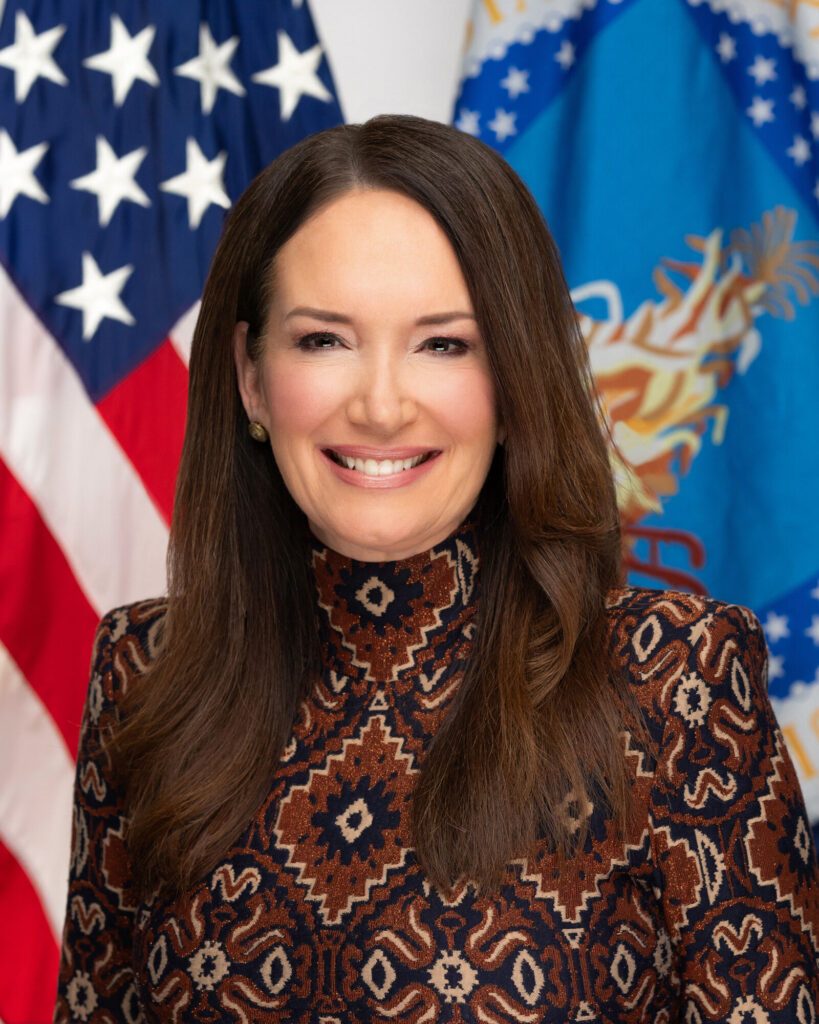
By Brooke L. Rollins Ever since Colorado was admitted to the union 150 years ago this month, farmers and ranchers across the state have kept our nation’s food supply secure and our freedom alive. From cattle ranchers on the eastern plains to specialty crop producers on the Western Slope, Colorado is home to more than 36,000...
No license, no inspection, no accountability — who is protecting women? | GUEST COLUMN
Catherine Wheeler
catherine-wheeler@gazette.com
Updated 4 days ago
In early August, Massachusetts Gov. Maura Healey signed into law expansion of abortion from 24 weeks through the entire pregnancy. While many celebrated, Colorado serves as a staunch warning of the unintended consequences of unrestricted, unregulated abortion. Whether pro-life or pro-choice,...
Gong-Show Griswold’s latest data dump a disaster | George Brauchler
George Brauchler
george-brauchler@gazette.com
Updated 5 days ago
Last week, Colorado Secretary of State Jena Griswold’s office discovered they exposed for weeks the addresses of more than 130,000 “confidential voters” — including victims of sexual assault, domestic violence — and her political opponent in the attorney general’s race,...
Colorado’s education paradigm déja-vu | Paula Noonan
Paula Noonan
paula-noonan@coloradopolitics.com
Updated 5 days ago
Déja-vu for 10 years. In 2015-2016, state standardized testing was fully integrated into teacher performance evaluation. The tests comprised 50% of teacher “performance.” The idea was to follow the General Electric “rank-and-yank” human resources model. At GE, the model went...
PREV
PREVIOUS

Members of Congress should be stripped of benefits for sexual misconduct
A fundamental principle of military leadership is that you lead by example. Servant leadership is based on the concept that you set the standard of ethical conduct that you expect others to follow. Unfortunately, that concept has been turned on its head in Washington. Too many of our elected leaders hold themselves to a different […]

Your year-end charitable donation could land you on Denver’s list
Donors may regret writing that year-end check to their favorite Colorado nonprofit, particularly if there’s a chance that nonprofit will have something to say about proposed laws in the city of Denver. Under a recently enacted Denver ordinance, nonprofits that spend more than $500 communicating with voters about a ballot question must give the city […]