

The Gazette: More pot is not good for our kids
To believe surveys, we must pretend Hillary Clinton is president.
And this: increase the pot supply, and consumption by kids goes down. It must be true, because “surveys” say so.
Hallelujah. More is less. Let’s flood the streets with cigarettes and beer, and maybe teens will smoke and drink less.
If soft red gumdrops fell from the sky, a survey would tell of declining rates of gumdrop consumption, obesity and diabetes.
“More doctors smoke Camels than any other cigarette!” said an old tobacco ad, when Big Tobacco promoted the myth that cigarettes were “physician” tested and approved.
Counterintuitive claims make for easy and valuable headlines.
Ann Reid, director of the National Center for Science Education, wrote in the Huffington Post about a “scientific study” that proves “scientific studies can’t prove anything.” She explained the position of an increasing chorus of critics who question the motives and tactics of surveys.
“Incentives that reward novelty and discourage replication,” Reid explained, “created an environment in which fraud is more likely to go undetected, perhaps even encouraging systemic fraud.”
Americans are onto it. A survey by the data investment management firm Kantar found 75 percent of Americans “believe that most polls… are biased toward a particular point of view.”
Minor wording changes can cause dramatically different results. A “scientific” CNBC poll found 46 percent of Americans opposed “Obamacare,” but the number fell to 37 percent when surveyors asked the same respondents if they opposed the “Affordable Care Act.” Same law, different description.
Surveys tell us Americans hate “the death tax” and love “the estate tax.” Same tax, different brands.
Combine confusion with dishonesty among survey respondents, and the outcomes are little more than junk.
“Ask some survey data experts and you’ll hear that up to 50 percent of people in any given sample will provide dishonest responses on any given survey,” explains an article titled “5 reasons why survey respondents don’t tell the truth,” published by Infosurv Research.
The prospect of truthful survey results becomes even lower when dishonesty and confusion meet the motivation of guarding personal interests.
Ask any pot-using teenager about the forbidden activity and a lie will typically ensue. The teenager perceives no gain, under any circumstance, by confirming drug use to an inquiring adult. In fact, teens who appreciate marijuana legalization may feel compelled to protect the law by downplaying its effect on young people.
“State and federal surveys have declared that Colorado youths are not using marijuana more than before the drug became legal… and that use is actually dropping,” explained the lead of a recent story by David Migoya in The Denver Post.
Anyone who believes this has no regular exposure to a large number of teens from diverse backgrounds.
The story told how law-enforcement officers “who interact with students each school day… offer a starkly different perspective.”
Officers explained recent data are flawed by the fact they issue fewer citations for teenage marijuana use because of a 2012 law that eliminated “zero tolerance” toward pot in schools. Another policy revision authorized each school to devise its own policies regarding pot use among students, creating new challenges for obtaining and managing data.
A survey of Colorado school resource officers found 86 percent believe marijuana use among students has risen “dramatically” since legalization and commercialization.
The Post found institutional underreporting of pot infractions, including among schools within Colorado Springs District 11. The district’s mandatory report to the state claimed no contacts with law enforcement during the 2015-16 school year, while the Colorado Springs Police Department documents handling 64 marijuana incidents at D-11 schools during the reporting period.
ColoradoPolitics.com found another group of professionals who balk at surveys that claim a reduction in teen pot use since legalization and commercialization.
“High school principals in parts of Denver with high concentrations of pot businesses say the opposite is true, and an organization that works with homeless youths says marijuana use is up sharply in recent years,” explains a ColoradoPolitics story by Earnest Luning.
Surveys told us Clinton would win. They were observably false, just like those that say Big Commercial Pot is good for kids.
For the real story, ask principals, teachers, social workers, and cops. They don’t need polls to explain the damage this free-for-all is doing to Colorado’s next generation of adults.


Trump lowers flags to half-staff for Dolly Parton: ‘The World loves you’
Naomi Lim
naomi-lim@coloradopolitics.com
Updated 16 hours ago
President Donald Trump is honoring the life of country music legend and philanthropist Dolly Parton by ordering federal buildings across the country to lower flags to half-staff for a week. “Very sad to report that Dolly Parton, one of the...
Ted Cruz suggests GOP realignment coming after Trump leaves office
Emily Hallas
emily-hallas@coloradopolitics.com
Updated 16 hours ago
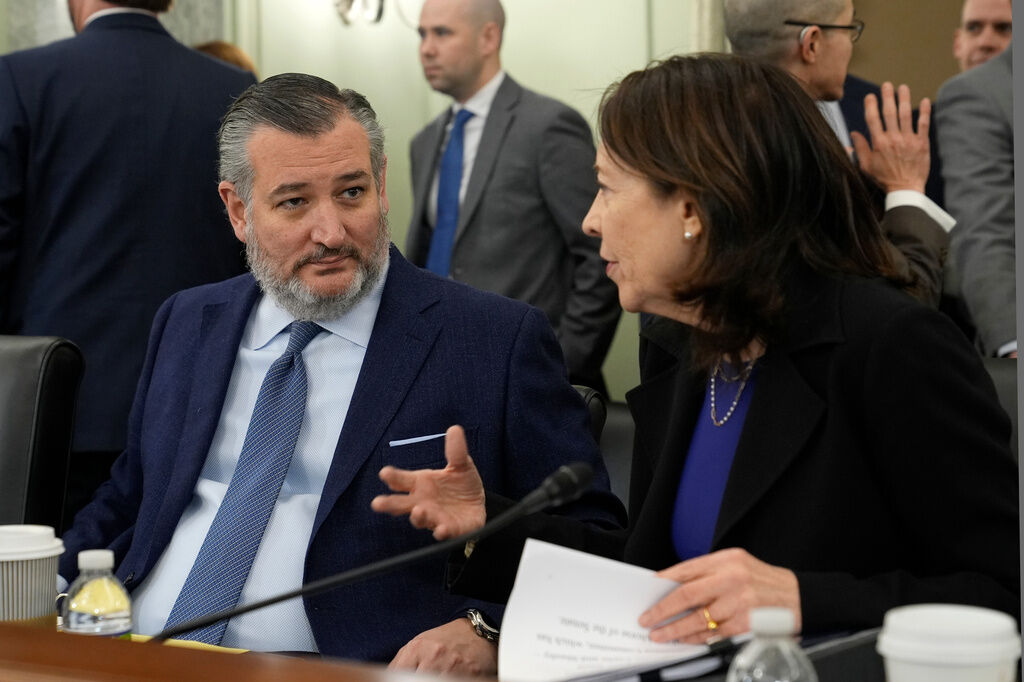
Sen. Ted Cruz (R-TX) on Monday suggested the Republican Party could embrace a directional shift after President Donald Trump leaves office, a transition that promises to leave a gaping hole in the GOP. Cruz is known as a critical ally...

2 Colorado State troopers shot near Woodland Park; suspect killed
DEBBIE KELLEY
debbie-kelley@coloradopolitics.com
Updated 16 hours ago
Two Colorado State Patrol troopers were hospitalized, and a suspect is dead after a shooting during a traffic stop Tuesday. The initial incident happened at about 7:15 a.m., when a resident reported suspicious activity in the area near milepost 286...

Aurora moves forward with data center regulations
Kyla Pearce
kyla.pearce@gazette.com
Updated 16 hours ago
The Aurora City Council approved moving forward with two new regulations on data centers and directed staff to come back at the next study session with others. At a council meeting in early August, council members directed city management to...

Aurora City Council considers stricter food truck regulations
Kyla Pearce
kyla.pearce@gazette.com
Updated 16 hours ago
The Aurora City Council is considering passing laws to limit the number of food trucks on properties in the city and how and when they operate. Councilmember Angela Lawson, who sponsored the ordinance, said she understands the importance of food...

Denver murder conviction reversed for incomplete self-defense instruction
Michael Karlik
michael.karlik@coloradopolitics.com
Updated 14 hours ago
Colorado’s second-highest court reversed a defendant’s murder conviction last week because a Denver judge gave an incomplete instruction to the jury about the man’s right to self-defense. Donald R. Gonzales and Gary McLaughlin met up in a Capitol Hill parking...
Colorado lawmaker, House leaders named in workplace-retaliation lawsuit
Marianne Goodland
marianne.goodland@coloradopolitics.com
Updated 17 hours ago
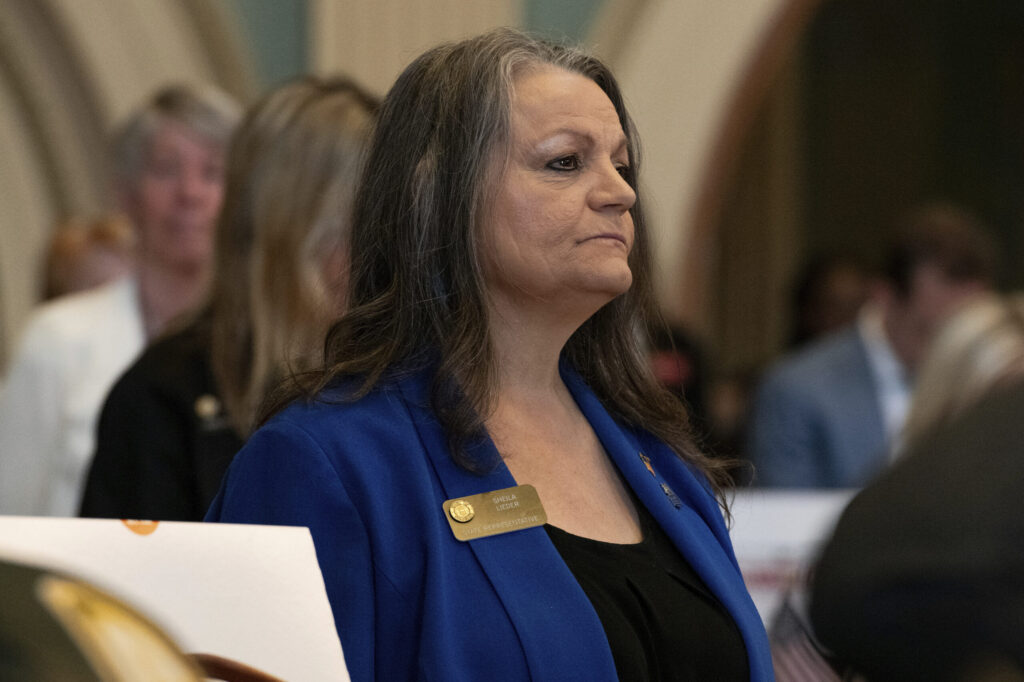
A former legislative aide has filed a lawsuit alleging she was mistreated, illegally directed to perform campaign work and harmed by a House leadership structure she charged was fragmented, politicized and ineffective at protecting employees. The lawsuit, filed by Jennifer...

Secret Service confirms awareness of Iranian state media video threatening Barron Trump’s life
The Associated Press
the-associated-press@coloradopolitics.com
Updated 22 hours ago
WASHINGTON (AP) — The U.S. Secret Service has confirmed it is aware that Iranian state media has aired a video that appears to threaten the life of Barron Trump, President Donald Trump’s youngest son. “The U.S. Secret Service is aware...

Federal judge hears arguments about Colorado’s 3-day gun purchase waiting period
Michael Karlik
michael.karlik@coloradopolitics.com
Updated 22 hours ago
A federal judge heard arguments on Monday about the constitutionality of a 2023 Colorado law that generally imposes a three-day waiting period on firearm purchases after the initiation of a background check. The test that the U.S. Supreme Court created...

Denver auditor finds oversight failures in $175.6M 16th Street project
Nico Brambila
nico.brambila@denvergazette.com
Updated 16 hours ago
Surprise historic sewer discovery delayed completion a year, cost $18M The Denver Auditor recently found significant oversight and contracting problems with the $175.6 million 16th Street Improvement Project, including an $18 million contract increase and a nearly one-year extension that...