

Colorado congressmen criticize regulatory burdens for projects
WASHINGTON – Colorado U.S. Rep. Scott Tipton used the West Elk Mine near Somerset as an example of unnecessary delays from environmental regulatory procedures during a congressional hearing Wednesday.
The coal mine won U.S. Forest Service approval to expand its operations in September. Work to build roads and methane vents on the site is scheduled to begin next spring.
Tipton, R-Cortez, said regulatory requirements delayed the mine expansion by eight years, needlessly depriving some residents of jobs and income.
“They have constant lawsuits that are coming up that are stymying that,” Tipton said during a hearing of the House Natural Resources Committee.
He made the comments as Congress considers revisions to the National Environmental Policy Act, a 1970 law designed to protect the environment from industrial or government projects that could damage the environment.
It requires any organization that wants to build a project to submit environmental impact statements to the federal government. Agencies that review and decide whether to approve the statements can sometimes take years to complete the process.
The projects typically include highways, bridges, dams, oil wells and mines.
Legislative revisions being considered by Congress would require all federal agencies participating in an environmental review to appoint a single agency to consolidate all their procedures.
The agencies also would be required to meet before they begin their reviews to coordinate their efforts and expected costs.
Tipton asked the head of the public policy foundation Common Good why environmental reviews in Germany usually are completed in less than two years, compared with an average of more than 4-½ in the United States.
“It’s because they have clear lines of authority to make decisions,” said Philip K. Howard, founder and chief advocate for Common Good’s effort to simplify government.
He referred to frequent complaints by project leaders about different regulatory approvals required by multiple U.S. agencies. They can include the Environmental Protection Agency, the Bureau of Land Management, the U.S. Forest Service and others.
The German government appoints a single agency to oversee all regulatory approvals.
“So that streamlining process, that authority, is something that is going to be really critical,” Tipton asked.
“Authority is critical in a culture” to reduce regulatory barriers, Howard said.
Tipton and Colorado U.S. Rep. Doug Lamborn, R-Colorado Springs, another member of the Natural Resources Committee, raised concerns about lawsuits they said could slow economic development.
“If a lawsuit is filed, will that hold up a project,” Tipton asked.
Howard said lawsuits can add to the heavy regulatory burden projects face.
“Before you know it, years have gone by,” he said.
He supported the idea of a single agency to handle all regulatory requirements for new projects. He also said courts should be limited to ruling only in cases in which there is evidence of illegal activity in projects.
“Not just nitpicky things,” Howard said.
A lawsuit over the West Elk Mine expansion is likely soon from by the Denver-based environmental group WildEarth Guardians, whose administrators have said they are considering a citizens lawsuit under the Clean Air Act.
Lamborn said in a statement that the National Environmental Policy Act (NEPA) “has become a magnet for litigation, with hundreds of NEPA-related lawsuits against the federal government filed or open each year.”
Colorado-based environmentalists disputed criticisms by the state’s Republican congressmen about NEPA’s failings.
“NEPA has worked in Colorado to result in better decision-making and better environmental outcomes,” said Ted Zukoski, a Denver-based attorney for the environmental defense group Earthjustice.
He mentioned the example of the Roan Plateau in northwest Colorado, which the Bureau of Land Management approved for oil and gas development. A lawsuit by local residents forced the agency to revise its approvals in 2016 after a federal judge ruled the agency violated NEPA.
Local residents were concerned about damage to wildlife and biodiversity in the Roan Plateau.
Scott Miller, a regional director for the environmental group The Wilderness Society, added, “Congress should not be undermining NEPA or the clean air, clean water, wildlife, wildlands and public participation it protects.”

Colorado board permits state to appeal injunction against arthritis drug price cap
Marissa Ventrelli
marissa.ventrelli@coloradopolitics.com
Updated 5 hours ago
A Colorado board voted Friday to allow the Attorney General’s Office to fight an injunction against a price cap on a drug that treats arthritis. A U.S. district court judge had granted the company Amgen a preliminary injunction, temporarily blocking...

Federal judge rejects constitutional claims, ‘expressions of hatred’ by Club Q defendant
Michael Karlik
michael.karlik@coloradopolitics.com
Updated 5 hours ago
A federal judge rejected a defendant’s claims that he received constitutionally ineffective assistance of counsel while facing federal hate crime and firearms charges for murdering five people at a Colorado Springs LGBTQ nightclub in 2022. Anderson Lee Aldrich is serving...

Divided 10th Circuit upholds Colorado congestion fee on car rentals
Michael Karlik
michael.karlik@coloradopolitics.com
Updated 1 hour ago
The Denver-based federal appeals court concluded on Monday that a 2024 “congestion impact fee” that lawmakers imposed on short-term vehicle rentals did not conflict with a federal prohibition on certain airport-related charges. Beginning in the 1970s, Congress began limiting the...

Space Force should measure workforce needs as it prepares to double in size, GAO report says
Mary Shinn
mary-shinn@coloradopolitics.com
Updated 10 hours ago
The Space Force needs more people. It’s just not precisely sure how many more. A Government Accountability Office report released earlier this month found that the youngest and smallest military branch does not have a process to consistently or accurately...

Colorado schools receive $24 million for free meals program
Marissa Ventrelli
marissa.ventrelli@coloradopolitics.com
Updated 5 hours ago
The Colorado Department of Education is providing Colorado schools with nearly $24 million in grant funding to implement a free lunch program. Approved by voters in 2022, the Healthy School Meals for All provides free breakfast and lunch to all...
Secret Service agent placed on administrative leave after arrest for near-deadly hazing ritual
Claire Carter
claire.carter@washingtonexaminer.com
Updated 12 hours ago
A Miami Secret Service agent in Florida was placed on administrative leave following his arrest on Sunday in connection with a near-deadly hazing incident at a University of Miami fraternity. Marquez Christopher Pinder, 29, was arrested alongside two other individuals...
Forest fire west of Sedalia prompts evacuations in Douglas County
Nicholas Fogleman
nicholas.fogleman@denvergazette.com
Updated 15 hours ago
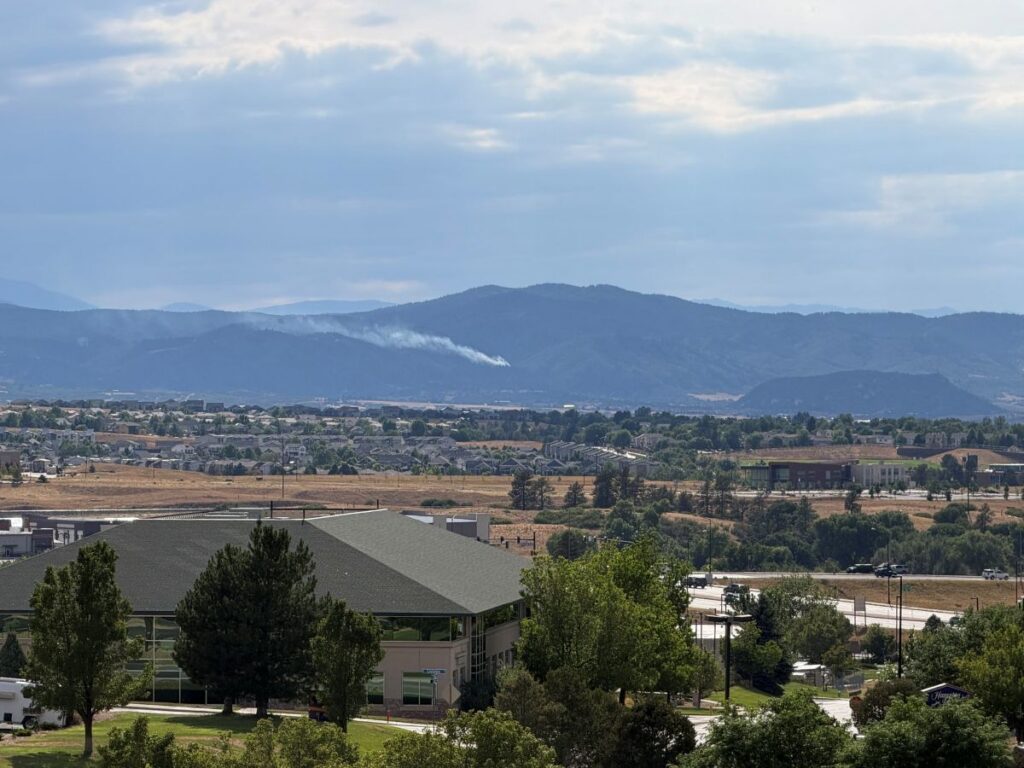
Emergency crews are responding to a forest fire burning west of Sedalia, prompting evacuation orders for nearby residents Sunday afternoon. At about 5 p.m. Sunday, the Douglas County Sheriff’s Office issued an evacuation order for residents within a 2-mile radius...

Airstrikes have paused and talks are pressing forward. But can the US and Iran take the off-ramp?
The Associated Press
the-associated-press@coloradopolitics.com
Updated 15 hours ago
WASHINGTON (AP) — The U.S. military has paused its airstrikes on Iran after nearly two weeks of intensifying bombing, while diplomatic efforts have pushed forward to try to avert a return to all-out war. But it remains to be seen...
Penrose fortune paved the way for Colorado Springs to be a military, space and sports town
Mary Shinn
mary-shinn@coloradopolitics.com
Updated 15 hours ago
Colorado Springs is always working to catch the next big economic wave. “We’re always trying to figure out what the next thing is going to be,” explained Matt Mayberry, director of the Colorado Springs Pioneers Museum. In the early days,...
Colorado Politics Calendar July 27-Aug. 2
Rachael Wright, Special to Colorado Politics
rachael.wright@coloradopolitics.com
Updated 6 days ago
CoPo’s weekly political calendar will help you find political and public-policy events throughout Colorado. It includes candidate and issue campaign events, public policy meetings, court hearings, state and local party conventions, assemblies, debates, rallies, parades, speaking engagements, traveling dignitary appearances,...