

U.S. Senate health treatment proposals offer hope for Colorado programs

WASHINGTON – Two U.S. Senate hearings this week bring prospects for more federal support for the kind of medical research and preventive programs that have marked Colorado health care efforts in recent years.
This week the Senate Health, Education, Labor and Pensions Committee heard witnesses describe promising treatments from gene editing.
“We’re really on the verge of new horizons with this therapy,” Katrine Bosley, chief executive officer of Cambridge, Mass.-based Editas Medicine Inc., told the Senate panel.
The hearing was intended to help lawmakers decide how to allocate billions of dollars of research and treatment funding. Gene editing and preventive health care are high priorities as Congress considers new legislation.
Gene editing refers to genetic engineering in which defective or diseased portions of DNA are chemically cut away and replaced through genetic recombination. Scientists say gene editing could be used to cure birth defects and genetically based diseases.
Some of the research that has converted gene editing from an unreliable, cumbersome and expensive treatment to a practical medical procedure has been done recently at Colorado State University and the University of Colorado Anschutz Medical Campus.
The University of Colorado’s Functional Genomics Facility is a clearinghouse for gene editing tools used for genetic research studies throughout the state.
“These studies have involved gene editing in human cells as well as rodent models of various diseases,” Joaquin Espinosa, a University of Colorado pharmacology and genomics professor, told Colorado Politics.
Some of the Colorado work is supported by grants from the National Cancer Institute.
“Within this framework, Colorado is strongly positioned to become a leader in the field of gene-editing for applications in human medicine,” Espinosa said.
The Senate hearing was held one day before scientists in Oakland, Calif., announced that for the first time they have edited a gene inside the body of man suffering from Hunter syndrome.
The 44-year-old man received billions of copies of a corrective gene intravenously.
Persons afflicted with Hunter syndrome lack a gene for an enzyme that breaks down carbohydrates, leading to infections, neurological disorders and distorted facial features. Until the treatment in Oakland on Wednesday, there was no cure for Hunter syndrome.
If the first treatment is successful, it is expected to lead to widespread use of gene editing for many diseases.
Senators during this week’s hearing asked whether placing new genes into human beings could lead to unintended consequences, such as cancer.
The expert witnesses acknowledged there could be unforeseen risks but said Food and Drug Administration regulatory oversight is likely to minimize the health hazards.
Jan Leach, a Colorado State University plant biologist, said techniques being used now have reduced the dangers of gene editing.
“One positive with genome editing, whether used in animals or plants, is that the changes are very precise, minimizing off-target or unintended effects and increasing safety,” she told Colorado Politics.
Also this week, the Senate Health, Education, Labor and Pensions Committee held a separate hearing with U.S. Surgeon General Jerome M. Adams to consider greater federal investment in preventive health care.
U.S. Sen. Michael Bennet, a Democrat from Denver, is a member of the committee. He did not speak at either of the hearings.
“Chronic diseases – like heart disease, cancer, diabetes, and chronic obstructive pulmonary disease – are the leading cause of death and disability in the U.S. and among the most costly, yet these afflictions may be preventable,” Adams said in his testimony.
Economic losses from preventable diseases include hundreds of billions of dollars each year, he said.
He recommended that employers offer financial incentives, such as health insurance premium subsidies, for workers who maintain recommended body weights, low blood pressure or other signs of good health. The benefits for companies would be greater than the costs, Adams said.
Public investment, such as building bike lanes, also return more to the economy than they cost, Adams said. He claimed $12 in health care savings from bike lanes for every $1 invested to build them.
Some of Adams’ recommendations are similar to disease prevention provisions in Colorado Gov. John Hickenlooper’s 2013 State of Health agenda.
“The governor’s State of Health has served as our primer for advancing preventive health, allowing us to invest in and emphasize multiple preventive health strategies including decreasing obesity, reducing unintended pregnancy, improving immunization rates and preventing youth use of marijuana and tobacco,” said Larry Wolk, executive director of the Colorado Department of Public Health and Environment.


Colorado Politics Calendar Sept. 7-13
Rachael Wright, Special to Colorado Politics
rachael.wright@coloradopolitics.com
Updated 5 days ago
CoPo’s weekly political calendar will help you find political and public-policy events throughout Colorado. It includes candidate and issue campaign events, public policy meetings, court hearings, state and local party conventions, assemblies, debates, rallies, parades, speaking engagements, traveling dignitary appearances,...

Blue-collar support trends highlighted GOP gains among rank‑and‑file workers | A LOOK BACK
Rachael Wright, Special to Colorado Politics
rachael.wright@coloradopolitics.com
Updated 4 days ago
Forty-five years ago this week: Kathy Oatis of the Colorado AFL-CIO’s Committee on Political Education said that organized labor had a negative image with the American voter. “I don’t think the country is against us,” said Oatis. “I think the...

The dissonance of an American Jew thinking about Israel | SONDERMANN
Eric Sondermann
eric-sondermann@coloradopolitics.com
Updated 4 days ago
The Jewish High Holidays will soon be upon us. The third anniversary of Oct. 7 will then quickly follow. Three weeks later, Israeli voters will head to the polls to elect all 120 members of its parliament, the Knesset and...
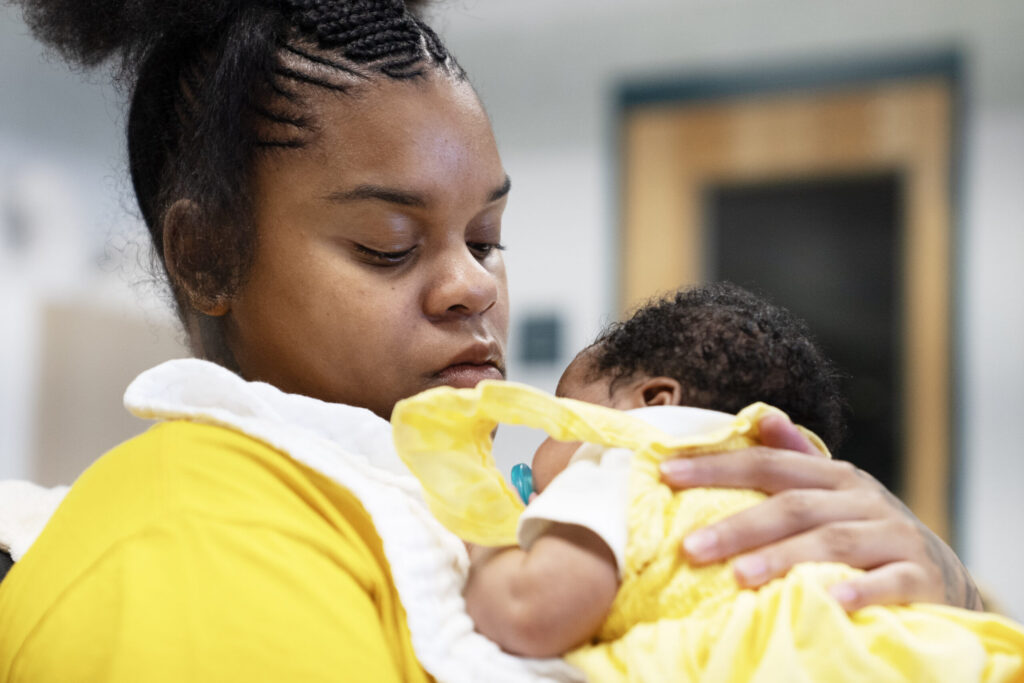
Parenting from prison: Inmates hope to be present in their children’s lives, while physically absent
Marianne Goodland
marianne.goodland@coloradopolitics.com
Updated 18 hours ago
The room was decorated with balloons, the tables sparking bright with colors as the smell of pizza and cake wafted through the air. As did music. This was, after all, a father-daughter dance. Except this was not a typical father-daughter...

Colorado House ethics committee issues ‘stern letter’ to Democrat over caucus funds mismanagement
Marianne Goodland
marianne.goodland@coloradopolitics.com
Updated 23 hours ago
The Colorado House ethics committee on Friday voted unanimously to issue a “stern letter” to Rep. Mandy Lindsay, D-Aurora, regarding her mismanagement of House Democratic caucus funds. The committee further voted to request that Lindsay resign as Democratic Caucus co-chair...
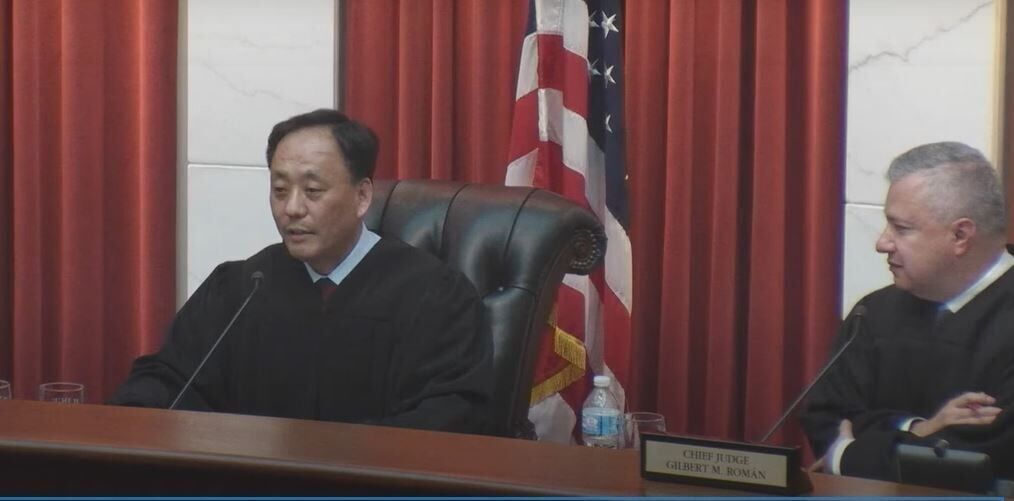
Appeals court confirms Colorado judges can compel electronic records from out of state
Michael Karlik
michael.karlik@coloradopolitics.com
Updated 22 hours ago
Colorado’s second-highest court clarified on Thursday that judges are empowered to compel out-of-state companies to produce electronic records under state law. El Paso County jurors convicted Mischa Jargowsky on three counts of money laundering and one violation of Colorado’s organized...

Federal judge extends block on Trump executive order seeking to limit mail voting in the midterms
The Associated Press
the-associated-press@coloradopolitics.com
Updated 3 days ago
A federal judge on Friday extended her prohibition against the U.S. Postal Service implementing President Donald Trump’s executive order seeking to limit mail voting during the midterms, putting another major obstacle in the way of the administration as the first...
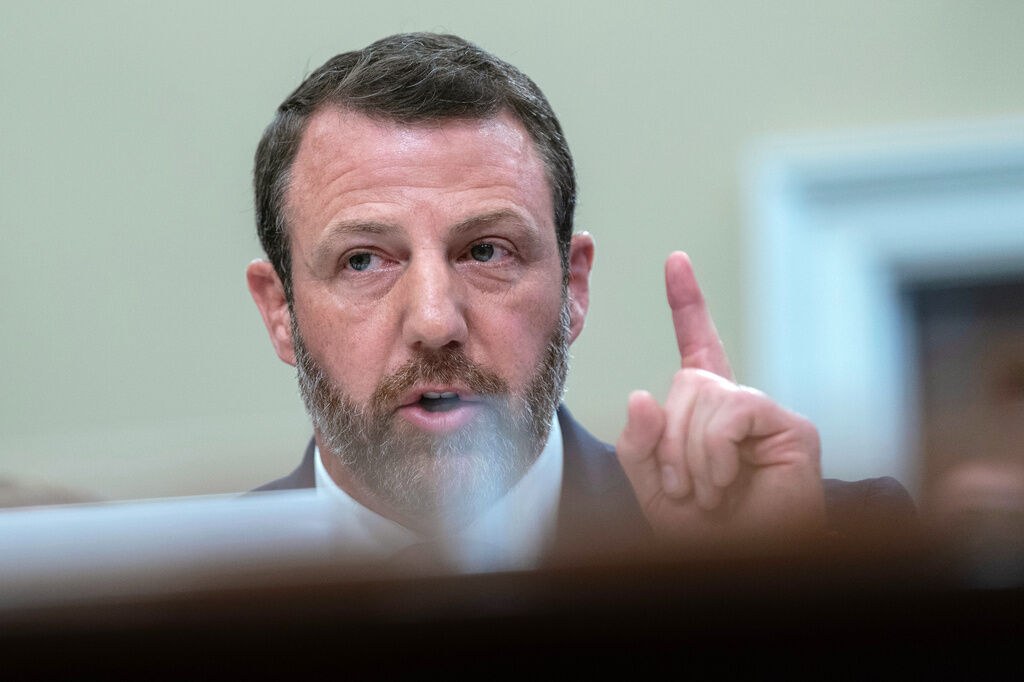
Mullin asks DOJ to review voter data sharing tied to Zuckerberg-funded nonprofit group
The Washington Examiner
the-washington-examiner@coloradopolitics.com
Updated 21 hours ago
Washington Examiner Homeland Security Secretary Markwayne Mullin asked the Justice Department this week to review whether election-related nonprofit groups, some with multimillion-dollar backing from a Mark Zuckerberg-linked nonprofit, improperly received sensitive state motor vehicle and voter-registration data. In a letter...

Colorado secures FEMA support for wildfire, flooding and mudslide recovery
Marissa Ventrelli
marissa.ventrelli@coloradopolitics.com
Updated 2 days ago
Federal authorities on Friday approved Colorado’s request for federal public assistance to help communities devastated by the Aspen Acres and Gold Mountain Fires. The Federal Emergency Management Agency did not announce how much the state would receive but confirmed that...

State seeks $50K penalty against GOP candidate Victor Marx over alleged campaign finance violations
Deborah Grigsby
deborah.smith@denvergazette.com
Updated 2 days ago
Republican gubernatorial candidate Victor Marx is looking at more than $50,000 in fines in what the Elections Division of the Office of the Secretary of State calls “unprecedented” campaign finance violations. The state has not imposed that fine yet, and...
PREV
PREVIOUS

Keating poll shows Democrat Cary Kennedy leading Republican Tom Tancredo in Colorado governor's race
A new statewide poll of likely Colorado voters shows Democrat Cary Kennedy ahead of Republican Tom Tancredo by 16 points in a general election match-up between the leading gubernatorial candidates. According to the survey, conducted over the past week by Colorado-based Democratic polling firm Keating Research and obtained exclusively by Colorado Politics, Kennedy, a former […]
The Aurora Sentinel: House Speaker Duran should do the ‘right thing,’ too — step down from leadership
We agree with Democratic Colorado House Speaker Crisanta Duran that fellow Rep. Steve Lebsock should resign in light of numerous accusations of sexual harassment – and that she do the “right thing” herself by resigning her leadership position in light of her extraordinarily bad judgment in the scandal. Lebsock, a Thornton Democrat, has been accused […]