

SLOAN: Time to evaluate the legalization experiment
Colorado Christian University hosted a fascinating debate last week on the relative merits of Colorado’s grand marijuana experiment, with Jeff Hunt, Executive Director of the University’s in-house think tank Centennial Institute, taking on marijuana industry attorney Robert Corry.
The event was well-timed; with the national posture tilting decidedly in favor of liberalization of marijuana laws, it seems prudent to take an objective look at how such liberalization has been playing out in the states where it has been applied.
It is difficult to deny that the state’s experience with marijuana legalization has not been entirely benign, but Mr. Corry managed to anyway; testament, perhaps, to his courtroom-honed skill at defending the indefensible.
Yet in Colorado we do find some challenges; Mr Hunt outlined some of the difficulties, including an escalation in traffic accidents and deaths related to marijuana use, and a spike in the number of marijuana-intoxicated young people appearing in hospital emergency rooms.
Neither issue presents a tidy fix. The traffic-accident problem, for instance, is paradoxical; we know that a) we are experiencing a substantial increase in the rate of accidents and deaths on the roads, which are b) directly related to marijuana intoxication at the time of the accident. However, we are also informed that c) there is no reliable and practical roadside test, nor indeed any universally accepted blood level of THC demarking verifiable intoxication, for which to use as an enforcement measure to combat these deadly figures.
One could argue that it is forgivable, prudent even, to insist that we better ascertain the nature and characteristics of the active ingredient of a substance, hitherto legally prohibited, before unleashing it to relatively widespread use in society.
Such practical problems affirm that the question of how to handle drug use, and the laws concerning it, in this country is a notoriously difficult one.
At least the issue is being addressed, soundly or not, at the proper level. One of the more admirable traits of the American political system is the oft-forgotten concept of federalism; individual states serving as laboratories of democracy. Of course, part of that equation is that some of those experiments are destined to fail. The allure of federalism lies not only in the freedom and imaginative energy allowed expression at the state level, but in the fact that if an innovation is a gawdawful idea, it is better that its failure, and the consequences of its failure, be confined to a single state rather than the entire nation. Thank goodness, for instance, that Vermont’s ill-fated and short lived single payer health care experiment was isolated to the Green Mountain State.
There are, historically, legitimate and thoughtful conservative arguments for marijuana legalization. Folks like Mr. Corry ecstatically point out to conservative crowds that such luminaries as Wm. F. Buckley Jr. and Milton Friedman were proponents of legalization. But the examination of their proposals pretty much stops there. The traditional argument advanced by such thinkers – one I feel remains valid – is that legalization ought to be a vehicle for the control of marijuana use; in other words, a weapon brought to bear for the express purpose of solving the drug problem. Buckley was quite clear and adamant on this point. He proposed that marijuana be legalized, in order to alleviate some of the problems created by the War on Drugs – mostly revolving around public cost and allocation of police resources – but subsequently be assigned the same social sanction attached to other undesirable activities, such as smoking, or contracting syphilis, or using racially offensive language.
The problem in Colorado with our legalization experiment is that it took an entirely different approach; rather than seeking legalization as a method for controlling the drug problem, marijuana proponents, by and large, simply proclaim that there is no problem – that marijuana, if anything, is something of a wonder drug with almost infinite, magical benefits.
I don’t know – and Mr. Corry doesn’t know – whether or not recreational marijuana provides real benefits or not. All proffered evidence is anecdotal, untested. THC’s properties make it remarkably resistant to research. Its psychiatric effects are notoriously unpredictable, varying widely between individuals.
What we do know is that, whatever your stance on legalization, it’s commercialization has generated some problems that ought to be intolerable in a civilized society, and pretending the problems do not exist is not a responsible option.
With the consequences of marijuana legalization becoming more pervasive, and the specter of widespread liberalization of drug laws rising with an air of inevitability, we would be wise to take a step back, and ask objectively the question: Has legalization advanced or hindered our efforts as a society to address the public problems created by drug use?

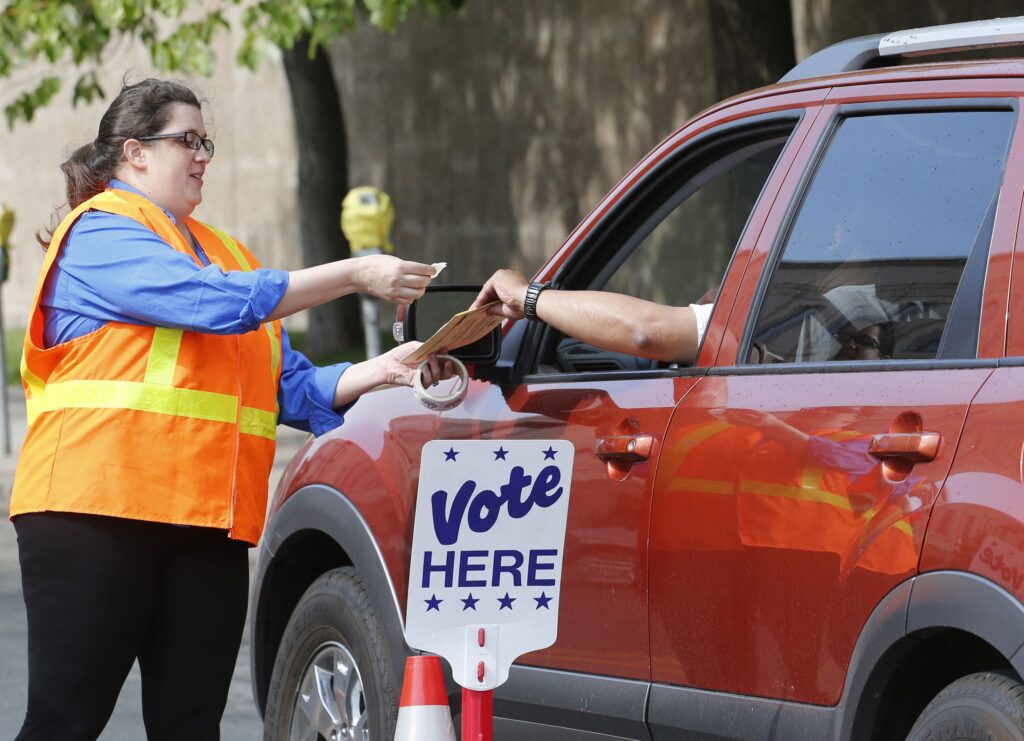
Registered voters on the eve of the 2026 primaries | Cronin & Loevy
Tom Cronin Bob Loevy
tom-cronin-bob-loevy@coloradopolitics.com
Updated 1 day ago
The Colorado Secretary of State’s Office has published the latest voter registration figures for the state and its counties as of June. Colorado ranks among the highest states for independent, or unaffiliated, voters. Only Alaska and Massachusetts have more. New Hampshire, New Jersey, Maine and Oregon also rank highly. So here...

A room for Sundance, a reality check for big-government Boulder | Jon Caldara
Jon Caldara
jon-caldara@coloradopolitics.com
Updated 3 days ago
There are few things more satisfying to watch than socialists getting mugged by reality. The Sundance Film Festival is invading my hometown of Boulder early next year. Sundance drew 85,000 attendees last year in Park City, Utah. Boulder’s hotel room...
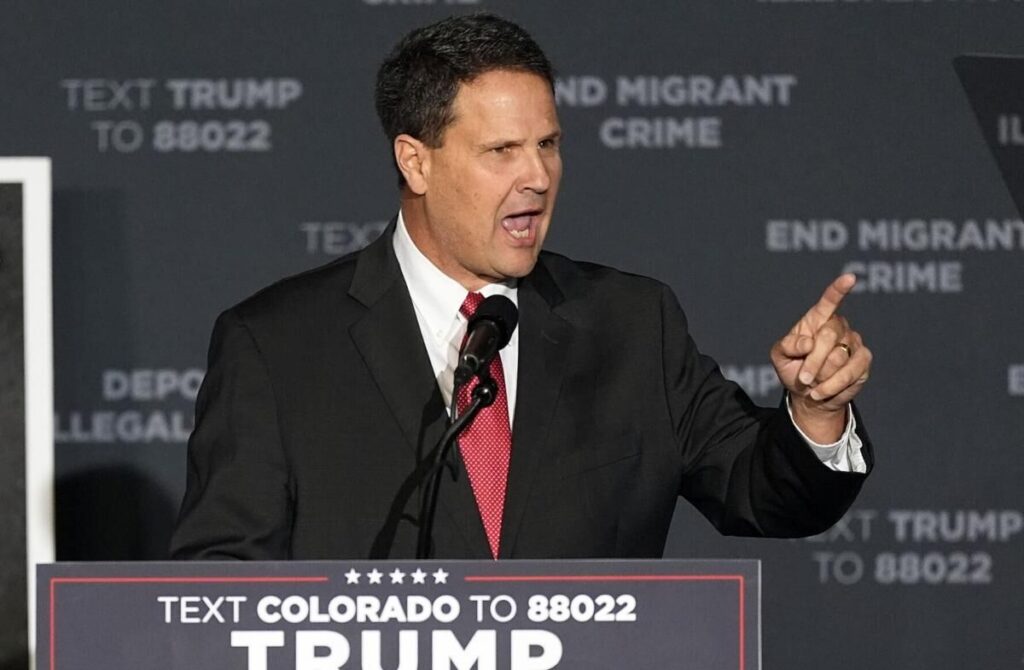
Rep. Jeff Crank thinks Democrats are too focused on Trump, not enough on Colorado Springs | Vince Bzdek
Vince Bzdek
vince.bzdek@gazette.com
Updated 21 hours ago
For U.S. Rep. Jeff Crank, who’s unopposed in the Republican primary for the 5th Congressional District but the main target of both candidates in the lively Democratic primary, the big question in the midterms is not who will stand up...
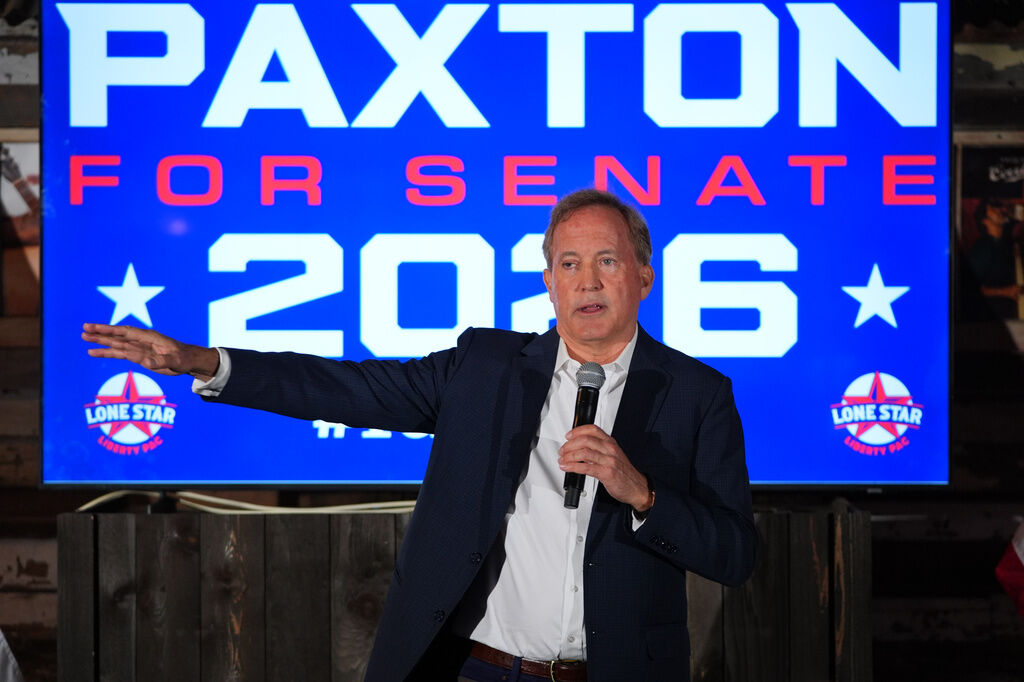
Does character matter anymore? | SONDERMANN
By Eric Sondermann
by-eric-sondermann@coloradopolitics.com
Updated 4 days ago
The last few weeks have been illuminating in the manner of a headlamp pointing the way to some deep, dark, murky netherworld. Graham Platner, a hero to the populist set on the Democratic side, became his party’s Senate nominee in...

Private equity has no place in health care | GUEST COLUMN
Colorado Politics
colorado-politics@coloradopolitics.com
Updated 3 days ago
By Miah Ntepp Of all the financial pressures placed on working people in this country, the skyrocketing costs of health care rank near the top. As families struggle under the cuts to Medicaid made by the Trump administration, they are...
Some pointed questions for the gubernatorial hopefuls | George Brauchler
George Brauchler
george-brauchler@gazette.com
Updated 4 days ago
Earlier this month, the Republican and Democratic candidates for governor participated in a televised interview moderated by well-known, left-leaning legacy media folks. Predictably, the questions asked of the GOP candidates were more aggressive, pointed, biographical and almost entirely disconnected from...
Chaotic funding throws monkey wrench into governor’s-race money madness | Paula Noonan
Paula Noonan
paula-noonan@coloradopolitics.com
Updated 4 days ago
Chaos Monkey, Inc., gave a trifle $20,000 donation to Rocky Mountain Way (RMW), the independent expenditure committee (IEC) supporting U.S. Sen. Michael Bennet for Colorado governor. But why, Coloradans should ask, would a guy who has assigned his contributor name...

Lindsay Datko on school safety, misconduct and transparency in Jeffco schools | The OpEdge Podcast
Tony Olivero
tony.olivero@gazette.com
Updated 5 days ago
Jeffco Kids First founder Lindsay Datko joins The OpEdge to explore concerns about school safety, staff misconduct and transparency in Jefferson County Schools. Datko tells host and investigative columnist Jimmy Sengenberger why she believes Colorado’s second-largest district has too often...

Candidate’s disturbing anti-animal agriculture history | Rachel Gabel
Rachel Gabel
rachel-gabel@coloradopolitics.com
Updated 1 week ago
Rep. Manny Rutinel has busted out a cowboy hat for campaign photos and has thrown it into the ring to represent Colorado’s 8th Congressional District in D.C. He is endorsed by U.S. Sen. Cory Booker, a New Jersey democrat who serves on the Committee...

Marx, Bottoms, a primary death wish for Colorado GOP | Dick Wadhams
Dick Wadhams
dick-wadhams@coloradopolitics.com
Updated 1 week ago
Colorado Republicans stand on the brink of total irrelevance and embarrassment if they nominate one of the two nonsensical, buffoonish candidates running for governor, Victor Marx and Scott Bottoms. Republicans are already in a very defensive, tenuous position as Democrats...