

Colorado mental hospital can’t keep up with court-ordered evaluations; lawmakers concerned
The state mental hospital can’t keep up with judges increasingly assigning people there for mental competency evaluations, the Colorado Department of Human Services said Thursday. That means some people might spend more time than necessary locked up.
Under a 2012 court settlement with the advocacy organization Disability Law Colorado, those sent to the Colorado Mental Health Institute at Pueblo by a judge must receive a mental health evaluation or treatment within 28 days. In October 2015, the Disability Law called out the hospital again for long past-due attention for patients.
When the second suit settled last August, DHS was put under the watch of an independent consultant for at least the next two-and-a-half years.
Thursday, DHS invoked “special circumstances” allowed by the settlement, citing an untenable spike in caseload.
The hospital said the situation has nothing to do with dire staffing shortages at the 449-bed hospital that forced administrators to act fast last week to avoid losing its Medicare and Medicaid funding, about 13 percent of its $91 million budget.
“Rather, the situation is directly attributable to an increase in court-ordered competency evaluation and restoration services that go beyond the hospital’s capacity,” DHS said in a statement.
The agency noted that last August’s settlement “intentionally included a safety valve provision for just this type of circumstance – a situation in which demand has significantly outpaced capacity and is beyond CMHIP’s control.”
Invoking special circumstances suspends the settlement’s requirement until Dec. 23.
Jennifer Brown of the Denver Post, who first reported on DHS’s declaration Thursday, said the increase was attributable to judges becoming more conscious of underlying mental health issues for some defendants, from misdemeanors to capital murder.
Nancy VanDeMark, the state director of behavioral health, told Colorado Politics about the struggle finding an adequate workforce to work at the mental hospital in a strengthening state economy. The hospital will work internally and with the state legislature to find solutions, she said.
In the wake of staffing crisis at the hospital, its superintendent, Ron Hale, resigned. He was hired in 2015.
State Senate Republicans who spoke to reporters and editors from Colorado Politics and the Colorado Springs Gazette Thursday morning volunteered that they’re concerned about the state hospital.
“Right now we’re having some serious leadership problems in getting our hands around these issues on a bipartisan basis,” said Sen. Kent Lambert of Colorado Springs, before Thursday afternoon’s announcement about the hospital being unable to keep up with mental health evaluations.
“I’ve talked to (Sen.) Leroy Garcia, a Democrat down in Pueblo, and he’s just as incensed by some of these things as we are. It’s not just a political divide, but we really, really need to hold some of our executive departments accountable for what they’ve been doing.”


Group submits signatures for proposed Colorado graduated income tax
Marianne Goodland
marianne.goodland@coloradopolitics.com
Updated 8 hours ago
The measure, which eliminates Colorado’s flat tax, is expected to raise $2 billion in new revenue The proposal to amend the Colorado constitution to change the state’s flat rate into a graduated income tax came in under the wire Monday,...
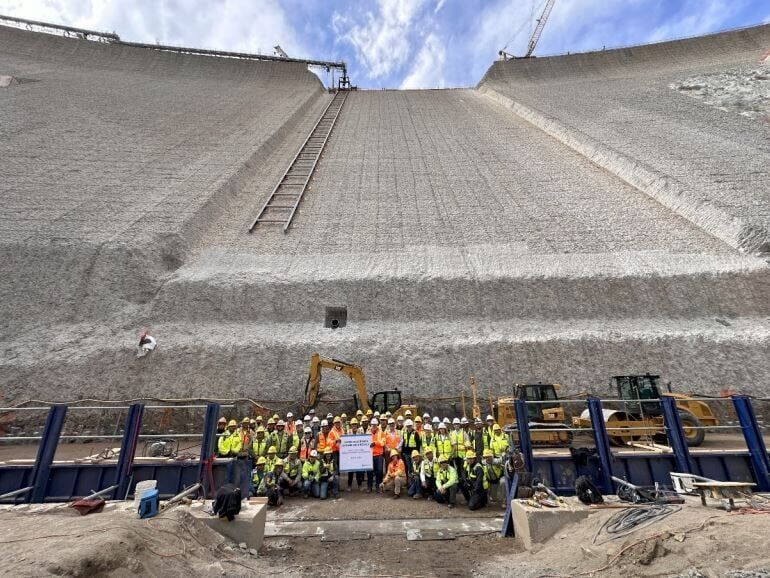
10th Circuit weighs Gross Reservoir expansion, judge’s ‘punishment’ of Denver Water
Michael Karlik
michael.karlik@coloradopolitics.com
Updated 6 hours ago
Members of the Denver-based federal appeals court considered on Friday whether they could intervene in an ongoing infrastructure project to enlarge a Boulder County dam after a trial judge deemed the underlying permit unlawful nearly two years ago. Denver Water...

Democratic group maps out path to Colorado House and Senate supermajorities
Marissa Ventrelli
marissa.ventrelli@coloradopolitics.com
Updated 10 hours ago
A national organization that works to elect Democrats to state legislatures has its sights on Colorado, unveiling a road map to establish a supermajority in both the House and Senate. Democrats have held a majority in the House since 2013...

10th Circuit upholds federal prohibition on juvenile handgun possession
Michael Karlik
michael.karlik@coloradopolitics.com
Updated 11 hours ago
The Denver-based federal appeals court concluded on Monday that Congress acted within its constitutional powers to make it a crime for juveniles to possess handguns in most instances. The decision from the U.S. Court of Appeals for the 10th Circuit...

Board of Peace demands Netanyahu cease Gaza airstrikes
The Washington Examiner
the-washington-examiner@coloradopolitics.com
Updated 12 hours ago
The Board of Peace is struggling to get Israel on board with its peace plan for Gaza as Israeli militia airstrikes continue to bombard the war-torn strip despite expectations for a ceasefire and de-escalation. Gaza City was hit repeatedly by...

Trump wants to give Iran ‘last chance’ to strike a deal before ‘decapitation’
Christian Datoc
christian-datoc@coloradopolitics.com
Updated 13 hours ago
President Donald Trump said this week’s talks with Iran will be the “last chance” for the Middle Eastern country to avoid a severe escalation in the war. Trump called off plans to strike Iran’s energy infrastructure over the weekend after...
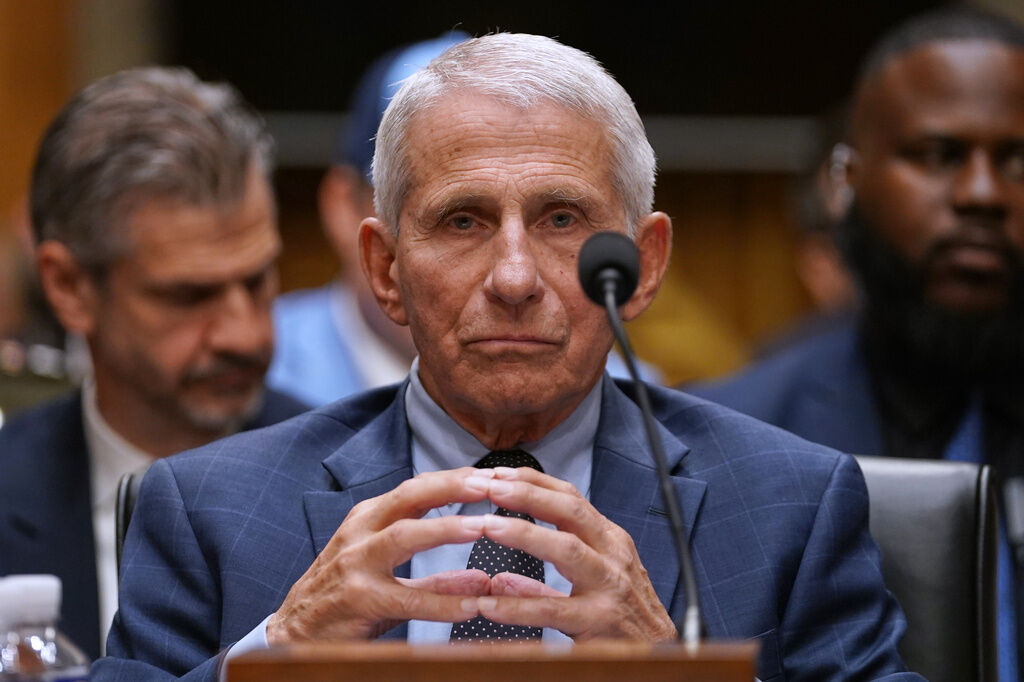
Fauci told Congress higher COVID-19 fatality rate than he calculated in diary: ‘More like 0.2-0.3%’
Mia Cathell
mia-cathell@coloradopolitics.com
Updated 13 hours ago
Dr. Anthony Fauci privately calculated that COVID-19 had a significantly lower fatality rate than what he told Congress a month later at the outset of the pandemic. On March 11, 2020, the day that the World Health Organization declared COVID-19...

Senate advances judicial nominee, Montezuma County judge agrees to discipline | COURT CRAWL
Michael Karlik
michael.karlik@coloradopolitics.com
Updated 15 hours ago
Welcome to Court Crawl, Colorado Politics’ roundup of news from the third branch of government. A U.S. Senate committee advanced a judicial nominee from Colorado, plus a Montezuma County judge agreed to receive discipline for his misconduct that stops short...

Tunnel to Towers brings 9/11 steel to Denver
Nicholas Fogleman
nicholas.fogleman@denvergazette.com
Updated 17 hours ago
A nationwide tour commemorating the 25th anniversary of 9/11 brought a piece of the World Trade Center to Denver on Saturday as the Tunnel to Towers Foundation hosted a ceremony at the Wings Over the Rockies Air & Space Museum....
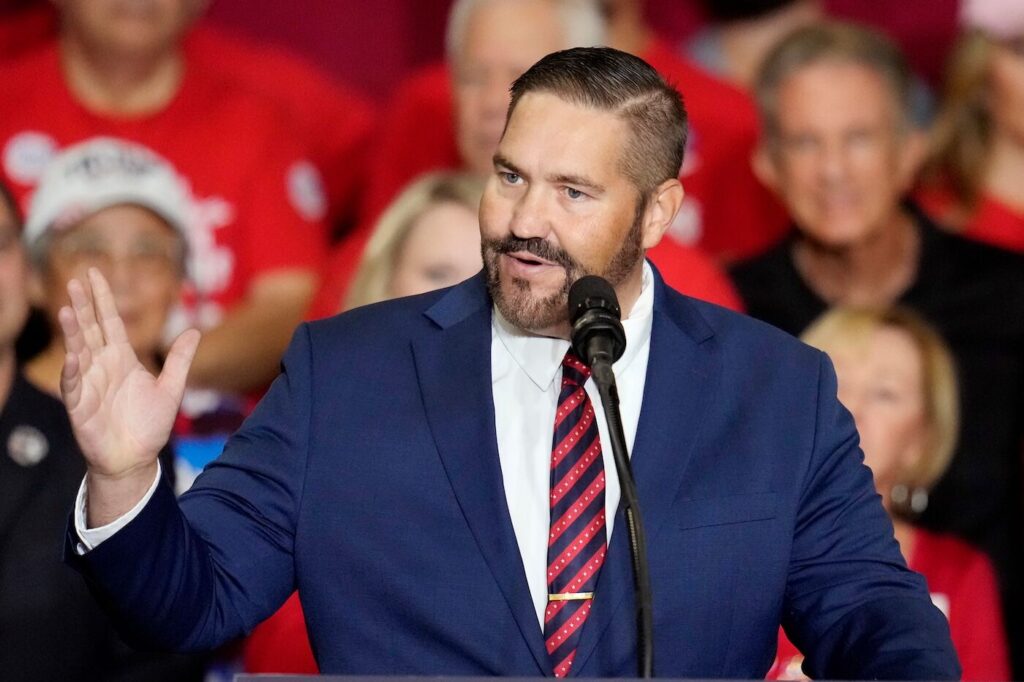
Top officials in Arizona’s Maricopa County agree on how to oversee elections | OUT WEST ROUNDUP
The Associated Press
the-associated-press@coloradopolitics.com
Updated 6 days ago
ARIZONA Officials agree on election oversight PHOENIX — Election officials in Arizona’s most populous county reached an agreement a week before the state’s July 21 primary on how to jointly oversee the vote, ending a prolonged legal battle. Republican Maricopa...