

Republicans, conservative groups rip proposal to send transportation tax hike to voters
In the halls of the Colorado Capitol and across social media, Republican elected officials got creative this week coming up with ways to declare a long-awaited bipartisan transportation-funding package dead on arrival.
“If it was a trial balloon, it has more of a resemblance to the Hindenburg,” state Sen. Tim Neville, R-Littleton, told The Colorado Statesman outside Senate chambers.
“If a 2/3rds of a BBBillion $ tax increase on Coloradans is compromise, what does surrender look like?” tweeted District Attorney George Brauchler, a likely Republican candidate for governor in next year’s election.
Some of the reaction to House Bill 1242 – introduced late Wednesday by Senate President Kevin Grantham, R-Cañon City, and House Speaker Crisanta Duran, D-Denver, along with the chairs of both chambers’ transportation committees, state Rep. Diane Mitsch Bush, D-Steamboat Springs, and state Sen. Randy Baumgardner, R-Hot Sulphur Springs – was more prosaic.
“I’ll be a ‘No’ vote,” Senate Majority Leader Chris Holbert, R-Parker, tweeted.
“Disappointing,” tweeted state Rep. Dave Williams, R-Colorado Springs, attached to a story describing the proposal. “This is a Dem spending problem, not a CO revenue problem. I’ll protect taxpayers and vote no.”
Meanwhile, conservative organizations mobilized opposition to the measure, which would ask voters to raise the state sales tax for 20 years by 0.62 percent – to a total of 3.52 percent – generating an estimated $677 million in net revenue in the first year to fund road construction and other transit projects. (The bill also proposes returning $75 million a year in vehicle registration fees to taxpayers.)
Advancing Colorado, a provocative advocacy organization, unleashed a slew of Photoshopped memes mocking Grantham and Baumgardner – one pictures Grantham in a wrestling hold at the mercy of Duran, while another places Baumgardner’s face alongside President Barack Obama, Gov. John Hickenlooper and 2016 Democratic presidential nominee Hillary Clinton – along with the GOP senators’ phone numbers.
Calling the 40-page bill a “misguided proposal,” Michael Fields, state director of Americans for Prosperity’s Colorado chapter, made it clear the conservative organization plans to block the measure.
“Despite Senate leadership publicly saying that a proposal would be revenue neutral in the first year, Senate President Grantham is now supporting a $677 million tax increase in year one,” Fields said. “It’s obvious that Senator President Grantham needs to hear more from his constituents – and that’s where we come in.”
Striking a somewhat more conciliatory tone, Compass Colorado Executive Director Kelly Maher said it was “ill-conceived” to propose shifting the burden of transportation funding to a regressive sales tax, leaving lower-income residents shouldering the burden.
“I have the greatest respect for the legislative leaders who attempted to find a compromise,” she said in a statement. “However, there is a better way to do it than off the backs of those amongst us who can afford it least.”
At a press briefing Thursday, the bill’s sponsors stressed that the proposal – hashed out over months of closed-door, bipartisan negotiations – was still a work in progress.
“We are still working on things, but we have laid the groundwork here for what I’m sure is going to be a very vibrant discussion over the next few weeks,” Grantham said.
Asked about some of the initial reaction from Republicans, Grantham said he expected the flak.
“Listen, this is going to be difficult for our side. There’s no secret about that. This is a difficult issue for us, and we’re going to have folks that are going to inflame the discussion, because this is some folks actually trying to solve the problem, and here we are with a solution. Do we expect perfect harmony on either side over the bill? No. I think that’s a ridiculous assumption.”
Referring to Brauchler’s tweets, Grantham added, “As far as certain governor candidates, that’s their right to say what they want to say, and we’ll see what the people say in November of this year and November of next year, for that matter, when it comes to issues like this and solving issues like transportation.”
Praising the work put in so far by the three other sponsors, Duran said it was time to set aside partisan wrangling and get to work for Colorado residents.
“One of the most important things that we can do is make sure we do things the way we have always done in Colorado, which is bringing people together, rising above ugly politics and delivering results to the people of the state,” she said.
“There’s things in here that the speaker and I arm-wrestled over – she won, more often than not,” Grantham said with a smile. “We’ve got some good things in here, we’ve got some tough things that I think both sides are going to be happy with, we’ve got some tough things I think both sides are going to sweat over.”
The leading House Republicans, Minority Leader Patrick Neville, R-Castle Rock, and Assistant Minority Leader Cole Wist, R-Centennial, roundly rejected the proposal and vowed vigorous opposition, complaining that they’d been kept in the dark during negotiations.
“A $677 million dollar tax increase is not the solution to Colorado’s problems and I will aggressively oppose the passage of this bill,” Neville said in a statement. “I am very disappointed that House Republican leadership and the House Republican caucus was excluded from the discussions of this bill and expect significant opposition from House Republicans as a result.”
Wist called the state’s budget issues “the result of a flawed budget system” and said the Legislature had to sort out “how it spends existing revenue and where it can improve efficiency before it asks Coloradans for more money from their pocket.”
Not every Republican lawmaker came out swinging in opposition to the legislation.
Senate President Pro Tem Jerry Sonnenberg, R-Sterling, for instance, told The Colorado Independent that he supports Grantham and Baumgardner’s work to resolve the funding problem for transportation, but he suggested that the Senate could rewrite the legislation substantially when it makes its way through the chamber.
The bill has been assigned to the House Transportation Committee, although a hearing date has yet to be set.

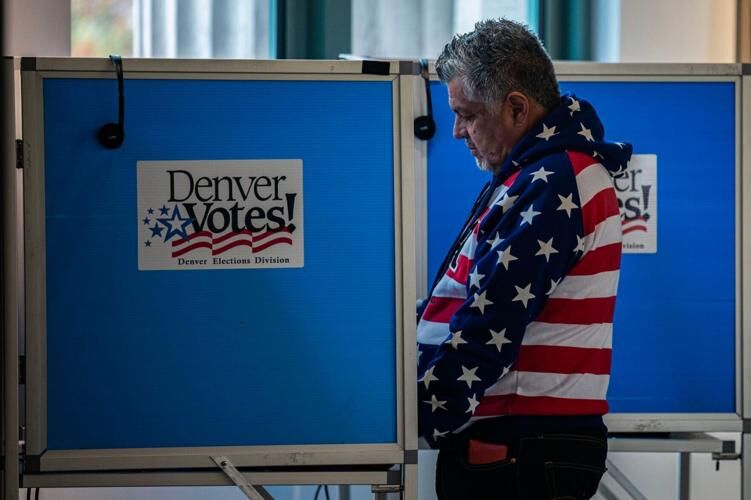
Denver sues Trump to block armed ICE agents from polling sites
Deborah Grigsby
deborah.smith@denvergazette.com
Updated 40 minutes ago
The city of Denver, along with several groups, sued the Trump administration Thursday, seeking to block U.S. Immigration and Customs Enforcement officers who are armed from polling sites during the upcoming midterm elections. In fact, there are no official orders...
Federal judge takes no action against ICE in Colorado after hearing about mistakes, not ‘blatant violations’
Michael Karlik
michael.karlik@coloradopolitics.com
Updated 3 hours ago
A federal judge declined to take action against U.S. Immigration and Customs Enforcement on Thursday after hearing that a pattern of alleged lawbreaking amounted to mistakes and a misunderstanding of the government’s position in court. For nearly a year, Colorado’s...
Colorado doctors, dentists challenge state law on gender‑transition services in new federal lawsuit
Marissa Ventrelli
marissa.ventrelli@coloradopolitics.com
Updated 2 hours ago
A group of Christian doctors and dentists has filed a federal lawsuit challenging a Colorado law they say requires them to provide gender‑transition services that conflict with their religious and ethical beliefs. The lawsuit, filed by the Christian Medical and...

Colorado Parks & Wildlife staff kill third wolf in 3 days
Marianne Goodland
marianne.goodland@coloradopolitics.com
Updated 2 hours ago
Colorado’s wildlife division on Thursday said that staff and contracted agents killed an uncollared female yearling wolf a pack after confirming she had been killing livestock in Grand County. Three wolves from three separate packs have been killed in the...
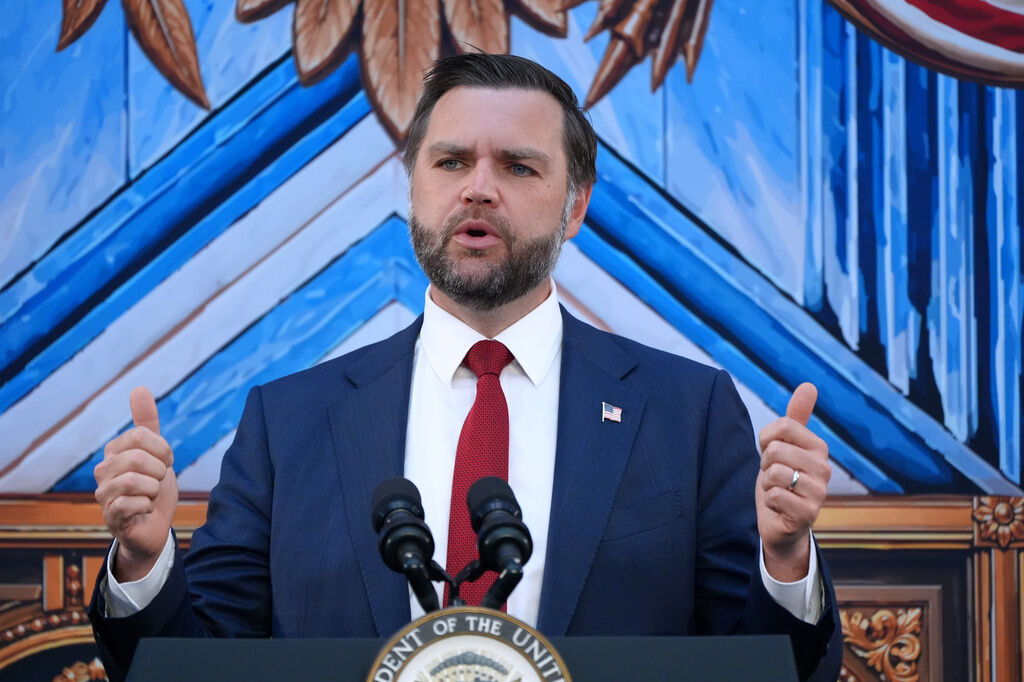
Vance strikes back at concern $5,000 Trump dividend will stoke debt: ‘Wealth will go back to the people’
Emily Hallas
emily-hallas@coloradopolitics.com
Updated 8 hours ago
Vice President JD Vance on Wednesday sought to deflect criticism that President Donald Trump’s newly proposed $5,000 dividend would further bankrupt the United States, arguing the handout would be offset by tariff revenue. Trump promised “every adult citizen” would receive...
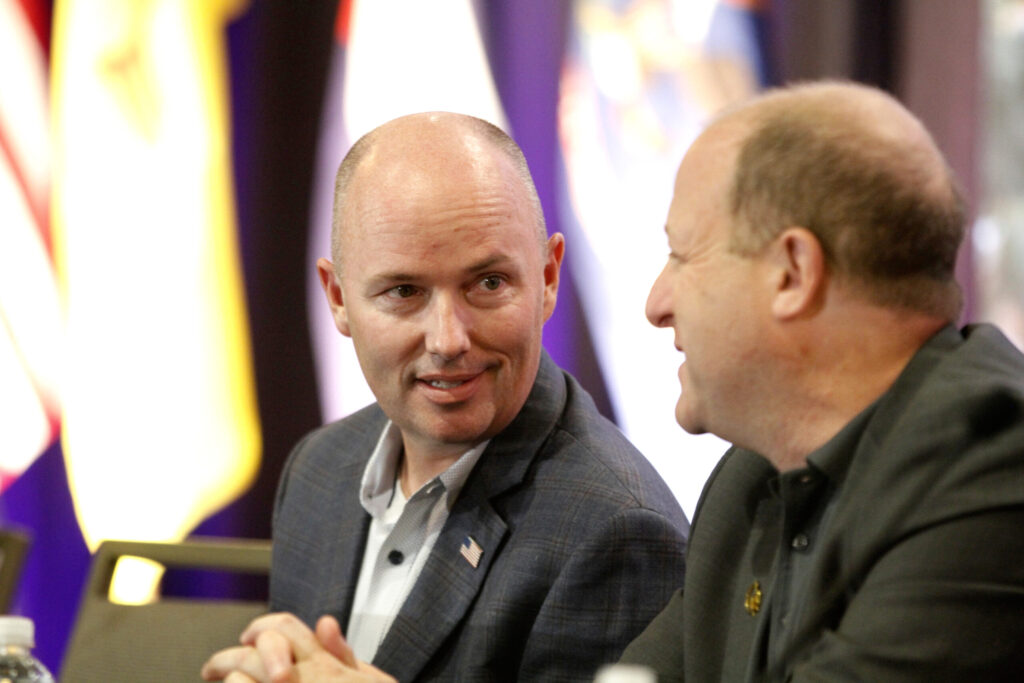
Utah governor renews call for ‘civility’ one year after Charlie Kirk assassination
David Sivak
david-sivak@coloradopolitics.com
Updated 8 hours ago
PHILADELPHIA — Spencer Cox, R-UT, the Utah governor who rose to national prominence with his calls for civility in the wake of Charlie Kirk’s assassination, used a stage in Philadelphia to argue that his message is just as salient one...
JD Vance faces big primetime moment at GOP midterm convention as Ted Cruz waits in the wings
Christian Datoc
christian-datoc@coloradopolitics.com
Updated 8 hours ago
Vice President JD Vance will take center stage on the final night of the Republican midterm convention on Thursday, giving him another opportunity to cement his standing as the early favorite to inherit President Donald Trump’s political movement in 2028....

How Charlie Kirk’s murder drove Trump’s crackdown on ‘radical-left lunatics’
Hudson Crozier
hudson.crozier@washingtonexaminer.com
Updated 8 hours ago
When Turning Point USA founder Charlie Kirk was gunned down in Utah a year ago, some leftists warned the killing could backfire for them. Far-left blogs and forums discussed how President Donald Trump would escalate law enforcement “repression” in the...
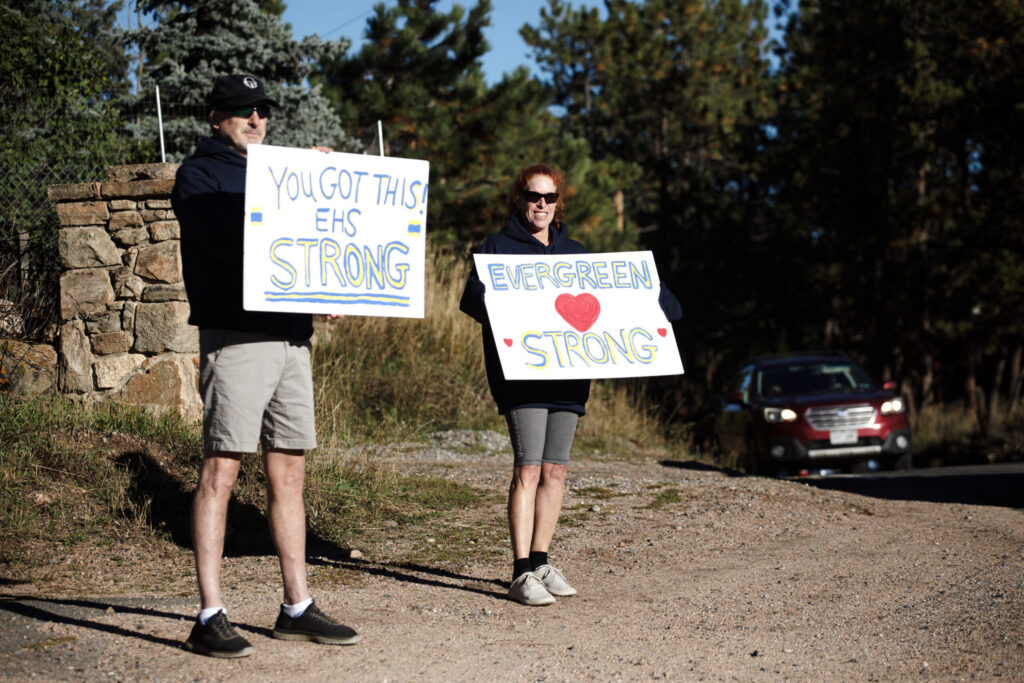
Evergreen High School marks one year since shooting on campus
Kyla Pearce
kyla.pearce@gazette.com
Updated 43 minutes ago
Thursday marks one year since the Evergreen High School shooting that injured two students and left the shooter dead. On Sept. 10, 2025, Desmond Holly, 16, entered the school armed with a Smith & Wesson .38 revolver and opened fire...
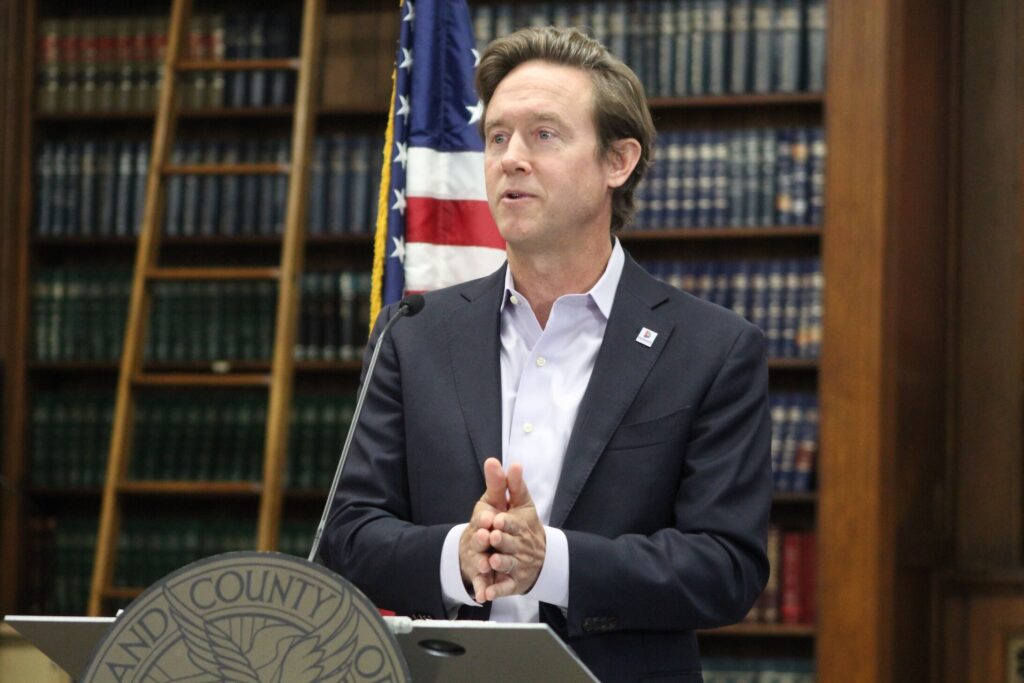
Denver mayor unveils 2027 budget after weeks of warning of tough choices
Nico Brambila
nico.brambila@denvergazette.com
Updated 17 minutes ago
Denver Mayor Mike Johnston unveiled his proposed 2027 budget Thursday after weeks of warning that the city is entering a tighter financial era despite stronger-than-expected revenue collections this year. The projected general fund revenue for 2027 is $1.684 billion, the...