

Gorsuch rulings show view of conservationists as obstructionists
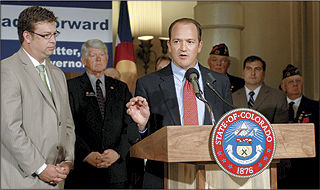
On the federal appeals court in Denver, Judge Neil Gorsuch tends to see environmental groups in lawsuits as more a problem than part of the solution.
The Association Press reviewed his decisions involving public lands during his decade on the 10th Circuit Court of Appeals, hearing cases from Colorado and five other Western states.
Gorsuch has shown a willingness to limit the participation of environmental groups in lawsuits involving public lands, writing in one case that allowing conservationists to intervene could complicate and slow down the judicial process.
In public lands cases in which he sought to limit environmental groups’ participation, Gorsuch at times has favored the position of federal agencies.
In 2011, Gorsuch showed his distaste for drawn-out litigation when he sided with a majority of other judges who found The Wilderness Society lacked standing in a suit related to off-road vehicles on federal land, including in Grand Staircase-Escalante National Monument.
“The Wilderness Society has fought to protect conservation of millions of acres of public lands in Colorado, and that fight includes getting into court to defend them when our government may not rise to the occasion,” Nada Culver, the Denver-based senior lawyer for The Wilderness Society, told Colorado Politics Monday afternoon. “We entered the fray to safeguard the Forest Service Roadless rule, which kept amazing lands around the state from the Maroon Bells to Battlement Mesa protected from destruction. This is not a right that should be undermined and not something Coloradans can accept.”
But his record on such cases is relatively limited considering that the territory the appeals court covers contains vast swaths of national forests and parks.
“I think that his record, although the number of cases is quite limited, shows that at times it has led to decisions that one might consider environmentally favorable, and about an equal number of times it has led to decisions some might think are environmentally unfavorable,” said Donald Kochan, associate dean and professor at Chapman University Dale E. Fowler School of Law.. “For those who think that he will lean toward one outcome or another, I think they’ll be surprised on how the more neutral application of his philosophy will often lead to confounding results.”
When an outdoor group sued the U.S. Forest Service over a temporary order that allowed motorcycles to ride on certain trails inside western Colorado’s San Juan National Forest, Gorsuch wrote a unanimous opinion in May 2015 for the three-judge panel dismissing the case on procedural grounds.
Backcountry Hunters and Anglers could not establish their ability to bring the case because if the order they challenged as being too lenient was struck down, the agency would revert to an earlier, even less-strict version of the trail plan, so the organization’s conservation goal would not be advanced, Gorsuch wrote.
“A further victory for Backcountry in this case promises only more, not fewer, vehicles on forest trails and the group hasn’t offered a timely argument how that turn of events might help its members,” he wrote.
Gorsuch has been sympathetic to outdoor enthusiasts, even when ruling against them, and has shown his Colorado roots in his writings.
“Everyone enjoys a trip to the mountains in the summertime. One popular spot is Mount Evans – a fourteen thousand foot peak just a short drive from Denver and with a paved road that goes right to the summit,” he wrote in a 2011 case.
In that case, Gorsuch was on a panel that found that the Forest Service could legally charge fees to visit the summit because it provided amenities such as a nature center, which thousands of visitors use annually. Those who sued had challenged the fee policy, saying it overstepped the Forest Service’s statutory authority to charge visitors.
Writing for the panel, Gorsuch said the fees were permissible, but he left open the possibility that the fees could be challenged, just not the way the plaintiffs sought to.
“In rejecting the plaintiffs’ facial challenge we hardly mean to suggest that the Service’s policy can’t be attacked at all. It might well be susceptible to a winning challenge as applied to certain particular visitors, perhaps even the plaintiffs themselves. But that’s a path the plaintiffs haven’t asked us to explore and so one we leave for another day,” Gorsuch wrote.
Denise Grab, a lawyer with New York University Law School’s Institute for Policy Integrity, said Gorsuch has a “mixed bag” of rulings related to public lands and the environment, yet seems “unusually eager to throw roadblocks in the way of public interest groups who want their day in court.”
In 2013, Gorsuch parted from the two-judge majority on a panel that said environmental groups should have the chance to participate in a particular suit. The New Mexico Off-Highway Vehicle Alliance had challenged a plan that reduced the number of roads and trails available to off-road vehicles in Santa Fe National Forest.
His colleagues on the appeals court said the groups should be allowed to join the case because “there is no guarantee that the Forest Service will make all of the environmental groups’ arguments in litigation.”
Gorsuch disagreed, saying there was only one issue to consider and no conflict between the groups and government over how to approach it.
“An intervenor becomes a full-fledged party, able to conduct discovery, file motions, and add new issues and complexity and delay to the litigation,” Gorsuch wrote.
Grab called that “very unusual,” and noted that neither party in the suit had objected to the environmental groups intervening.
“An environmental group is not the government. It has different goals,” Grab said. “In most cases, intervention is allowed.”
*************************
Colorado Politics senior correspondent Joey Bunch wrote some stuff in this.

Tiered or capped? Battle over Colorado’s income taxes might come down to one number
Marianne Goodland
marianne.goodland@coloradopolitics.com
Updated 39 minutes ago
The battle between two competing ballot measures — one seeking to cap Colorado’s income tax rate, the other pushing for a tiered system depending on income levels — might come down to whichever ballot proposal gets one more vote. The...
10th Circuit says landowner cannot sue ex-Routt County judge for statements in decision
Michael Karlik
michael.karlik@coloradopolitics.com
Updated 3 hours ago
A Routt County landowner cannot sue a former judge for his allegedly inaccurate statements in a case where the landowner was not a party, the Denver-based federal appeals court decided on Wednesday. Anne Fitzsimmons, who lives in Germany, owns a...
Rubio crushes Vance in Western Conservative Summit 2028 straw poll
Kiara Moore
kiara.moore@washingtonexaminer.com
Updated 7 hours ago
Secretary of State Marco Rubio came out on top in this past weekend’s nonpartisan straw poll at the Western Conservative Summit, outpacing a packed field of would-be 2028 presidential hopefuls. Hosted by the Centennial Institute, Colorado Christian University’s public policy...
Supreme Court to open next term with major climate change case
Jack Birle
jack-birle@coloradopolitics.com
Updated 6 hours ago
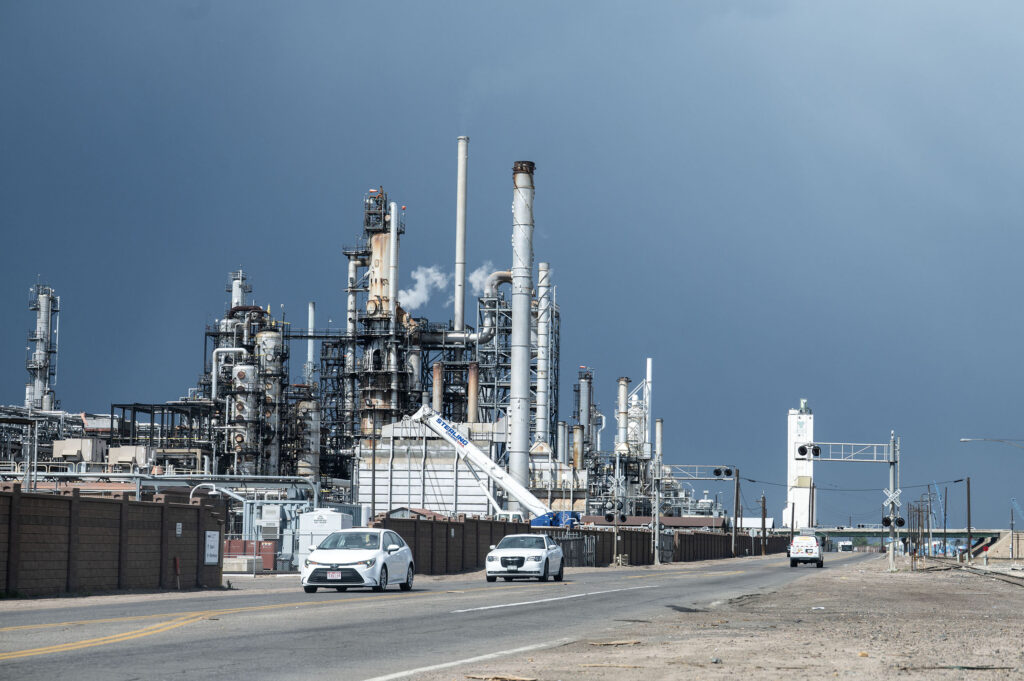
The Supreme Court’s next term will begin in October with major cases about costly climate change lawsuits and immigration. The high court announced the cases it will hear in the first month of its upcoming term, as the justices remain...

New Colorado laws going into effect cover AI disclosures, medical marijuana access and gambling limits
Marissa Ventrelli
marissa.ventrelli@coloradopolitics.com
Updated 7 hours ago
More than 100 new Colorado laws take effect Aug. 12, bringing changes to chatbot safety rules, psychedelic research, campus wellness checks and sports betting restrictions. Here is a look at some of those laws set to take effect. The law:...

National House Democrats add Colorado seats held by Lauren Boebert, Jeff Hurd to target list
Ernest Luning
ernest.luning@coloradopolitics.com
Updated 5 hours ago
The national House Democrats’ campaign arm on Wednesday added the Colorado congressional district held by Republican U.S. Reps. Jeff Hurd and Lauren Boebert to the list of targeted seats the party believes are vulnerable in this year’s midterms. The Democratic...
Bennet settles campaign finance complaints, admits violating state law
Marianne Goodland
marianne.goodland@coloradopolitics.com
Updated 3 hours ago
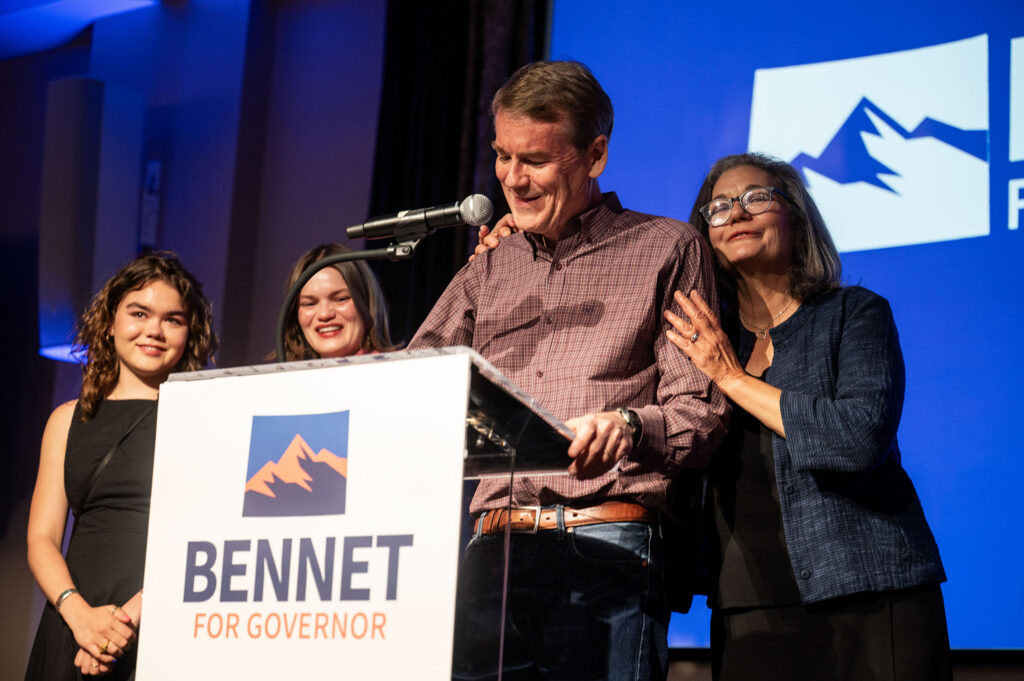
U.S. Sen. Michael Bennet’s gubernatorial campaign has agreed to pay a $7,433 fine for using his Senate campaign account to pay for gubernatorial campaign travel expenses. The July 31 settlement includes an admission by Bennet and his campaign that they...

Colorado to implement new laws on jail standards, safe haven rules, and agricultural labeling
Marissa Ventrelli
marissa.ventrelli@coloradopolitics.com
Updated 9 hours ago
In mid-August every year, a slew of recently passed laws in Colorado go into effect 90 days after the end of the legislative session. This year, all bills without a specified effective date or safety clause — a provision stating...
Colorado records 17th wolf death, a yearling tied to livestock losses
Marianne Goodland
marianne.goodland@coloradopolitics.com
Updated 4 hours ago
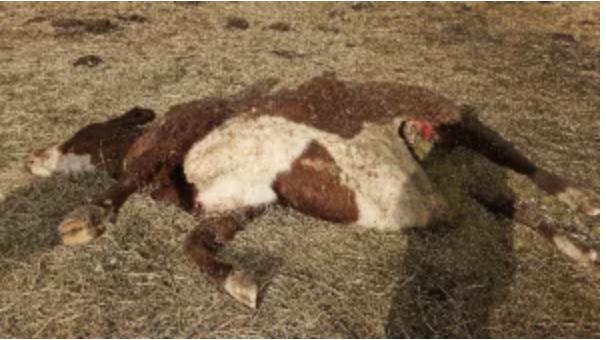
A yearling male wolf in Grand County has become the 17th wolf to die in Colorado in the past two years. Colorado Parks and Wildlife announced that its staff killed the wolf on Aug. 4 because it was believed to...
Parole, appeals deadlines and restitution: Colorado justices accept cases
Michael Karlik
michael.karlik@coloradopolitics.com
Updated 1 day ago
The Colorado Supreme Court announced on Monday that it will determine how a defendant’s parole-eligibility date should be calculated in instances where a new trial results in a sentence being imposed retroactively to the date of the original, since-overturned sentence....
PREV
PREVIOUS
Denver EPA office at risk as Trump looks to pare down agency
The EPA’s Denver office could be a target for closure as the Trump administration looks to make deep cuts in federal regulatory programs. Denver is one of the two the Trump administration might seek to shutter, the environmental newsletter InsideEPA.com reported Monday. The Environmental Protection Agency maintains 10 regional offices. The Denver-based Region 8 office […]

Rival groups of liquor retailers kick up dust in legislative fight over spirit licenses
The battle over Colorado’s liquor store landscape intensified Monday in the wake of a Senate vote that killed a bill to let Wal-Mart sell full-strength liquor in as many as 20 locations over the next two decades, among other tweaks to 2016 legislation that overhauled the state’s liquor licensing laws. And amid renewed threats of […]