

Business groups push for immigration reform, calling it a bipartisan issue
Colorado business leaders – including Republican interests – are trying to put a face to immigration by highlighting the economic impact immigrants have on the country.
The effort comes as President Trump explores expanded deportations and travel restrictions for undocumented immigrants, going as far as to threaten to punish local governments for interfering with any immigration crackdown.
While Trump’s plan to build a multi-billion dollar wall along the Southern border is not supported universally by Republicans, it does have significant GOP backing. This is why Republican business leaders are hoping to shift the conversation by humanizing the impact of immigrants.
“We need to make this a personal issue,” said Jeff Wasden, a Republican and president of the Colorado Business Roundtable, which is part of a recently-launched coalition on immigration reform. “We need to understand how this impacts lives – those lives of the immigrant community and certainly the lives of the business owners that are struggling to find a workforce.”
The bipartisan coalition is using data to fuel their conversation and to look at what practical next steps can be taken.
Business leaders expressing support for immigration reform is nothing new. In 2013, a diverse group of influential leaders came together to support reform efforts in Congress, which were in part spearheaded by U.S. Sen. Michael Bennet, a Democrat. The legislation passed the Senate but stalled in the House.
Stakeholders hope to build on the effort by utilizing research spearheaded by New American Economy, a bipartisan group of business leaders who support immigration reform. The group is connected to the Colorado business effort. This week it launched “Map the Impact,” a campaign to highlight the power of immigrants.
There are 342,509 foreign-born residents who make up 12.5 percent of the Denver area’s population, according to the data. Immigrants in the area paid $2.3 billion in state and local taxes and held $6.9 billion in spending power in 2014.
Interestingly, immigrants are about 1 percent more likely to be entrepreneurs than the domestic population, and there are 20,857 immigrant entrepreneurs in Denver.
Wasden hopes that the data will help quell some of the “hysteria” currently being seen around immigration, especially as Trump has fanned the flames. He said the discussion can include addressing security, but that it shouldn’t dominate the conversation. Looking at illegal employment might be a more practical way of framing immigration reform, Wasden said.
“We want a discussion around welcoming the immigrant community and the contributions that the immigrant community makes,” he said.
Oscar Juarez-Luna, spokesman for the Colorado Immigrant Rights Coalition, said he is thrilled to see reinforcements coming from the business community with Republican buy-in. An immigrant from Mexico, he owns a commercial cleaning business and employs five people.
“It’s something that any politician should be talking about,” Juarez-Luna said. “We always hear about how we want to create jobs and how we want to grow as a country. This is a big step for business leaders and having Republicans talk about the issue.”
Wasden is optimistic that his coalition will be able to move the needle, despite the inflamed environment for immigration discussions.
“D.C. people are looking to the Republicans that many view as being obstructionists on this issue. They are not. They’re looking to ensure that some of the basic tenets of immigration reform are dealt with first,” Wasden said.
“We have a population that is contributing to the wealth and fabric of our communities. It is impacting the business community positively,” Wasden continued. “In D.C. there’s great support for this. It’s a matter of threading the needle and finding the right time to push this with competing priorities.”


10th Circuit upholds finding of no misconduct against Colorado federal judge
Michael Karlik
michael.karlik@coloradopolitics.com
Updated 5 hours ago
A judicial committee for the Denver-based federal appeals court upheld the chief judge’s finding last week that a federal judge in Colorado did not engage in misconduct by handling a civil case involving other attorneys and judges in the state....
Denver mayor says city police will detain ICE officers using ‘excessive force’
Deborah Grigsby
deborah.smith@denvergazette.com
Updated 3 hours ago
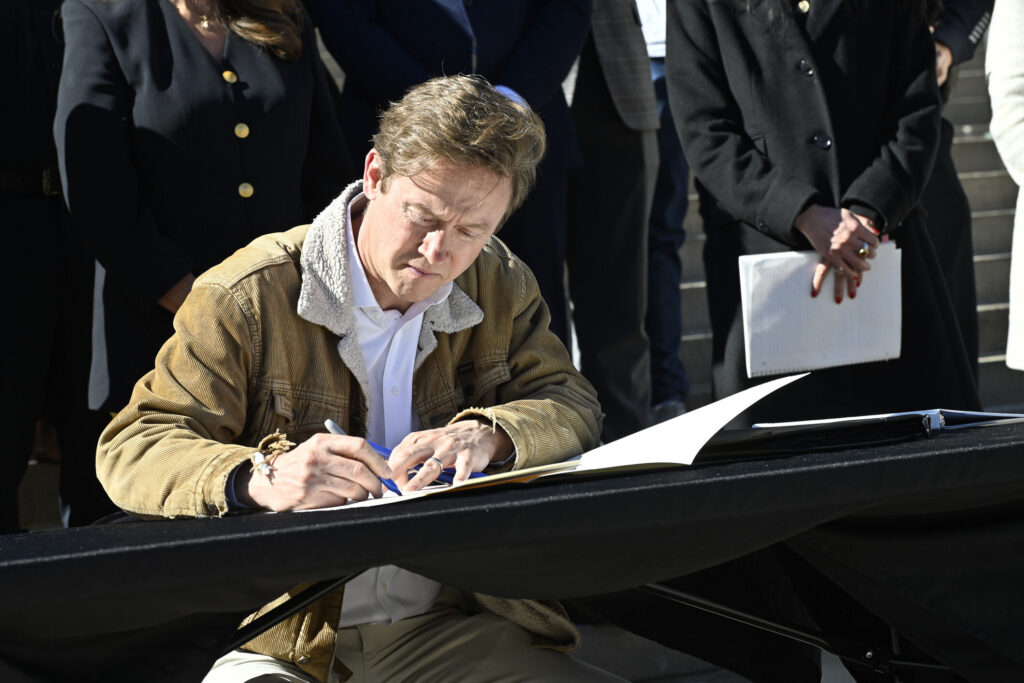
Denver Mayor Mike Johnston on Thursday outlined his city’s response to immigration enforcement operations, including intervening to stop federal officers when local police observe them using “excessive” force. Johnston also said the city will not allow federal authorities to “stand...
SCOTUS whisperer? Justice Carlos Samour may get second opportunity to turn state dissent into national precedent
Michael Karlik
michael.karlik@coloradopolitics.com
Updated 9 hours ago
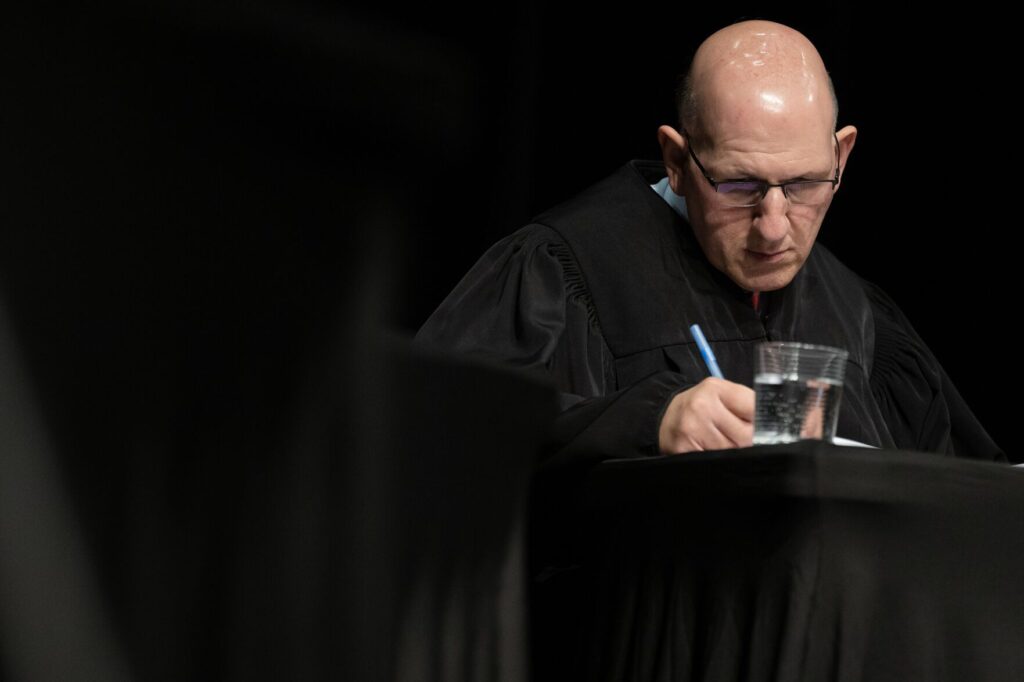
For the second time in two years, Justice Carlos A. Samour Jr. occupies an unusual position: Having his dissent in a Colorado Supreme Court case potentially forming the basis of U.S. Supreme Court precedent. Earlier this week, the nation’s highest...
Republicans roll out first ad pinning Democrats for not standing during State of the Union
Emily Hallas, Washington Examiner
emily.hallas.washington.examiner@gazetteedit.wpenginepowered.com
Updated 9 hours ago
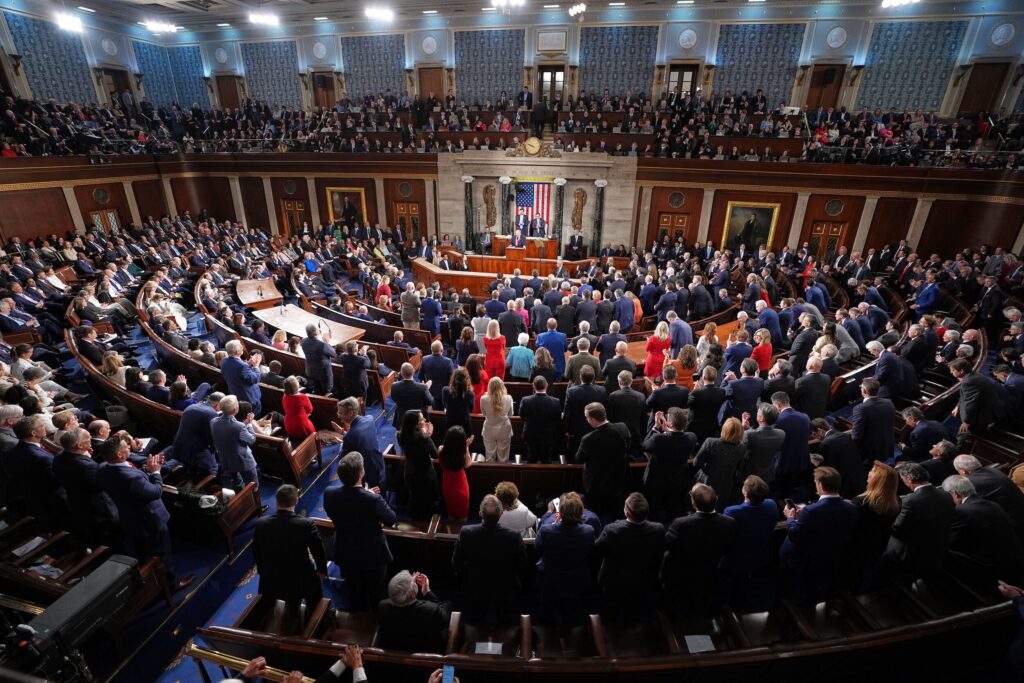
A conservative group is launching a sweeping ad campaign on Thursday, seeking to capitalize on Democrats‘ refusal to stand during a portion of President Donald Trump’s State of the Union address centered on illegal immigration. American Sovereignty created a message...
Rubio says any future nuclear proliferation deals have ‘to involve’ China and Russia
Washington Examiner Staff, Washington Examiner
washington.examiner.staff.washington.examiner@gazetteedit.wpenginepowered.com
Updated 10 hours ago
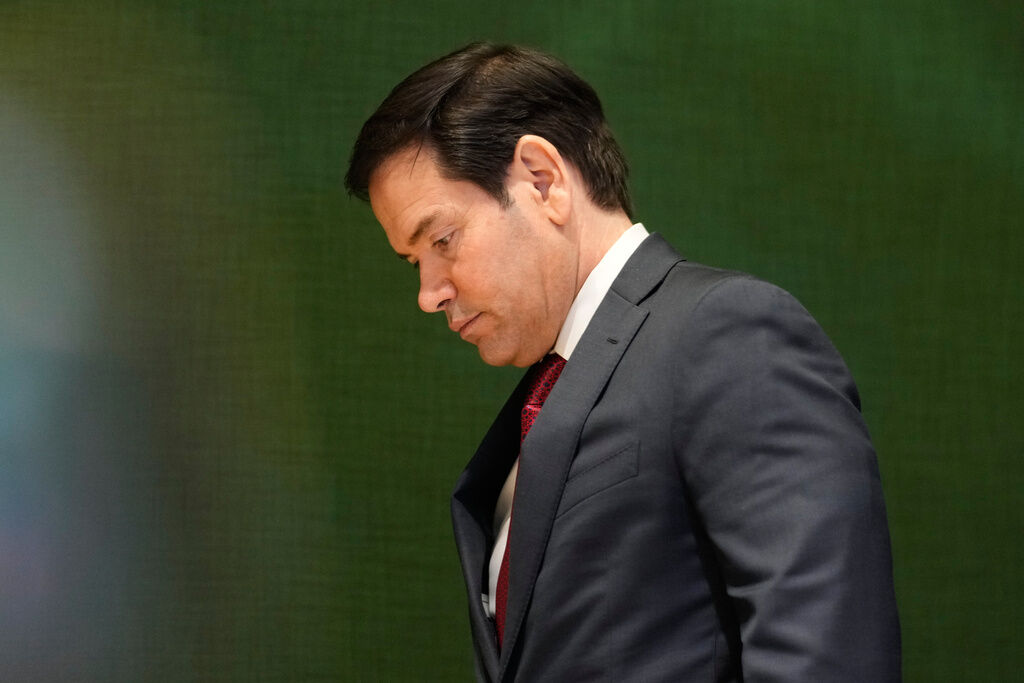
During a visit to the Caribbean on Wednesday, Secretary of State Marco Rubio was asked about recent talks in Geneva regarding weapons of mass destruction and the prospect of future nuclear weapons agreements. He responded that any such deal would...
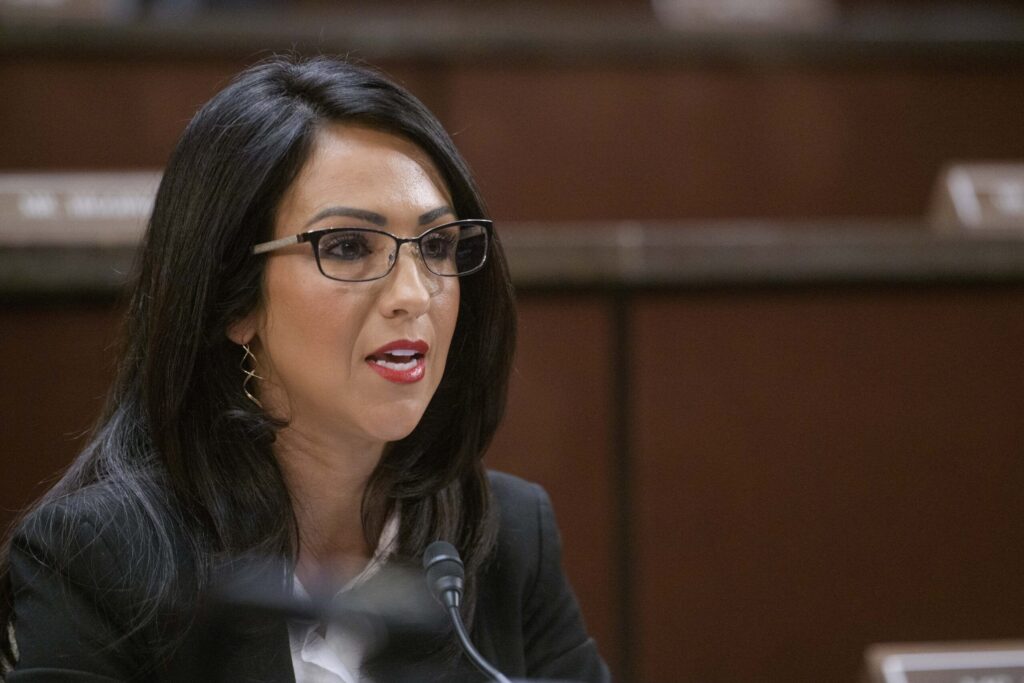
Hillary Clinton deposition paused after Lauren Boebert allegedly leaks photo from inside hearing
Molly Parks, Washington Examiner
molly.parks.washington.examiner@gazetteedit.wpenginepowered.com
Updated 9 hours ago
The House Oversight Committee has paused the deposition of former first lady and Secretary of State Hillary Clinton on Thursday after political commentator Benny Johnson shared a photo on social media of the closed-door hearing. Rep. Lauren Boebert (R-CO), who...

Colorado district attorneys oppose bipartisan bill limiting government access to bought data
Marissa Ventrelli
marissa.ventrelli@coloradopolitics.com
Updated 10 hours ago
A bipartisan coalition of Colorado lawmakers is advancing a bill that would prohibit police from purchasing personal consumer data without a warrant, setting up a clash with prosecutors who warn the measure could hamper criminal investigations. House Bill 1037, sponsored...

Lawmakers propose raising excise taxes on alcohol, marijuana to fund mental health spending
Marissa Ventrelli
marissa.ventrelli@coloradopolitics.com
Updated 10 hours ago
Colorado lawmakers hope to refer a measure to the November ballot that would increase excise taxes on alcohol and marijuana, with the revenue going toward mental health and civil commitment facilities around the state. House Bill 1301, sponsored by Rep....

10th Circuit appoints ex-Colorado solicitor general to argue issue after federal government declines
Michael Karlik
michael.karlik@coloradopolitics.com
Updated 24 hours ago
The Denver-based federal appeals court took the unusual step earlier this month of appointing an attorney to independently argue a key issue in a criminal sentencing appeal after the government indicated it would not contest the defendant’s view of the...

Greeley voters halt landmark development project
Hap Fry, Special to The Gazette
hap-fry@gazette.com
Updated 24 hours ago
GREELEY – The landscape-altering Cascadia development project has been put on ice, according to unofficial results of a city referendum on the project Tuesday. The proposed development would have included an 8,600-seat multiuse arena and ice center that would be home to the Colorado Eagles,...