

Foreign policy experts discuss Trump’s impact on global security at CELL event
Introducing a panel of foreign policy and national security experts convened on Thursday, Feb. 16, to sort out the impact of President Donald Trump on global security, moderator Samuel Rascoff recalled remarks – possibly apocryphal – attributed to Zhou Enlai on the occasion of President Nixon’s groundbreaking 1972 visit to the Chinese mainland.
Asked what he thought about the French Revolution, the Chinese premier is supposed to have replied, “It’s too soon to tell.”
With that established – and the packed auditorium sounding thoroughly amused – Rascoff, the faculty director of New York University’s Center on Law and Security, proceeded to lay out competing narratives he said have gathered around Trump’s approach to foreign policy.
Ninety minutes later, after a freewheeling discussion covering everything from the threats of ISIS and North Korea to Pacific trade and Russia’s intentions, the four experts at the University of Denver’s Newman Center hadn’t reached a conclusion, but they had traced the outlines of the question and seemed to agree that the young Trump administration could be full of surprises.
The bipartisan panelists were Juan Zarate, a former deputy assistant to President George W. Bush and deputy national security adviser for combating terrorism; Michéle Flournoy, a former under secretary of defense to President Barack Obama; Jeremy Bash, former chief of staff to Leon Panetta when he was CIA director and secretary of defense, also under Obama; and Ambassador Christopher Hill, dean of DU’s Josef Korbel School of International Studies and a four-time ambassador under presidents of both parties, including in Iraq at the start of the Obama administration.
Presented by the Counter Terrorism Education Learning Lab (known as the CELL), the event was sponsored by The Denver Post, the University of Denver, the Scientific and Cultural Facilities District and Branded Cities Network.
Perhaps Trump was, to borrow the language of Silicon Valley, “disruptive,” Rascoff said, shaking up the underlying assumptions beneath American strategy for generations, including the value of a network of alliances and a bipartisan approach toward expanding free trade. Or, the moderator posed, Trump’s approach on everything from immigration policy to international relations represented a “disrupted” technology. Would the new administration break apart calcified, worn ways of doing things, or was it a bull stepping into the proverbial china shop?
Fighting the Islamic State
The experts first considered Trump’s response to the Islamic State in Iraq and Syria – referred to variously as ISIS or ISIL – and his request that his secretary of defense develop a plan to defeat the organization by the end of the month.
Flournoy cautioned against Trump’s team “throwing out the baby with the bathwater,” falling into the familiar pitfall of assuming that the previous administration was inept because the problem persists. ISIS has lost half its territory in Syria and Iraq, she said, and its financial networks have been disrupted or destroyed. Still, she said, “The Islamic State remains very virulent, it remains dedicated, it remains committed to an ideological struggle,” and was intent on radicalizing people in their home countries to carry out attacks. The key, she added, was empowering “legitimate, capable partners.”
Bash said the United States would have to train, equip, fund and mobilize Syrian forces to conduct ground operations, noting that such an approach was imperfect and not without risk. “However,” he added, “we don’t have a lot of options.”
Hill said he didn’t see an opening for a diplomatic approach – unlike in Afghanistan, where supporters of the Taliban could be peeled off – to weaken ISIS. Instead, he said there has to be an unrelenting effort to defeat them, terming the approach “a war of annihilation.”
The options in the Middle East, Hill said, shaking his head, aren’t very good, as traditional partners – including Turkey, Saudi Arabia and Egypt – are increasingly consumed with their own problems. The United States needs a Sunni country on its side, he added, because what is commonly called “radical Islam” is more specifically a Sunni problem.
There aren’t any easy options in Syria, either, Hill said. “At the end of the day, we can’t annihilate them all, so we have to put together some kind of peace proposal.” However, without regional powers that can step in, the United States would have to involve what he termed the great powers, such as Russia, but that too was fraught, because Russia has been bombing civilians in Syria.
Turning to Zarate, Rascoff pivoted to a broader question, whether ISIS was simply the most prominent current manifestation of radical Sunni movements that required a comprehensive strategy to confront.
Zarate agreed, saying the challenge facing Trump was to keep from “drawing strategy too myopically around ISIS.” The movement that begun as Al Qaeda “has metastacized,” sending trained fighters back to their home countries and using social media to recruit women and children in previously unseen ways. “They’ve been really devious,” he said, pointing out that most of the videos posted online by ISIS aren’t beheading videos, they’re about running police forces in cities they govern.
The Iranian nuclear deal
Turning attention to Iran and the nuclear deal, the panel said it appeared the Trump administration was ready to keep the agreement in place but that the American stance toward the country could change dramatically, with Secretary of Defense James Mattis calling for “scrupulous enforcement” of the deal rather than rushing to tear it up.
“Whether we like the deal or it’s perfect, it’s in place,” said Flournoy, who suggested the United States would be better served focusing on Iran’s other actions, such as financing terrorism and supporting its troublesome allies across the region.
“The actual fact is, at this point, Iran’s nuclear program has been halted,” she said, contending that before the deal, Iran was “within months of dashing to a nuclear weapons capability” but was now more than a year away. “We should hold their feet to the fire,” she said, adding that so long as the United States remains part of the multi-national deal, the international community will come together to enforce sanctions if Iran starts cheating. But if the Trump administration pulls out, the United States would be isolated with very few options, such as bombing Iranian facilities, likely leading into broader conflict.
Zarate said it sounded like the Trump administration had shifted its stance to keeping the deal in place and using sanctions to pressure Iran on terrorism and human rights abuses. “You can push back in the context of the deal without it unraveling and where we look like the bad guy,” he suggested.
Alliance with Israel
Asked about the relationship between Iran and Israel, Hill drew chuckles from the audience when he pointed to Iranian-sponsored “mischief” on its borders but said the difficulties with Iran don’t trace back to the 1980s but to 1501, when Sunni Iran turned Shia due to the influence of clerics from southern Lebanon. “It’s easy to say to the mullahs, ‘Stay out,’ but they feel they have some DNA there.”
As far as the Israeli-Palestinian conflict, the panelists wondered if the Trump administration’s approach might be confusing matters.
“Unpredictability on behalf of the United States is not a strategic asset,” Flournoy said with a smile, adding, “We have to be very careful that, as these policies get made, we’re very clear about communicating what we’re committed to and what we’re not.”
Bash agreed that Israeli Prime Minister Netanyahu’s recent visit might have left him somewhat empty-handed.
“The Israelis like what they’re hearing from the administration about Iran, but when they got here all they heard about was the Palestinians,” he said. “They like the friendship, they like the warmth, they like the familial connection, but I don’t think as a matter of policy they got what they want.”
Zarate cautioned against swallowing a long-held assumption about the Middle East – that unlocking the Israeli-Palestinian problem will lead to all the other pieces magically falling into place. “Not to diminish the peace process or what the Palestinians are striving for,” he said, but it misses the mark to make that the principle concern regarding Israel when Israel itself is worried about a number of other challenges and threats.
Understanding Russia’s objectives
As far as relations with Russia, Flournoy said, President Vladimir Putin has had “a deep sense of grievance” ever since the end of the Cold War, when the country’s international standing declined dramatically. His mission, she said, is to “make Russia great again,” by invading Georgia, annexing the Crimea, invading Ukraine and intimidating the Baltic states.
“This is all trying to recreate a sphere of influence,” she said. “We have to be very clear about what his objectives are. At the same time, he thinks a way to get to that goal is to weaken the West.”
To accomplish that, Putin intervened in the American presidential election and is attempting to influence the elections in France and Germany, all with an aim to divide the West, Flournoy said.
“There may be things we should cooperate on,” she added. “Certainly nonproliferation, certainly dealing with terrorism. But we shouldn’t be naïve about understanding the fundamental tension that underlies the relationship.”
Hill suggested staying calm and cautioned that Western “triumphalism” in the 1990s has led to paying a price. Putin, he observed, represents a strong strain of Russian belief that the country has been mistreated but can be great again. Nonetheless, Hill added, “We need to understand that, in the fullness of time, Russia’s not going to win this thing.”
Bash begged to differ, at least a bit, saying he didn’t think the United States acted excessively when officials talked about why the country was superior to the old Soviet Union after it fell. But when he took power, Putin was facing different, internal problems, including a growing Asian population in Russia, Bash said, “And he felt the need to show his own strength, his own machismo, for lack of a better term, and that he was in charge and was going to push others around.”
But as far as Trump’s attitude toward Russia, Bash said, turning grim, “We have a problem.” The president, he argued, has been articulating a policy in line with Putin’s, including support for the annexation of Crimea and rhetoric that could weaken NATO.
Referring to Trump, Bash said, “And he has at every turn refused to criticize Vladimir Putin, even when he criticizes Gold Star families and intelligence officers. Something is going on, and it’s something that needs to be explored.”
Flournoy noted that every recent American president has tried to reset the country’s relationship with Russia but maintained that the context at the dawn of the Trump administration was different.
“This is happening in the immediate wake of a clear Russian intervention in our democratic process,” she said. “We can’t reset without understanding what exactly did they do, and why, and what do we make of that.” She added, “We have to have a nonpartisan, independent investigation of this.”
Bash interjected that Russia had achieved at least one objective. “They wanted America to back off, and it worked. They got what they wanted.”
Hill said it was important to recognize that state structures were weakening overall across the globe. “It’s kind of an unprecedented loss of momentum and capacity, really, to deal with problems around the world,” he said, calling it “a very chaotic situation.”
North Korea’s nuclear intentions
Rascoff asked the panel what good options might exist for dealing with North Korea and its recent test of a long-range missile, as well as the apparent assassination of the prime minister’s half brother in Malaysia in a series of events that appeared too outlandish even for a spy novel.
“There are no good options,” Hill said, shaking his head.
“I meant to say, what are our least horrific options?” Rascoff shot back.
Hill said it was important to make it clear that “some stray comments of then-candidate Trump” have been put in the rear view mirror. He called it a good sign that the president had spoken with the Chinese leader and walked back suggestions he might use the longstanding one-China policy to apply leverage. “Frankly,” Hill said, “it was just a dog that wasn’t going to hunt here.”
China would be key to pressuring North Korea, he said, adding, “We need to look very carefully to see if there are any technological tricks in our bag to slow down their missiles, their nuclear technology” without endangering the 20 million South Koreans who live within conventional artillery range of the North. “I think we need to put this on the top of our agenda,” Hill said.
Bash called it “a shame” that both Democrats and Republicans appear to be walking away from the global trade regime.
The foreign policy establishment
Discussing tensions between the White House and the government’s permanent security personnel, Hill said there was always a concern that career services were loyal to the previous administration, but added that he felt the issue has come up too often in the transition to the Trump administration. Ticking off the sparsely populated ranks of State Department officials, Hill lamented that nonpolitical personnel have been ousted sometimes on a day’s notice. “This is a little much,” he said. “This kind of distrust is too much.”
Noting that the country’s mood seems to be that there’s fundamentally something wrong with Washington, Hill said it was unfortunate that hardworking, loyal career personnel were being treated as the problem.
Wondering aloud whether the transition to the new administration was a matter of growing pains or something fundamentally different, Zarate said he’d concluded it wasn’t the usual difficulty. “Frankly, this feels different.”
In part, he suggested, it might be because a good portion of the foreign policy establishment had vowed during the campaign not to work with Trump. As Trump’s team filled out, though, Zarate said, he was increasingly optimistic. “But it’s going to be rocky. It’s going to be rocky.”
Bash speculated that the seeming chaos surrounding some activities of the Trump administration might be by design. “The objective could be chaos, because they feel that’s how they’ll succeed,” he said, adding that he worried if that was the case.
The American ideal
As the panel drew to its conclusion, Flournoy said her biggest worry was that the Trump administration might not see the value of upholding “the mantle of U.S. leadership in the world. Being the United States of America is not just an identity, it’s an idea, it’s an ideal – it is something that’s inspired millions of people around the world.”
Shifting from that position, even briefly, she said, could have long-reaching consequences.
“If we step back from that and we think of that as a much narrower, self-centered, smaller thing, we will lose something that may be either impossible to regain or take years and years and years to regain.” She added, “That is my biggest worry, that we settle for something far less than what we have been and can be.”
Zarate said it was important to keep in mind that the international order was shifting by the day, raising fundamental questions: “What is America’s role in the world? How do we exert power and for what reasons?”
The country’s leaders had to be clear-eyed, he said, about these answers and understand what it means to take an isolationist stance when the world is ever more connected.
“There are some core and fundamental questions yet to be answered, and some inconsistencies that will shake out over time,” he said.
Noting that he was the son of a Mexican father and a Cuban mother who came to America believing in the country’s ideals, Zarate said the United States had to remain committed to that role. “The world is a less safe and a more dangerous place without a strong and committed America.”
Hill said it was crucial that the country improve the quality of its discourse.
“When I see Republicans and Democrats becoming Hutus and Tutsis, it’s astounding to me that people often came from the same schools, looked at the same facts and wound up as these polar opposites,” he said.
Keeping the American ideal foremost, Hill said, was key.
“When we go out in the world and wag our fingers and tell them to be different,” he said, “it’s really quite ineffective compared to looking at us as an example.”
Bash, with the opportunity to provide the closing words, said he was optimistic about some developments with the new administration, including toughening policy on Iran and making clear that Trump stood by the country’s allies.
“But I’m concerned about something more fundamental, which is the source of our strength,” he said, which wasn’t something “based on our military might, it’s based on our values and people’s belief in our system and our way of life.”
Saying he had “a deep worry about certain things coming out of our government,” Bash confessed he thought often about how he’ll raise his three young daughters.
“I want to teach them to speak nicely of others, I want to teach them to welcome other people into our home – especially those who have less than we do – and I want to teach them to always tell the truth,” he said. That, he concluded, was his fervent prayer for America, that its people will always hold those values.


Fishing closures are becoming routine as record heat warms rivers in the US West | OUT WEST ROUNDUP
Ernest Luning
ernest.luning@coloradopolitics.com
Updated 3 days ago
MONTANA Fishing restricted as rivers warm LIVINGSTON — Trout need cool water to survive, but record heat this summer has driven water temperatures to lethal levels for fish. Wildlife officials are banning fishing during certain hours on rivers and streams...

Colorado measure redirects sales tax revenue from sporting goods, equipment to conservation programs
The Denver Gazette
the-denver-gazette@coloradopolitics.com
Updated 14 hours ago
A proposal to redirect sales tax revenues from sporting goods and equipment toward wildfire and conservation programs will appear on the ballot this November, election officials in Colorado confirmed. The measure, if approved by voters, would reduce the amount available...
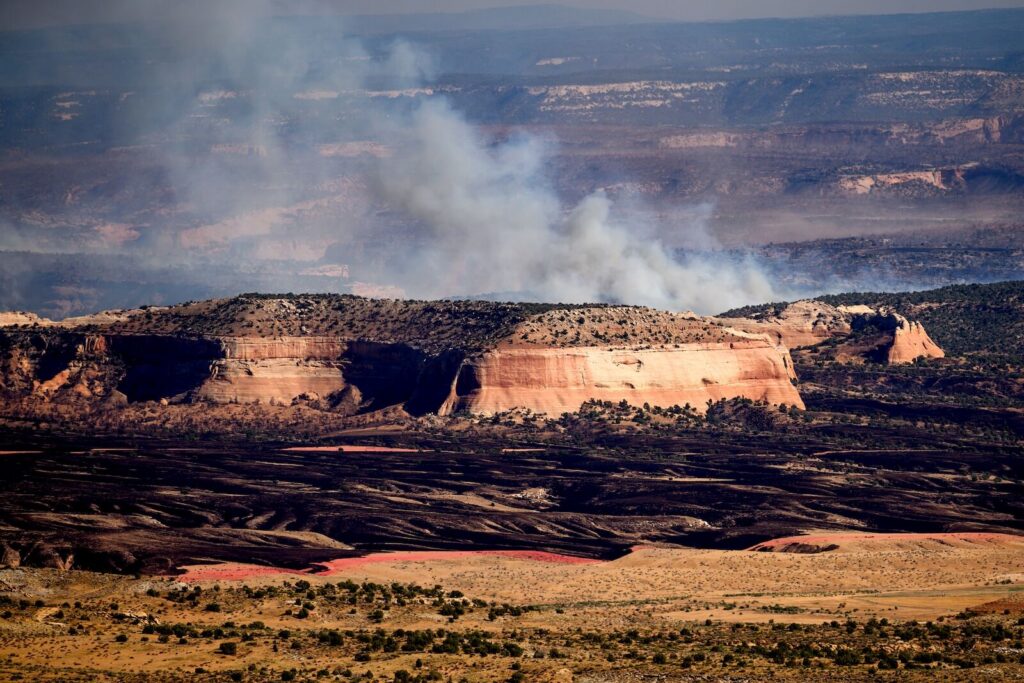
Firefighters’ deaths prompt debate over 100% suppression wildfire strategy
Rachael Wright, Special to Colorado Politics
rachael.wright@coloradopolitics.com
Updated 12 hours ago
On July 22, 2026, the chief of the U.S. Forest Service testified before a House Agriculture subcommittee that his agency pursues a “full suppression” strategy to contain all fires while they are still small, rather than allowing them to burn...
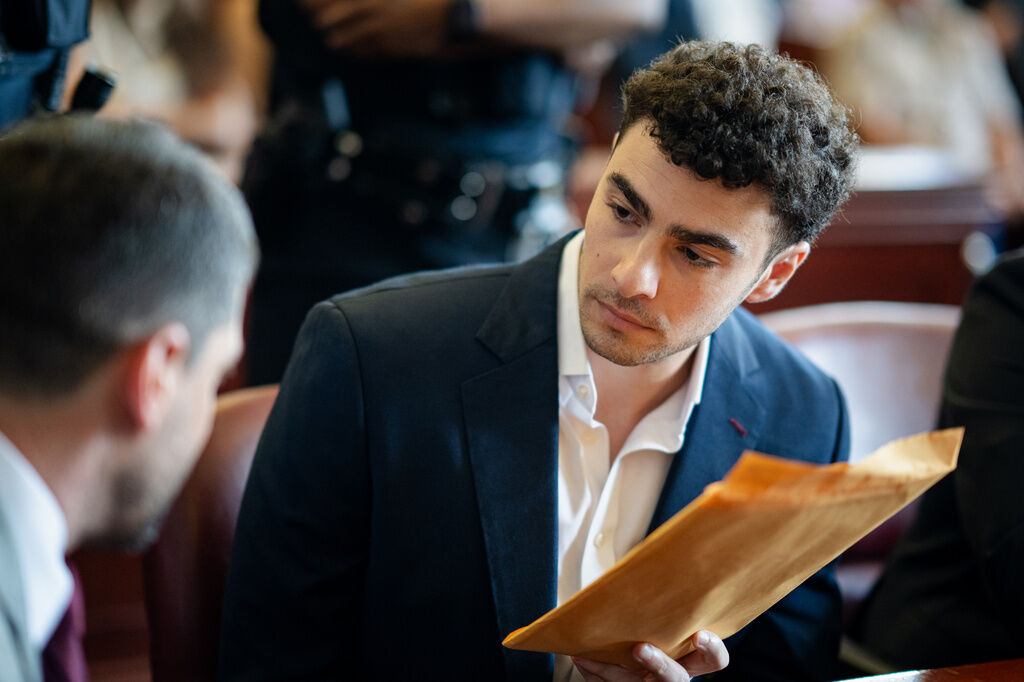
A summertime all-you-can-eat political buffet | SONDERMANN
Eric Sondermann
eric-sondermann@coloradopolitics.com
Updated 5 days ago
We find ourselves in the doldrums of August with a complete dearth of political news. Yeah, right. These days, that train never stops moving. It is a 24/7/365 express amplified by 24/7/365 media. Let me respond with one of my...
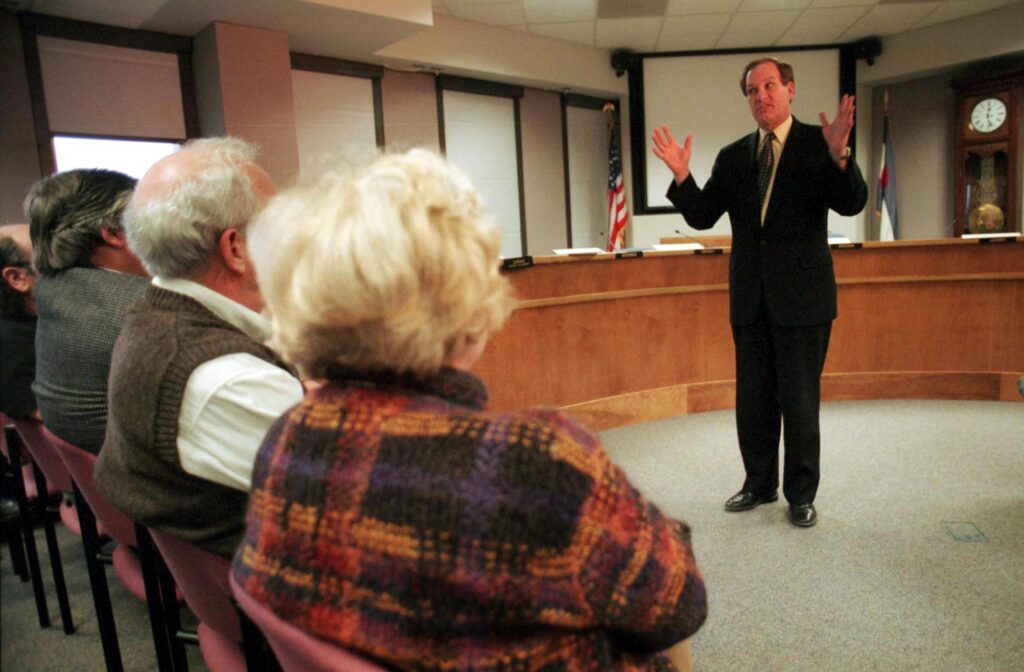
GOP worker pleads guilty to campaign funds embezzlement scheme | A LOOK BACK
Rachael Wright, Special to Colorado Politics
rachael.wright@coloradopolitics.com
Updated 5 days ago
Forty-five Years ago this week: After pleading not guilty to a Denver federal grand jury indictment of five counts of bank embezzlement, Eve Lynn Lincoln, a Colorado Republican Party employee, decided to plead guilty to one count: using bank credit...
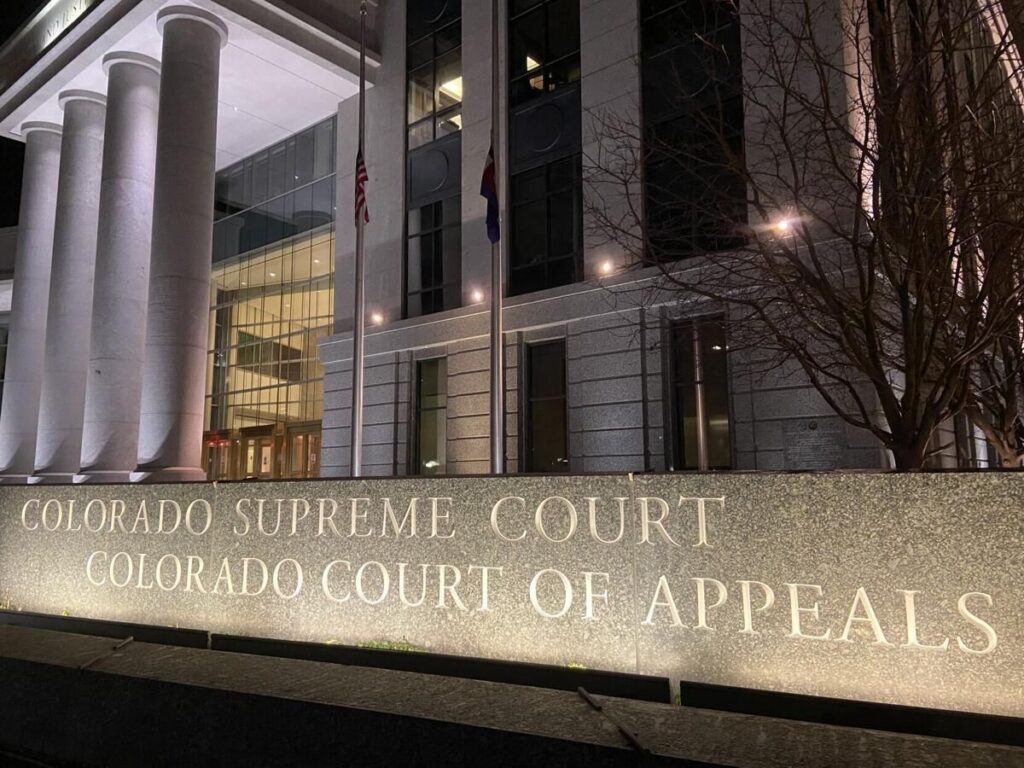
Schoolchildren’s presence at child sex-related trial did not harm Arapahoe County defendant, appeals court says
Michael Karlik
michael.karlik@coloradopolitics.com
Updated 1 day ago
Colorado’s second-highest court decided on Thursday that the presence of a group of schoolchildren on the first day of a child sexual exploitation trial did not violate an Arapahoe County defendant’s constitutional right to a fair trial. Prosecutors charged Jerry...
Appeals court cites week-old Colorado law to reinstate child neglect case at child, father’s request
Michael Karlik
michael.karlik@coloradopolitics.com
Updated 1 day ago
Colorado’s second-highest court invoked a new state law for the first time on Thursday and reinstated a child neglect case that both the child and her father wished to reopen. House Bill 1227 took effect on Aug. 12, reversing a...
Democratic candidate in Colorado’s 4th CD urges long-term water planning
Marianne Goodland
marianne.goodland@coloradopolitics.com
Updated 1 day ago
The Democrat hoping to become the next representative of Colorado’s 4th Congressional District on Thursday made her case on the final day of Colorado Water Congress in Steamboat Springs. Eileen Laubacher, who spent 34 years in the U.S. Navy and...

Castle Rock council declines to censure member accused of misconduct
Nicholas Fogleman
nicholas.fogleman@denvergazette.com
Updated 3 days ago
A Castle Rock Town Council meeting Tuesday became consumed by allegations that a councilmember attempted to trade a town policy decision for the withdrawal of a recall effort against him. The allegations against Councilmember Mark Davis surfaced during public comment...

Proposal to cap Colorado income tax rate qualifies for November ballot
Thelma Grimes
thelma.grimes@coloradopolitics.com
Updated 19 hours ago
Election officials on Thursday confirmed that the proposal to cap the state’s income tax at the current rate submitted signatures and voters will consequently decide its fate this November. The fight over tax rates is part of the tug and...